Egyptian Supernatural Beings

238 documented Egyptian supernatural beings from the Evil Eye grimoire, including 85 ancient and 76 lesser in power tier.

page 2 of 4

Banebdjedet
Greater

Banebdjedet

An ancient Egyptian ram deity worshipped at Mendes (Djedet), understood as the local 'Ba' or soul‑manifestation tied to fertility, virility, and aspects of rulership; depicted commonly as a ram or ram‑headed man and sometimes as a four‑headed ram representing multiple Bas of the sun god.

Bartholomew the Apostle
Minor Spirit

Bartholomew the Apostle

Bartholomew is presented in the supplied sources as one of the Twelve Apostles of Jesus, an early Christian missionary and martyr whose life functions in Christian liturgical memory, regional founding traditions (notably Armenian), and in later apocryphal and visionary narratives that expand his missionary itinerary and miraculous acts.

Bastet
Ancient

Bastet

Bastet (Ancient Egyptian bꜣstt; also rendered Bast, Ubasti, Bubastis) is an ancient Egyptian goddess whose character shifted over millennia from a lioness warrior-protector of the king and Ra to a later cat-associated deity linked to domestic protection, fertility, motherhood, and healing against disease and evil spirits. Her principal cult center was Per-Bastet (Bubastis) in the Nile Delta.

Bat
Ancient

Bat

Bat is an ancient Egyptian cow- and sky-goddess, attested from the late Predynastic period as the chief deity of the 7th Upper Egyptian nome (Seshesh/Hu). She is closely associated with the sistrum and was later syncretized into the cult of Hathor by the Middle Kingdom.

Bata
Ancient

Bata

Bata is an Egyptian local deity associated with cattle and with a territorial cult in Upper Egypt. In New Kingdom religious geography he appears as the co-representative of the 17th Upper Egyptian Nome alongside Anubis and also functions as the protagonist of the Tale of Two Brothers (Papyrus D’Orbiney), a mythic narrative that includes motifs of kinship, death and postmortem continuity.

Baʿal Zephon
Ancient

Baʿal Zephon

An epithet/localized form of the Canaanite storm god Baʿal (Hadad) associated with Mount Zaphon (Jebel Aqra) and with the north; worship of Baʿal Zephon served protective and maritime functions and was widely syncretized in neighboring cultures.

Ba‑Pef
Lesser

Ba‑Pef

Ba‑Pef is an obscure, malevolent underworld deity attested in Old Kingdom Egyptian sources and referenced in later summaries; the name literally means "that Ba". The priesthood of Ba‑Pef was held by queens in the Old and Middle Kingdoms, and the deity appears in at least one funerary inscriptional context naming a priestess.

Behedety
Ancient

Behedety

Behedety is attested in the supplied sources only as an Egyptian deity label; the available materials do not provide mythological narratives, attributes, iconography, cult practice, or functions. One modern musical release uses the name as a title, but offers no traditional information.

Bennu
Ancient

Bennu

Bennu is an ancient Egyptian divine bird associated with the sun, creation, and cyclical renewal. Presented as a self-originating creative force and as an emblem of rebirth, Bennu functions as an aspect (ba) of the solar creator gods (Ra and Atum) and appears in funerary iconography linked to Osiris.

Bes
Greater

Bes

Bes is an ancient Egyptian household protective deity, commonly kept close to domestic life to guard mothers, children, and childbirth; he also defends households against snakes and malevolent spirits and is associated with music, dance, and sexual vitality.

Beset
Lesser

Beset

Beset is the feminine counterpart or female avatar of the household protector deity Bes in ancient Egyptian religion. Attested as a domestic protective figure, she is associated especially with mothers, children, and childbirth and is understood by sources as part of the Bes–Beset protective function opposing harmful influences.

Bishop Karas (Sorial Ayad Sorial)
Minor Spirit

Bishop Karas (Sorial Ayad Sorial)

Bishop Karas (born Sorial Ayad Sorial, 1955–2002) was a Coptic Orthodox monk, abbot, and the first bishop of the Coptic Orthodox Church in the United States to head its first monastery outside Egypt. He is documented as a historical ecclesiastical figure known for monastic leadership, pastoral care, and ascetic practice.

Book of Caverns (Egyptian tradition)
Primordial

Book of Caverns (Egyptian tradition)

The Book of Caverns is an ancient Egyptian text that describes Ra's journey through the underworld, Duat. It does not describe a specific supernatural entity but mentions interactions between Ra and the residents of the underworld. (Note: 1. Power tier should be Ancient (deity-level) since it describes a journey of the sun god Ra and interactions between him and other deities. 2. Origin story needs clarification that the Book of Cavern)

Book of Thoth
Lesser

Book of Thoth

A collection of ancient Egyptian texts attributed to and believed to be created by the god Thoth, holding significant knowledge and magical power. (Note: 1. Power tier: Primordial (given its association with a deity-level entity like Thoth) 2. Appearance: While some illustrations depict it as an ornate book, the source does not explicitly describe appe)

Book of the Dead
Primordial

Book of the Dead

A collection of magical spells and texts that assist a deceased person's journey through the Duat (underworld) into the afterlife. (Note: 1. Power tier: Reduce to Ancient (deity-level), as it's a collection of spells and texts that aid in the deceased person's journey, but not a cosmic entity itself. 2. Appearance: Remove or rephrase, a)

Book of the Earth
Primordial

Book of the Earth

Ancient Egyptian funerary text associated with Aker, a deity possibly connected to time, the sun, and creation. (Note: 1. Power tier should be Ancient (deity-level) instead of Primordial (cosmic). 2. Abilities section is missing; source material does not mention any powers or behaviors. 3. No sensory cues, wards, or w)

Buchis
Greater

Buchis

The deification of the kꜣ (ka) of the war god Montu, incarnated as a sacred bull in Egyptian mythology. (Note: - Remove "Greater" power tier; no information in source material supports this level of power. - Add sensory cues (e.g., distinctive markings, specific sounds) related to sacred bulls' selection and w)

Cavern deities of the underworld
Lesser

Cavern deities of the underworld

A class of ancient Egyptian minor, place-bound divine beings dwelling in the caverns of the Duat. They are recorded as punitive creatures that punish and devour wicked souls but are also shown in funerary contexts as beings who, if propitiated by offerings and spells, can be pacified and render aid to the deceased.

Celestial Ferryman
Lesser

Celestial Ferryman

An ancient Egyptian funerary figure attested in Pyramid Texts, Coffin Texts, and the Book of the Dead who functions as a boatman/psychopomp, guard of Osiris, and one of the Assessors of Maat. Modern summaries render ancient names as Hraf-haf and Ma-haf and emphasize an iconography of a man seated in a boat with his head turned backward.

Chaos/Nun (Ancient Egyptian)
Primordial

Chaos/Nun (Ancient Egyptian)

Primordial, formless substance underlying the created world in Ancient Egyptian creation myths. (Note: 1. Power tier should be Primordial (as it's a primordial substance underlying all creation), but Primordial is typically reserved for cosmic entities, so consider revising to Ancient, as Chaos/Nun has)

Chiaffredo
Lesser

Chiaffredo

Chiaffredo is a locally venerated Christian saint in Piedmont, Italy, regarded as patron of Saluzzo. The cult centers on a discovered skeleton/relics near Crissolo and functions within Catholic devotional practice (pilgrimage, indulgences, relic translation), with later legendary association to the Theban Legion and disputed historicity.

Chnuphis (Kneph / Kmeph)
Greater

Chnuphis (Kneph / Kmeph)

Chnuphis (Egyptian Kneph or Kmeph) is an ancient Egyptian motif of divinity attested in religious art and later reused in Greco‑Roman Late Antique magical and gnostic contexts. In Egyptian iconography it appears as a winged egg, a globe encircled by serpents, or the serpent form of Amun (Kematef); in Late Antiquity the Greek theonym Chnuphis commonly denotes a lion‑headed serpent figure on magical artifacts.

Cowroid
Lesser

Cowroid

A cowroid (also spelled cauroid) is a prehistoric and ancient Egyptian seal‑amulet that imitates the cowrie shell. Treated as a protective amulet, cowroids were incorporated into women's dress (notably girdles) and funerary assemblages from Pre‑dynastic contexts through multiple Dynastic periods, and sometimes bear divine imagery (for example Taweret).

Creator God (creator deity)
Primordial

Creator God (creator deity)

A functional category of divine agents held responsible for the origin of the world, Earth, and universe within a given religious or mythological system. Depending on tradition the creator is identified with the single supreme God (especially in monotheisms), is one among multiple creator-deities (ancient/polytheistic contexts), or is distinguished from a more transcendent ultimate being.

Creator deity
Primordial

Creator deity

A category of divine being held responsible in a religion or myth for bringing the earth, world, or universe into being; functions as the explanatory center of cosmologies and as the ultimate source of existence in many traditions.

Cynocephalics
Greater

Cynocephalics

In Egyptian tradition, cynocephalics are human beings with dog's heads. (Note: 1. The power tier should be Primordial, given the fact that cynocephalics are described as a widely attested mythical phenomenon existing in many different forms and contexts. 2. Add an origin story b)

Doppelgänger
Lesser

Doppelgänger

A supernatural double or look‑alike of a living person, frequently reported in folklore and literature as a haunting counterpart or an omen of misfortune. The motif appears across cultures with related but distinct concepts (e.g., Egyptian ka, Norse vardøger, Finnish etiäinen, Muslim karin/qareen).

Dragon (Long)
Greater

Dragon (Long)

Long (龍, "dragon") is a pervasive cultural and artistic motif that appears in Taoist sacred-geographical contexts, Chinese literature, and modern exhibitions; the provided sources treat it as part of the broader mythic imagery present around Taoist sites and ritual scenes rather than as a single, consistently described doctrinal entity.

Duamutef
Lesser

Duamutef

Duamutef is one of the four Sons of Horus in ancient Egyptian funerary religion, a jackal‑headed mummiform guardian whose primary role is to protect the internal organs of the deceased (most commonly the stomach) and to ensure restoration of the body in the afterlife. He appears on canopic jar lids, amulets, and tomb furnishings across a long chronological span from the New Kingdom through the Late Period and beyond.

Earth Mother
Primordial

Earth Mother

An archetypal mother-goddess category personifying the earth, nature, fertility, and life-giving forces; presented in comparative sources as a generative, sustaining cosmological figure often paired with a complementary sky/father principle and invoked in both ancient mythic frameworks and contemporary political-environmental discourse.

Earth deity
Ancient

Earth deity

An earth deity is the personification or deification of the Earth in a culture's cosmology, often tied to fertility, the ground/land, chthonic or underworld aspects, and communal protection of territory or Dharma. Specific named examples include Papa (Polynesian/Maori), Geb (ancient Egyptian), and Prithivi (in Buddhist textual contexts).

Egyptian Pool
Greater

Egyptian Pool

A symbolic representation of water in Egyptian mythology, depicted as a rectangular shape with seven equally spaced vertical zigzag lines. (Note: 1. Power tier should be "Minor Spirit" since the Egyptian Pool appears to be more of a symbolic representation without explicit abilities or behaviors. 2. Origin story should mention that it is not pr)

Egyptian Supernatural Beings
Primordial

Egyptian Supernatural Beings

In Egyptian mythology, various supernatural entities inhabit different realms, including gods, goddesses, demons (uncertain), and spirits. They are considered Primordial beings, with cosmic-level powers. (Note: 1. Remove the claim that demons are considered Primordial beings (Source 1 does not mention this). 2. Update the power tier to Ancient, as Egyptian gods have cosmic-level powers but the text describes)

Egyptian goddesses
Ancient

Egyptian goddesses

A category of divine female figures in ancient Egyptian religion who embody, sustain, or control particular natural forces, social roles, cosmic functions, or ritual powers. They are objects of cultic worship with temples, priesthoods, hymns, prayers, and magical spells that maintain their functions within maat.

El Naddaha
Lesser

El Naddaha

El Naddaha (Arabic النداهة, "the caller") is an Egyptian popular-legend female water spirit associated with the Nile and its canals. She is portrayed as an alluring, voice-centered figure who calls men—often by name—with a hypnotic voice, drawing them toward the riverbank where they are believed by locals to disappear or drown.

Fetket
Minor Spirit

Fetket

Fetket is a minor ancient Egyptian deity attested in modern secondary compilations as an attendant of the sun god Ra, described in some sources with the functional label 'butler' or 'cupbearer' to Ra. Surviving references record the name and this occupational role but provide no primary-text evidence, iconography, or ritual material in the supplied sources.

Geb
Ancient

Geb

Geb (Egyptian gbb/Gebeb) is the ancient Egyptian personification of the Earth and a member of the Heliopolitan Ennead. He functions as the fertile, chthonic ground that produces crops and snakes, an early divine king who later judges in the divine tribunal, and the husband of the sky goddess Nut.

Gengen-Wer
Primordial

Gengen-Wer

Gengen-Wer (also Negeg-Wer) is an Egyptian mythological avian figure presented in secondary summaries as a celestial goose associated with the origin of life; sources describe it either as bearing or guarding a cosmic egg from which creation emerged and note a minor textual appearance in Chapter 59 of the Book of the Dead.

Grivet
Minor Spirit

Grivet

The grivet (Chlorocebus aethiops) is an Old World monkey species native to parts of northeastern Africa. The provided sources treat it as a biological taxon with ecological, behavioral, and historical-cultural associations (not as a supernatural being).

Hamadryas baboon (tradition)
Lesser

Hamadryas baboon (tradition)

The hamadryas baboon (Papio hamadryas) is an Old World primate native to the Horn of Africa and southwestern Arabian Peninsula. In ancient Egyptian religious and archaeological contexts baboons are attested as sacred animals kept in temple precincts and represented in votive statuary and funerary catacombs (the Sacred Animal Necropolis at North Saqqara included baboons among its interments and monuments). The cited materials document the species' biological ecology and its institutional cultic treatment in temple and necropolis contexts but do not supply mythic origin narratives or ritual liturgies specific to the species.

Hapi
Ancient

Hapi

Hapi (Ancient Egyptian ḥꜥpj, often rendered Hapy) is the personified deity of the annual Nile inundation in Ancient Egyptian religion; he is the divine agent of the life-giving flood that deposits fertile silt and enables agriculture. He was ritually celebrated as the source of fertility and abundance tied to the river's cyclical renewal.

Hapy (Son of Horus)
Minor Spirit

Hapy (Son of Horus)

Hapy is one of the four sons of Horus in ancient Egyptian funerary religion, most commonly associated with guarding the lungs of the deceased. He appears in mortuary contexts as a protective presence embodied on canopic-lid iconography and in amulets and small statuettes, often shown with a baboon head from the late New Kingdom onward.

Harendotes
Greater

Harendotes

Harendotes is a local epithet/manifestation of the Egyptian god Horus, attested in Greek transliteration as meaning 'Horus-avenger-of-his-father.' He is documented as the dedicatee of a temple on Philae and appears in coronation/baptismal relief imagery and in late Pharaonic to Roman-period documentary and onomastic records.

Harpocrates (Horus the Child)
Lesser

Harpocrates (Horus the Child)

Harpocrates is the Hellenistic form of the Egyptian Har-pa-khered (Heru-pa-khered), the infant aspect of Horus representing the newborn sun; in Ptolemaic Alexandria he was adapted into a minor god associated with silence, secrets, confidentiality, and the protection of reputations.

Harsomtus
Lesser

Harsomtus

Harsomtus (also Harsomptus, Somtus) is an ancient Egyptian child-deity associated with fertility, birth and the solar-primordial creative principle. Worshiped in local temple contexts (notably Dendera and Edfu) and venerated in mammisi (birth-houses), he functions as a youthful or infant form of the Horus/Ra divine line and is integrated into regional triads and family-group theology.

Hathor
Ancient

Hathor

Hathor (Ancient Egyptian ḥwt-ḥr, 'House of Horus') is a major polyvalent goddess of ancient Egypt associated with the sky, maternal and royal motherhood, music, joy, fertility, and the Eye of Ra; she appears in multiple local manifestations and assisted the deceased into the afterlife.

Hauhet
Ancient

Hauhet

Hauhet is the feminine personification of endlessness or eternity in the Egyptian Ogdoad of Hermopolis (Khmun). She functions as the feminine counterpart to the male deity Heh and represents the boundless, pre-creation watery chaos (Nu) rather than acting as a localized, interventionist deity.

Hauron (Haurun / Horon / Hawran)
Ancient

Hauron (Haurun / Horon / Hawran)

Hauron (also Haurun, Horon, Hawran) is an ancient Near Eastern deity attested in Egyptian sources (worshiped at Giza) and identified by scholarship as the Egyptian form of a West Semitic god worshiped in Canaan and at Ugarit. In Egypt his name was closely associated with Harmachis and could be used as a designation of the Great Sphinx of Giza.

Hedjhotep
Lesser

Hedjhotep

Hedjhotep (ḥḏ-ḥtp) is a minor ancient Egyptian deity associated primarily with fabrics, clothing, and the dressing of gods, kings, and the deceased. Attested from the Middle Kingdom Coffin Texts and later sources, his roles expand in the New Kingdom to include technical/medicinal functions (amulet cords, unguents) and in the Late Period onward he appears in syncretic family scenes with major gods.

Heh
Primordial

Heh

Heh is the ancient Egyptian personification of infinity or eternity, a member of the primordial Ogdoad of Hermopolis whose name originally meant "flood," referring to the primeval watery chaos Nu that preceded creation.

Hemen
Greater

Hemen

Hemen is an Ancient Egyptian falcon god venerated in local cults and frequently syncretized with Horus/Horakhte. Attested from the Pyramid Texts through the Late Period, Hemen received offerings, was cared for via cult statuary, and is recorded once functioning in an oracular capacity.

Hemsut
Minor Spirit

Hemsut

Hemsut (ḥmswt) are ancient Egyptian female divine personifications associated with fate, destiny, nourishment, life-force, and magical protection. They function as female counterparts to the Ka and are particularly linked with the safeguarding and vitality of royal persons; they appear in art and temple contexts, sometimes in pairings with specific Kas or other deities.

Henet (the Pelican)
Lesser

Henet (the Pelican)

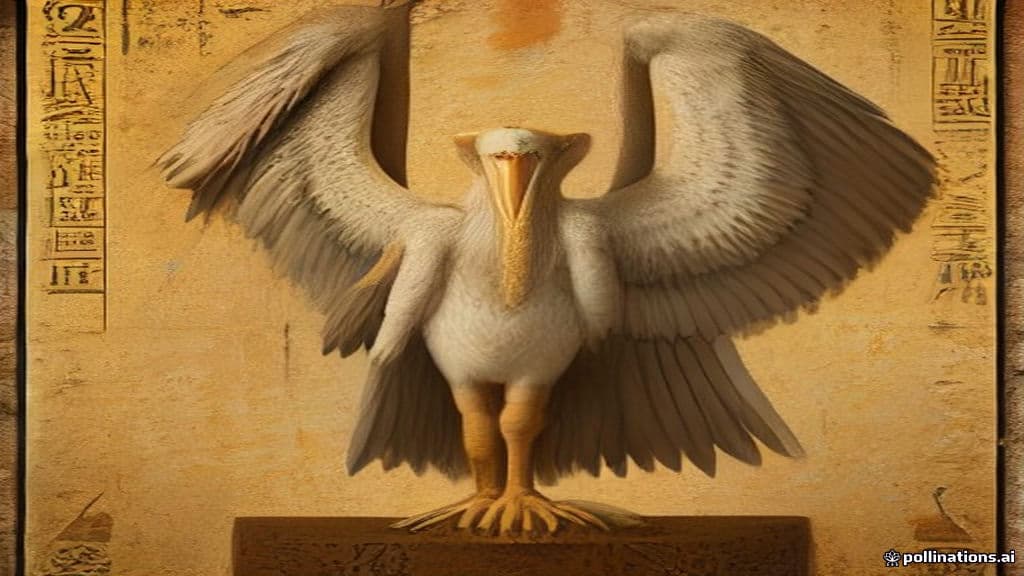
Henet is an Ancient Egyptian funerary figure represented as a pelican. Attested in Pyramid Texts, funerary papyri, and tomb imagery, she functions as a protective, motherly figure for the dead, associated especially with allowing exit from the tomb and protection against snakes.

Hennu (Seker's Underworld Barque)
Greater

Hennu (Seker's Underworld Barque)

In Egyptian mythology, the Hennu is a symbolic entity representing Seker of Memphis's underworld journey. (Note: * Power tier: Lesser (not Greater), as it's an aspect of Seker and doesn't possess deity-level powers. * Origin story: Clarify that the Hennu represents a part of Seker's journey, rather than being "a)

Her-Inmutef
Lesser

Her-Inmutef

Her-Inmutef is attested in the provided sources only as a named form or manifestation of the Egyptian god Horus. The available material does not supply independent myths, iconography, powers, rituals, or etymology for this form beyond that classificatory identification.

Her-sema-tawy
Ancient

Her-sema-tawy

Her-sema-tawy is presented in the supplied sources as an epithet or named form of the Egyptian god Horus associated with the idea of "uniting the Two Lands," and thus functions within Egyptian royal ideology as a manifestation of Horus that emphasizes political unity and kingship.

Heru-Behdeti
Ancient

Heru-Behdeti

Heru-Behdeti is a named manifestation of the ancient Egyptian sky-and-solar-falcon god Horus (Heru). Treated within the tradition as one facet of a multi-layered deity, this form participates in the broader Horus associations with kingship, protection, healing, and the sun/sky and was worshipped throughout Egyptian history.

Heru‑ra‑ha
Ancient

Heru‑ra‑ha

Heru‑ra‑ha is a composite, twofold deity in the modern religion of Thelema, composed of the active solar aspect Ra‑Hoor‑Khuit and the passive child‑aspect Hoor‑pa‑kraat (Harpocrates). Presented in Thelemic doctrine as the principal godform or Lord of the New Aeon (the Aeon begun in 1904), Heru‑ra‑ha functions as an aeonic, revelatory presence central to The Book of the Law and later Thelemic liturgy.

Heryshaf
Ancient

Heryshaf

Heryshaf (ḥrj š f), also spelled Hershef, is an ancient Egyptian ram-associated deity centered at Heracleopolis Magna. He is attested as a creator and fertility god 'born from the primordial waters,' titled 'Ruler of the Riverbanks,' and was syncretized with major gods such as Ra and Osiris and, in Greek interpretatio, with Dionysus or Heracles.

Hesat
Greater

Hesat

An ancient Egyptian bovine goddess who embodies a nurturing, lactating mother‑figure. Hesat provides milk (called 'the beer of Hesat'), nurses the pharaoh and sacred bull deities, and appears in funerary texts as a regenerating nurse and mother-figure linked to royal ideology and bull cults.