Egyptian Supernatural Beings

238 documented Egyptian supernatural beings from the Evil Eye grimoire, including 85 ancient and 76 lesser in power tier.

page 3 of 4

Historiola (Greek tradition)
Primordial

Historiola (Greek tradition)

A narrative tool used for magical purposes, providing a paradigm for desired action. (Note: - Power tier: Downgrade to Ancient (deity-level), as it does not interact with humans and its abilities seem more akin to a tool or concept rather than an entity with primordial powers. - Appearance: )

Horsemsu
Ancient

Horsemsu

Horsemsu is attested in a modern database entry (Wikidata) as an Egyptian deity. The supplied sources beyond that single label provide no additional attested information about its functions, attributes, iconography, or cult.

Horus
Ancient

Horus

Horus (Ancient Egyptian ḥr.w) is a major Egyptian deity associated with the sky, the sun and moon, kingship, protection, and healing. He appears in multiple local and chronological manifestations (e.g., Horus the Elder, Horus the Younger) and serves as the divine model of the living pharaoh and avenger/heir of Osiris.

Horus Name
Primordial

Horus Name

Title or crest used by ancient Egyptian rulers, symbolizing divine connection and royal identity. (Note: - Power tier should be Ancient (deity-level) as it represents a connection to a deity and is used by rulers, not just regional spirits. - Summary: While accurate, could be rephrased for clarity: "Titl)

Iah
Ancient

Iah

Iah (Ancient Egyptian jꜥḥ, Coptic ⲟⲟϩ) is the personification of the Moon in ancient Egyptian religion. Initially an independent lunar deity attested from the Middle Kingdom, Iah was later increasingly identified with other lunar and related gods such as Thoth (Djehuty), Khonsu, and at times assimilated with Osiris.

Ihy
Minor Spirit

Ihy

Ihy is an ancient Egyptian child-god associated with the sistrum, ritual music, joy, and fertility. Centered on the Dendera (Iunet) cult, he appears in temple art and fertility 'mystery plays' connected to Hathor and Horus and is depicted as the youthful divine offspring bound to Hathor's cultic roles.

Imhotep
Ancient

Imhotep

Imhotep was a historical Old Kingdom Egyptian official (chancellor to Pharaoh Djoser) whose memory was gradually glorified and by the Late Period and Ptolemaic era had been assimilated into Egyptian cult as a deified patron of medicine, wisdom, architecture, and scribal arts. He functioned as a non-royal cult deity centered at Memphis and was syncretized with gods such as Thoth and equated by Greeks with Asclepius.

Imsety
Ancient

Imsety

Imsety is one of the Four Sons of Horus in ancient Egyptian religion, a mummiform, human-headed funerary deity invoked to protect the viscera of the deceased and to secure bodily wholeness in the afterlife. He commonly appears on canopic-jar lids and amulets and is named in funerary spells and ritual contexts tied to mummification and burial.

Iry (as-attested-uses)
Minor Spirit

Iry (as-attested-uses)

No coherent folkloric or mythological entity called 'Iry' is attested in the supplied sources. The string 'Iry' appears only as an element of personal names, modern nicknames/handles, a taxonomic component, and as an administrative label in archival materials.

Isfet (Egyptian mythology)
Primordial

Isfet (Egyptian mythology)

In Egyptian mythology, Isfet is the concept of chaos and disorder, personified by Apep, a serpent deity. (Note: - Power tier should be Primordial, but it's unclear if this is directly stated; verify that "Primordial" is a correct interpretation. - Appearance: Clarify that Apep is considered a personification of)

Isis
Ancient

Isis

Isis is a major goddess of ancient Egyptian religion, a member of the Heliopolitan Ennead who functions as sister and consort of Osiris, mother and protector of Horus, a funerary and royal protector, and a locus of potent magic whose cult spread through the Hellenistic and Roman Mediterranean.

Iunit
Lesser

Iunit

Iunit is a minor ancient Egyptian goddess whose name is translated as "She of Armant" and who is attested as the consort (wife) of the war-god Montu (also spelled Mentu). Surviving references are brief and localizing; no substantial myths, iconography, or cultic rites for Iunit are recorded in the supplied sources.

Iusaaset
Primordial

Iusaaset

Iusaaset is a primordial female deity from the Heliopolitan creation tradition of Ancient Egypt, presented as a feminine counterpart or aspect of the creator Atum and associated with the emergent, growth-related side of creation and abundance.

Jackal (folklore)
Lesser

Jackal (folklore)

A liminal canid figure in multiple cultural traditions, the jackal functions as a symbol and occasional ritual embodiment connected to desolation, funerary contexts, cunning wisdom, and in some tantric contexts a manifestation of the goddess Kali. Sources treat it primarily as an animal with layered symbolic and mythic uses rather than a consistently personified independent supernatural agent.

Kamutef
Ancient

Kamutef

Kamutef is attested in Egyptian temple inscriptions and iconography as an epithet/aspect attached to the major god Amun/Amun‑Ra, invoked in contexts of divine maternity, royal status, and creative power rather than as an independently described deity in the supplied sources.

Kauket
Primordial

Kauket

Kauket (also Keket, Kaukēt, Keku) is the feminine member of the Hermopolitan Ogdoad who personifies primordial darkness, especially the darkness associated with sunset and the unformed condition preceding creation. She is paired with the male Kek and is attested in traditions tied to Hermopolis and later funerary/ western symbolism.

Kebehet
Lesser

Kebehet

Kebehet is a minor divine figure attested in modern secondary literature on Ancient Egyptian funerary religion. She appears in discussions of the ensemble of attendant deities and personae invoked in royal mortuary ritual and the king's passage into the celestial afterlife, but primary-source details about her name, iconography, or distinct functions are sparse in the supplied sources.

Kenmet
Lesser

Kenmet

Kenmet (Egyptian Knm.t) is a named figure attested in ancient Egyptian temple, dramatic, and decanal/astronomical texts. The attestations place Kenmet within mythic and stellar ordering contexts — as a named component associated with the divine stars and decanal schemata rather than as a fully attested cultic deity with independent biography.

Khefthernebes
Ancient

Khefthernebes

Khefthernebes is a name attested among the corpus of ancient Egyptian deities; surviving sources list the name but do not record any attributes, roles, or myths. The published surveys note that many Egyptian deity names are preserved without indicating character or function, and Khefthernebes appears to be one of those names.

Khensit
Lesser

Khensit

Khensit (also Khenset, Chensit, Khensut) is a localized ancient Egyptian goddess who served as the patroness of the twentieth nome of Lower Egypt and the consort of the local god Sopdu at the city of Per-Soped (Saft el-Hinna). She is attested in brief genealogical and iconographic notes and is described in sources as depicted as an uraeus and sometimes portrayed in associations with Hathor-Isis.

Khenti-kheti
Ancient

Khenti-kheti

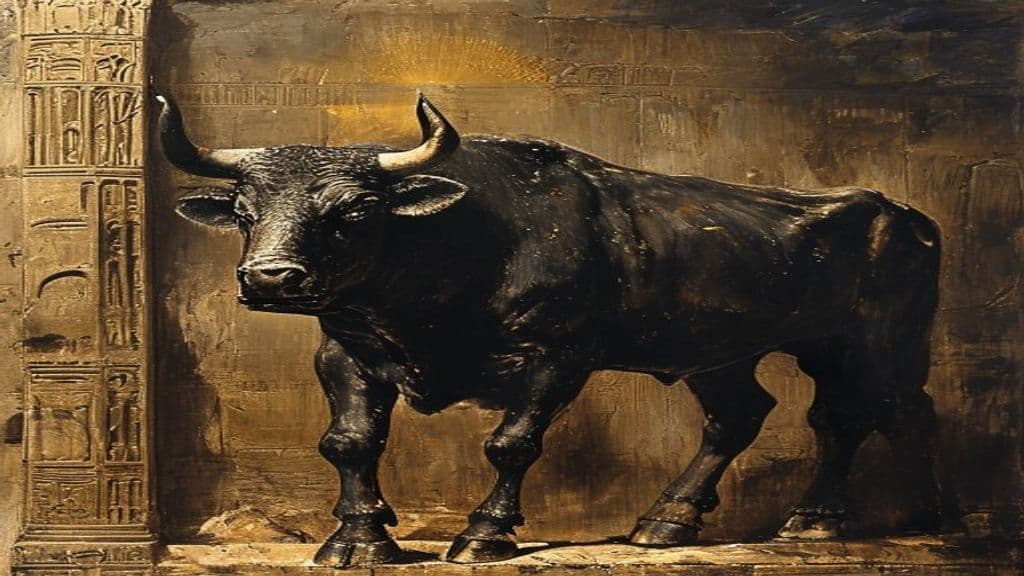
Khenti-kheti is a local tutelary deity of ancient Athribis in Lower Egypt, attested in sources as a crocodile-god later represented as a hawk associated with Horus and, in some descriptions, able to assume the form of a giant black bull named Kemwer. Over time his cult in Athribis was syncretized with or replaced by better-known deities such as Sebek, Horus, and eventually Osiris.

Kherty
Ancient

Kherty

Kherty is an ancient Egyptian netjer of the Duat attested from the early 2nd Dynasty and prominent in Old Kingdom Pyramid Texts. He functions as an underworld escort or ferryman for the dead—especially the king—while also appearing as an ambivalent figure associated with the physical act of dying.

Khnum
Ancient

Khnum

Khnum is an ancient Egyptian deity associated with the Nile cataract(s), the regulation of the annual inundation, and the crafting of human bodies and life‑force using a potter's‑wheel metaphor. He was principally worshipped at Elephantine and Esna from the Early Dynastic period into the Greco‑Roman era and was integrated into local temple triads and wider syncretic identities (e.g., Khnum‑Ra).

Khonsu
Ancient

Khonsu

Khonsu is an ancient Egyptian lunar deity, member of the Theban Triad (son of Amun and Mut), associated with the nightly passage of the Moon, protection during the night, healing, fertility, and certain fierce underworld roles attested in funerary texts.

Khopesh (khepesh)
Minor Spirit

Khopesh (khepesh)

The khopesh (also spelled khepesh) is a sickle-shaped sword from the Bronze Age that was adopted into ancient Egyptian military and royal iconography. It is a material weapon type and emblem frequently depicted with kings in New Kingdom statuary and later appears as a decorative/ornamental motif (e.g., a "khepesh crown") in Late Period and Ptolemaic votive reliefs.

Khor-akhti (Ra‑Horakhty / Re‑Horakhte)
Ancient

Khor-akhti (Ra‑Horakhty / Re‑Horakhte)

Khor-akhti is an aspectual, syncretic solar deity of ancient Egyptian religion, formed by the fusion of the sun‑god Re/Ra and the horizon aspect of Horus (Horakhty). Representing the sun at the horizon (dawn and/or the west horizon in some contexts), this composite bears solar iconography and royal sky symbolism and appears in temple, funerary, and amuletic contexts across multiple pharaonic periods.

Kneph
Primordial

Kneph

Egyptian god and motif of divinity, representing creation, fertility, and spiritual growth. (Note: - Power tier: Reduce to Greater, as there's no indication of cosmic or deity-level power. - Abilities: Remove mention of specific abilities and behaviors, as source does not support this claim. - Weak)

Kolanthes (Kolanthes the Child)
Lesser

Kolanthes (Kolanthes the Child)

Kolanthes is a late‑period Egyptian local child deity documented in the Akhmim/Athribis circle (ninth Upper Egyptian nome). Attested in Greek, Demotic and hieroglyphic inscriptions and a hymn, he appears as a member of a local patron triad and is identified with the divine child motif (Horus) and called 'the child of Osiris and Isis'.

Maat
Ancient

Maat

Maat is the ancient Egyptian concept and personified goddess of truth, balance, law, morality, and justice. As both an abstract ordering principle and a divine personification, she underlies cosmic order, legitimizes kingship, and functions as the judicial standard in life and the Weighing of the Heart in the afterlife.

Medjed
Lesser

Medjed

Medjed is a minor, named supernatural figure attested in a few copies of spell 17b of the Egyptian Book of the Dead and depicted on nine New Kingdom/Late Period papyri dated to around the Twenty‑first Dynasty. Textual lines call him “that smiter,” say he “shoots with his eyes, yet is unseen,” and that “the sky is encircled with the fiery blast of his mouth,” and place him among those who belong to the House of Osiris in the Duat.

Mehen
Lesser

Mehen

Mehen is an ancient Egyptian protective serpent deity whose name means 'coiled one'; depicted coiling around the sun god Ra during his nightly voyage and lending protective guardianship. The term also names an archaeological game board whose relation to the deity is uncertain.

Menes
Ancient

Menes

Historical figure and pharaoh of ancient Egypt, credited with unifying Upper and Lower Egypt. (Note: * Power tier: Should be Primordial, not Ancient (Historical figure and pharaoh, not a deity-level entity) * Abilities: The text does not support the claim that Menes' unification had a "profound impac)

Menhit
Ancient

Menhit

Menhit (also Menhyt, Menchit) is a Nubian-origin lioness war goddess incorporated into Egyptian religion as a martial tutelary and solar-associated deity. She is commonly depicted as a lioness bearing a solar disk and the uraeus and is linked in myth to the Eye of Ra tradition and to royal protective iconography.

Min
Ancient

Min

Min (Egyptian mnw) is an ancient Egyptian deity of male fertility, sexual potency, and agricultural renewal whose cult began in the predynastic period and was centered at Upper Egyptian cities such as Coptos (Koptos/Qift) and Akhmim (Panopolis). His worship involved public festivals (a "coming forth" and harvest-season rites), votive phallic offerings, and royal associations through syncretism with Horus and Amun and kamutef (self-fathering) imagery.

Min-Kamutef
Ancient

Min-Kamutef

A theonym used in ancient Egyptian religion designating an epithetial form linking the fertility god Min with the title Kamutef ('Bull of his Mother'), attested in temple reliefs and indexes of Egyptian cult practice, especially in a Ramesside doorjamb depicting royal offerings.

Mnevis
Ancient

Mnevis

Mnevis is the ancient Egyptian sacred bull cult of Heliopolis (On), regarded as the living manifestation or ba of the solar god Ra and later assimilated with Atum‑Ra. A single living bull served as an oracular and cultic presence, entitled to ritual attendants and embalmed and buried with honours in a dedicated necropolis; the cult persisted into the late Pharaonic and classical periods and was one of the few cults tolerated during Akhenaten's reign.

Mummy (undead) (Egyptian tradition)
Lesser

Mummy (undead) (Egyptian tradition)

In Egyptian folklore, a mummy is an undead creature believed to be the reanimated corpse of a deceased person. (Note: * Power tier: Should be Primordial, given the association with cosmic entities and magical powers tied to ancient Egyptian rituals. * Abilities: Clarify that supernatural abilities refer to those on a)

Mut
Ancient

Mut

Mut is an ancient Egyptian mother goddess associated with the primordial waters (Nu), the Theban Triad, and the Eye of Ra corpus. She functions as a cosmic maternal principle, a local patroness of Thebes with temples and priesthood, and a shifting consort/maternal figure within Amun-centered theology.

Naunet
Primordial

Naunet

Naunet is the feminine personification of the primordial watery abyss in ancient Egyptian cosmogony (often paired conceptually with Nu/Nun). She represents the pre-creation watery substrate from which the creator sun god Ra is said to have arisen.

Nebethetepet
Lesser

Nebethetepet

Nebethetepet (nb.t-ḥtp.t) is an ancient Egyptian goddess and personified female principle associated with creation and offerings. Worshipped in the Heliopolitan tradition, she is described as the personification of Atum's hand and can function as a title or manifestation of Hathor; surviving attestations are limited and mainly cultic or late-period in date.

Nebtuwi
Lesser

Nebtuwi

Nebtuwi is an ancient Egyptian goddess who personifies fertility and is attested as the wife of the creator/fertility god Khnum. Her cult was centered at Latopolis (Esna) and over time her local cult was gradually relegated to that of Neith.

Nebty Name
Primordial

Nebty Name

One of the 'great five names' used by Egyptian pharaohs, representing a specific aspect of their divine authority. (Note: - Power tier should be Ancient (deity-level) since it's one of the 'great five names' used by pharaohs, representing divine authority. - Abilities need to be clarified or removed, as the text currentl)

Nebu
Primordial

Nebu

An ancient Egyptian hieroglyph representing gold with phonetic value nb, associated with royalty and divine authority. (Note: 1. Power tier: Change Primordial to Ancient (since Nebu is a hieroglyph associated with royalty and divine authority, but not described as cosmic). 2. Abilities/Origin story: Add that Nebu has no know)

Nehmetawy
Lesser

Nehmetawy

Nehmetawy is an ancient Egyptian goddess attested chiefly at Khemenu (Hermopolis) and in the Tebtunis Mythological Manual. She functions as a local, protective and consoling deity who appears as the pacified or returned form in the 'returning goddess' cycle and is associated with festival rites and maternal iconography.

Neith
Ancient

Neith

Neith is an ancient Egyptian deity attested from the Predynastic period onward, venerated as a creator and primordial mother, a warlike patron and 'Opener of the Ways,' and a funerary guardian associated with weaving and the protection of the dead. Her primary cult center was Sais in the western Nile Delta, and she remained important into the Greek and Roman periods.

Nekhbet
Ancient

Nekhbet

Nekhbet is an ancient Egyptian tutelary goddess of the city Nekheb (El Kab) who became the patron and protector of Upper Egypt and, after political unification, one of the Two Ladies safeguarding the king and the unified land. She is primarily portrayed as a vulture in royal and funerary iconography and is associated with protective, maternal, and royal-ideological functions in Egyptian state religion.

Nemty
Lesser

Nemty

Nemty is an ancient Egyptian local deity centered at Antaeopolis (Per-Nemty) in Upper Egypt, attested from at least the 2nd Dynasty. In later tradition he is known as a patron of ferrymen and is iconographically shown as a falcon standing on a boat; he appears in the Contendings of Horus and Seth as the divine ferryman who is deceived by Isis and subsequently punished.

Neper
Ancient

Neper

Neper (also Nepra or Nepri) is an ancient Egyptian deity personifying grain and the productive principle of cereal crops. He functions as the divine guarantee of seed, growth and sustenance within the Egyptian agricultural and domestic religious framework.

Nephthys
Ancient

Nephthys

Nephthys (Egyptian Nebet-ḥwt) is an ancient Egyptian goddess associated with funerary transition, night/darkness, temple service, protection, and ritual magic. Member of the Heliopolitan Ennead and sister of Isis, Osiris, and Set, she functions as a liminal guardian and ritual attendant who assists the deceased's passage through the Duat and appears widely in tomb and temple iconography.

Neshmet
Greater

Neshmet

Divine vessel or bark in Egyptian tradition associated with the god Nun, used as a conveyance for Osiris during the Osiris festival at Abydos. (Note: 1. Power tier should be Primordial as it is associated with the primordial deity Nun. 2. No mention of physical appearance or abilities beyond being a vessel for Osiris, so these sections are inaccura)

Numbers in Egyptian Mythology
Primordial

Numbers in Egyptian Mythology

Sacred numbers with significant power and repeated appearances in Egyptian mythology, including 2, 3, 4, and 7. (Note: * Power tier: Downgrade to Ancient (deity-level), as the source material doesn't imply cosmic power but rather reverence for these numbers. * Abilities: Add a sentence that explicitly states that thes)

Nut
Ancient

Nut

Nut (Ancient Egyptian: Nwt; Coptic: Ⲛⲉ) is the ancient Egyptian goddess who personifies the sky, stars, and cosmos and is associated with motherhood and astronomical symbolism. She is commonly depicted as a star-covered woman arched over the earth, forming the vault of heaven.

Opening of the Year Festival
Minor Spirit

Opening of the Year Festival

Ancient Egyptian festival marking the beginning of the year, tied to astronomical and calendrical events, and associated with gods such as Re (Ra) and Sothis (Sopdet). The event likely represents cyclical renewal and rebirth of life. (Note: 1. Power tier should be Ancient (deity-level) given the festival's association with gods such as Re and Sothis, and its significance in establishing cosmic order. 2. Add sensory cues related to agricu)

Osiris
Ancient

Osiris

Osiris is the major ancient Egyptian god of fertility, vegetation, death, resurrection, and the afterlife. He functions as sovereign of the realm of the dead, a guarantor of postmortem renewal and agricultural fertility, and the archetypal divine figure with whom deceased kings and mortals ritually unite to gain continuity after death.

Peret (Nile-drought spirits — Coptic)
Lesser

Peret (Nile-drought spirits — Coptic)

No evidence for a Coptic spirit named 'Peret' or for spirits specifically associated with the Nile's droughts appears in the supplied source corpus. The available materials that mention the string 'Peret' refer to an unrelated modern Catalan musician and a Wikidata label; no mythological descriptions, rituals, or etymologies for a Coptic supernatural 'Peret' are present.

Petbe
Lesser

Petbe

Petbe is attested in modern summaries as a localized deity associated with retributive justice, described as a "god of revenge" worshipped around Akhmim in central Egypt. Sources present competing etymological readings (e.g., "Sky-Ba" vs. a hybrid Pet-(Baʻl)) and offer little surviving detail about cult practice, iconography, or myths.

Prenomen (Ancient Egypt)
Ancient

Prenomen (Ancient Egypt)

The Prenomen is one of the five royal names of ancient Egyptian pharaohs, used to signify their divine authority and power. (Note: 1. Power tier: Lower to Greater (as it's tied to the pharaoh's identity and power, but not explicitly stated as deity-level). 2. Abilities: Remove claim that Prenomen has no supernatural abilities or )

Ptah
Ancient

Ptah

Ptah is the principal Memphite deity of ancient Egypt, venerated as a creator god and patron of craftsmen and architects. He conceives the world 'in the design of his heart' and realizes it by speech, serves as master of ceremonies and justice in state cult, and is central to funerary and royal ritual in Memphis.

Ptah-Patek
Lesser

Ptah-Patek

Ptah‑Patek (Greek Pataikos) is a protective dwarf figure in late ancient Egyptian practice, represented primarily as small faience amulets and household figurines that safeguard wearers from danger and assist in childbirth. From the Late Period onward the figure is syncretic with Bes, Taweret, and aspects of Ptah and Horus/Harpocrates in popular iconography and use.
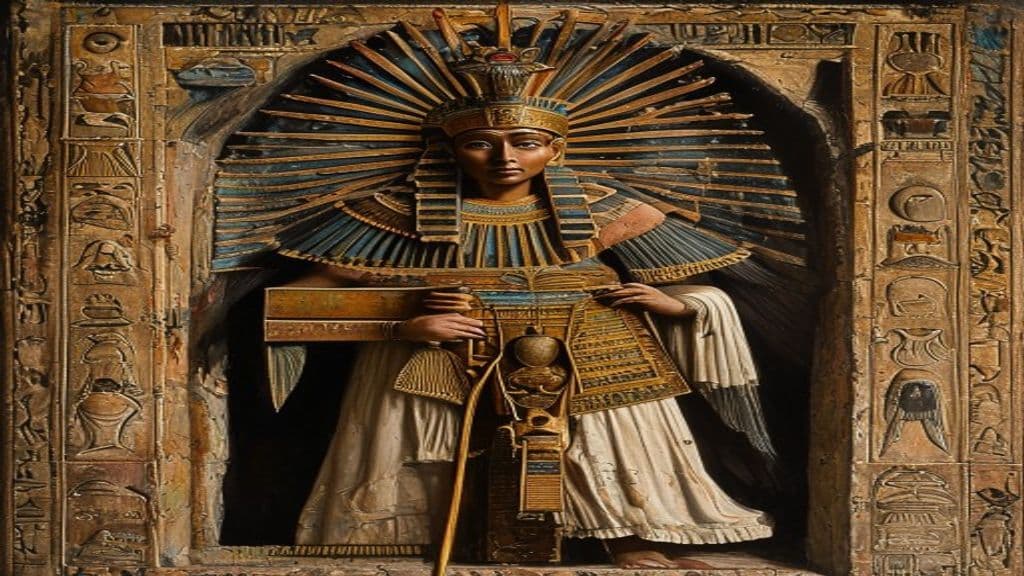
Ptah‑Sokar‑Osiris
Ancient

Ptah‑Sokar‑Osiris

Ptah‑Sokar‑Osiris is a syncretic funerary deity of ancient Egyptian religion, combining aspects of Ptah (Memphite creator/craftsman), Sokar (a Memphite necropolis hawk/falcon god), and Osiris (the pan‑Egyptian god of death and resurrection). The compound appears on offering formulas, statuary, papyrus containers, and temple reliefs used in mortuary and necropolis contexts, especially associated with Memphis and the Memphite necropolis, attested in material from the Late Period through the Ptolemaic era.