Greek Supernatural Beings

1796 documented Greek supernatural beings from the Evil Eye grimoire, including 1106 lesser and 335 minor spirit in power tier.

page 2 of 30

Aeacidae
Lesser

Aeacidae

The Aeacidae are a dynastic lineage in Greek myth and historiography descended from the hero Aeacus, son of Zeus and the nymph Aegina. The name functions as a patronymic designation for those 'of Aeacus' and is used to claim genealogical legitimacy and political prestige in regions such as Aegina and Molossian Epirus.

Aeacus
Ancient

Aeacus

Aeacus is a mythic king of the island of Aegina in Greek tradition, famed for his justice and piety. After death he is accorded a permanent office in Hades as one of the three judges of the dead alongside Minos and Rhadamanthus, and he is the eponymous ancestor of the Aeacidae.

Aeanes
Minor Spirit

Aeanes

Aeanes is attested in classical sources as an ancient personal name preserved in epic indices and as a local toponym (a sacred precinct, Aeaneium, and a spring, Aeanis) said to be named after a man slain by Patroclus. The name also appears in modern contexts as a taxonomic genus and in placename continuity, but the provided sources do not support a coherent supernatural identity for Aeanes.

Aega
Lesser

Aega

Aega is attested in modern reference works as a mythological name from the Greek tradition; the string 'Aega' is used for more than one minor figure or entry in Greek mythic catalogs. Surviving provided sources give no coherent myth, iconography, or rituals tied to a single, identifiable deity or spirit named Aega.

Aegaeon
Primordial

Aegaeon

Aegaeon is a name used in ancient Greek myth for multiple figures, most notably a Hecatoncheir sometimes equated with Briareus and also borne by several localized personages (an Arcadian prince, a son of Lycaon, and occasional Giants). The name carries maritime and stormy connotations (etymologized as 'goatish', 'stormy', or 'Aegean') and in some traditions marks a primordial, multiform monstrous kin of the gods.

Aegaeus
Lesser

Aegaeus

Aegaeus (Ancient Greek: Αἰγαῖος) appears in Greek myth as (1) a local river-god associated with the island called Scheria (traditionally associated with Corfu) and father of the nymphs Aigaiides and of Melite (who in some sources bore Heracles a son, Hyllus), and (2) as a toponymic surname/epithet of the sea-god Poseidon derived from the town of Aegae in Euboea.

Aegeas (Aegeus)
Minor Spirit

Aegeas (Aegeus)

Aegeas (classical Aegeus) is the mytho-historical king of Athens from Greek myth, father of Theseus and traditional eponym of the Aegean Sea. The provided sources treat him as a mortal royal figure embedded in epic and local foundation narratives rather than a supernatural spirit or cultic being.

Aegesta
Lesser

Aegesta

Aegesta is an ancient place-name and eponym recorded in Greek and Roman sources as an alternate form of Segesta, an Elymian city in northwestern Sicily, and as a mythic personal name (Aegestus/Aegesta) tied to Trojan foundation legends rather than a supernatural being.

Aegeus
Lesser

Aegeus

Aegeus is a mytho-historical king of Athens in Greek tradition, an eponymous ancestor who links Athenian dynastic identity to wider heroic and divine narratives. He is best known as the father (in most traditions) of Theseus, a seeker of an heir who consults oracles, introduces at least one civic cult, and whose death provides an aetiology for the name of the Aegean Sea.

Aegiale
Lesser

Aegiale

Aegiale is a mortal woman in Greek mythic tradition, best known as the wife of the hero Diomedes. In post‑Trojan War nostos narratives she is depicted in several accounts as unfaithful and as plotting against her husband; some traditions attribute her conduct to the vengeance of the goddess Aphrodite.

Aegialeus
Lesser

Aegialeus

Aegialeus (Ancient Greek: Αἰγιαλεύς) is a name borne by several legendary figures in Greek mytho-historical tradition; chiefly remembered as (a) an eponymous early king associated with Sicyon and the littoral name Aegialea/Aegialeia, and (b) the elder son of Adrastus of Argos who fell among the Epigoni in the Theban cycle. He functions in sources as a mortal king/hero and etiological ancestor used to explain place-names and local chronologies.

Aegimius
Lesser

Aegimius

Aegimius (Ancient Greek: Αἰγίμιος) is a legendary ancestral king and lawgiver of the Dorians in Greek tradition. He appears in mythic-historical narratives as the eponymous progenitor of Dorian subgroups, a military leader who enlisted Heracles' aid, and the adoptive guardian of Hyllas, linking the Dorians to the Heracleidae.

Aegina
Lesser

Aegina

Aegina is an eponymous nymph of Greek mythology who personifies the island of Aegina in the Saronic Gulf. She is remembered primarily as the mother of the hero-king Aeacus and as the island’s mythical ancestress, anchoring local civic identity and cultic landscape.

Aegipan
Lesser

Aegipan

Aegipan (Αἰγίπαν / Αἰγίπανος) is an ancient Greek mythological figure associated with goat attributes and with the sea‑goat imagery of the constellation Capricornus. He appears in classical myth as a semi‑divine helper (notably in the Typhon episode) and, in later natural‑history and medieval bestiary reception, the name is applied to satyr‑like or ape‑like wild men in distant lands.

Aegisthus
Lesser

Aegisthus

Aegisthus (Greek Αἴγισθος, Aigisthos) is a mortal member of the House of Atreus in Greek myth who, born of incestuous circumstances and raised by shepherds and a goat, participates in dynastic murder and usurpation — notably the slaying of Atreus in some accounts and the conspiracy (with Clytemnestra) that results in Agamemnon's death — and is later killed by Orestes, an episode that figures in narratives about inherited guilt, vengeance, and the transition from private retribution to public justice.

Aegius
Lesser

Aegius

Aegius (Ancient Greek: Αἴγιος) is a named mortal figure in Greek mythic genealogies, one of the fifty sons of King Aegyptus who married the daughters of Danaus and was slain on his wedding night. He appears only as a genealogical/legendary royal personage within the Danaid cycle rather than as a supernatural being.

Aegle
Lesser

Aegle

Aegle (Ancient Greek: Αἴγλη, 'brightness' or 'dazzling light') is a name applied to several distinct female figures in Greek myth: a daughter of Asclepius associated with health, a Naiad mother of the Charites by Helios and Neaera, one of the Heliades transformed into a poplar after Phaeton's death, a named Hesperid, an alternate name for Coronis in some traditions, a daughter of Panopeus beloved by Theseus, and a nurse of Dionysus. The recurrence of the name links these figures by the themes of brightness, beauty, and filial or nymph-like status rather than by a single unified identity.

Aegolius
Minor Spirit

Aegolius

Aegolius (Ancient Greek Αἰγωλιός) is a Cretan man in Greek myth who, after attempting to steal sacred honey from the cave where the infant Zeus was reared, was transformed by Zeus into an owl as punishment. The episode is attested in summaries of ancient metamorphosis traditions (Antoninus Liberalis) and modern secondary summaries (Wikipedia).

Aegypius
Minor Spirit

Aegypius

Aegypius (Ancient Greek: Αἰγυπιός) is a Thessalian mortal in Greek myth who, after a tragic household deception and prayer, is transformed by the gods into a vulture. The story is etiological: the metamorphoses explain the avian forms and behaviors assigned to the characters.

Aegyptius
Lesser

Aegyptius

Aegyptius (Greek Αἰγύπτιος, Latinized Aegyptius) is a mortal elder of Ithaca attested in the Homeric tradition, identified as an old lord and loyal retainer of Odysseus who speaks among the assembly in Odyssey Book 2 and is father of Antiphus.

Aegyptus
Lesser

Aegyptus

Aegyptus is a legendary king in Greek mythic genealogy, presented as the eponymous founder of the land called Egypt and the father of fifty sons whose intended marriages to the fifty daughters of his twin brother Danaus end in mass murder and mythic consequences.

Aello
Lesser

Aello

Aello (Ancient Greek: Ἀελλώ) is a named figure in Greek myth primarily attested as one of the Harpies—winged female personifications of storm-wind who harry, snatch, and torment. The name also appears in variant lists as applied to an Actaeonian hunting dog, showing onomastic fluidity in the tradition.

Aeneads
Lesser

Aeneads

A collective term in Roman myth for the friends, family, and companions of the Trojan hero Aeneas who fled Troy and wandered before settling in Italy; treated as a retinue and ancestral cohort rather than independent supernatural beings.

Aeneas Silvius
Lesser

Aeneas Silvius

Aeneas Silvius is a legendary mytho-historical king of Alba Longa in Roman/Latin foundational tradition, counted third among the Silvian line. Ancient chroniclers credit him with a multi-decade reign, military success, the planting of Latin colonies (the Prisci Latini) and the founding of a group of early Latin towns, and with passing kingship to his son Latinus Silvius.

Aeneas, Anchises, and Ascanius
Ancient

Aeneas, Anchises, and Ascanius

Aeneas is a legendary Trojan nobleman, son of the goddess Aphrodite (Venus) and the mortal Anchises; he is portrayed in Greek epic and Roman literary tradition as a divinely favored warrior and a founder-ancestor whose destiny links Troy to the eventual Roman line represented by Romulus and Remus. Anchises is Aeneas' mortal father and a Trojan prince; Ascanius (also called Iulus in Roman tradition) is his son and the next link in the genealogical chain. Together they function in the sources as a familial triad that embodies divine intervention, pietas, and sacred genealogy.

Aenesidemus
Minor Spirit

Aenesidemus

Aenesidemus was a 1st-century BCE Greek Pyrrhonist philosopher, traditionally said to be from Knossos, who revived Pyrrhonian skepticism and formulated ten skeptical 'modes' (tropai) intended to produce epoché (suspension of judgment). Knowledge of him and his doctrines survives only through later epitomes and secondary sources.

Aenete
Lesser

Aenete

Aenete (Ancient Greek Αἰνήτη) is a mythological human figure recorded in Greek epic genealogies as the mother of Cyzicus, king of the Doliones. She appears in brief genealogical notices in the Argonautic tradition and is otherwise unattested as an active character, cult figure, or supernatural agent in the surviving citations.

Aeneus (of Aenus)
Minor Spirit

Aeneus (of Aenus)

Aeneus (Ancient Greek: Αἰνεύς / Aineus) is a legendary eponymous founder attested in Greek mythographic tradition as the ancestral name‑figure for the ancient Thracian city Aenus (Ainos, modern Enez). He is cited in genealogical summaries as the father of Cyzicus by Aenete, daughter of Eusorus, and functions as an etiological ancestor linking place‑name and local mythic genealogy.

Aeolus
Greater

Aeolus

Aeolus is a name applied to multiple related figures in Greek myth: an eponymous son of Hellen (founder of the Aeolian people), a son of Poseidon who led colonial ventures to Tyrrhenian islands, and a son of Hippotes depicted in epic as a ruler or keeper of the winds. Ancient mythographers note confusion and overlap among these persons.

Aeopolus
Lesser

Aeopolus

Aeopolus (Ancient Greek: Αἰπόλος, gen.: Αἰοπόλου, romanized Aipolus or Aiopólos, lit. 'goatherd') is a mortal figure in Greek mythic genealogical tradition recorded only in brief scholia and summaries. He is named as the father of Cleobule, who in one variant is cited as a possible mother of Myrtilus by Hermes; some sources note he was also called Aeolus. Attestations are limited and no cult, deeds, or narratives are preserved for him.

Aepytus
Minor Spirit

Aepytus

Aepytus (Ancient Greek: Αἴπυτος, Aíputos/Aípytos, lit. 'steep, high, lofty') is a personal name in Greek myth borne by several legendary kings tied to Arcadian and Heraclid genealogies. The figures named Aepytus function as ancestral/dynastic nodes in literary genealogies and later literary receptions rather than as supernatural beings.

Aergia
Lesser

Aergia

Aergia (Ancient Greek: Ἀεργία) is the personification/goddess of sloth, idleness, indolence and laziness in Greco-Roman mythic thought. She appears in literary sources as a named personified quality and as an attendant or guardian in the household of Sleep (Hypnos/Somnus); Roman equivalents include Socordia and Ignavia.

Aerope
Lesser

Aerope

Aerope (Ancient Greek: Ἀερόπη) is a mythological mortal woman of Greek tradition, a Cretan princess connected to the royal house of Mycenae (the Atreidai). In surviving accounts she functions as a human agent whose sexual relationships and/or the transfer of a symbolic object (the "golden lamb") are narrated as catalysts in the dynastic feuds of Atreus and Thyestes; sources preserve variant and sometimes conflicting traditions about her fate and parentage.

Aeropus
Lesser

Aeropus

Aeropus is a name used for several distinct figures in Greek tradition: a mythic child variously described as son of Ares and Aerope; a son of Cepheus associated with Arcadian/Tegean genealogies and as ancestor/father of Echemus; a name applied to historical Macedonian kings; and a separate usage naming a bird into which Botres was transformed. The sources treat Aeropus primarily as a mortal or legendary ancestor rather than as an autonomous supernatural class.

Aesacus
Minor Spirit

Aesacus

Aesacus (Ancient Greek: Αἴσακος) is a mythic son of King Priam of Troy who, grieving the death of a river-nymph beloved, throws himself from a cliff and is transformed mid-plunge by the sea-goddess Tethys into a diving seabird (mergus). In some traditions (Apollodorus and Tzetzes) he is also described as a seer who learned dream-interpretation from his grandfather Merops and interprets Hecabe’s dream about Paris.

Aesculapius (Asclepius)
Greater

Aesculapius (Asclepius)

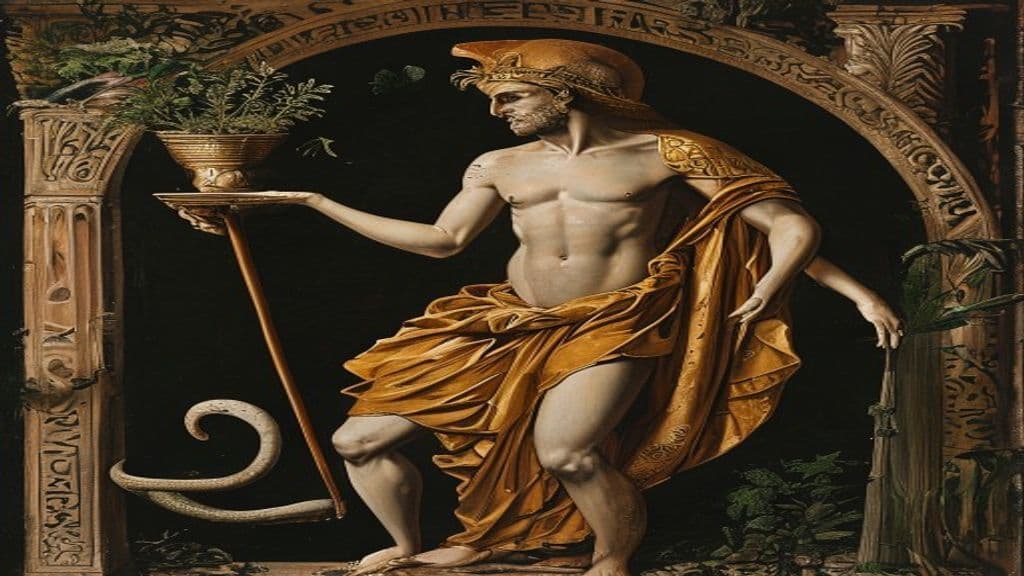
Aesculapius (Greek Asclepius) is the classical divine-hero of medicine and healing in ancient Greek religion and later Roman cult. He functioned as the patron and legitimating divine figure for temples, attendants (therapeutae), and organized healing practices; his emblem, the rod of Asclepius (a snake-entwined staff), endures as a symbol of medicine.

Aesepus
Ancient

Aesepus

Aesepus is the personified river-god (potamos) of the Aesepus River in the Troad / northern Mysia of Anatolia. Attested in Hesiod's catalogue of river-children and in Homeric and geographic passages, Aesepus functions primarily as a topographical divine ancestor and eponym for a town and local genealogies.

Aesimus
Lesser

Aesimus

Aesimus is a mortal figure in Greek mythic genealogy, primarily attested as the father of Sinon, the Trojan-war deceiver. He appears only in brief genealogical notices and a few poetic fragments; no independent myths, cult, or supernatural powers are recorded for him in the supplied sources.

Aeson
Lesser

Aeson

Aeson (Ancient Greek: Αἴσων) is a legendary mortal king of Iolcus in Thessaly in Greek myth, best known as the father of the hero Jason. His fate—imprisonment by his half-brother Pelias and either suicide or a miraculous restoration performed by Medea—provides the dynastic and moral background for the Argonautic cycle.

Aethalides
Lesser

Aethalides

Aethalides is a personal name borne by two distinct figures in ancient Greek myth: one listed among the Argonauts as a son of Hermes and Eupolemeia, and another named among the Tyrrhenian sailors who attempted to deceive Dionysus and was transformed into a dolphin. The sources treat Aethalides as named human mythic personages appearing in separate narrative contexts rather than as a class of supernatural being.

Aether
Primordial

Aether

Aether is the personified bright upper sky in ancient Greek myth and a primordial cosmic principle. Treated both as the luminous upper atmosphere and as a divine being, Aether appears in multiple cosmogonic genealogies (notably Hesiodic and Orphic traditions) as an early-born element that helps constitute the ordered cosmos.

Aethilla
Lesser

Aethilla

Aethilla (Αἴθιλλα / Αἴθυλλα), also spelled Aethylla, is a mythic Trojan princess in Greek and Roman legendary tradition. She is credited in several ancient-derived accounts with persuading captive women to set fire to the Greek ships after the fall of Troy, an act that produced local etiologies for place-names and forced settlement in various locales (Thrace, Italy, or Sicily) rather than any supernatural office or power.

Aethiolas
Lesser

Aethiolas

Aethiolas (Aithiolas) is a figure from Greek mytho-historical tradition described as a Spartan prince, commonly listed as a son of King Menelaus and in some accounts son of Helen or of an unnamed concubine. He and his brother Nicostratus are recorded in secondary sources as receiving cult worship from the Lacedaemonians.

Aethlius
Ancient

Aethlius

Aethlius (Ancient Greek: Ἀέθλιος) is a legendary founding king of Elis in Greek tradition. Attested in genealogical and foundation narratives, he functions as an eponymic ancestor and dynastic progenitor whose line held ritual and political roles in Elis; some accounts also connect his name etymologically to athletic competition.

Aethon
Minor Spirit

Aethon

Aethon (Ancient Greek aithōn) is an epithet meaning 'burning', 'blazing' or 'shining' used across classical Greek literature to describe animals (especially horses), some other animals, and occasionally humans. In the provided sources it functions as a descriptive name applied in poetry and myth rather than as a single, individuated supernatural being; the term is also reused in modern taxonomy and cultural titles.

Aethra
Lesser

Aethra

Aethra (Ancient Greek: Αἴθρα, romanized Aithra, lit. 'bright sky') is a name borne by multiple women in Greek myth, most prominently a princess of Troezen who is mother of the hero Theseus. In some traditions an Aethra is also listed among Oceanids, indicating a separate, water‑nymph identity in certain genealogies.

Aetnaeus
Minor Spirit

Aetnaeus

An epithet associated with gods and mythical beings connected to Mount Etna. (Note: - Power tier: Primordial (due to association with major gods like Zeus) - Weaknesses: Needs to be filled - Wards: Needs to be filled - Sensory cues: Needs to be filled - The summary should be revised )

Aetolus
Lesser

Aetolus

Aetolus (Ancient Greek: Αἰτωλός, Aitolos) is a figure in Greek legendary genealogy described as a son of Endymion and an eponymous ancestor of the region called Aetolia. He appears in traditions that explain regional origins and sequences of local kingship, notably in genealogies connected with Elis and the foundation/ethnogenesis of Aetolia.

Aetolus of Aetolia
Lesser

Aetolus of Aetolia

Aetolus (Greek: Aἰτωλός) is a mythic ancestral figure in Greek genealogical tradition, presented as a son of Endymion and member of the ruling dynasty that explains origins and succession in Elis, Calydon, and Aetolia. He functions as a mortal culture-hero/founder within origin myths rather than as a supernatural monster or daimon.

Aex
Lesser

Aex

Aex (also rendered Aix) is a name attested in fragmentary Greek mythic traditions with at least three different identifications: a nurse of the infant Zeus later said (in a Hyginus-derived summary) to have been changed into a constellation; an Arcadian epimelid or 'nanny-goat' nymph said to have borne the goat-associated son Aegipan; and a goatish primeval figure called Gorgô Aix ('Terrible Goat') described in a source-summary as slain by Zeus at the start of the Titanomachy. These attestations are brief and inconsistent across sources.

Aeëtes
Lesser

Aeëtes

Aeëtes is a mythic, semi-divine king of Aea (identified with Colchis) in the Greek heroic tradition, son of Helios and the Oceanid Perseis. He is guardian of wondrous objects—most famously the Golden Fleece—and functions as a royal task-master whose demands and possessions test visiting heroes (notably Jason and the Argonauts).

Agamede
Lesser

Agamede

Agamede (Ancient Greek Ἀγαμήδη) is a name applied to several mythic women in Greek literary and geographic tradition: a Homeric healer versed in the powers of plants, a Hellenistic-era sorceress-figure associated with pharmakeia, and an eponymous ancestral woman linked to a town on Lesbos. Sources present her variously as a practical herbalist, a literary sorceress archetype, and a local founding figure.

Agamemnon
Lesser

Agamemnon

Agamemnon is the legendary king of Mycenae (or Argos), head of the House of Atreus, and commander of the Achaean forces at Troy in Greek epic and tragedy. His story links dynastic guilt, ritual obligation, and political authority, culminating in the sacrifice-at-Aulis episode and his murder on return from Troy followed by juridical atonement in the Oresteia.

Aganippe (naiad)
Lesser

Aganippe (naiad)

Aganippe is the local Naiad of the spring called Aganippe at the base of Mount Helicon in Boeotia. The spring and its nymph are traditionally associated with the Muses and with poetic inspiration; the name Aganippe is also used as an epithet in other, sometimes divergent, local mythic or cultic contexts.

Agapenor
Lesser

Agapenor

Agapenor (Ancient Greek: Ἀγαπήνωρ) is a legendary Arcadian leader in the Greek heroic-age tradition: commander of Arcadian contingents at Troy, participant in Trojan-cycle episodes (including the Trojan Horse and funeral games), and, in later tradition, shipwrecked on Cyprus and credited with founding New Paphos. He is presented as a mortal king and genealogical ancestor rather than a supernatural being.

Agapius of Athens
Lesser

Agapius of Athens

Agapius (Greek: Ἀγάπιος; c. 460 – after 511) is recorded in late antique sources as a learned Neoplatonic philosopher of Athens who lectured on Plato and Aristotle and as, in some traditions, a physician who worked in Alexandria and later Constantinople. The evidence is fragmentary and transmitted through later epitomes (notably Damascius via Photius and the Suda) and a report by John Lydus.

Agaptolemus
Greater

Agaptolemus

Agaptolemus (Ancient Greek: Ἀγαπτόλεμος) is a mythic Greek prince, one of the fifty sons of King Aegyptus, best known as the husband of the Danaid Pirene who, like most of the Danaids, slew her husband on their wedding night at the command of her father Danaus.

Agasthenes
Lesser

Agasthenes

Agasthenes (Ancient Greek: Ἀγασθένης) is a mytho-historical king of Elis in Greek tradition, presented in surviving sources as the son and successor of Augeas and the father of Polyxenus. He functions as a dynastic link in Elean king-lists that connect local rulership to wider heroic-age events such as the Trojan War.

Agathos Daimon (Agathodaemon)
Lesser

Agathos Daimon (Agathodaemon)

A beneficent household and civic daemon attested in classical Greek and Graeco‑Egyptian religion. In domestic Greece it is a household spirit honored with post‑meal libations; in Ptolemaic Alexandria it appears prominently in serpentine civic and household forms and is syncretised with various Egyptian protective and fate deities in late antiquity.

Agave
Lesser

Agave

Agave (Ancient Greek: Agaue/Agaúē) is a personal name borne by at least two distinct figures in Greek myth: a Nereid (one of the fifty sea-nymph daughters of Nereus) and a Theban princess, daughter of Cadmus, who appears in myths connected with Dionysus. The name is glossed in Greek sources as 'illustrious', 'noble', or 'high-born'.