Literary and Fictional Supernatural Beings

717 documented Literary and Fictional supernatural beings from the Evil Eye grimoire, including 329 lesser and 185 greater in power tier.

page 8 of 12

Elendil
Lesser

Elendil

Elendil is a human Númenórean leader in J. R. R. Tolkien’s legendarium: a refugee of Númenor who founded the northern realm of Arnor, led the Faithful, and fought in the Last Alliance against Sauron. He is remembered as a dynastic founder whose proclamation and heirlooms shaped later kingship in Middle-earth.
Elloe Kaifi
Lesser

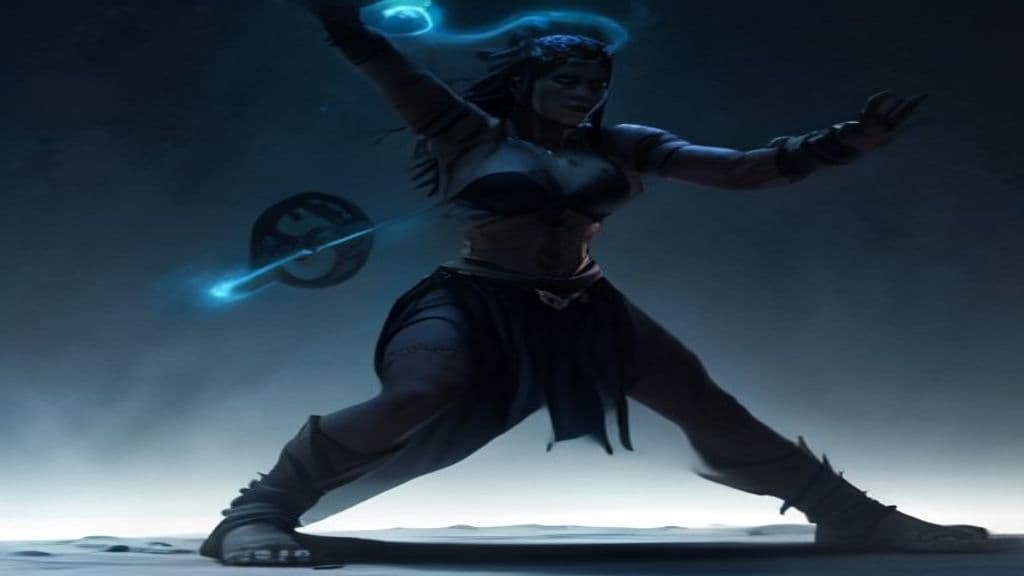
Elloe Kaifi

Elloe Kaifi is a Sakaarian noble-turned-gladiator in Marvel Comics who becomes a pledged member of the Warbound alongside the Hulk. Her arc spans Planet Hulk and World War Hulk storylines in which she pursues revenge against the Red King and later accompanies the Warbound to Earth.
Elphaba Thropp
Lesser

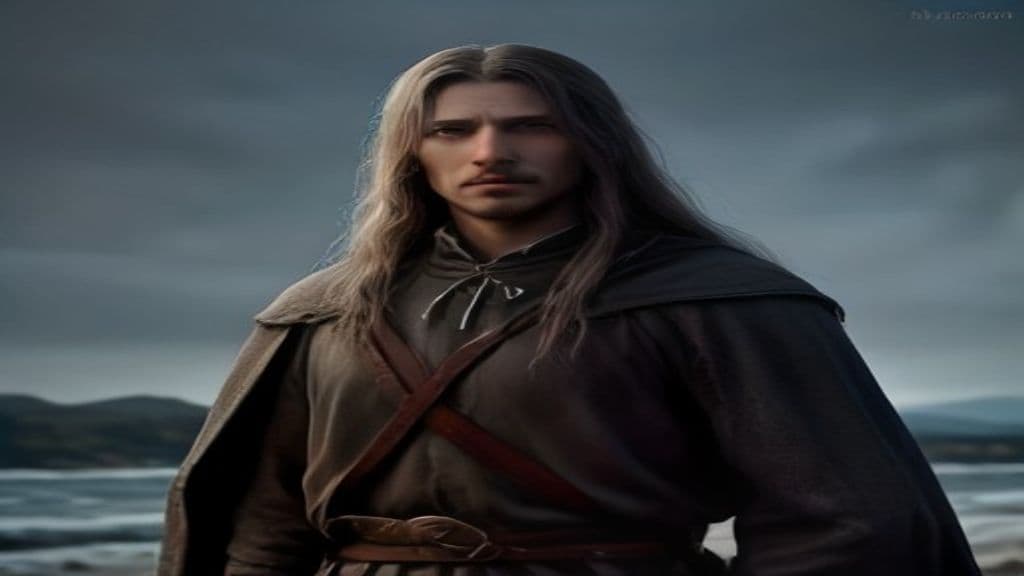
Elphaba Thropp

Elphaba Thropp is a fictional human character created by Gregory Maguire as a revisionist reinterpretation of Baum's Wicked Witch of the West. In Maguire's Oz she functions both as a political actor—opposing the Wizard's regime—and as a legendary figure whose life and reputed witchcraft enter the internal folklore of that secondary world.

Elric of Melniboné
Greater

Elric of Melniboné

Elric of Melniboné is a fictional literary protagonist created by Michael Moorcock: the albino, sorcerer‑emperor of the decaying island realm Melniboné (Imrryr), wielder of the soul‑feeding sword Stormbringer and a manifestion/facet of Moorcock's Eternal Champion theme in later treatments.

Elrond
Ancient

Elrond

Elrond is a named fictional individual in J. R. R. Tolkien's Middle-earth legendarium: a Peredhil ('Half-elven') who served as master of Rivendell (Imladris), bearer of the Elven ring Vilya, counselor and refuge-giver across the Second and Third Ages, and a figure bridging the great ages of Tolkien's world.

Elua and His Companions
Ancient

Elua and His Companions

Elua and His Companions are divine and semi-divine figures within the fictional religion of Jacqueline Carey’s Kushiel’s Legacy, functioning as central mythic personages in the series’ alternate-medieval Western European setting.

Elves (Middle-earth)
Primordial

Elves (Middle-earth)

In J. R. R. Tolkien's legendarium, the Elves are the Firstborn of Ilúvatar, a prime pre‑human race whose lives are long and whose spiritual destiny differs from Men. They dwell in Middle‑earth and in the Undying Lands of Valinor; slain Elves' spirits go to the Halls of Mandos in Aman, and many eventually yearn to sail from the Grey Havens to Valinor.

Elyan the White
Lesser

Elyan the White

Elyan the White is a human knight of Arthurian legend attested in the medieval prose romances of the Lancelot‑Grail (Vulgate) and Post‑Vulgate cycles (and in the Prose Tristan). He is presented as the son of Bors the Younger, a member of the Round Table, a loyal kinsman of Lancelot, and a martial participant in episodes such as the rescue of Guinevere and Lancelot's exile; one Vulgate strand prophesies he will become Emperor of Constantinople.

Emma Frost
Greater

Emma Frost

Emma Frost is a fictional human mutant character from American comic books published by Marvel Comics, depicted as a high-level telepath who can transform into an organic diamond form. Introduced in 1980, she has appeared as both antagonist (notably the Hellfire Club's "White Queen") and later as a central member and leader of the X-Men.

Ent
Greater

Ent

An Ent is a fictional, tree-like, sentient humanoid from J. R. R. Tolkien's Middle-earth who serve as ancient 'Shepherds of the Trees', guarding forests and vegetation and reacting when those they tend are harmed.

Epigoni
Lesser

Epigoni

A mythic generation in Greek tradition comprising the sons (progeny) of the Argive heroes who fought in the first war against Thebes; they mount a second expedition against Thebes ten years after their fathers and function in the Theban epic cycle as heirs who avenge and continue their fathers' deeds.

Erebos (Erebus)
Primordial

Erebos (Erebus)

Erebos (also Erebus) is the primordial personification of darkness in ancient Greek cosmogony. Presented primarily as an elemental divine principle and progenitor in origin myths, Erebos appears in varied genealogies (Hesiodic, Orphic, and Roman summaries) as an early ancestor from whom other personified forces arise.

Erechtheus
Ancient

Erechtheus

Erechtheus is a mythic-heroic foundational figure of ancient Athens whose identity blends an autochthonous, earth-born ancestor-king with a localized cultic name often syncretized with Poseidon; he functions as eponymous progenitor of the Erechtheidai and as the focus of ritual memory on the Acropolis (the Erechtheion).

Erekosë
Greater

Erekosë

Erekosë is a recurring fictional identity — one incarnation of Michael Moorcock's Eternal Champion — presented in the novel The Eternal Champion as the name given to the incarnation John Daker. The figure represents the archetypal Champion who is repeatedly reborn across Moorcock's Multiverse and is drawn into large metaphysical conflicts between cosmic forces (Law, Chaos, later Balance).

Ereuthalion
Lesser

Ereuthalion

A mortal Arcadian champion in Homeric epic, notable for wearing the famed armour of Areithous and for being remembered by Nestor as the greatest opponent he once slew. Appears in Iliadic reminiscence of Bronze Age heroic combat and in later scholia with variant accounts.

Eridanos / Eridanus
Lesser

Eridanos / Eridanus

Eridanos (Latin Eridanus) is a name attested across multiple domains — a river and river-god mentioned in ancient Greek poetry, a southern constellation in astronomy, a geological palaeoriver in northern Europe, and a recurring place-name in modern fiction and music. The supplied sources do not support a single, coherent folkloric supernatural entity under this name; instead the name functions as a toponym applied to waterways, a star-pattern, and various fictional locales.

Ermac
Greater

Ermac

Ermac is a fictional character from the Mortal Kombat video game franchise, presented in‑universe as an amalgam of the souls of deceased warriors who serves as a supernatural combatant. The character originated from a developers' diagnostics label and fan rumor which the franchise later incorporated into official canon; Ermac is noted for a red ninja appearance and telekinetic powers.

Eros
Primordial

Eros

Eros (Ancient Greek: Ἔρως) is a Greek divine figure associated with love and sexual desire. In Greek sources he appears in two primary registers: as a primordial generative principle in early/Orphic cosmogonies and as a younger deity—often called the son of Aphrodite—who causes desire among gods and mortals.

Eteriani
Primordial

Eteriani

A Georgian folk epic romance and cultural phenomenon, featuring themes of love, heroism, and chivalry in its oral prose and poetry. (Note: 1. The summary is accurate. 2. Power tier should be Ancient (deity-level) rather than Primordial (cosmic), as Eteriani is a cultural phenomenon tied to human history and not a cosmic entity. 3. Sensor)

Eternal Champion
Greater

Eternal Champion

A recurring archetypal hero created by Michael Moorcock who appears as many incarnations across a fictional Multiverse to maintain a metaphysical Balance between the forces of Law and Chaos. The Eternal Champion is described as different facets or incarnations of a single semi‑conscious archetype rather than a single individual.

Etrigan the Demon
Greater

Etrigan the Demon

A fictional infernal being from the DC Comics cosmology: a Hell-origin demon bound to the human Jason Blood by the wizard Merlin. Portrayed as a powerful, rhyming-speaking infernal warrior who alternately opposes and allies with Earth's heroes and participates in conflicts within Hell's hierarchy.

Euboeus
Lesser

Euboeus

Euboeus is not a folkloric supernatural being but a name attested in two distinct contexts in the supplied sources: (1) a Linnaean genus of Palaearctic darkling beetles (Euboeus Boieldieu, 1865) and (2) a fragmentary classical author, a comic/parodist poet (presumably Euboeus of Paros, fl. c. 359–336 BC) known from scant citations. No traditional myths, rituals, or cosmological roles attaching supernatural agency to the name are recorded in the provided material.

Eudaf Hen
Lesser

Eudaf Hen

Eudaf Hen (Eudaf "the Old") is a legendary dynastic figure in medieval Welsh and Breton literature, remembered as a king of the Britons and an ancestral founder used in royal and saintly genealogies. He appears in narrative sources (notably The Dream of Macsen Wledig and Geoffrey of Monmouth's Historia) and in various pedigrees where his identity organizes claims to rulership, descent, and regional foundation (including links to Brittany).

Eumolpus
Lesser

Eumolpus

Eumolpus is a legendary Greek culture-hero and priest associated with Demeter and the founding of the Eleusinian Mysteries; he is remembered as a singer, ritual teacher, and sometimes as a Thracian leader in conflict with Athens. Later Roman literature repurposes his name as a poetic persona in satire.

Eupeithes
Lesser

Eupeithes

Eupeithes is a mortal figure from Greek myth, known as the father of Antinous, one of the principal suitors of Penelope in the Odyssey cycle. After Antinous is killed by Odysseus, Eupeithes leads a revolt seeking vengeance and is slain by Laertes. The name Eupeithes is also used in modern taxonomic databases as the label of a genus of insects, but that is a separate, scientific namesake.

Eurycleia
Minor Spirit

Eurycleia

Eurycleia is a mortal household nurse and longtime attendant in the Homeric tradition, famed as the wet-nurse of Odysseus and a trusted domestic figure who recognizes Odysseus on his return by a scar and keeps his secret. She functions as an intimate caregiver, keeper of household memory, and an agent of domestic authority within Odysseus's household in Ithaca.

Eurydice
Lesser

Eurydice

In Greek myth, Eurydice (Ancient Greek: Εὐρυδίκη) is the wife of the poet‑musician Orpheus whose death by a viper and conditional retrieval from Hades frames themes of love, loss, and the limits of reversing death. She is treated in the literature as an individuated mortal figure associated with the boundary between life and the underworld rather than a recurring spirit type.
Eurythemis
Minor Spirit

Eurythemis

Eurythemis is a name borne by one or more mortal women in ancient Greek mythic genealogies. The figures called Eurythemis function primarily as wives and mothers who link generations of heroes and royal houses (notably as wife of Thestius and mother of Althaea and Leda in one tradition); the attestations are genealogical rather than mythic-heroic or cultic.

Eurytus
Lesser

Eurytus

Eurytus is a Greek personal name borne by multiple distinct figures in ancient traditions: at least one Giant (a son of Gaia), a centaur present at the wedding of Pirithous and Hippodamia, several mortal kings (including a king of Oechalia and a king of Caria), and a historical Pythagorean philosopher from Magna Graecia. The name therefore appears across cosmological, heroic, local-political, and intellectual registers rather than referring to a single coherent supernatural being.

Eva (Devil May Cry) (tradition)
Lesser

Eva (Devil May Cry) (tradition)

The supplied sources only attest to the existence of the name "Eva" and list an item "Eva (Devil May Cry)" on a disambiguation page; they do not provide any folkloric, in-universe, or supernatural information about an entity called Eva from the Devil May Cry series. No origin, description, abilities, rituals, or cultural role are recorded in the provided materials.

Evenor
Lesser

Evenor

In the primary classical attestations Evenor (Ancient Greek Εὐήνωρ/Euenor) is an autochthonous human figure presented in Plato's account of Atlantis as the father of Cleito and ancestor of the Atlantean royal line. The name also appears for several unrelated historical and mythic individuals (warriors, a painter, a surgeon) and has been reused in modern fiction as an elevated Atlantean figure.

Evil clown
Lesser

Evil clown

A modern pop‑culture archetype and horror trope that inverts the traditional comic clown into a disturbing, threatening, or malevolent figure. It functions across literature, film, comics, media scares, and occasional real‑world associations rather than as a traditional supernatural being.

Exadius
Lesser

Exadius

Exadius (Ancient Greek: Ἐξάδιος) is a mortal Lapith warrior named in Greek myth who took part in the Centauromachy at the wedding of Pirithous and Hippodamia. In the surviving account he seizes a votive stag's double antler from a pine and uses it to pierce and gouge out the eyes of the centaur Gryneus.

Eärendil and Elwing
Greater

Eärendil and Elwing

Eärendil and Elwing are narrative personages from J. R. R. Tolkien’s Middle‑earth legendarium (primarily The Silmarillion). They are Half‑elven descendants of notable lines of Elves and Men whose joint voyage to Valinor and subsequent fate—Eärendil set among the stars as a celestial mariner, Elwing briefly given the likeness of a great white bird—serve as a pivotal cosmological turning point in the legendarium.

Falhófnir
Lesser

Falhófnir

Falhófnir is a named horse in Old Norse sources listed among the steeds ridden by the Æsir when they go to make judgments at Yggdrasil. The name is glossed as "pale-hoofed" or "the one with the fallow hooves," but the surviving sources preserve only roster-like attestations rather than a narrative or cultic role.

Faramir
Lesser

Faramir

Faramir is a fictional human noble of J. R. R. Tolkien's legendarium: younger son of Denethor II, brother of Boromir, captain of Gondor who commands forces in the War of the Ring, later Steward under King Aragorn. He is notable for resisting the temptation of the One Ring and for being healed by Aragorn with athelas in the Houses of Healing.

Farshidvard
Minor Spirit

Farshidvard

Farshidvard is a human literary character in Ferdowsi’s Shahnameh who appears in the Davāzdah Rokh episode as a Turanian combatant. In an illustrated episode he flees the agreed combat and is slain by the Iranian warrior Gustaham (Gushtaham).

Faust
Lesser

Faust

Faust is the human protagonist of a long-standing German legend, based on a probable historical figure (Johann Georg Faust, c. 1480–1540), whose central motif is making a pact with an infernal representative (commonly named Mephistopheles) at a crossroads to exchange his soul for unlimited knowledge and worldly pleasures. The figure functions as a moral and literary archetype warning against preferring human/occult knowledge and worldly gain over divine order; later usages yield the adjective “Faustian.”

Feirefiz
Lesser

Feirefiz

Feirefiz is a human knight-character in Wolfram von Eschenbach’s medieval Arthurian poem Parzival. Son of Gahmuret and the Moorish queen Belacane, he appears as Parzival’s half-brother and equals him in knightly skill; within Wolfram’s narrative he is a non-Christian noble who must undergo baptism to participate fully in the Grail community.

Fin Fang Foom
Greater

Fin Fang Foom

Fin Fang Foom is a Marvel Comics extraterrestrial dragon-like monster (a Makluan) created by Stan Lee and Jack Kirby. In-universe he is an alien of great size and power who arrived on ancient Earth, has been awakened and contained multiple times, and whose portrayals range from invader/weapon to a reformed/rehabilitated being.

Fingolfin
Greater

Fingolfin

Fingolfin is a named Elven king of the Noldor in J. R. R. Tolkien's legendarium. Son of Finwë, he led the greatest host of the Noldor that fled Aman, became High King of the Noldor in Middle-earth after Maedhros renounced his claim, maintained a long siege of Angband, and finally rode alone to challenge Morgoth, wounding him before being slain.

Finwë and Míriel
Ancient

Finwë and Míriel

Principal Elven figures in J. R. R. Tolkien's legendarium: Finwë, first King of the Noldor, and his first wife Míriel, famed for creative craft. Their personal choices — Míriel's voluntary relinquishment of embodied life and Finwë's remarriage and later murder — provoke adjudication by the Valar and have far-reaching legal and historical consequences in the history of the Eldar.

Fir Bolg
Lesser

Fir Bolg

In medieval Irish myth the Fir Bolg are presented as a people — the fourth group to settle and rule Ireland in the traditional sequence of successive populations; in modern fantasy they have been re‑appropriated as a race of large, forest‑dwelling humanoids (often rendered 'Firbolg') in role‑playing games.

Flash Thompson
Lesser

Flash Thompson

Eugene "Flash" Thompson is a fictional human character from American comic books published by Marvel Comics. Introduced as a star high-school football player and bully of Peter Parker, he later serves in the U.S. Army, loses both legs in the Iraq War, and becomes host to the alien Venom symbiote, operating for a time as the costumed figure Agent Venom (and later Agent Anti‑Venom) in Marvel storylines.

Frankenstein (the creature / creation)
Lesser

Frankenstein (the creature / creation)

A sapient humanoid created by Victor Frankenstein in Mary Shelley's 1818 novel by assembling human remains and animating them through an unorthodox scientific experiment. In the original text the family name 'Frankenstein' refers to the creator, but cultural usage often applies the name to the created being itself.

Freedom Beast
Greater

Freedom Beast

Freedom Beast (Dominic Mndawe) is a fictional comic-book superhero published by DC Comics. A South African activist-turned-powered figure, he gains animal-themed abilities from an elixir and an ancient helmet and operates in narratives that link political resistance (apartheid-era origins) with animal protection and superheroic alliances.

Fëanor
Ancient

Fëanor

Fëanor is a singular fictional Elf of the Noldor in J. R. R. Tolkien's legendarium, famed as the foremost craftsman and leader whose creation of the Silmarils, and the oath he and his sons swore over them, precipitated exile, kinslaying, and long-lasting calamities among the Elves.

G'nort Esplanade G'neesmacher
Greater

G'nort Esplanade G'neesmacher

G'nort is a fictional anthropomorphic-dog alien from DC Comics who served at times as a Green Lantern and a Darkstar and has appeared as a comic-relief but valorous supporting character across multiple storylines. Created by Keith Giffen and J. M. DeMatteis, he first appeared in Justice League International #10 (February 1988) and recurs in tales involving Corps-level conflicts and Justice League teams.

Galadriel
Ancient

Galadriel

Galadriel is a fictional Elven ruler in J. R. R. Tolkien's legendarium: a royal Elf of both the Noldor and the Teleri, famed as the 'mightiest and fairest of all the Elves that remained in Middle-earth.' She appears across the First, Second, and Third Ages as a leader of her people, keeper of one of the Three Rings (Nenya), and a moral tester confronted with the temptation of the One Ring.

Gandalf
Greater

Gandalf

Gandalf is a central protagonist in J. R. R. Tolkien's legendarium (The Hobbit; The Lord of the Rings). Within that fictional cosmology he is one of the Istari — incarnated Maiar spirits — sent to Middle-earth to oppose Sauron; he functions primarily as a guiding counselor who also acts directly in exceptional combat or magical need and bears the Elven Ring Narya.

Ganthet
Ancient

Ganthet

Ganthet is one of the Guardians of the Universe, an ancient, non‑human member of the custodial order that founded and manages the Green Lantern Corps and its power system. Unlike many Guardians, he is repeatedly depicted as emotionally open and empathetic, acting as mentor, technician, and occasional dissident (notably co‑founding the Blue Lantern Corps with Sayd and at times renouncing or being separated from full Guardian rank).

Gareth
Minor Spirit

Gareth

Gareth is a literary knight of King Arthur's Round Table, traditionally presented as a younger son of King Lot and nephew of King Arthur. In medieval Arthurian romances (notably Thomas Malory's Le Morte d'Arthur and continental Vulgate/Post-Vulgate material) he functions as an exemplar of chivalric virtues—humility, martial skill, generosity—and as a narrative figure whose death helps precipitate the collapse of Arthur's realm.

Garokk
Greater

Garokk

Garokk is a long-lived, apotheosized figure of the Savage Land in Marvel Comics: a petrified, stone-like being worshipped by the Sun People who has exhibited matter-and-energy-altering powers, near-immortality, and periodic resurrections across multiple storylines.

Gegant Negre (Cervera)
Lesser

Gegant Negre (Cervera)

The name "Gegant Negre (Cervera)" combines Catalan elements meaning "Black Giant" and a toponym (Cervera), but the supplied sources do not document a coherent traditional supernatural being by that exact name. Available evidence shows the "gegant" motif appearing in contemporary Catalan-language literary and science‑fiction texts as a poetic or apocalyptic image rather than as an ethnographic, ritualized entity tied to Cervera.

General Ironfist
Lesser

General Ironfist

“General Ironfist” is not a single folkloric or mythic being but a recurring modern fictional epithet or proper name applied to disparate martial characters across games, pulp fiction, comics, and novels. The label signals martial authority, toughness, or fighting prowess in English-language popular media rather than a unified supernatural tradition.

Genevieve of Brabant
Lesser

Genevieve of Brabant

Genevieve of Brabant (Genoveva, Genoveffa) is a legendary/hagiographic medieval European heroine: a chaste wife falsely accused of adultery who survives execution, lives in exile with her child nourished by a roe deer, and is later vindicated and restored to honour. The tale functions as a moral exemplum and became popular in early modern drama, opera and puppet theatre.

Geryon
Greater

Geryon

Geryon is a monstrous, martial figure from Greek heroic-age mythology who dwells on the far-western island Erytheia and guards a valuable herd of red cattle; he is best known as the opponent slain by Heracles in the Tenth Labour. Classical sources present multiple, conflicting physical descriptions; later reception (notably Dante) recasts the name as an allegorical composite monster.

Ghost Rider
Greater

Ghost Rider

Ghost Rider is a Marvel Comics mantle borne by multiple human hosts who transform into a flaming-skulled, skeletal superhuman bonded to a supernatural agency variously described as a demon (Zarathos), a Spirit of Vengeance, or an incarnation of Death/Judgment. The figure functions in-universe as an avenger/antihero who enacts retributive justice and is associated with hellfire and a supernatural vehicle (motorcycle or, in some incarnations, a muscle car).

Ghoul
Lesser

Ghoul

A ghoul is a demon-like or monstrous humanoid originating in pre-Islamic Arabian religion, traditionally associated with graveyards and the consumption of human flesh. The concept later entered broader folklore and has been widely reused and transformed in modern fiction and popular culture.

Gideon Stargrave
Minor Spirit

Gideon Stargrave

Gideon Stargrave is a fictional comics character created by Grant Morrison in 1978 who functions as a pulp‑style 1970s spy archetype and as a metafictional persona adopted by other characters (notably King Mob) within Morrison's The Invisibles. The character exists as a literary construct and metatextual device rather than a supernatural being.