Hubal is a deity in Arabian folklore, from Mecca (Hijaz, Arabian Peninsula). Hubal (هُبَل) is attested in medieval Islamic sources as a pre-Islamic Arabian cult image kept in the Kaʿba at Mecca, used for sacrificial offerings and for an oracular divination practice involving seven arrows. The statue is reported as made of a semi-precious stone in medieval accounts, with a broken right hand (in some reports replaced by a golden hand); it was destroyed when the Kaʿba’s images were broken during Muhammad’s conquest of Mecca (630 CE).
Medieval Islamic authors record traditions that the statue of Hubal stood inside the Kaʿba in Mecca and that it was set up in the shrine by a named early introducer in some reports (traditions variously name figures such as Amr ibn Luhayy or Khuzayma ibn Mudrika). Medieval accounts and later scholarship offer competing proposals about the statue’s provenance: al-Azraqi reports it came from the land of Hit in Mesopotamia; modern scholars have proposed northern-Arabian/Nabataean, Syrian, Moabite, or Mesopotamian connections. No single indigenous mythological genealogy is preserved in the supplied sources; the provenance and classificatory identity remain debated in the scholarship summarized by the medieval reports and modern commentators.
Medieval Islamic descriptions attest a human-shaped cult image. Ibn al-Kalbi describes the statue as made of red agate; al-Azraqi describes it as carnelian (variant readings in the sources). A repeatedly noted detail is that the statue’s right hand was broken and, in some accounts, replaced with a golden hand. Beyond 'human-shaped' and the material descriptors, the supplied sources do not preserve a consistent iconographic description or dress detail.
The surviving record presents Hubal primarily as a stationary cult image receiving offerings and serving an oracular function. The best-attested ritual ability is divination by means of seven arrows placed before the image and cast; the direction or outcome of the arrows was interpreted to answer questions (reported uses include questions about death, virginity, and marriage). The Kaʿba shrine to Hubal is also described as having a vault for sacrifice and receiving substantial offerings (one report records an offering of one hundred camels). The sources do not present Hubal as an independently mobile or narratively acting supernatural agent; broader powers (for example classification as a warrior or celestial deity) are suggested in modern scholarship but remain interpretive and contested in the provided materials.
Weaknesses
- conditiondestruction of the cult image (historical abolition during Muhammad's conquest of Mecca, 630 CE)
Wards
None recorded.
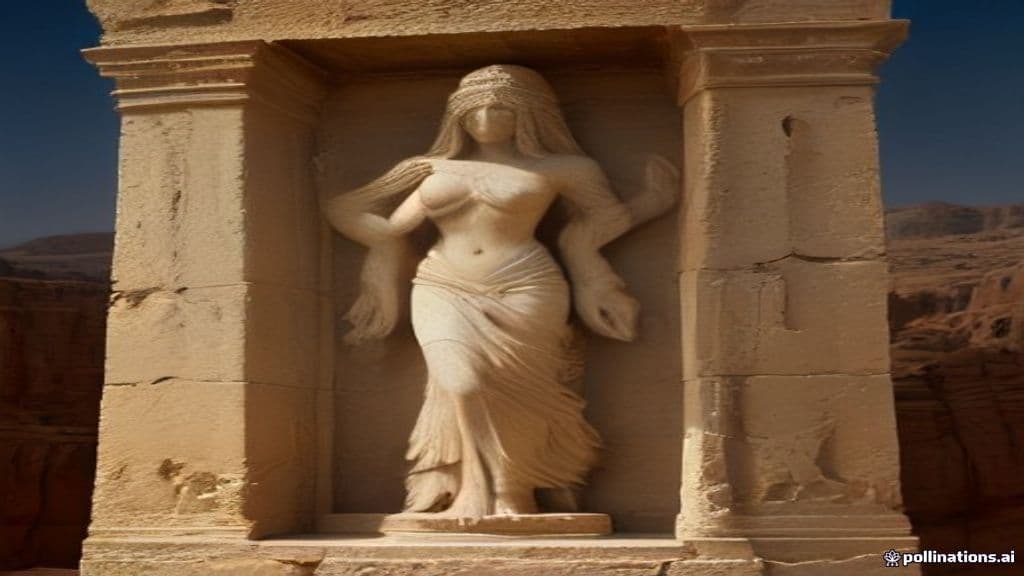
Dushara
Dushara is a principal pre-Islamic Nabataean deity, venerated as a city and mountain-linked patron god (notably of Petra and Hegra). Represented commonly by aniconic stone symbols, he was the focus of petitionary cult practice (notably animal sacrifice) and was syncretized by classical authors with Greco‑Roman gods.
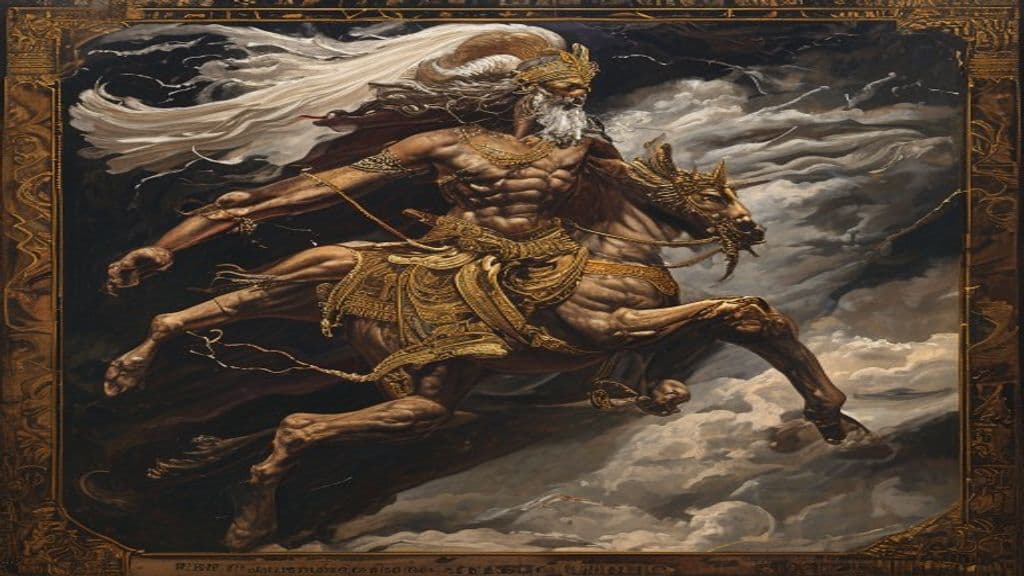
Baal
Baal (bāʿal) is a Northwest Semitic title meaning 'owner' or 'lord' that served as a theonym in the ancient Levant; in Ugaritic and Canaanite texts it appears as the name/title of a prominent storm and fertility god (often rendered Baʿal Haddu) who features centrally in the Baal Cycle and in regional cults tied to rain, fertility, and kingship. In later monotheistic literatures the term becomes a polemical label for rival or foreign deities and is reinterpreted in various receptions.
A'ra
No reliable sources in the supplied material establish A'ra as a distinct supernatural entity. The token "A'ra" appears in the dataset as (a) part of general references to pre-Islamic Arabian deities, (b) a modern Korean female given name (A-ra/아라), and (c) an Arabic toponym (A'ra, one village merged into Ar'ara).
Ababil
Ababil (Arabic: أبابيل, romanized abābīl) are miraculous birds mentioned in the Qur'anic account of Surah Al‑Fil. In Islamic tradition they appear as a divinely sent avian host that defended the Kaaba by pelting an invading army with small clay stones; tradition places the event in the year traditionally given as 570 CE.
Abadir
Abadir is a polysemous name attested in distinct cultural contexts: a legendary founding saint and clan ancestor in eastern Ethiopia (Sheikh Abadir Umar Al‑Rida / Aw Abadir), a term applied to cone‑shaped cult stones in Phoenician religious description, and a personal name of a martyr (Abadir/Apater) in the Coptic Synaxarium. The attestations are independent usages of the same name rather than a single supernatural being.
Abdul Qadir Gilani
A historical 11th–12th century Hanbali jurist, preacher, and Sufi shaykh who became the eponym and principal early figure of the Qadiriyya tariqa; venerated in Sunni Sufi traditions as an Awliya (saint) and often given exalted hagiographical ranks such as Muḥi al‑Dīn and Ghawth.
Abel
Abel is the second son of Adam and Eve in the Genesis narrative, a shepherd whose accepted offering and subsequent murder by his brother Cain form the biblical account of the first death. Later interpretive traditions expand his role, treating him as an archetypal righteous victim, a postmortem avenging or adjudicating figure, and in some systems (notably Mandaean) identifying him with an angelic lightbeing.
Abgal
Abgal (Arabic: أبغال) is a pre‑Islamic local tutelary figure attested in the Palmyrene cultural sphere (c. 154–270 AD), primarily venerated by nomadic Arab groups in the Syrian desert. He appears in inscriptions and reliefs as one of a constellation of armed, mounted protective deities associated with caravan and nomadic protection, though no ritual texts survive in the cited sources.
Abraham (Ibrāhīm) in Islam
Ibrāhīm (Abraham) in Islam is a human prophet and messenger chosen by God, a paradigm of pure monotheism (hanīf), patriarchal ancestor to later peoples and prophets, and traditionally regarded as having helped establish the Kaʿbah with his son Ismāʿīl. He is called Khalīl Allāh ('Friend of God') and is central to rites commemorated in Hajj and Eid al‑Adha.
Abī-simtī
Abī-simtī (also rendered Abi-simti, Abisimti) is a named woman attested in third-millennium BCE Mesopotamian documentary and literary texts. She appears in administrative account records as a provider of animals and donor to temple cults and in Sumerian love-song literature as the named beloved/consort addressed by a royal speaker.
Abū Lahab
Abū Lahab (ʿAbd al-ʿUzzā ibn ʿAbd al-Muṭṭalib) is a historical Meccan figure — a paternal uncle of the Prophet Muḥammad and a Quraysh leader who opposed the Prophet; he is singled out and condemned in Qurʾān 111 (Sūrat al-Masad) and functions in Islamic textual memory as an exemplar of divine punishment for opposition.
Acerbas
Acerbas (also recorded as Sychaeus, Sycharbas, Zacherbas) is a figure in classical Greco‑Roman accounts of Phoenician/Tyrian tradition: a wealthy priest of Melqart (the Tyrian Hercules) whose concealed riches and murder by King Pygmalion precipitate Elissa/Dido's flight from Tyre and the foundation of Carthage. He is presented as a human priestly figure of high social rank rather than as a supernatural being.
Adad
Adad (also Hadad, Haddad; Sumerian Iškur) is the storm- and rain-deity attested in ancient Mesopotamian and Canaanite religious contexts. Sources identify him as a principal weather god whose domain is storms and rainfall and whose name appears across multiple Near Eastern languages and sites, including Ebla (as Hadda, c. 2500 BCE).
Adam (ʾĀdam)
In Islamic theology Adam (Arabic: آدم, ʾĀdam) is presented as the first human being and the first prophet (nabī), created by God from earth/clay, granted life by God's spirit, placed in a paradisal Garden, taught knowledge (the "Names"), tested by divine command, tempted by Iblīs, and ultimately sent to live and die on Earth while remaining eligible for repentance and forgiveness.
Community Record
- [1]Hubal - Wikipedia. Wikipedia: 'Hubal' (summary of medieval authors Ibn al-Kalbi, al-Azraqi, and modern scholarly discussion)wiki
- [2]Wikidata: Hubal. Wikidata entry for Hubal (identifier Q289933); linked data recordother
- [3]Archive: Kenneth J. Hubal and Barbara D. Hubal. Archive item referenced in provided research list (not an academic source on the cult but included in supplied materials)other
- [4]Answering Islam: 'Hubal and Allah' (response). Modern polemical/analytical webpages included in the supplied materials discussing Hubal in relation to Islamic theology and polemicsother
- [5]WikiIslam: Hubal. Secondary online summary of medieval materials and modern interpretations included in the provided listother
- [6]Reviews in History (review mention). Scholarly review referenced in the provided materials list (contextual scholarly discussion)other