Arabian Supernatural Beings

58 documented Arabian supernatural beings from the Evil Eye grimoire, including 23 lesser and 12 ancient in power tier.

A'ra
Minor Spirit

A'ra

No reliable sources in the supplied material establish A'ra as a distinct supernatural entity. The token "A'ra" appears in the dataset as (a) part of general references to pre-Islamic Arabian deities, (b) a modern Korean female given name (A-ra/아라), and (c) an Arabic toponym (A'ra, one village merged into Ar'ara).

Abgal
Lesser

Abgal

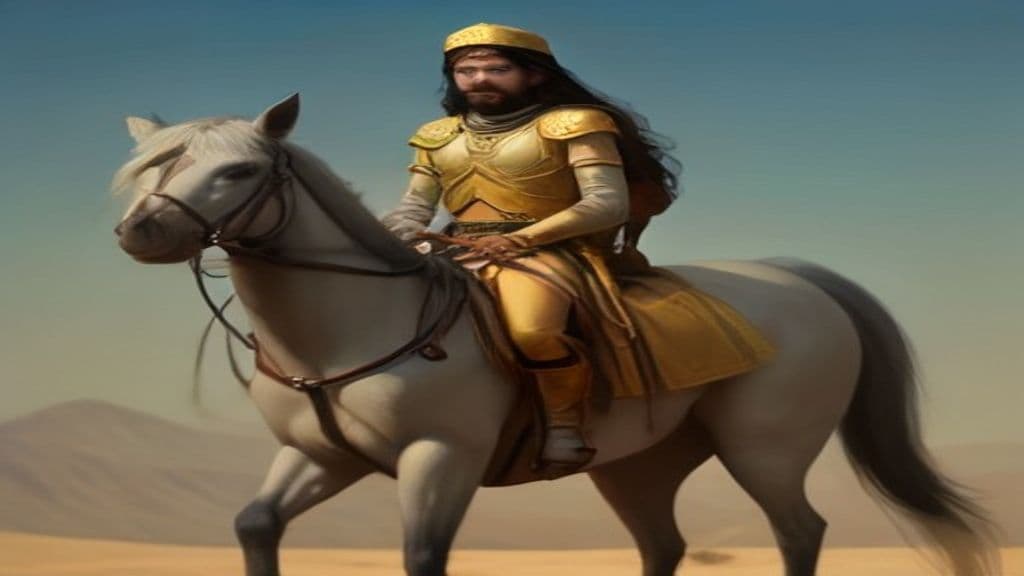
Abgal (Arabic: أبغال) is a pre‑Islamic local tutelary figure attested in the Palmyrene cultural sphere (c. 154–270 AD), primarily venerated by nomadic Arab groups in the Syrian desert. He appears in inscriptions and reliefs as one of a constellation of armed, mounted protective deities associated with caravan and nomadic protection, though no ritual texts survive in the cited sources.

Al-Abyad
Lesser

Al-Abyad

Al-Abyad (Arabic: al‑Abyad, "the White") appears in modern compilations and anecdotal references as a named jinn or epithet within Arabic/Islamic discourse on jinn. The corpus consists mainly of contemporary lists, forum posts, popular articles, and a polemical anecdote; no coherent classical origin myth or primary ritual tradition for Al-Abyad is attested in the supplied materials.

Al-Jānn
Ancient

Al-Jānn

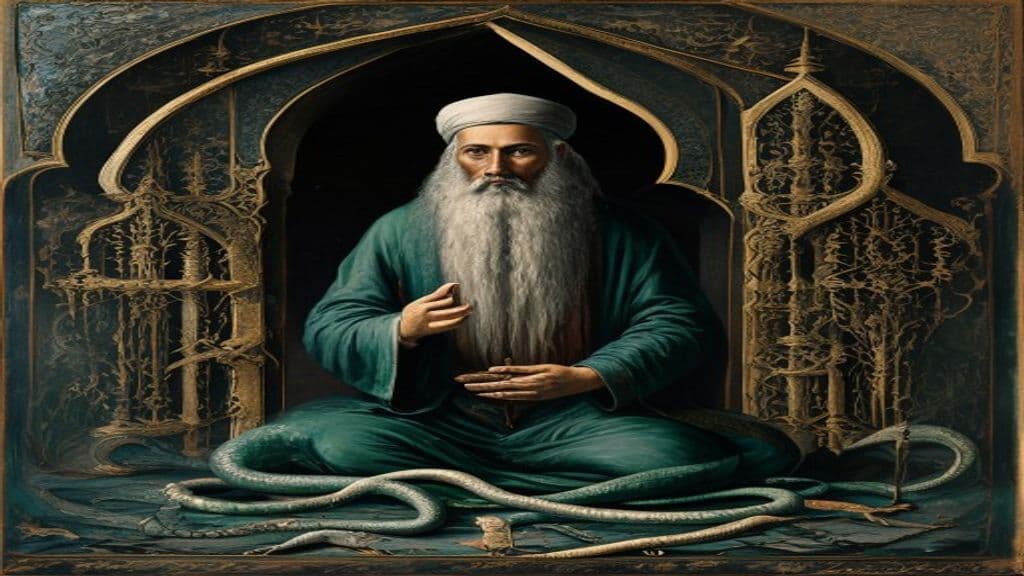
Al-Jānn (jann) is a pre-Adamite, ancestral category invoked in Arabic-Islamic exegetical, hadithic, mystical, and folkloric materials to designate an earlier class of sentient beings—progenitors of later jinn—said to be created of fire, to have once inhabited and sometimes ruled the earth, and to stand in a liminal ontological position between angels and humans.

Al-Kuz
Minor Spirit

Al-Kuz

Al-Kuz is not attested in the supplied corpus as a supernatural being; the name appears as the designation of an impact crater on Saturn's moon Enceladus and as the name of a literary character (one of the barber’s six brothers) in "The Hunchback's Tale" from The Book of One Thousand and One Nights.

Al-Mi'raj
Minor Spirit

Al-Mi'raj

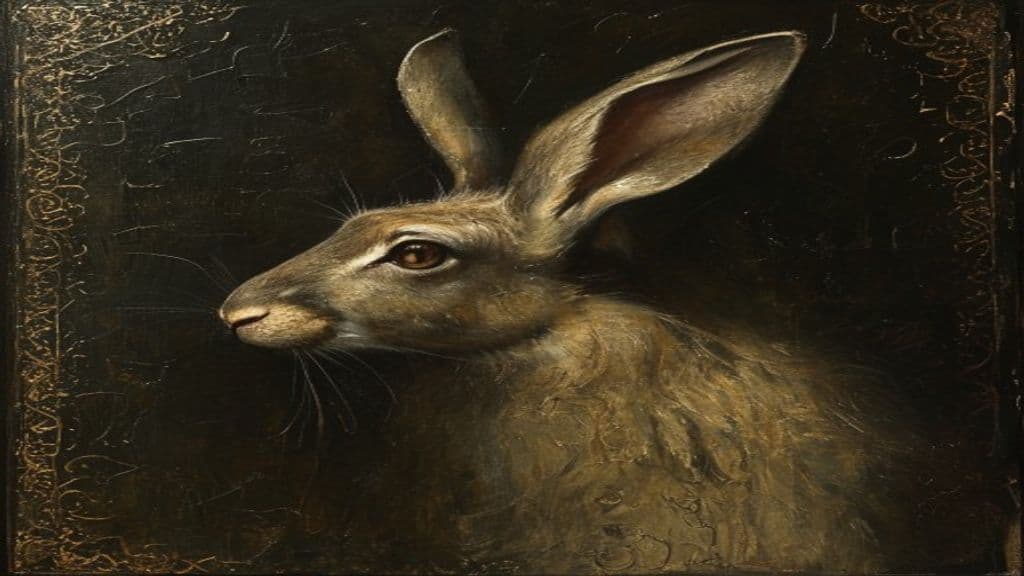
A mythical creature from medieval Arabic literature, described as a one-horned hare or rabbit. (Note: * Power tier: Given the lack of information on abilities and powers, it's too early to assign a power tier. However, considering its classification as a "mythical creature" in medieval Arabic literatu)

Al-ʻUzzā
Ancient

Al-ʻUzzā

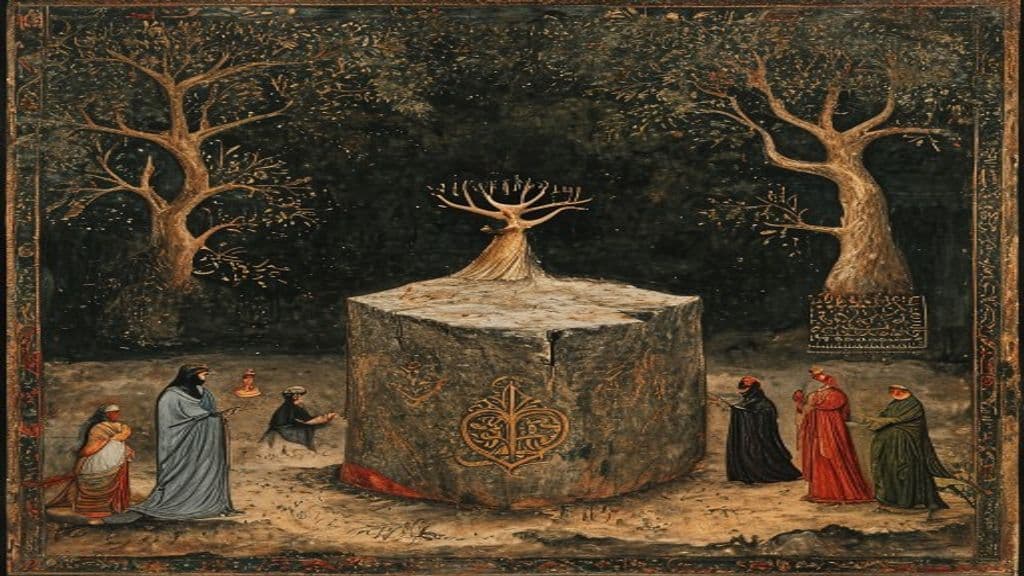
Al-ʻUzzā was a principal female deity of pre-Islamic Arabian religion, widely venerated by tribes such as the Quraysh. She formed a triad with al-Lāt and Manāt, had a prominent shrine at Nakhlah (near Mecca) with sacred trees and a stone cube, and was invoked for protection, intercession and oracular consultation in late medieval Islamic sources that record pre-Islamic cult practice.

Aladdin
Lesser

Aladdin

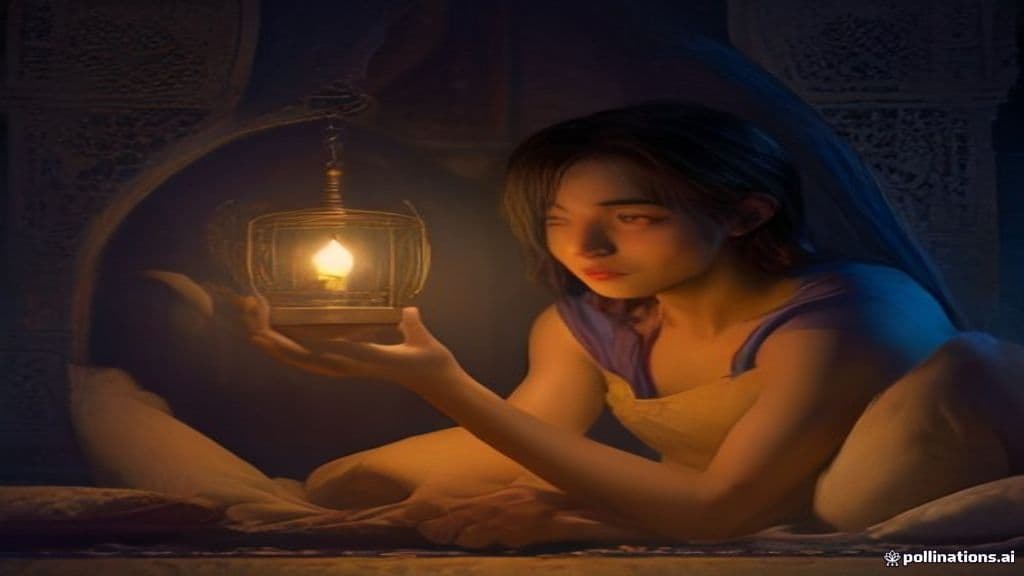
Aladdin is the human protagonist of a Middle Eastern folktale (ATU 561) who rises from poverty to wealth after acquiring a magical ring and a magical lamp that house spirit-agents. Although widely associated with The Thousand and One Nights, the tale entered that corpus via Antoine Galland from a story told by the Syrian storyteller Hanna Diyab rather than from the earliest Arabic Nights manuscripts.

Alexander the Great in Arabic tradition
Primordial

Alexander the Great in Arabic tradition

Legendary figure with divine authority, expanded empire from Greece to northwestern India. (Note: - Power tier: Change Primordial to Ancient (Alexander is a legendary figure with divine authority, but his abilities are not on a cosmic level) - Abilities: Add that Alexander's ability to inspire loy)

Allah
Primordial

Allah

Allah is the Arabic-language term for the singular monotheistic God of the Abrahamic tradition as used in Islamic theology and by Arabic-speaking Jews and Christians. Linguistically related to other West Semitic divine names, the term in Islamic usage functions as God's unique proper name (Lafẓ al-Jalālah) and denotes the transcendent creator and sovereign of the universe.

Allat (Al-Lat)
Ancient

Allat (Al-Lat)

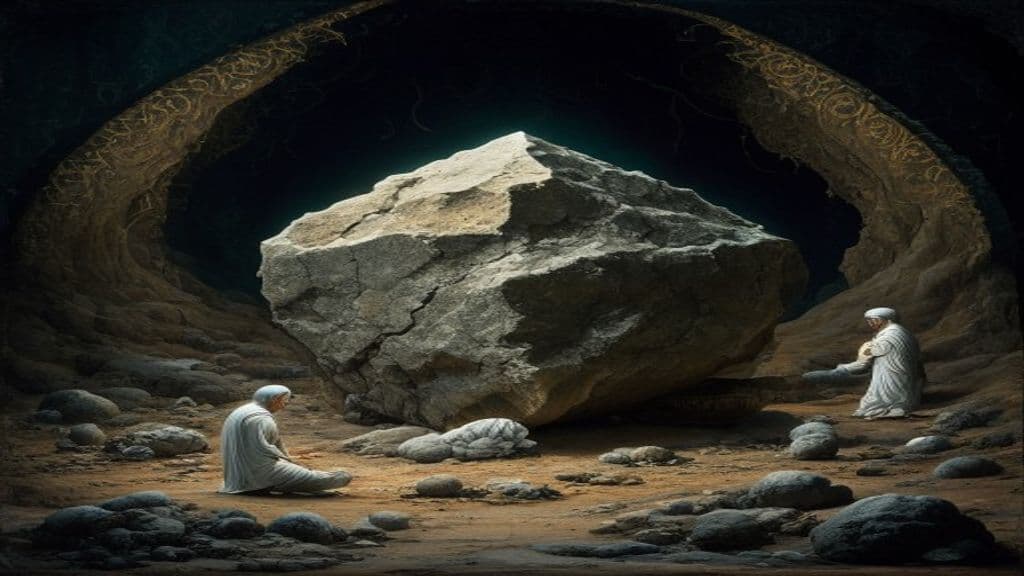
Allat (Al-Lat) is a pre-Islamic Arabian goddess attested across the Arabian Peninsula and in wider ancient Near Eastern onomastics. In the supplied sources she is recorded as one of the triad of goddesses worshipped in Arabia (with Al‑Uzza and Manat) and as a cult figure at sites such as al‑Ta'if where her cult-object was a cubic rock.

Amrak
Minor Spirit

Amrak

Amrak is not attested in the provided sources as a supernatural being. The lexical string "Amrak" appears across unrelated secular contexts — as a historical regnal name (Amrak Khagan / Ashina Anluo), a Turkish place-name (Çamrak / amrak), titles in modern Arabic-language music, an institutional name/acronym (AMRAK Institute), and as a modern brand/typeface/project name. No folkloric, ritual, or mythological descriptions of an entity called "Amrak" are present in the cited material.

Anqa (ʿanqāʾ)
Greater

Anqa (ʿanqāʾ)

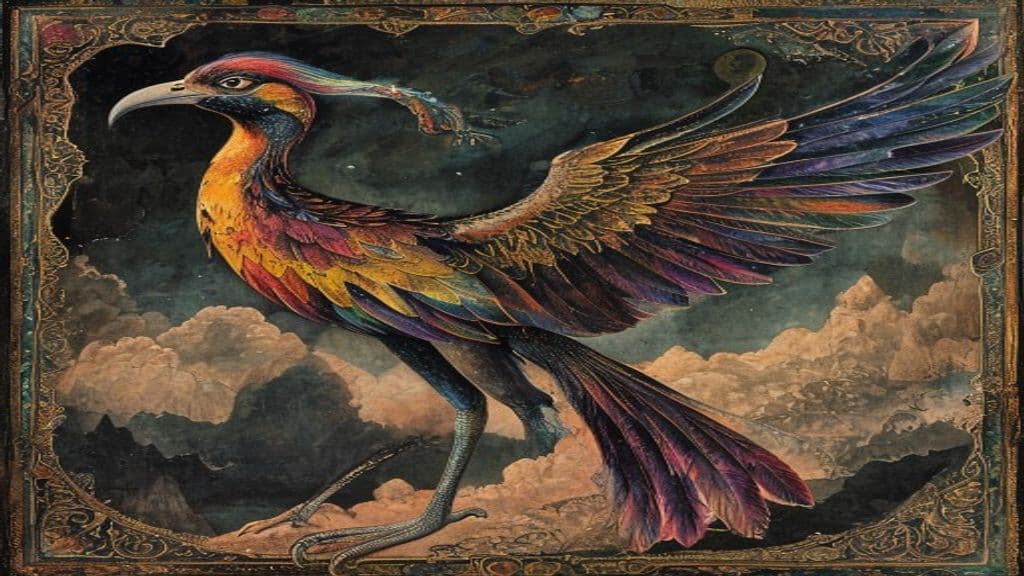
A singular, marvelous female bird of pre-Islamic and medieval Arab cosmography, the Anqa is described in medieval sources as a remote, extremely long‑lived composite bird associated with wisdom, liminal places (the setting sun, Mount Qaf), and ambivalent moral meanings that range from perfection to calamity.

Asira
Ancient

Asira

Asira is described in the available source material as a local god worshipped in pre-Islamic northern Arabia, specifically revered at the oasis-town of Taima (Tayma). The deity is noted as having been strongly influenced by Egyptian culture and is only minimally attested in the historical record (mentioned only by name by the Babylonian king Nabonidus).

Aspidochelone
Greater

Aspidochelone

A massive sea creature in Arabian tradition that lures sailors to their deaths with its 'island' appearance, emitting a sweet smell to attract fish. (Note: 1. Power tier should be Primordial (as it's described as a "giant sea monster" and its appearance is often mistaken for an island). 2. No source material mentions any connection to the symbolism of Sa)

Baalshamin
Ancient

Baalshamin

Baalshamin (literally "Lord of Heaven[s]") is a Northwest Semitic theonym/title used across the Levant and adjacent regions to denote a supreme sky/heavenly lord. Depending on time and place it functions as an epithet of other deities (notably Hadad/Baal) or as a distinct civic/sky deity associated with weather, lightning, and sometimes solar aspects; attested in inscriptions from Ugarit, Phoenicia, Safaitic Arabia, Palmyra, Nabataea, and in treaty and stele texts.

Barqan
Greater

Barqan

Barqan is a named jinn-king appearing in modern compilations of Islamic/Arabic occult and folkloric name-sets. He is listed alongside other named jinn rulers (e.g., Mudhib, Maimun, al‑Ahmar) in secondary sources and appears as a narrative antagonist in at least one Arabian Nights synopsis.

Barqash
Minor Spirit

Barqash

No folkloric descriptions of an entity named Barqash appear in the supplied sources. One provided source uses 'Barqash' as a toponym (an administrative district associated with Kufr Rakeb in Jordan); the other source (a Cairo travel-safety article) does not mention Barqash or any related spirit.

Basamum
Ancient

Basamum

Basamum is attested as a deity worshipped in pre-Islamic South Arabia, tentatively associated with healing through an etymological link to balsam; a single ancient text credits Basamum with curing two sick goats or ibexes. The evidence is limited and leaves most aspects of cult and myth undetermined.

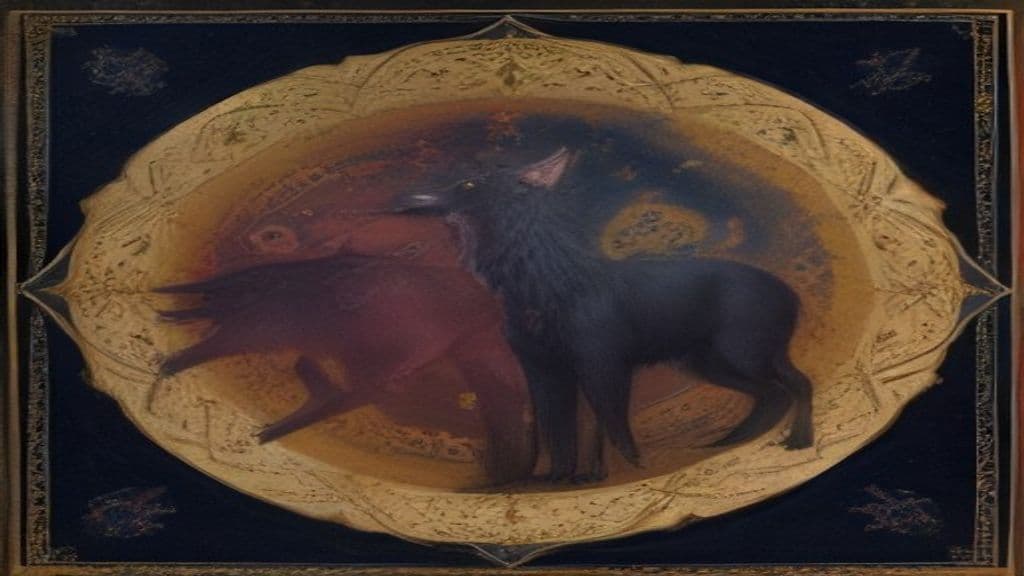
Black wolf
Minor Spirit

Black wolf

A melanistic colour variant of the gray wolf (Canis lupus) documented in zoological and regional observational sources. The term is used both for living black-coated wolves—whose coloration is now known to trace to a dog-origin mutation in some populations—and as a modern cultural label (titles, team names, etc.). The provided sources do not document a discrete supernatural being called “Black Wolf.”

Bozorgmehr
Lesser

Bozorgmehr

Bozorgmehr (Middle Persian Wuzurgmihr ī Bōkhtagān) is attested in Middle Persian, Persian epic, and Arabic/Persian historiography as a Sasanian-era sage, minister (wuzurg framadār), and military commander associated with the House of Karen during the late 5th–6th centuries CE. He is remembered as an exemplary court counselor, author of treatises, and a theme figure in literary traditions rather than a supernatural being.

Dandan (dendan)
Lesser

Dandan (dendan)

A monstrous, enormous sea-fish from the One Thousand and One Nights tale "Abdullah the Fisherman and Abdullah the Merman," presented as the largest and most fell of sea creatures; its liver-fat is said to serve as an ointment enabling humans to survive underwater, while paradoxically the creature is described as vulnerable to certain human-related conditions.

Dhu'l‑Suwayqatayn
Lesser

Dhu'l‑Suwayqatayn

An eschatological human figure named in Islamic hadith literature, described as an Abyssinian man with 'two thin legs' who will dismantle the Kaʿba and remove its treasure as a sign of the Last Days.

Dhuʾl-Khalasa
Lesser

Dhuʾl-Khalasa

Dhuʾl-Khalasa (al-Khalasa) is attested in early Islamic literature as a pre-Islamic southern Arabian cult-centre and/or idol—described variously as a deity, the shrine/house associated with that deity, or the name of its worshippers. Islamic-era sources portray it as a regional “Southern Kaʿba” used for communal ritual and divination and record its demolition on the Prophet’s order shortly after the Islamic conquest.

Djinn
Lesser

Djinn

The class of supernatural beings created from smokeless fire in Islamic cosmology — a parallel civilization to humanity, capable of belief or unbelief, with their own prophets, society, and judgment before God.

Dushara
Ancient

Dushara

Dushara is a principal pre-Islamic Nabataean deity, venerated as a city and mountain-linked patron god (notably of Petra and Hegra). Represented commonly by aniconic stone symbols, he was the focus of petitionary cult practice (notably animal sacrifice) and was syncretized by classical authors with Greco‑Roman gods.

Ghoul
Lesser

Ghoul

A ghoul is a demon-like or monstrous humanoid originating in pre-Islamic Arabian religion, traditionally associated with graveyards and the consumption of human flesh. The concept later entered broader folklore and has been widely reused and transformed in modern fiction and popular culture.

Ghul (Ghoul)
Lesser

Ghul (Ghoul)

A demon-like monstrous humanoid from Arabian folklore, traditionally associated with graveyards and the consumption of human flesh; described in scholarship as originating in pre-Islamic Arabian religion.

Gul (Ghoul)
Lesser

Gul (Ghoul)

A folkloric Persian/Turkic monstrous being (Persian غول, Turkish ğul) described in etymological and lexical sources as an 'imaginary sylvan demon' that devours men and animals; the term also entered European languages and later literary usage as 'ghoul'/'goule'.

Hatif
Lesser

Hatif

Hatif (Arabic: هَاتِف, hātif) is an auditory phenomenon in Arabic and Bedouin traditions described as a voice heard without discovering the body that made it. Sources record multiple, sometimes conflicting explanations: an unseen communicator such as a jinn, the voice of the dead near graves, or a psychological hallucination arising from loneliness.

Ifrit
Ancient

Ifrit

One of the most powerful classes of jinn in Islamic and pre-Islamic Arab tradition — a fire-born being of immense strength and cunning, capable of great works of engineering and terrible violence.

Ilah
Ancient

Ilah

Arabic concept for deity, encompassing gods, goddesses, and other supernatural beings worshipped in Arabian traditions. (Note: 1. Power tier: Ilah is more accurately classified as Primordial (cosmic) since it refers to any deity or god worshipped in Arabian traditions. 2. Appearance: Clarify that there is no physical descript)

Jann
Minor Spirit

Jann

The weakest class of djinn in Islamic tradition, associated with desert winds and taking the form of snakes or whirlwinds, dwelling in empty wilderness and posing little threat to those who know the proper invocations.

Jinn
Lesser

Jinn

A class of supernatural beings from pre-Islamic Arabian religion later integrated into Islamic theology; jinn are created, morally accountable entities distinct from humans and angels, often unseen but capable of taking visible forms and interacting with people in varied ways.

Jinniyya (female jinni)
Lesser

Jinniyya (female jinni)

A female member of the class of beings known as jinn in ancient Arabian religion and Islam. Jinniyya are moral agents within that cosmology, capable of belief or unbelief and accountable for their deeds.

Magic Carpet (Persian Tradition)
Lesser

Magic Carpet (Persian Tradition)

A legendary carpet in Persian tradition that serves as a form of transportation, carrying its user(s) quickly or instantaneously to their destination. (Note: - Power tier should be Greater, given the ability to defy physical laws and traverse vast distances at will. - Appearance should state "no specific description provided" instead of making an unsubstan)

Mahd al-Aadiyya
Ancient

Mahd al-Aadiyya

A chronicle character in Arabian tradition, serving as a vessel for conveying divine warning through poetry. (Note: 1. The power tier should be Primordial (as she serves as a vessel for conveying divine warnings from Allah, which would imply a connection to cosmic forces rather than regional or local). 2. Appearanc)
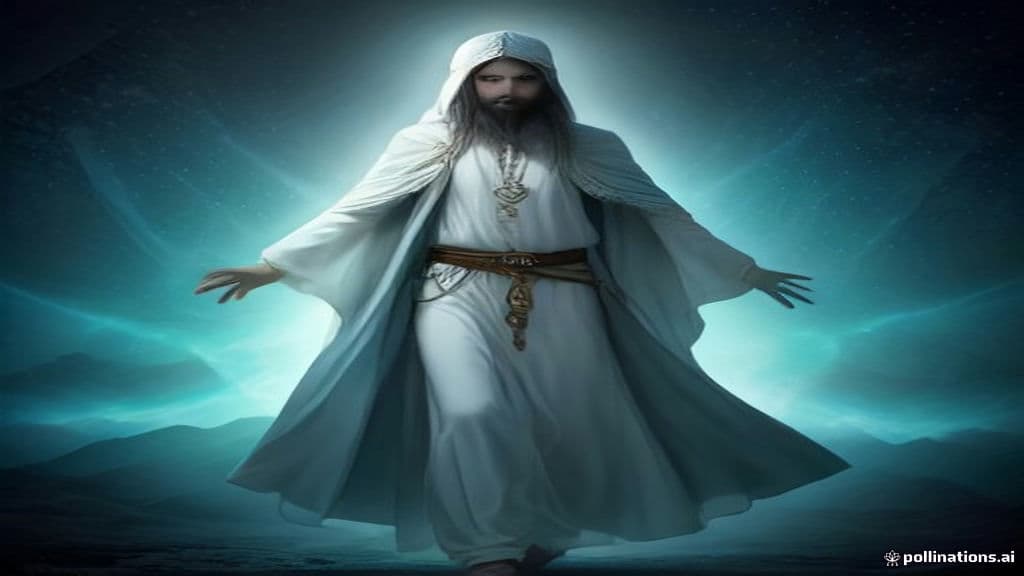
Mahdi
Greater

Mahdi

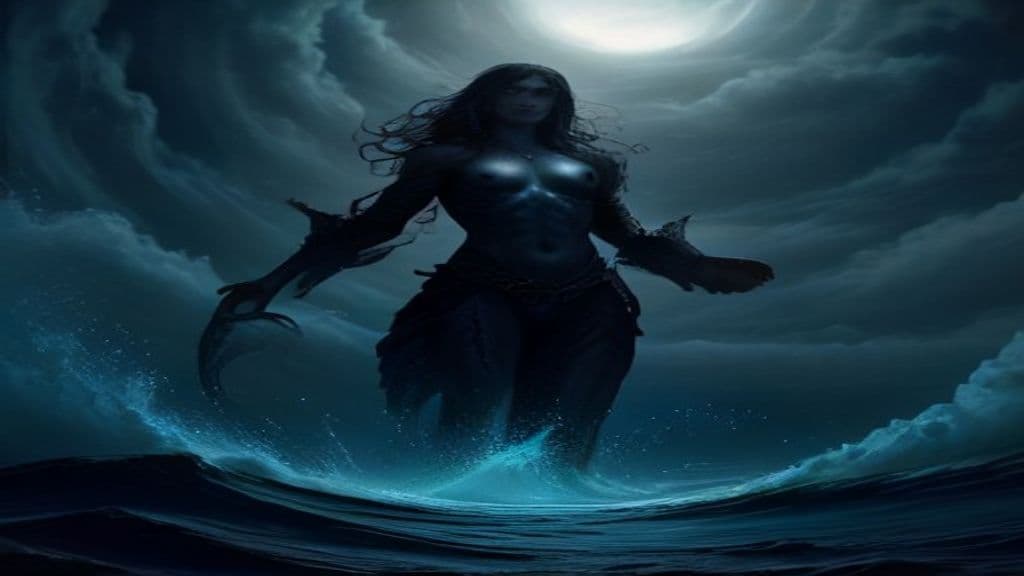
The Mahdi (Arabic: al‑Mahdī) is an eschatological, messianic figure in Islamic belief expected to appear before the End Times to restore justice and defeat tyranny, often envisaged as acting alongside ʿĪsā (Jesus). In Twelver Shīʿism the Mahdi is identified with the twelfth Imam (Muhammad al‑Mahdī) who entered occultation; in many Sunni accounts he is a future descendant of Muḥammad who will emerge as a reforming leader.

Marid
Ancient

Marid

The most powerful class of jinn in Islamic tradition — beings of the sea, associated with the deep ocean, storms, and the granting of wishes at terrible cost. The classic genie of the Arabian Nights.

Monotheism in pre-Islamic Arabia
Greater

Monotheism in pre-Islamic Arabia

Followers of Abrahamic faiths, such as Christianity and Judaism, who believed in a single all-powerful God in pre-Islamic Arabia. (Note: * Power tier: Lesser (not Greater) - monotheistic beliefs were not limited to powerful regional deities but had a relatively local presence in pre-Islamic Arabia. * Origin story: The exact timing is u)

Mount Qaf
Greater

Mount Qaf

Legendary mountain in Persian tradition and Arab mythology, considered homeland of the jinn. (Note: * Power tier: Primordial (based on being created directly from "shining emerald material" by God) * Abilities: Not explicitly described in source material; should be removed or rephrased * Sensory cue)

Nabataean Religion
Lesser

Nabataean Religion

Ancient Arabian polytheistic tradition with aniconic worship practices, centered around multiple local gods and deities. (Note: 1. Power tier should be "Ancient" as the sources describe multiple local deities and deities from other cultures (Baalshamin, Isis, Tyche, Dionysus), indicating deity-level powers. 2. Add sensory cues)

Nasnas
Minor Spirit

Nasnas

A half-human djinn creature of Arab folklore — possessing only half a face, one arm, one leg, and half a torso — descended from the union of a shaitan and a human, moving by leaping and highly dangerous to encounter.

Ninlil
Ancient

Ninlil

Ninlil is a principal goddess of ancient Mesopotamia, worshipped chiefly at Nippur and Tummal as the consort of Enlil. She shares with Enlil authority in determining fates and in appointing other deities, is portrayed as mother of major gods in some traditions, and is attested from early Sumerian texts through later Akkadian/Assyrian forms.

Old Man of the Sea
Greater

Old Man of the Sea

A titular elder of the sea applied across Greek epic and local myth to ancient sea‑deities (notably Nereus, Proteus, Phorcys, Pontus) who are prophetic and often shapeshifting; in the Sinbad folktale corpus the name (Arabic: Šayḵ al‑Baḥr) denotes a parasitic, murderous sea‑monster that latches onto travellers.

Qutrub
Minor Spirit

Qutrub

A qutrub (قُطْرُب) in Arabian folklore is described in secondary sources as a type of jinn or demon associated with graveyards and corpse‑eating; it is variously likened to an 'Arabian werewolf' or a ghoul and appears in Arabic literary and manuscript references.

Shaddād
Lesser

Shaddād

A legendary king in Arabian folklore, described as tyrannical. (Note: 1. The power tier should be Greater (deity-level abilities are implied by association with a lost city and connection to Qur'anic lore). 2. Add appearance description from source material, mentioning )

Shaitan
Lesser

Shaitan

A class of corrupted djinn who follow Iblis and dedicate themselves to leading humans astray — distinct from Iblis himself, the Shayatin are a species of evil djinn who whisper doubts and temptations into the minds of the living.

Shams al-Ma'arif
Primordial

Shams al-Ma'arif

A 13th-century grimoire attributed to Ahmad al-Buni, containing knowledge on Arabic magic and esoteric spirituality. (Note: - Power tier should be Ancient (deity-level) instead of Primordial (cosmic), as the abilities described do not imply cosmic powers. - The origin story should clarify that the authorship is disputed, r)

Shiqq
Lesser

Shiqq

A jinn-like monstrous being from Arabic folklore, described in available sources as a lower-ranked, 'half-formed' creature with a monstrous appearance. Attested in references to pre-Islamic Arabian belief and retained in later Bedouin folklore with conceptual overlap with ghouls and other malformed entities.

Si'lah
Lesser

Si'lah

A female supernatural figure attested in Arabic poetic commentary, described in a scholion as "the most dangerous of the female demons called ghūl" and as an "enchantress of the Jinn." The term appears in classical poetry as a metaphor for perilous power, speed, or beguiling danger.

Sila (Si'la, Si'lat)
Lesser

Sila (Si'la, Si'lat)

A jinn-like, chiefly female shapeshifting spirit from Arabian folklore, the Sila (Si'la/Si'lat) is associated with desolate desert places where it misleads travellers, seduces men, and may intermarry with humans. Early sources equated it with the ghoul; later traditions treat it as the female counterpart of ghoul-type beings.

Speak, Bird, Speak Again
Minor Spirit

Speak, Bird, Speak Again

The book 'Speak, Bird, Speak Again' is a collection of Palestinian folk tales featuring stories that may include supernatural entities from Arabian tradition. (Note: 1. Remove "Hypothetical supernatural entity" as it implies the existence of an entity, which is not confirmed. 2. Change Power tier to Primordial (since it's a book featuring stories that may include )

The Book of the Thousand Nights and a Night
Primordial

The Book of the Thousand Nights and a Night

A collection of Middle Eastern and South Asian stories and folk tales compiled in Arabic during the Islamic Golden Age. (Note: - Power tier should be Greater, as there is no indication that the Book of the Thousand Nights and a Night has cosmic powers. - The summary mentions the collection reflecting the cultural context and )

The Magic Jinn
Primordial

The Magic Jinn

A magical jinn from Arabian tradition with the ability to grant wishes, but at a cost. (Note: 1. Power tier: Primordial is not plausible given that granting wishes and providing assistance are abilities typically attributed to lower-tier entities (Greater or Lesser). 2. Origin story: Since The)

Theandrios
Lesser

Theandrios

Arabian deity worshipped by North Arabian tribes in pre-Islamic Arabia, similar to Greek 'God-man' deities. (Note: - Power tier should be Primordial or Ancient, not Lesser, given the entity's association with a Greek deity and being worshipped by North Arabian tribes. - Sensory cues, wards, and weaknesses are miss)

Witch-like Werehyena
Lesser

Witch-like Werehyena

A therianthropic being in African and Arabian Peninsula folklore that can take the form of a hyena or disguise itself as a human; traditions portray it ambiguously as either human-turned-hyena or hyena-passing-as-human. The available summary source records only shapeshifting and wide geographic distribution without detailed local names, rituals, or consistent attributes.

Zarqa al-Yamama
Primordial

Zarqa al-Yamama

A pre-Islamic Arabian figure with exceptional intuition, sharp eyesight, and prophetic abilities. (Note: 1. Power tier: Lower the power tier to Ancient (deity-level) since her abilities are described as prophetic but not on a cosmic level. 2. Abilities: Add that her prophecies were often linked to omens )