Christian Supernatural Beings

398 documented Christian supernatural beings from the Evil Eye grimoire, including 166 lesser and 78 ancient in power tier.

page 2 of 7

Andrew the Apostle
Ancient

Andrew the Apostle

Andrew the Apostle (Greek Ἀνδρέας, Latin Andreas) is one of the Twelve Apostles in the New Testament, a fisherman from Bethsaida, the brother of Simon Peter, described as the “first-called” who introduced others to Jesus. Post-biblical traditions depict him as an early missionary and founder of Christian communities (notably claims of missions to Thrace, Scythia, and founding the see of Byzantium) and as a martyr crucified at Patras.

Angel
Greater

Angel

A spiritual or heavenly being functioning primarily as a messenger and intermediary between a transcendent deity and humanity; angels also act as protectors, guides, and executors of divine will across several Abrahamic and adjacent traditions.
Angel Moroni
Ancient

Angel Moroni

In Latter Day Saint narratives, Moroni is a post‑mortem, angelic messenger and custodian of sacred scripture who is said to have appeared to Joseph Smith beginning in 1823 to reveal and deliver the golden plates that became the Book of Mormon. He is portrayed as a resurrected/ministering human who functions as intermediary, guardian of records, and revealer to a chosen prophet.

Angel of Hadley
Lesser

Angel of Hadley

A New England colonial legend of a sudden, providential defender who appeared in Hadley, Massachusetts during attacks in King Philip's War. The figure is commonly identified in tradition with the fugitive regicide Colonel William Goffe; accounts blend possible historical actions, contemporary silence or obfuscation, and later legendary embellishment that calls the rescuer an 'angel.'

Angel of Portugal
Greater

Angel of Portugal

A Catholic devotional national guardian angel venerated as the heavenly custodian of Portugal. Recognized in popular devotion, private revelation narratives (notably the 1916 visitations connected to Fátima), and in Portuguese liturgical practice through a feast instituted in the early 16th century and restored in the 20th century.

Angel of the Lord
Ancient

Angel of the Lord

A recurring divine messenger in the Hebrew Bible and New Testament who appears on behalf of the God of Israel, acting as God's representative in speech and deed. The figure—Hebrew מַלְאַךְ יְהוָה (mal’ākh YHWH)—functions as intermediary, guide, protector, judge, and announcer at decisive narrative moments.

Angel of the Presence
Ancient

Angel of the Presence

A high-ranking heavenly attendant described in Hebrew and Second Temple literature as one who "stands in the presence" of God and acts on God's behalf toward Israel. Sources treat the figure either as an elite created angelic office (one of the attendants who enter before the Lord) or, alternately, as a scriptural idiom referring to God's own saving presence.

Angels of Mons
Greater

Angels of Mons

A World War I legend of a supernatural force that intervened to protect British troops during the Battle of Mons (23 August 1914). Originating in Arthur Machen's short story "The Bowmen" and amplified by wartime press, spiritualist magazines, sermons and memoirs, the phenomenon was variously described as phantom medieval bowmen, a luminous cloud, or angelic warriors associated with Christian figures such as St. George, Joan of Arc, or the archangel Michael.

Annas (Ananus)
Minor Spirit

Annas (Ananus)

Annas (Hebrew Ḥānān; Greek Ἅννας) was a first-century CE Jewish high priest of Judaea (AD 6–15) whose familial network and continued influence made him a central figure in priestly leadership in Jerusalem and in New Testament narratives of the Passion and early Christian episodes.

Anthony the Great
Lesser

Anthony the Great

Anthony the Great (Antony) was an Egyptian Christian monk and ascetic (c. 251–356) whose life, as recorded by Athanasius and later commemorations, made him the exemplar 'Father of All Monks.' His biography frames ascetic practices and persistent prayer as the means by which he endured demonic temptations and guided later monastic communities.

Antichrist
Greater

Antichrist

An eschatological oppositional figure in Christian tradition who opposes Jesus Christ and may appear either as a present spirit or as a single climactic deceiver before the Second Coming. The term functions both as a category of false teachers and as a particular latter‑day 'lawless one' identified with apocalyptic images in Daniel, Paul, and Revelation.

Antinoe
Lesser

Antinoe

Antinoe (Ancient Greek: Ἀντινόη) is primarily attested as a proper name in classical and later sources: several mortal women in Greek myth (founding and tragic narratives) and as the place-name Antinopolis/Antinoë in Roman Egypt. The surveyed materials do not present Antinoe as a discrete supernatural being, nor record rituals or wards directed against an entity by this name.

Antioche
Minor Spirit

Antioche

Antioche is a variant form of the Greek personal name more commonly rendered as Antiope, attested for several distinct women in Greek myth (including Amazonic and dynastic figures) and reused as a toponym and ecclesiastical/literary name in later traditions. The sources treat Antioche not as a single supernatural class but as a personal name with multiple local and literary usages.

Aphrahat (the Persian Sage)
Minor Spirit

Aphrahat (the Persian Sage)

Aphrahat was a fourth‑century Syriac Christian ascetic and author in the Sasanian Empire, venerated later as "the Persian Sage." He composed a corpus of twenty‑three homiletic expositions called the Demonstrations, which addressed doctrine, church order, Jewish‑Christian tensions, and pastoral care during persecutions.

Aram (Nahapet)
Greater

Aram (Nahapet)

Legendary leader and patriarch in Armenian tradition who united Armenians into one state. (Note: - Power tier: Primordial (given cosmic/unifying abilities) - Summary: Expand to include "unification of Armenians" as a key aspect of his leadership - Abilities: More specific and detailed description)

Archangel
Ancient

Archangel

An archangel is a ranked heavenly messenger in Abrahamic and related religious literatures, understood in many traditions as a high‑level angelic agent charged with carrying out divine missions. The term and ranked office are framed by Greek etymology (archángelos, 'chief messenger') and by medieval Christian angelology (notably Pseudo‑Dionysius), while named figures such as Michael, Gabriel, and Raphael appear across Jewish, Christian, and Islamic texts and liturgies.

Archdemon (tradition)
Greater

Archdemon (tradition)

A high-ranking infernal or non‑human spiritual being that functions as a leader, king, or princely figure within hostile supernatural hierarchies. Appears across Christian/occult, Islamic/Middle Eastern, and Zoroastrian contexts as commanding subordinate demons, jinn, or evil spirits and acting in opposition to divine or benevolent spiritual authorities.

Archon (Gnosticism)
Ancient

Archon (Gnosticism)

In Gnostic traditions, an archon (Greek ἄρχων, árchōn) is a cosmic ruler or architect of the visible, material cosmos. Archons function as intermediate powers that construct, govern, and limit the created world and are frequently depicted as obstacles to the soul's return to higher spiritual realms.

Arevakhach’
Ancient

Arevakhach’

The Armenian eternity sign is an ancient national symbol representing the Armenians' spiritual and celestial connection. It appears as a geometric figure on khachkars and church walls, embodying the significance of faith and symbolism in Armenian tradition. (Note: - Power tier: Primordial (as it's described as an "ancient" national symbol, but there's no indication that it's deity-level) - Appearance: Not enough detail is provided; the source material only ment)

Argeus
Minor Spirit

Argeus

Argeus (Ancient Greek: Ἀργεύς, "the hunter") is a personal and place-name attested across classical, Christian, and modern contexts. The name labels several distinct referents — mythological individuals (including a king of Argos), a historical/legendary pretender, a Christian saint, and a Roman toponym for Mount Erciyes — rather than a single supernatural being.

Ariel
Lesser

Ariel

Ariel is named in the provided materials as an angel appearing primarily in Jewish and Christian mysticism and apocrypha. The supplied sources give the Hebrew form אֲרִיאֵל (romanized ʾÁrīʾēl) and identify Ariel as an angelic figure but do not provide further doctrinal, narrative, or ritual detail.

Arioch
Greater

Arioch

Arioch (Hebrew: אַרְיוֹךְ, ’Aryōḵ) is a personal name recorded in Genesis 14 as the "king of Ellasar" who took part in a coalition of kings at the Battle of Siddim. In later literary, occult, and popular-fantasy traditions the name is reused for various infernal or chaotic personae (e.g., listed in grimoires as a demon, named among fallen angels in Milton, a lord of Chaos in Michael Moorcock, and a duke of Hell in Greyhawk lore).

Arphugitonos
Lesser

Arphugitonos

Arphugitonos is a named angel attested in the Greek Apocalypse of Ezra / Revelation of Esdras as one of nine heavenly beings who "will govern 'at the end of the world'." The name appears only nominally in the apocalyptic vision and is not accompanied by description, etymology, or ritual material in the supplied sources.

Arsenius the Great
Lesser

Arsenius the Great

Arsenius the Great (c. 350/354–c. 445/450) was a Roman-born imperial tutor who renounced court life to become an anchorite among the Desert Fathers in Egypt. Venerated as a saint in Eastern Orthodox, Coptic, and Roman Catholic traditions, he is remembered for extreme humility, prolonged solitude, silence, copious tears of devotion, and brief monastic writings and sayings preserved in the Apophthegmata Patrum and other collections.

Ashteroth Karnaim
Minor Spirit

Ashteroth Karnaim

Ashteroth Karnaim is an ancient place-name in the biblical and Near Eastern record—a city or paired cities in the region of Bashan (Transjordan) associated with the goddess Astarte (Ashtoreth) and described in some sources as the ‘abode of the Rephaim.’ It is attested in Bronze‑ and Iron‑Age texts and later Hellenistic traditions, and is identified with several proposed archaeological sites (e.g., Tell Ashtara, al‑Shaykh Saad) though the exact location remains debated.

Asiya bint Muzāḥim (Asiya)
Lesser

Asiya bint Muzāḥim (Asiya)

Asiya is the Qur'anic figure presented as the wife of the Pharaoh in the era of Moses who secretly embraced monotheism, adopted and preserved the infant Moses, and is venerated in Islamic tradition as an exemplary righteous woman promised a house in Paradise for her faith and steadfastness.

Asmodai
Greater

Asmodai

Asmodai (variants: Asmodeus, Asmodaeus, Ashmedai) is a named, kingly malign spirit attested in late-antique and medieval Judaeo-Christian narrative traditions — most prominently the deuterocanonical Book of Tobit and legends about Solomon — where he functions as a leading hostile spirit who troubles humans.

Asmodeus
Greater

Asmodeus

Asmodeus (Heb. Ashmedai/Ashmeday; Gr. Asmodaios; Arabic Sakhr in some accounts) is a named malignant spirit appearing in Near Eastern Jewish, Christian deuterocanonical, and later Islamic storytelling. Traditions portray him as a princely or kingly figure among malevolent spirits who intervenes in human affairs—notably hostile to marriages and in contest with King Solomon—and who can be driven off or bound by ritual fumigation and angelic agency.

Astaroth
Greater

Astaroth

Astaroth is a named adversarial spirit in Christian demonological literature, commonly catalogued as a high-ranking infernal officer (described in sources as a 'Great Duke' or 'Grand Duke' of Hell). The figure represents the Christian polemical reception of ancient Near Eastern goddess-names (Astarte/Ashtoreth) recast within narratives and demonological lists and appears in medieval legendary episodes as well as later occult imagery and modern popular culture.

Astyanassa
Minor Spirit

Astyanassa

Astyanassa (Ancient Greek: Ἀστυάνασσα) is a named figure in late Greek mythographic and Byzantine tradition, presented as Helen of Troy's maid. Late sources record anecdotes linking her to the theft of Aphrodite's "kestos himas" and to a tradition naming her among early authors of erotic literature.

Athisl
Lesser

Athisl

Athisl is a semi-legendary Swedish king known from medieval Scandinavian saga and chronicle traditions and occasional runic/epigraphic mentions. Attested in sources such as Saxo Grammaticus and saga-name lists, he appears in martial and vengeance narratives that pit Swedish rulers against Danish opponents and in funeral-feast episodes.

Az (unattested as distinct demon)
Minor Spirit

Az (unattested as distinct demon)

No supplied sources attest a distinct folkloric or mythological entity named 'Az'. The available materials only provide general background on 'demons' as a category and on Zoroastrian daevas; any association of the name 'Az' with a specific supernatural being is not supported by the provided corpus.

Azariah
Lesser

Azariah

Azariah (Hebrew: עֲזַרְיָה ‘Ǎzaryāh, 'Yah has helped') is principally a theophoric Hebrew personal name borne by multiple figures in biblical, apocryphal, and modern contexts. In the provided sources it appears as the name of a prophet in 2 Chronicles 15:1–8, as an alias used by the archangel Raphael in the Book of Tobit, as a guardian-angel name in modern private revelation, and as the name of various priests, kings, and later individuals.

Azazel
Ancient

Azazel

In earliest biblical usage Azazel is a ritual locus or destination in the Yom Kippur scapegoat rite to which communal sins are sent; in later Second Temple and subsequent Christian and Islamic receptions Azazel becomes personified as a fallen angel associated with rebellion and the transmission of forbidden knowledge to humans.

Azrael
Ancient

Azrael

Azrael is the canonical angel of death in Islamic tradition and appears earlier in apocryphal Christian literature; portrayed as a high‑ranking, God‑ordained psychopomp who removes and transports souls, keeps a register of human fates, and acts only under divine command. In some extra‑Quranic and exegetical accounts he is depicted with vast, awe‑inspiring physical attributes and in a few apocryphal Christian texts he is associated with punitive afterlife functions.

Babalon
Greater

Babalon

A central goddess-figure in the Thelemic system founded by Aleister Crowley; simultaneously an archetypal Great Mother/Binah, a sacralized principle of liberated female sexuality, a ritual vessel (the Grail), and an office manifested historically as the "Scarlet Woman."

Badalisc
Lesser

Badalisc

The Badalisc is a local ritual creature of Val Camonica (Andrista, Cevo) in northern Italy: an animal‑like masked figure captured in the woods at Epiphany, led into the village, and used as a mouthpiece for a satirical public speech that names communal misdeeds before being released back to the woods.

Bakebi
Minor Spirit

Bakebi

No information about an entity named 'Bakebi' is present in the supplied Tshiluba Bible-heading sources. The name does not occur in the provided excerpts, so all attributes of a folkloric entity cannot be documented from these materials.

Balaam
Ancient

Balaam

Balaam (Hebrew Bīlʿām) is a non‑Israelite seer/diviner attested in the Hebrew Bible and in an extra‑biblical West Semitic inscription (Deir Alla). He is portrayed as a liminal prophetic figure who receives divine visions and utters oracular poems but is morally contested in later traditions for his alleged role in leading Israel to transgression.

Balam
Lesser

Balam

Balam is a name that appears in modern secondary demonological compilations and in English-language reference listings as a demon-name; the supplied sources do not provide primary traditional descriptions, rites, or a sustained cosmology for a demon called Balam. The same lexical form (B'alam/Bahlam) is also a Maya-language word meaning 'jaguar' and occurs widely in Maya personal and place names, a distinct and unrelated usage.

Balthazar (Magus)
Minor Spirit

Balthazar (Magus)

Balthazar is the traditional Western Christian name attributed to one of the three Magi—wise men or kings—who visited the infant Jesus in the Nativity narrative. The name appears in later Western tradition and liturgical/ artistic treatments of the Christmas story rather than in the Gospel text itself.

Baltic Mythology
Primordial

Baltic Mythology

A complex pantheon of gods, spirits, and supernatural beings in ancient Baltic cultures. (Note: 1. Power tier: Change to "Ancient" as Primordial implies a cosmic entity, which is not supported by the source material. 2. Origin story: Specify that the connection with nature and inspiration from t)

Baphomet
Minor Spirit

Baphomet

Baphomet is a mutable Western esoteric and cultural figure: in medieval inquisitorial records the name labels an alleged idol or head invoked in accusations against the Knights Templar; in 19th‑century occultism Éliphas Lévi reimagined Baphomet as a symbolic androgynous human‑goat figure embodying reconciled opposites; in modern culture the term and imagery are widely repurposed across conspiracy discourse, art, and fiction.

Barachiel
Ancient

Barachiel

Barachiel (Hebrew: בַּרַכְאֵל, Baraḵʾēl, 'God has blessed') is an archangelic figure in Jewish mystical literature and in Byzantine Catholic and Eastern Orthodox Christian devotion, traditionally associated with blessings, guardianship of family and married life, and as chief of guardian angels. Mystical texts place him over the second heaven and attended by a vast retinue of ministering angels; Christian iconography portrays him with symbols of blessing such as a white rose, rose petals, a bread basket, or a staff.

Barbēlō
Primordial

Barbēlō

Barbēlō is a primary divine emanation (aeon) in several Gnostic theogonies, presented as the first thought and generative principle within the pleroma. She functions as an originating mediating principle through which subsequent divine manifestations arise and is central to certain Sethian and related Gnostic systems.

Barnabas
Lesser

Barnabas

Barnabas is an early Christian disciple and apostolic figure known from the New Testament book of Acts and later Christian tradition. Presented as an encourager, mediator, and missionary companion of Paul, he is associated with the Jerusalem and Antioch churches, missionary journeys in the eastern Mediterranean, and later traditions tying him to writings and martyrdom in Cyprus.

Bartholomew the Apostle
Minor Spirit

Bartholomew the Apostle

Bartholomew is presented in the supplied sources as one of the Twelve Apostles of Jesus, an early Christian missionary and martyr whose life functions in Christian liturgical memory, regional founding traditions (notably Armenian), and in later apocryphal and visionary narratives that expand his missionary itinerary and miraculous acts.

Baruch ben Neriah
Lesser

Baruch ben Neriah

Baruch ben Neriah (Hebrew: Bārūḵ ben Nērīyyā) is presented in the Judaic and Christian literary tradition as the scribe, disciple, secretary, and devoted companion of the prophet Jeremiah (c. 6th century BCE). He is remembered as the recorder and public reader of Jeremiah’s prophecies and as the putative author or eponymous attributee of later deuterocanonical and pseudepigraphical works (Book of Baruch; 2 Baruch, 3 Baruch).

Bashnouna
Lesser

Bashnouna

Bashnouna is a Coptic Christian monk venerated as a saint and martyr in the Coptic Orthodox tradition. According to hagiographical accounts recorded in the Coptic Synaxarion and secondary summaries, he was a monk of the Monastery of Saint Macarius in Scetes, arrested during the Fatimid caliphate of al-'Āḍid, refused to convert to Islam, and was burned alive on 24 Pashons (19 May 1164). His relics are reported buried at the Church of Saint Sergius in Cairo and he is commemorated liturgically on that date.

Basilides and Potamiana
Lesser

Basilides and Potamiana

Basilides and Potamiana are early Christian martyrs venerated in later tradition. Potamiana is remembered as a young virgin of Alexandria whose martyrdom and reported nocturnal appearances inspired conversions; Basilides was a court officer converted by Potamiana’s apparition, baptized, and subsequently executed.

Basilisk
Greater

Basilisk

A legendary serpent from classical and medieval bestiary tradition, the basilisk is described as a paradigmatic "king" of serpents whose gaze, breath, or venom is fatal and whose presence scorches and corrupts the surrounding environment. Treated variously as a monstrous animal, materia for alchemy, and a locus of local legend, it features recurrent countermeasures (weasel, rooster, mirror) in the sources.

Beatrice Portinari
Lesser

Beatrice Portinari

Beatrice (Bice) di Folco Portinari appears in Dante Alighieri's works as the personified embodiment of beatific love, divine grace, and theological vision who intercedes for and ultimately guides the pilgrim from human reason into Paradise. Historically she may be a Florentine woman documented in late 13th-century records, but the literary Beatrice is primarily a theological and allegorical figure within Dante's poetic cosmology.

Beburos
Ancient

Beburos

Beburos is a named angel attested in the Greek Apocalypse of Ezra (Revelation of Esdras) as one of nine heavenly beings who will "govern at the end of the world." The figure is non‑canonical and known primarily from this apocryphal source and modern reference glossaries that reproduce the roster.

Beelzebub
Ancient

Beelzebub

Originally the name of a Philistine city-deity of Ekron recorded in the Hebrew Bible (2 Kings), Baʿal-zəḇūḇ was later used in Jewish polemic as a derisive title and appears in Christian texts as a designation for a principal demonic figure (rendered Beelzebul/Beelzebub) often called the 'prince of demons.' Over subsequent centuries the name is incorporated into medieval and early modern demonological hierarchies and literary depictions of infernal powers.

Beerwolf
Lesser

Beerwolf

Beerwolf (also attested Bärwolf, Werwolf) is a German term equated with the werewolf in folkloric vocabulary and separately used as a political-theoretical metaphor in 16th‑century Protestant resistance discourse to designate a ruler who has placed himself outside the moral and legal order.

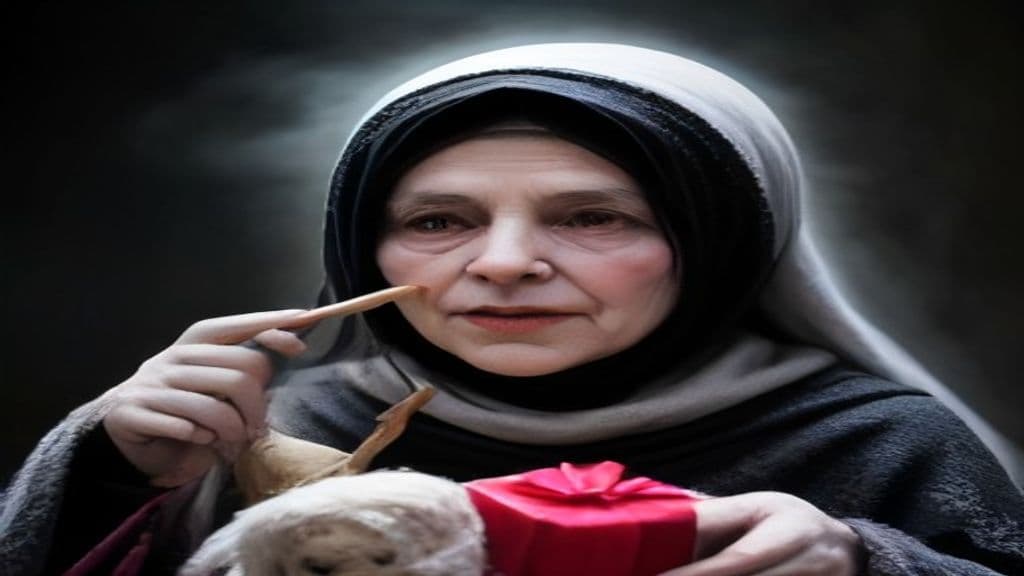
Befana
Lesser

Befana

In Italian popular and folk culture, the Befana is a witch‑like old woman associated with the Feast of the Epiphany who, on Epiphany Eve (night of January 5), brings sweets to good children and coal to bad children. She is an ambivalent household/seasonal figure involved in domestic and communal Epiphany rituals such as mumming, effigy‑making and bonfires, and her origins are debated between liturgical personification and survivals of older household goddess offerings.

Belacqua
Minor Spirit

Belacqua

Belacqua is a literary soul appearing in Dante Alighieri's Purgatorio (Canto IV), encountered in Ante‑Purgatory as a saved soul whose delayed repentance requires him to wait before beginning active purgation. He personifies sloth/indolence, functions as a comic, humanized figure in Dante's moral topography, and was identified by early commentators with the Florentine instrument‑maker Duccio di Bonavia.

Beleth
Greater

Beleth

Beleth is a high-ranking infernal king attested in Renaissance and early-modern grimoire tradition, described as commanding eighty-five legions of demons and as a spirit that ritual conjurers may summon, test, or bind for specific ends.

Belfagor arcidiavolo
Greater

Belfagor arcidiavolo

The title character of Niccolò Machiavelli's Renaissance novella, presented as an archdevil (arcidiavolo) sent from Hell to Earth to investigate male complaints about marriage; a literary adaptation of an older folktale motif about a supernatural being assuming human guise and entering domestic life.

Belphegor
Greater

Belphegor

Belphegor is a named infernal figure in Christian and later European literary and occult traditions, commonly identified in those traditions with the ancient Near Eastern figure Baal‑Peor. In demonological lists he is associated with particular vices (notably sloth, though some sources assign gluttony), and literary treatments depict him as a tempter who offers wealth, inventions, or incarnate visitation to lead humans into sin.