Japanese Supernatural Beings

324 documented Japanese supernatural beings from the Evil Eye grimoire, including 179 lesser and 66 greater in power tier.

page 1 of 6

5 Ronin
Minor Spirit

5 Ronin

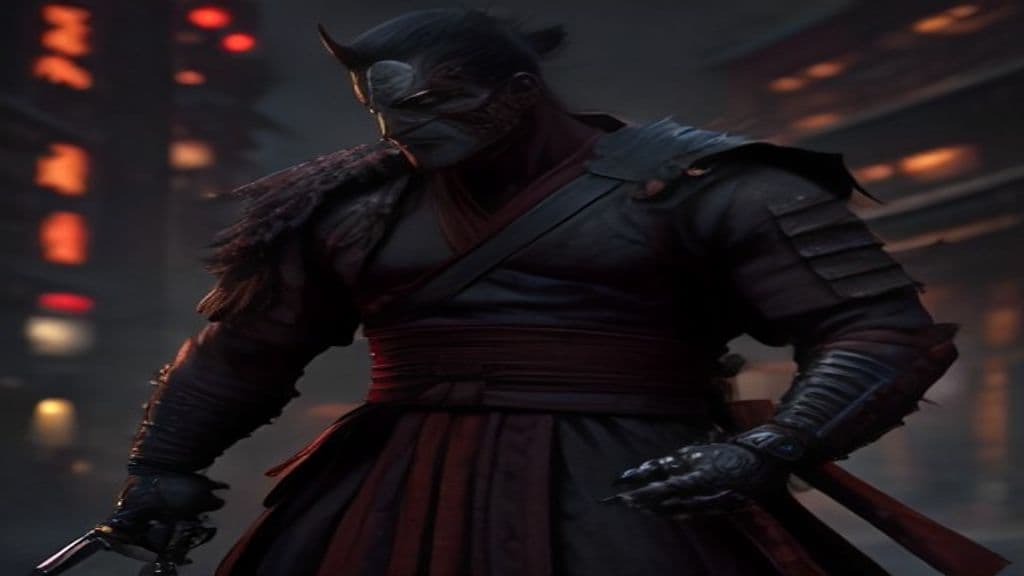
5 Ronin is a 2011 Marvel Comics five-issue limited series that reimagines five Marvel superhero archetypes as rōnin (masterless samurai) in a fictionalized post‑Sekigahara feudal Japan. The work places Wolverine, Hulk, Punisher, Psylocke, and Deadpool analogues into period roles to explore displacement, revenge, and identity in an era of political upheaval.
Abumi-guchi
Minor Spirit

Abumi-guchi

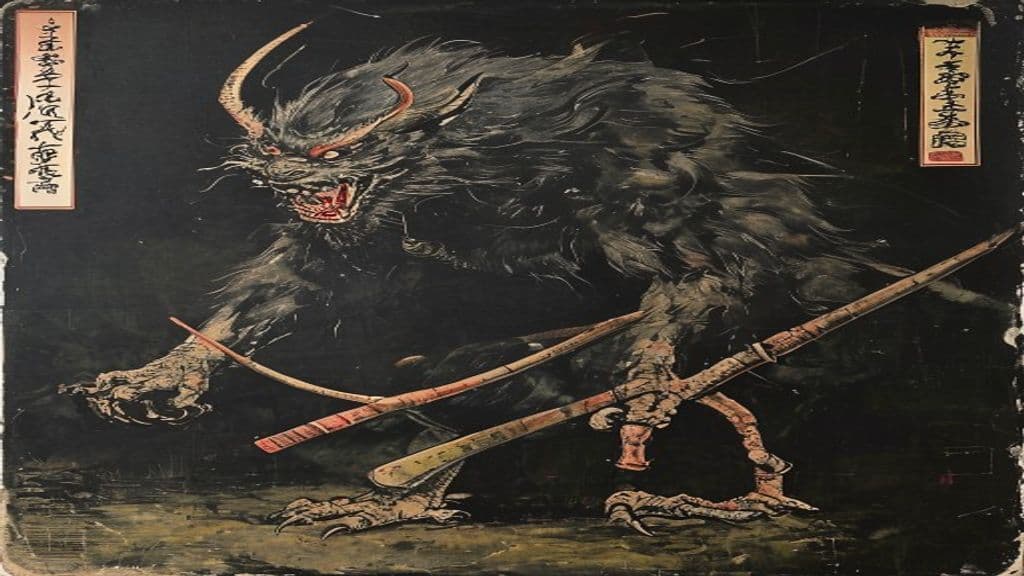
A Japanese yōkai classed as a tsukumogami: an animated stirrup (abumi) depicted in Sekien Toriyama's Gazu Hyakki Tsurezure Bukuro. Traditional accounts say it is formed from a stirrup that belonged to a soldier who fell in battle and that it waits where the stirrup lies for its dead owner to return.

Abura-akago
Minor Spirit

Abura-akago

An Edo-period yōkai depicted as an oil‑licking infant or a ball of flame. First recorded in illustrated compendia (notably Toriyama Sekien's Konjaku Gazu Zoku Hyakki), the Abura-akago is tied to tales of oil‑stealing fires and functions in part as an etiological warning about wasting or stealing oil.

Abura-sumashi
Lesser

Abura-sumashi

A yōkai spirit from the Amakusa region of Kumamoto Prefecture, Japan, said to inhabit mountain passes. Traditionally explained as the ghost of a person who stole oil, it appears to surprise travelers and is represented in modern media with a straw-coat body and a potato- or stone-like head.

Aburabō / Abura-bōzu / Aosaginohi (traditions)
Lesser

Aburabō / Abura-bōzu / Aosaginohi (traditions)

Two distinct Japanese traditions appear under related flame imagery: Aosaginohi/Aosagibi is presented as a will-o'-the-wisp type luminous night phenomenon interpreted as reflections from herons; aburabōzu (abura bōzu, "oil monk") appears in a separate anecdote as a reported fire-breathing apparition in a 12th-century Yasaka Shrine tale. The sources treat them as separate portrayals rather than a single unified being.

Acala
Greater

Acala

Acala (Sanskrit: अचल, 'The Immovable') is a wrathful protective deity (dharmapala) in Vajrayāna and East Asian esoteric Buddhism, classed among the Wisdom Kings (Vidyārāja). He functions as a ritual focus for visualization and mantra practice intended to remove obstacles and bind or destroy hostile forces.

Agaru
Minor Spirit

Agaru

Agaru (attested historically as Agarum) appears in the supplied sources as a Bronze Age Near Eastern toponym—often identified with Failaka Island—and as a modern personal or media name. The provided material contains no evidence that Agaru is a supernatural being in any traditional cosmology.

Ajisukitakahikone
Greater

Ajisukitakahikone

Ajisukitakahikone is a kami in Japanese mythic literature (Kojiki/Nihon Shoki). He appears in the transfer-of-rule cycle between heaven and earth, is described as a son of Ōkuninushi, associated with the Kamo cult (called Kamo no ōmikami in some modern museum/catalog entries), and features in narratives that explain landscape formation and meteorological genealogy.

Aka Manto
Lesser

Aka Manto

Aka Manto (赤マント, "Red Cloak") is a Japanese urban legend and schoolyard ghost-story about a masked, cloaked figure who appears in public or school toilet stalls and forces occupants to choose between colored toilet paper; each choice in the tale produces a violent supernatural consequence. The legend is part of modern popular folklore recorded in school contexts from the 1930s onward rather than a formal religious myth.

Akaname
Lesser

Akaname

Akaname is a Japanese yōkai associated with baths, bathtubs, toilets, and other places where scum and filth accumulate. Traditionally depicted as a child-like creature that licks grime, it functions in folklore as a cautionary figure tied to cleanliness; a few narrative variants cast it as dangerously predatory.

Akashaguma
Lesser

Akashaguma

Akashaguma is presented in the available sources as a child-like house guardian spirit in the Japanese yokai tradition, closely comparable to the regional zashiki-warashi. It is associated with domestic interiors (parlors or storage rooms) and with bringing prosperity to households where it dwells.

Akashita
Lesser

Akashita

Akashita (赤舌, lit. “red tongue”) is an Edo-period pictorial yōkai commonly represented as a hairy, clawed face emerging from dark clouds with a wide open mouth and a conspicuous red tongue. The figure appears in yōkai emaki and Toriyama Sekien’s Gazu Hyakki Yagyō; Sekien’s plate shows it atop a sluice, but the original pictorial tradition provides no explanatory caption. Later folklorists and popular writers (Shōwa and later) have variously interpreted the image as a punitive spirit linked to irrigation/floodgate justice or as a kidnapper in evening skies, though these narrative roles are post-hoc.

Akateko
Lesser

Akateko

Akateko (赤手児, lit. 'red child's hand') is a yōkai from Japanese folklore commonly told as a small, red, disembodied child's hand that appears from trees—especially the Japanese honey locust—and startles travelers; in some regional variants it is accompanied by a specter of a young woman or manifests as paired foot- or leg-like apparitions. Accounts vary between mostly harmless trickster apparition and a violent variant that attacks humans.

Akira Fudō
Greater

Akira Fudō

Akira Fudō is the human protagonist of Go Nagai’s Devilman narrative who becomes a hybrid figure — described in the story as “the Devilman, the only being who can fight demons; a being possessing the powers of a demon and a soul of a man.” He gains demonic power (notably from the demon Amon) while retaining his human moral identity and functions as the principal fighter against a re-emergent host of ancient demons within the series’ modern-Japan setting.

Akkorokamui
Greater

Akkorokamui

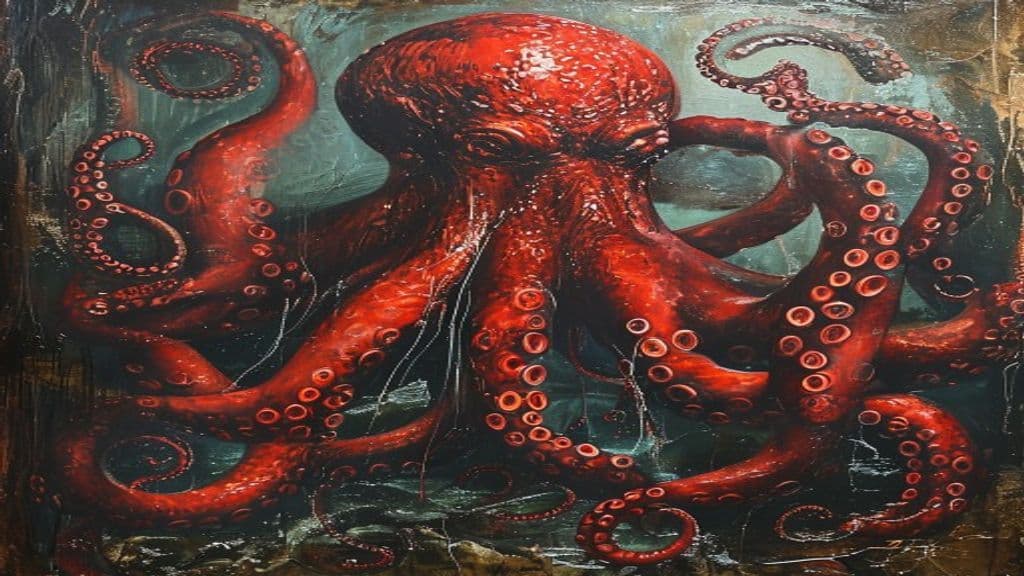
Akkorokamui is a titanic octopus-like sea kamuy (spirit) in Ainu tradition, described as the nushi (local lord) of Funka/Uchiura Bay in Hokkaidō. Traditional accounts portray it both as a fearsome physical monster capable of overturning or swallowing vessels and as a named supernatural presence embedded in Ainu cosmology and ritual vocabulary.

Akubōzu
Lesser

Akubōzu

Akubōzu (灰坊主, Akubōzu) is a household yōkai from parts of Akita and Iwate Prefectures in northern Japan said to live in the ashes of the hearth. Sources say they appear when people (notably children) play with or dig in hearth/furnace ash; the figure is cited as part of a broader Tōhoku motif warning against disturbing ash.

Akugyo
Greater

Akugyo

Akugyo (悪魚) are a class of monstrous aquatic yōkai in Japanese tradition: enormous sea creatures—described in different accounts as giant fish, gigantic ningyo-like merfolk, or fire‑breathing sea monsters—that threaten sailors and fishermen by capsizing boats and devouring drowning people.

Akuma
Greater

Akuma

Akuma (悪魔/あくま) in Japanese sources is an evil spirit, devil, or demon associated with misfortune and mental disturbance. The term appears in Buddhist texts and Heian-period literature and was later used to translate the Christian figure of Satan, as well as the Buddhist Mara.

Akuro-ō
Lesser

Akuro-ō

Akuro-ō is a fragmentarily attested label appearing in a secondary database gloss as 'Emishi's chief or ogre.' Surviving references are inconsistent and do not supply primary folkloric narratives, descriptions, or rituals; other supplied materials that mention demons or demon-rulers do not refer to Akuro-ō. This entry treats Akuro-ō as a probable secondary/database attestation rather than a well-documented traditional figure.

Akurojin-no-hi
Lesser

Akurojin-no-hi

Akurojin-no-hi (悪路神の火, "fire of the god of the bad road") is a flamelike ghost from the folklore of Mie Prefecture, Japan. It is reported to appear on rainy nights; those who encounter it and do not run away are said to become gravely ill. The phenomenon is sparsely documented and is usually compared to will-o'-the-wisp type ghost-lights.

Alichino
Minor Spirit

Alichino

Alichino is a name used in two distinct literary contexts: in Dante Alighieri's Inferno it names one of the Malebranche devils assigned to guard the fifth bolgia of Hell; in Kouyu Shurei's manga Alichino it denotes a species of beautiful, wish-granting demons who prey on desperate humans in exchange for their souls.

Ama no Fuchigoma
Lesser

Ama no Fuchigoma

Ama no Fuchigoma (天乃斑駒, "heavenly spotted foal") is a named mythical horse attested in the Nihon Shoki (Chronicles of Japan). In the surviving summaries it is recorded as the spotted mount ridden by the storm/sea god Susanoo; no further powers or rituals are supplied in the cited modern summaries.

Amabie
Lesser

Amabie

Amabie is a mid-19th-century Japanese yogenjū-type wondrous creature attested in kawaraban and related pamphlet culture that emerges from the sea (in canonical accounts) to prophesy about harvests and epidemics and prescribes that its image be drawn and shown to the sick as a protective measure.

Amamikyu
Ancient

Amamikyu

Amamikyu is the female creator deity of the indigenous Ryukyuan religion who, by command of the Heavenly Emperor and aided by the spirit Shinerikyu, fashions the Ryukyu Islands, founds sacred sites and castles, and whose descendants institute kingship and the noro priesthood. She is the focal ancestor of Ryukyuan political-religious order and was ritually venerated at key utaki such as Sefa-utaki.

Amano Jyaku
Lesser

Amano Jyaku

Amano Jyaku is a fictional half‑man, half‑beast Juujinkai warrior from the Urotsukidōji franchise who searches for and seeks to protect the cyclical supreme being called the Choujin (Overfiend) on Earth, and who opposes the Makai (a demon race) in that mission.

Amanojaku
Minor Spirit

Amanojaku

Amanojaku (天邪鬼 / あまのじゃく) is a Japanese yōkai-type being portrayed as a contrarian, heart-reading trickster. Treated in different contexts as a small ogre (ko-oni), a wicked demon (jaki) in Buddhist iconography, and a folkloric spirit that provokes human vice, it appears across regional tales with variable roles from malicious kidnapper to household oddity.

Amanozako
Greater

Amanozako

Amanozako is a Japanese divine/monstrous figure described in classical summaries as a furious, contrarian kami produced from the ferocious aspect (ara-mitama) of the storm-god Susanoo; later glosses present her as an ancestor-figure for ill-tempered yōkai such as tengu and amanojaku.

Amaterasu Ōmikami
Ancient

Amaterasu Ōmikami

Amaterasu Ōmikami is the sun deity and a principal kami in Shinto tradition, presented in classical Japanese sources as ruler of Takamagahara (the High Celestial Plain) and the mythic ancestress of the Imperial House through her grandson Ninigi. She is central to shrine cult at Ise and to ritual nomenclature and practice within institutional Shinto.

Amatsu-Mikaboshi
Lesser

Amatsu-Mikaboshi

A star-associated kami attested in the Nihon Shoki with ambivalent placement: in one account a rebellious star-god (Hoshi‑no‑Kami Kagaseo) who refused submission and was subdued, in another an "Evil Deity" the heavenly deities asked to be executed. The name and later commentary link the figure to stellar/planetary phenomena and to specialized star shrines (Hoshi‑jinja/Hoshimiya‑jinja).

Amatsuhikone
Ancient

Amatsuhikone

Amatsuhikone (天津日子根命 / 天津彥根命) is a kami in Japanese mythology described as a son of the sun goddess Amaterasu. He functions primarily as a member of the heavenly genealogy used to legitimize clan lineages and is later identified as the shintai (sacred body) of Mount Mikami, where Mikami Shrine stands to venerate him.

Amatsukami
Ancient

Amatsukami

Amatsukami (天津神, 天つ神), often glossed 'kami of heaven,' is a classical Shinto category grouping deities native to or resident in the heavenly plain Takamagahara. In foundational myths they constitute the heavenly lineage that descends in the kuni-yuzuri narratives to pacify the land and establish heavenly authority over the terrestrial realm.

Amatsumara
Ancient

Amatsumara

Amatsumara (天津麻羅), also called Amenomahitotsu, is a Shinto kami presented in sources as the divine smith of Takamagahara who is said to have aided in making the mirror used in the Amaterasu cave episode and who serves as a patron of earthly blacksmiths.

Amazake-babaa
Lesser

Amazake-babaa

Amazake-babaa (甘酒婆, 'amazake old woman') is a Japanese yōkai figure from northern Honshū traditions associated with contagious illness. She is said to call at house doors at night asking for amazake and, if answered, brings smallpox or the common cold; local variants include a door-to-door seller (amazake-banbā/banbaa) and a Kohinata, Bunkyō account that treats her as a deified former amazake seller.

Ame no Mahitotsu no Kami
Lesser

Ame no Mahitotsu no Kami

A named heavenly artisan deity attested in modern secondary sources as a smithing kami; in limited modern folklore he is also locally identified with one-eyed yōkai imagery. Sources are fragmentary and combine encyclopedic labels with localized folk claims.

Ame-no-Koyane-no-mikoto
Greater

Ame-no-Koyane-no-mikoto

Ame-no-Koyane-no-mikoto is a male Amatsukami (heavenly kami) in classical Shinto myth, presented as the ritual-official ancestor of the Nakatomi clan and linked genealogically to the Fujiwara. He functions as a divine ritual specialist—performing divination and liturgical speech in foundational myths (notably the Ama-no-Iwato episode) and as guardian of the sacred mirror—and is venerated at major shrines such as Kasuga Taisha and Hiraoka Shrine.

Ame-no-Minakanushi
Primordial

Ame-no-Minakanushi

Ame-no-Minakanushi (天之御中主) is a primordial kami named in Japan's classical creation texts as one of the very first deities to come into being in Takamanohara (High Heaven). Presented in the Kojiki and Nihon Shoki as a solitary, hidden first god, he functions primarily as a mythic point of cosmic origin rather than an actively intervening deity in surviving narratives.

Ame-no-Ohabari
Ancient

Ame-no-Ohabari

Ame-no-Ohabari (also attested originally as Itsu-no-Ohabari) is a named sword in the Kojiki that is also treated in later passages and commentaries as a kami (divine spirit). In the mythic cycle the sword is wielded by Izanagi to slay the fire-deity Kagu-tsuchi, and the same name is later presented as a candidate kami proposed to descend from Takamagahara to Ashihara no Nakatsukuni.

Ame-no-Tajikarao
Greater

Ame-no-Tajikarao

Ame-no-Tajikarao is a kami in Japanese Shinto myth notable for exceptional physical strength. He appears in the Ama-no-Iwato narrative as the deity who pulls Amaterasu from the heavenly rock cave, and he is venerated at numerous shrines across Japan with associations to physical power and local lineage claims.

Ame-no-Tokotachi
Primordial

Ame-no-Tokotachi

Ame-no-Tokotachi is a primordial kami in classical Shinto cosmology attested in summaries of the Kojiki and Nihon Shoki tradition. Sources identify a very early solitary or among-the-first deity who manifests at the creation of heaven and earth; supplied materials also reference a closely related name, Ame-no-Minakanushi, in English summaries of those chronicles.

Ame-no-Uzume-no-Mikoto
Ancient

Ame-no-Uzume-no-Mikoto

Ame-no-Uzume-no-Mikoto is a Shinto kami of dawn, mirth, revelry and the performing arts whose comic and erotic dance at the entrance of Amano‑Iwato lures the sun goddess Amaterasu from hiding, restoring light; her action is cited as the mythic origin of kagura and of certain ritual/performance lineages.

Ame-no-hohi
Lesser

Ame-no-hohi

Ame-no-hohi (also rendered Ame no Fuhi) is a male kami in Japanese mythology identified in sources as the second son of the sun goddess Amaterasu. He is principally attested as an ancestral figure: historical rulers of Izumo and the modern heads of Izumo Taisha and Izumo-taishakyo claim descent from him.

Ame-no-oshihomimi
Ancient

Ame-no-oshihomimi

Ame-no-oshihomimi (天忍穗耳尊), often shortened Oshihomimi, is a kami in Shintō mythology described as the first son of the sun goddess Amaterasu and an ancestral figure for the Japanese Imperial family. In some versions of the myths he is offered rulership of the earth but declines; he is also father (through Takuhadachiji-hime) of Ninigi-no-Mikoto, linking heavenly descent to terrestrial rule.

Ame-no-wakahiko
Minor Spirit

Ame-no-wakahiko

Ame-no-wakahiko is presented in the provided sources as a kami in Japanese mythology, described specifically as a god of grains and counted among the Amatsukami (heavenly deities). The sources identify him as a son of Amatsukunitama and note a medieval prose narrative, the Ame no Wakahiko Monogatari, exists about him.

Amefurikozō
Lesser

Amefurikozō

Amefurikozō (雨降小僧 or 雨降り小僧) is an Edo-period yōkai figure depicted in classical illustrated and popular print culture as a youthful attendant associated with rain. Classical sources (notably Sekien Toriyama's Konjaku Gazu Zoku Hyakki) present it as a kozō-type servant linked by captional wordplay to a rain deity; later popular literature elaborates its rain-producing role and playful mischief on rainy nights.

Amemasu
Ancient

Amemasu

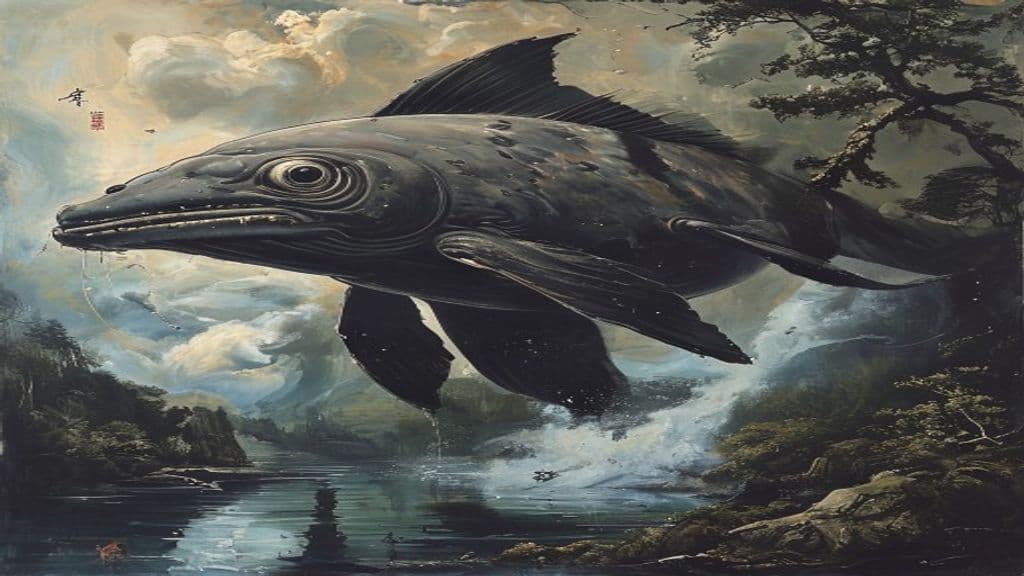
Amemasu (雨鱒, アメマス), sometimes Ō-amemasu (大アメマス), is a giant fish- or whale-like lake-being in Ainu-related and regional Japanese folklore. Tales attribute to it dangerous behaviors (capsizing boats, drowning people), landscape-changing effects (blocking lakes, causing floods), and a cosmological role in which very large individuals can affect earthquakes by 'holding up' the earth.

Amenohoakari
Greater

Amenohoakari

Amenohoakari (天火明) is a Japanese kami associated with sunlight, heat, and the ripening of grain; he functions as an agricultural deity and a divine ancestor claimed by multiple clans and hereditary priestly lineages. Textual sources place him within heavenly genealogy (tensonzoku) while other records give alternate parentage, producing divergent traditions about his origins and relationships to other kami.

Ameonna
Lesser

Ameonna

Ameonna (雨女, "rain woman") is a figure in Japanese folklore treated as a yōkai associated with rain. Sources depict her both as a rain-calling supernatural being (sometimes helpful in drought) and as a folk label for an unlucky person whom rain seems to follow; a key pictorial source is Toriyama Sekien's Konjaku Hyakki Shūi.

Amida Nyorai
Ancient

Amida Nyorai

Amida Nyorai (Amitābha / Amitāyus) is a principal Mahayana Buddha venerated across East Asia as the embodiment of Infinite Light and Infinite Life who presides over a Western Pure Land and is invoked as the savior who receives the dying into rebirth there.

Amikiri
Minor Spirit

Amikiri

An illustrated yōkai first attested in Toriyama Sekien's Gazu Hyakki Yagyō (1776), later described in modern writings as a small creature that cuts nets, mosquito curtains, and bamboo blinds. Scholarly commentary treats it as primarily an iconographic invention or pun by Sekien rather than a well‑attested folkloric agent.

Amitābha Buddha
Ancient

Amitābha Buddha

Amitābha is a principal Mahayana Buddha who presides over the Western Pure Land (the Land of Ultimate Bliss). Devotional practices—most centrally recitation of his name and chanting of Pure Land sutras—are presented in sources as the means by which Amitābha welcomes practitioners for rebirth in his hindrance-free realm.

Amorōnagu
Lesser

Amorōnagu

Amorōnagu (Amorōnagu / 天降女子) is a tennyo or celestial maiden figure in the folklore of Amami Ōshima (Kagoshima Prefecture, Japan). Attested sources describe her as a heavenly woman who bathes in pools and waterfalls in ravines on the island.

An (案)
Minor Spirit

An (案)

An (案) is a small table, desk, or platform used in Shinto ceremonies to bear offerings. It is a liturgical furnishing and material mediator in shrine rites rather than a sentient supernatural being.

Aoandon
Minor Spirit

Aoandon

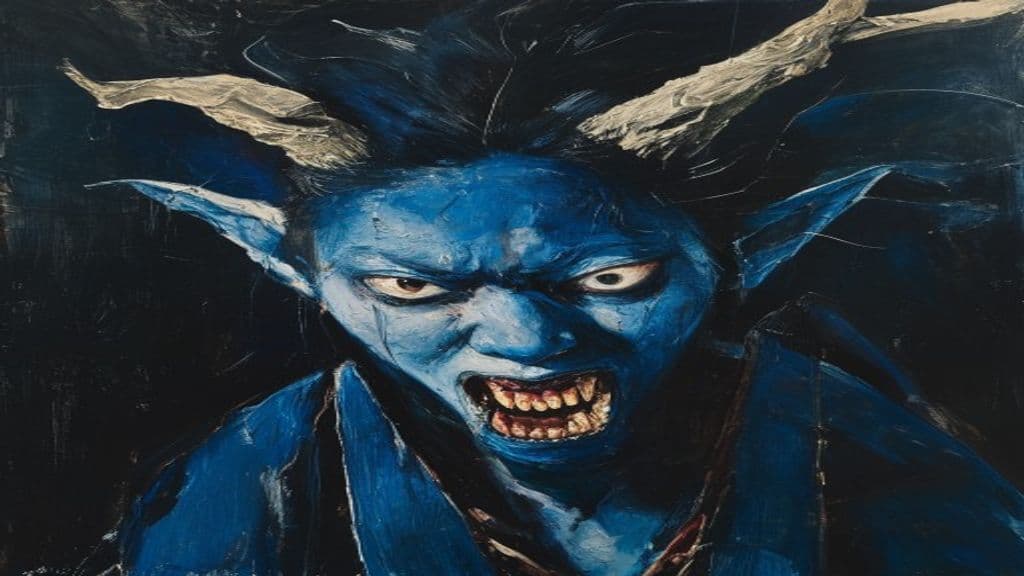
Aoandon (青行灯, "blue andon") is a yōkai figure represented in Edo-period yokai iconography, best known from Toriyama Sekien's Konjaku Hyakki Shūi. It personifies the eerie apparition said to appear at the conclusion of the Hyakumonogatari Kaidankai storytelling ritual and is visually depicted as a blue-skinned woman with horns and sharp teeth.

Aobōzu
Lesser

Aobōzu

Aobōzu (青坊主, "blue priest") is a Japanese yōkai whose depiction and behavior vary by locality. Appearing as a priestly humanoid with blue coloration or as a priest-faced apparition, it functions in regional legends as a frightening presence that can kidnap, threaten, or haunt people—especially children and schoolchildren—and is sometimes identified as a disguised animal or a mountain deity.

Aoi no Ue
Minor Spirit

Aoi no Ue

Aoi no Ue is a Heian-period noblewoman character in The Tale of Genji who becomes the victim of mono no ke (spirit possession). In the narrative she is portrayed as a high-ranking court wife of Hikaru Genji whose body is afflicted by the jealous spirit of Lady Rokujō and other wandering phantoms; the episode was later adapted into a Noh play titled Aoi no Ue.

Aonyōbō
Lesser

Aonyōbō

Aonyōbō (青女房) is a yōkai in Japanese folklore described in legend as a blue-skinned, ogre-like spirit who appears as an ancient court noblewoman and haunts the ruined houses of fallen nobles, embodying poverty, abandonment, and social decline.

Aosaginohi
Minor Spirit

Aosaginohi

Aosaginohi (also Aosagibi or Goi no hi) is a Japanese hikarimono — a night luminous phenomenon traditionally associated with a kind of heron (ao sagi/goi sagi). Recorded in Edo-period yōkai compendia and folkloric accounts, it is described as a ball or patch of blue flame or lantern-like glow often explained either as a gleaming heron in flight or as an uncanny light.

Arikura-no-baba
Minor Spirit

Arikura-no-baba

Arikura-no-baba (蟻鞍の婆, glossed "ant-saddle hag") is a local legendary figure from Takayama in Gifu Prefecture, Japan, described in sources as an old woman with supernatural powers. She is credited in the cited accounts with stopping a mountain eruption by prayer after it had been rumbling for seven days and with cooling the water of an onsen by throwing a horse's hoof into it.

Ashi-magari
Minor Spirit

Ashi-magari

Ashi-magari (足まがり) is a ghostly phenomenon from Kagawa Prefecture, Shikoku, Japan, described as a soft, unseen thing that wraps around a person's legs at night and impedes walking. It is commonly presented in local accounts as a tactile obstruction rather than a visually manifest creature and is often attributed to tanuki trickery.

Ashide
Lesser

Ashide

Ashide denotes (a) a historical Turkic clan/noble family closely allied with the Ashina ruling house of the Göktürk Khaganate and (b) a Japanese pictorial calligraphic technique (literally "reed-hand") in which cursive characters are disguised within painted natural motifs. Neither usage in the supplied sources describes a supernatural being.