Japanese Supernatural Beings

324 documented Japanese supernatural beings from the Evil Eye grimoire, including 179 lesser and 66 greater in power tier.

page 3 of 6

Fukusuke
Minor Spirit

Fukusuke

Fukusuke (福助) is a traditional Japanese talismanic doll depicting a kneeling man with a large head and topknot, historically enshrined in Edo-period tea houses and brothels and today commonly displayed in businesses as a symbol intended to bring good luck, prosperity, and honor.

Funayūrei
Lesser

Funayūrei

Funayūrei (船幽霊 / 舟幽霊) are Japanese yūrei—spirits of the dead—associated with boats and maritime settings. Traditions describe them as the restless or vengeful dead who manifest around vessels and coastal waters and who may attempt to drown living sailors or cause shipwrecks.

Furaribi
Lesser

Furaribi

A Japanese yōkai appearing in classical pictorial yōkai compendia as fire-associated, bird-like apparitions; some scholars interpret certain representations as visualizations of restless dead not given memorial rites. A Toyama Prefecture local tale links related nocturnal ghost-lights (buraribi / Sayuri-bi) to a specific vengeful spirit whose invocation produces an apparition.

Furutsubaki-no-rei
Lesser

Furutsubaki-no-rei

An old-camellia spirit (古椿の霊) in Japanese folklore said to develop from aged camellia trees. Attested in multiple regional tales, it appears as a beautiful woman or as a grotesque tree, emits a mournful night-cry that can serve as an omen, and in rare accounts entices victims who may disappear or be transformed.

Fushimi Tokiwa
Lesser

Fushimi Tokiwa

A named representation that links the historical/legendary woman Tokiwa Gozen with snow imagery (variants: Fushimi no Yuki, Yuki no Tokiwa). Sources present the figure in an ambiguous space between a human/legendary mother and the broader yuki-onna (snow-woman) motif, but do not establish Fushimi Tokiwa as a distinct supernatural species with defined powers or rituals.

Futakuchi-onna
Lesser

Futakuchi-onna

Futakuchi-onna (二口女, ふたくちおんな; "two-mouthed woman") is a Japanese yōkai characterized in folktales by an otherwise ordinary woman who bears a second, functional mouth on the back of her head beneath her hair. Stories commonly present the second mouth as a supernatural condition associated in narrative causation with stinginess, neglect, or injury.

Futsu-no-mitama
Greater

Futsu-no-mitama

A named sacred sword or charm in Japanese mythic and popular-culture references, presented in modern secondary sources as the weapon used by the kami Takemikazuchi to "quell the lands" and later associated in some summaries with transfer to Emperor Jimmu. In contemporary media it is frequently adapted as a named piece of equipment or charm that grants combat power or symbolic authority.

Gagoze
Lesser

Gagoze

Gagoze is a Japanese yōkai traditionally associated with Gangō-ji temple in Nara. In classical sources and pictorial collections it is treated as an oni-like, temple-associated spirit that appears at night and was implicated in a Heian-period tale of nocturnal killings at the temple's bell tower.

Gaki (hungry ghosts)
Lesser

Gaki (hungry ghosts)

Gaki is the Japanese term often used in secondary literature for beings corresponding to the Sanskrit preta, commonly translated as 'hungry ghosts.' The supplied source material for this entry contains no substantive primary descriptions and therefore records questions and absences as well as the minimal, well-attested identification as a named category.

Gashadokuro
Greater

Gashadokuro

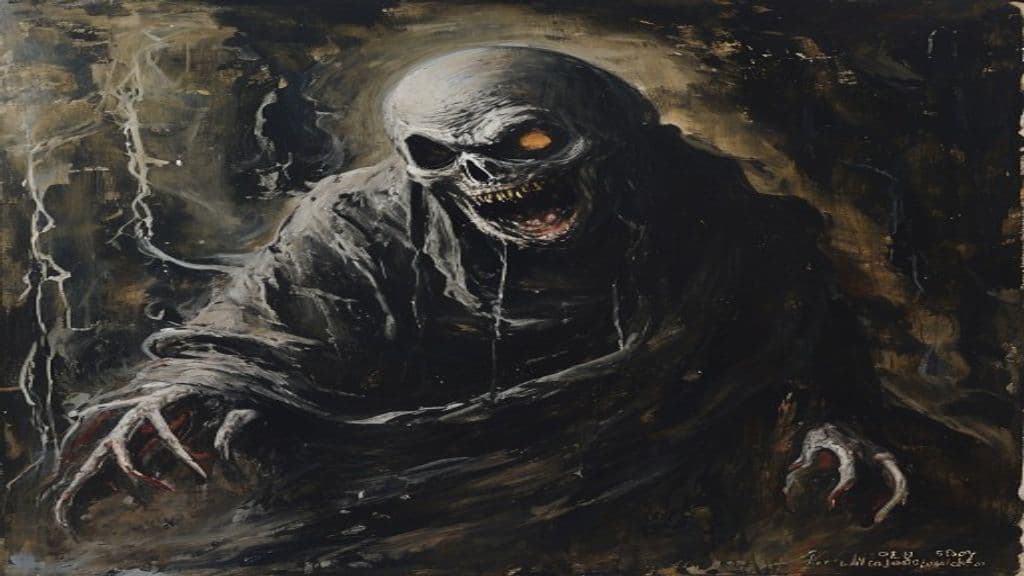
A fifteen-times-human-height skeletal yokai formed from the bones of those who starved to death or died on battlefields, their unburied remains fused together into a hungry colossus.

Ghost Train
Lesser

Ghost Train

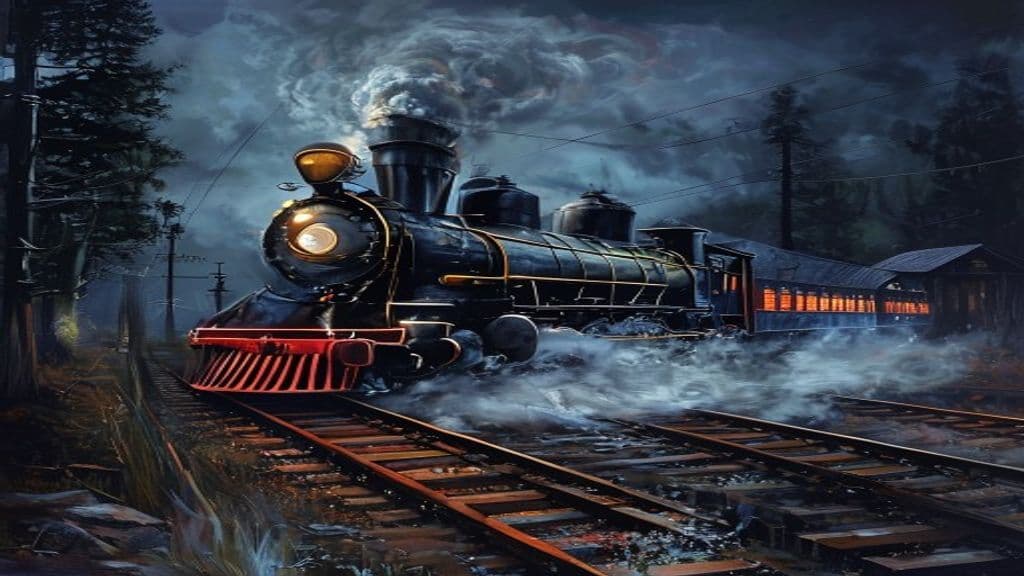
A folkloric apparition whose visible form is an entire train or rail vehicle rather than a single disembodied human spirit. Reported in multiple regions where railways have been significant, it appears variously as omen, commemorative phantom, or an imitation created by animal tricksters in local tales.

Giant frog
Minor Spirit

Giant frog

The English label "giant frog" in the supplied sources is ambiguous: it names several very large real-world frog species (Blyth's river frog, Cyclorana australis, and the Goliath frog) and also appears as a short Wikidata classification linking the phrase to the category of youkai in Japanese mythology. The materials do not supply a single, unified folkloric entity or narrative for a specific giant-frog youkai.

Gigan
Greater

Gigan

Gigan is a fictional kaiju from Toho's Godzilla franchise: a constructed, weaponized, avian-appearing monster presented in Showa continuity as an extraterrestrial creature transformed into a cyborg by the Nebulans and in Millennium continuity as an ancient bioweapon created by the Xilliens. He serves as an alien-deployed combatant and recurring antagonist in films, television, and related media.

Gishiki Hachimen Daiō (unattested name)
Ancient

Gishiki Hachimen Daiō (unattested name)

The name 'Gishiki Hachimen Daiō' is not attested in the provided sources as a discrete folkloric entity. The supplied materials instead document the kijo Momiji (紅葉, 'Maple Leaves') from Nagano legends and the toponymic element Daiō (大王, 'great king') appearing in modern place-names such as Daio Wasabi Farm; no source links these into a single named being called Gishiki Hachimen Daiō.

Gohō dōji
Lesser

Gohō dōji

A guardian attendant spirit in Japanese Buddhist folklore depicted as a youthful protector devoted to defending the Dharma and assisting followers of Buddhist teaching. Attested in medieval narrative collections and illustrated emaki, the figure appears as a cultic attendant associated with dharmapāla-type protection.

Goryō (御霊)
Greater

Goryō (御霊)

In Japanese belief, goryō are spirits of the dead—specifically honorificly framed spirits of persons who died unjustly, prematurely, or in political disgrace—whose unrest was thought to produce calamities until they were ritually and politically appeased and often enshrined as kami.

Guruguru Medaman (Amanojaku)
Lesser

Guruguru Medaman (Amanojaku)

Guruguru Medaman is identified in the supplied sources with the Amanojaku — a demon-like, contrarian being in Japanese folklore classed among wicked ogre-gods (akukijin), small ogres (ko-oni), and yōkai. The name also appears as a media character title in an archived audiovisual clip, but the supplied material contains no detailed traditional narratives, rituals, or specific physical descriptions for this named form.

Hachikazuki
Lesser

Hachikazuki

Hachikazuki is the human heroine of a Japanese Otogi-zōshi folktale (literary folktale) in which a noble-born maiden conceals her beauty by wearing a bowl on her head, endures mistreatment, works in menial service, and is ultimately revealed and married to a prince. The character is treated in sources as a folktale protagonist and narrative archetype (a persecuted heroine), not as a supernatural being.

Hachiman
Ancient

Hachiman

Hachiman is a long‑venerated syncretic Japanese tutelary deity whose identity spans Shinto kami worship and Buddhist practice. Traditionally associated with the deified spirit of Emperor Ōjin, Hachiman functions as a protector of warriors (notably the Minamoto and samurai), Buddhist temples, the imperial house, and the nation, and appears in both native shrine cults and as the Buddhist 'Great Bodhisattva Hachiman.'

Hakuzōsu
Lesser

Hakuzōsu

Hakuzōsu (白蔵主) is a named kitsune character in Japanese folklore who adopts the social role of a Buddhist priest or uncle in multiple local legends and theatrical versions. As a concrete fox-spirit tied to Inari-associated cultic contexts and village life, Hakuzōsu appears in narratives that emphasize shapeshifting, impersonation, and interaction with hunters and temple communities.

Hanako-san
Lesser

Hanako-san

Hanako-san (Toire no Hanako-san) is a modern Japanese urban-legend spirit said to haunt school toilets. Commonly framed as the ghost of a young girl associated with a particular stall/floor of a school lavatory, the figure is transmitted chiefly in school settings and popular media and is described variously as a yūrei or a yōkai.

Hanasaka Jiisan
Lesser

Hanasaka Jiisan

A Japanese folktale figure centered on a beloved dog whose postmortem agency, conveyed in dreams and by the ashes of a burned mortar, rewards a kind old couple (making rice turn to gold and causing cherry trees to bloom) while an envious neighbor who copies the actions is punished. The tale emphasizes kindness to animals, dreams as channels of guidance, and the miraculous efficacy of ordinary materials associated with the dog.

Hannya (般若)
Greater

Hannya (般若)

Hannya is a traditional Japanese Noh mask type and the theatrical/folkloric embodiment of a woman transformed into a resentful, jealous spirit. The mask represents a stage of metamorphosis into an onryō-like figure, visually marked by horns and a leering mouth, and is situated at the intersection of Noh theatre, ritual dance (kagura), and Buddhist-influenced folk belief.

Hare of Inaba
Minor Spirit

Hare of Inaba

A mythic white hare (Inaba no Shirousagi) from the Izumo cycle of ancient Japanese myth, best known from the Kojiki narrative in which it interacts with the deity Ōnamuchi-no-kami; the hare functions as an anthropomorphic plot figure whose trickery, injury, and subsequent healing help reveal aspects of the deity's character and destiny.

Harionago
Lesser

Harionago

Harionago (針女子), also called Harionna (針女), is a frightening female supernatural figure from regional Japanese folklore, described as a beautiful woman whose extremely long, barbed hair is under her control and used to ensnare and attack young men on roads in Ehime Prefecture, Shikoku.

Hashihime
Greater

Hashihime

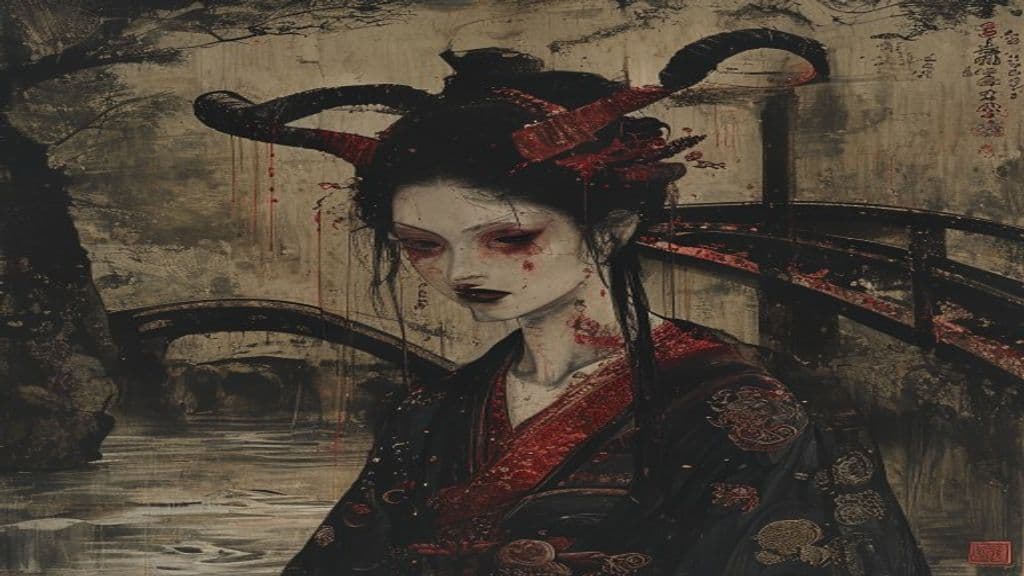
Hashihime (橋姫, "Bridge Maiden/Princess") is a Japanese literary and folkloric figure variously depicted as a poetic emblem of lonely waiting at bridges and, in later tales and drama, as a woman who through ritual transforms into a violent, bridge-associated vengeful spirit.

Hasshaku-sama
Lesser

Hasshaku-sama

Hasshaku-sama (八尺様) is a contemporary Japanese urban-legend figure depicted as a very tall, pale womanlike spirit associated with isolated rural zones; circulating since the late 2000s in internet folklore, she is said to target children and young people and is warded in stories by sealed rooms, talismans, salt, and boundary Jizō statues.

Hata no Kawakatsu
Greater

Hata no Kawakatsu

Hata no Kawakatsu (秦河勝 / Hada no Kōkatsu) is a semi-legendary Asuka-period courtier and leader of the Hata clan attested in classical chronicles. In the Nihon Shoki he appears as a high-ranking official who received a Buddha image from Prince Shōtoku, founded Hachioka-dera (Kōryū-ji), escorted foreign envoys, and suppressed the popular cult of Tokoyo-no-Kami. Later medieval traditions expand his biography with legendary accretions (e.g., claimed descent or identification with Qin imperial lineage, enshrinement as Ōsake Daimyōjin, and association with performing-arts ancestry).

Hawk's Eye
Lesser

Hawk's Eye

Hawk's Eye is a named antagonist from the Sailor Moon SuperS-era antagonists and appears in the Sailor Moon Eternal adaptation. Presented as a humanoid member of the Dead Moon Circus ensemble, Hawk's Eye fights the Sailor Guardians, uses disguise/deception in the manga, and is defeated in combat by Super Sailor Jupiter in the supplied summaries.

Headless Rider (Kubinashi Rider)
Lesser

Headless Rider (Kubinashi Rider)

A modern urban-legend revenant of a motorcyclist who suffered a decapitating accident and is said to reappear along the route or at the time of death, often riding a motorcycle without a head. The cycle adapts older headless‑rider motifs to motorized roadways and functions as a contemporary cautionary and liminal apparition.

Hibagon
Lesser

Hibagon

The Hibagon is a regional cryptid reported around Mount Hiba in Hiroshima Prefecture, Japan, described as a large, bipedal, hairy humanoid. Reported since the 1970s, it is presented in sources as a local analogue to North American Bigfoot and the Himalayan Yeti and treated primarily as a cryptozoological/folkloric curiosity rather than a being embedded in traditional religious cosmology.

Hiderigami (Hanba)
Ancient

Hiderigami (Hanba)

Hiderigami (Japanese) / Hanba (Chinese, 旱魃) is a drought‑associated supernatural being in East Asian tradition. Treated variously as a goddess, spirit/ghost, monster, and later vampire‑like or shape‑changing entity, it is chiefly known for causing severe drought and drying up waters in affected places.

Himegami
Lesser

Himegami

Himegami (比売神) is a general term in Shinto for a female kami; it can refer either to an independently identified goddess or to a feminine relational role (for example, the wife, daughter, or other important relation) of a male kami enshrined at the same shrine. The term functions as a classificatory title within Shinto practice rather than denoting a single uniform mythic individual.

Hito-gitsune
Minor Spirit

Hito-gitsune

A household-associated small carnivore spirit from western Japan (Chūgoku region) that attaches to certain families, providing wealth in belief but causing illness, behavioral change, social stigma, and transmission across households. It is represented in regional traditions as a marten/fox/weasel‑like possessing spirit rather than a singular individualized deity.

Hitogami (Arahitogami)
Minor Spirit

Hitogami (Arahitogami)

Hitogami, often rendered Arahitogami (現人神), is a term in Shinto denoting a kami who is a human being — a divinity identified with or embodied in a human. The term is attested in classical Japanese sources such as the Nihon Shoki and is treated in modern reference works as a category of Shinto deity.

Hitorigami
Primordial

Hitorigami

Hitorigami (独神) are a class of solitary-origin kami in Shinto cosmogony who 'came into being alone' rather than as male–female pairs. They are primordial, often hidden deities named in early texts (e.g., the Kojiki) and include figures such as Ame‑no‑Minakanushi and Kuni‑no‑Tokotachi.

Hitotsume-kozō
Lesser

Hitotsume-kozō

A class of Japanese yōkai depicted as a bald child or young monk with a single central eye; typically a mischievous, comparatively harmless apparition that startles people and appears in Edo-period picture-books, local tales, and calendar-based folk practices.

Hitotsume-nyūdō
Lesser

Hitotsume-nyūdō

A Japanese yōkai appearing as a one‑eyed ōnyūdō (large monk). Found in roadside and procession narratives, it is variously explained as an autonomous monkish spirit, a transformed or admonishing monk figure from Mount Hiei, or as a kitsune/tanuki disguise in local traditions.

Hoderi (Umisachi-hiko)
Ancient

Hoderi (Umisachi-hiko)

Hoderi, also called Umisachi-hiko in some accounts, is a figure from the Kojiki and Nihon Shoki presented as a kami of the sea’s bounty and an enchanted fisherman. Son of Ninigi and Konohanasakuya-hime, he is associated with a magic fishing hook, a quarrel with his brother Hoori over exchanged sacred gifts, and is recorded as ancestor of the Hayato people.

Hone-onna
Greater

Hone-onna

Hone-onna (骨女, "bone woman") are a class of yōkai in Japanese folklore identified as women who died while still attached to living lovers and who return at night to reunite with those lovers. To the beloved they appear as beautiful young women, while their true form is a decaying skeleton; their nocturnal visits are said to drain the life force of the living partner unless the deception is revealed or religious protections are maintained.

Household deity
Lesser

Household deity

A household deity is a deity or spirit that protects the home and its members, cared for inside domestic spaces and integrated into everyday household ritual. The category spans distinct cultural instantiations — hearth goddesses, ancestral family kami, and animistic house-spirits — and is characterized by reciprocal relations of offering and protection rather than cosmic sovereignty.

Hyakki Yagyō
Greater

Hyakki Yagyō

An idiom and folkloric motif in Japanese tradition describing a mass nocturnal procession of supernatural creatures (yōkai and related beings) that march through human streets at night. Depictions and stories vary: sometimes an orderly parade, sometimes a chaotic riot, and encounters are commonly described as dangerous to humans.

Hyottoko
Lesser

Hyottoko

Hyottoko is a comical masked character in Japanese folk performance, symbolically tied to fire and the household hearth. Primarily a stock clown in dengaku and festival dances, in some regional traditions he is also regarded as a local fire-deity or household talisman associated with luck and productive fire (ironworking).

Hyōsube
Lesser

Hyōsube

A child-sized river yōkai from Kyūshū folklore (notably Saga and Miyazaki) associated with underwater caves and rivers; known for fouling household baths, raiding eggplant crops, and sometimes causing mysterious fevers. Often treated as a kappa-cousin within regional river-yōkai traditions.

Ibaraki-dōji
Greater

Ibaraki-dōji

Ibaraki-dōji (茨木童子 / 茨城童子) is an oni from Heian-period tale cycles, portrayed as a powerful, place-associated demon-child who served in Shuten-dōji’s gang based on Mount Ōe and acted as an antagonist to warrior-heroes such as Minamoto no Yorimitsu and his retainers. Multiple local traditions (Settsu/Osaka and Echigo/Niigata variants) give differing origin episodes that emphasize unnatural birth, early signs of monstrosity, and later violent behavior.

Ikiryō
Greater

Ikiryō

In Japanese belief and classical literature, an ikiryō (生霊, lit. 'living spirit') is the soul or spirit of a living person that leaves the body and manifests elsewhere, sometimes haunting, possessing, or affecting others; it is distinct from the spirit of the dead (shiryō) and is variously tied to strong emotions, portents of death, or possession.

Ikuchi
Lesser

Ikuchi

An Edo-period Japanese maritime yōkai reported as an enormously long sea creature that appears at night to slither over ships and deposit copious viscous oil, forcing crews to bail and cleanse their vessels to avoid sinking.

Imugi (proto-dragon)
Lesser

Imugi (proto-dragon)

Imugi (이무기; also transcribed Imoogi) is a Korean folkloric proto‑dragon — a large serpentine, aspirant creature described in modern summaries as a 'lesser dragon' that may become a true Korean dragon through a transformative act.

Inari
Ancient

Inari

Inari is a major Shinto kami of Japan associated primarily with rice and the rice harvest, agriculture, food/prosperity, foxes as messengers, and, in broader practice, industry. Venerated at thousands of shrines (most prominently Fushimi Inari-taisha on Mount Inari), Inari receives offerings and votive donations such as torii gates and food (notably inari-zushi).

Inari Ōkami
Ancient

Inari Ōkami

Inari Ōkami is a major Shinto kami primarily associated with rice cultivation, fertility, food, and general worldly prosperity; over time Inari's patronage expanded to trades such as swordsmithing and commerce, and the figure is syncretically identified with various Buddhist and Shinto deities. Inari is venerated at thousands of shrines across Japan and is closely tied to white foxes (kitsune) who act as messengers in popular belief.

Inugami
Minor Spirit

Inugami

Inugami (犬神) are Japanese household-associated dog-spirits that appear in western Japan. In folklore they may be intentionally created by kodoku/kojutsu rituals or become hereditary household possessors that attach to people, animals, or objects and produce illness, jealousy, or social stigma.

Inugami Gyōbu
Greater

Inugami Gyōbu

Inugami Gyōbu (隠神刑部), also called Gyōbu-danuki, is a named bake-danuki figure from the Matsuyama (Iyo Province) folk tradition. In local narrative cycles he functions as an individualized, powerful leader of a household of tanuki associated with Kumayama cave and is portrayed variously as a protector of Matsuyama Castle, a recipient of vassal faith, and an active supernatural agent in the O-Ie Sōdō (domain disturbance) narratives.

Ishinagenjo
Lesser

Ishinagenjo

Ishinagenjo is a Japanese coastal folkloric phenomenon in which fishermen hear the sound and feel the effects of a huge stone crashing into the sea though no stone is ever found. Sources treat it variously as an episode of yōkai activity (sometimes linked to sea-witch figures such as the Iso Woman) or as an illusion/perceptual error recorded in fisherfolk accounts from several coastal localities.

Isonade
Greater

Isonade

A large, shark-like sea monster from Japanese regional folklore (notably Matsuura and other parts of western Japan). Its body is said to remain hidden beneath the waves, with only a huge, barbed tail fin visible; it approaches boats stealthily, can snare sailors with its hooked tail, capsize vessels, strike beaches, and is associated with fierce winds when it appears.

Issun-bōshi
Lesser

Issun-bōshi

Issun-bōshi (一寸法師, "One-sun Boy") is the protagonist of a Japanese folktale: a human child born the size of one sun (about 3 cm) who travels to the capital, serves in a noble household, defeats an oni by bravery and craft, and— in some variants—acquires a magic mallet that enlarges him. The figure is principally a miraculous or abnormal human hero in premodern tale cycles, later sometimes mentioned in Edo-period popular culture as a label for very small people or as a yōkai-type motif.

Ittan-momen
Lesser

Ittan-momen

Ittan-momen (一反木綿, "one bolt of cotton") are Japanese yōkai traditionally described in Kagoshima folklore as a white, flying strip of cloth (reported roughly 10.6 m by 30 cm) that appears at dusk and night, wrapping around faces and necks to suffocate or carry victims away. The motif functions chiefly as a local cautionary tale and has been reimagined in modern popular culture.

Izanagi (Izanagi-no-Mikoto)
Primordial

Izanagi (Izanagi-no-Mikoto)

Izanagi is a principal creator deity in early Japanese cosmogony who, together with his sister-spouse Izanami, shapes the chaotic primordial world, begets the islands and many kami (including Amaterasu, Tsukuyomi, and Susanoo), descends to Yomi to retrieve Izanami, and establishes purification and boundary practices by his actions on return.

Izanami (Izanami-no-Mikoto)
Primordial

Izanami (Izanami-no-Mikoto)

Izanami is a primordial female creator deity in ancient Japanese cosmogony and Shinto worldview, portrayed as co-creator of the Japanese islands and many kami and as the originator of death after dying in childbirth and taking residence in the land of the dead (Yomi).

Janjanbi
Lesser

Janjanbi

Janjanbi (じゃんじゃん火) is a Japanese local tradition of onibi — animate ghost‑lights tied to human deaths and unsettled spirits. Documented variants from Nara Prefecture present janjanbi as balls of fire or hitodama that appear at specific sites, make a characteristic "jan‑jan" sound, and are woven into local rites and avoidance customs.

Japanese dragon
Greater

Japanese dragon

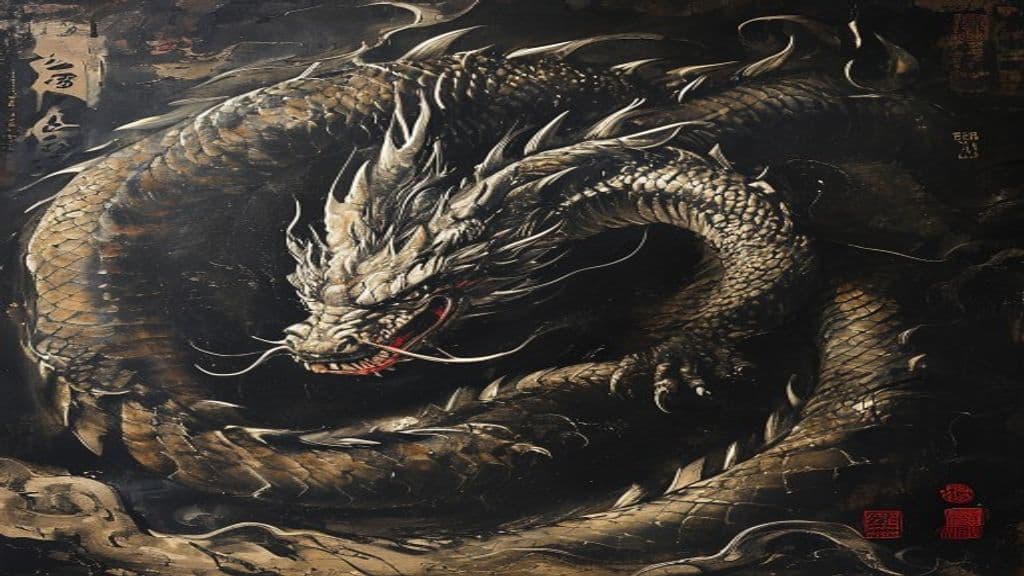
A class of large serpentine beings in Japanese myth that function variously as water deities, regional kami, Buddhist nāga/dragon kings, and shapeshifting supernatural creatures associated with seas, rivers, rain and related powers.