Japanese Supernatural Beings

324 documented Japanese supernatural beings from the Evil Eye grimoire, including 179 lesser and 66 greater in power tier.

page 5 of 6

Ponyo
Greater

Ponyo

Ponyo is a fictional goldfish-like child with a human face from the Studio Ghibli film Ponyo on the Cliff by the Sea. Born as Brunhilde to the underwater wizard Fujimoto and the powerful maternal figure Gran Mamare, she escapes to the human shore, bonds with a boy named Sōsuke, and uses potent magic whose release threatens the balance between sea and land.
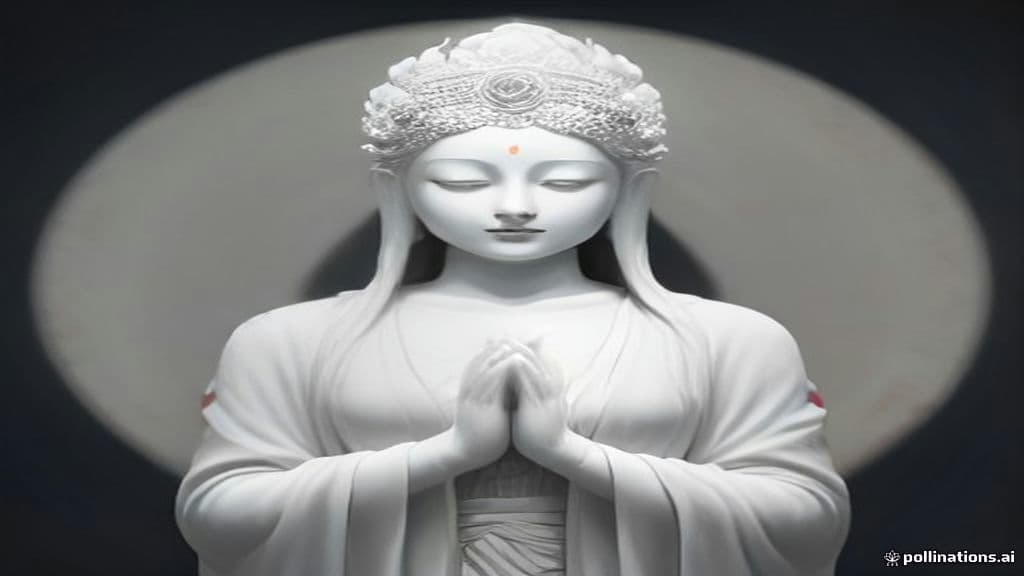
Pāṇḍara-vāsinī (White-Robed Guanyin / Baiyi Guanyin)
Ancient

Pāṇḍara-vāsinī (White-Robed Guanyin / Baiyi Guanyin)

A figured form of Avalokiteśvara/Guanyin known in East Asian Mahāyāna devotional and mandalic contexts as the White-Robed (Baiyi) Guanyin. Associated in sources with garbhadhātu (womb) mandala inclusion and maternal/childbirth devotional functions rather than as a hostile spirit.

Qilin
Greater

Qilin

A legendary hooved chimerical creature of Chinese literary tradition (麒麟, qílín) whose appearances in classical accounts function as auspicious omens tied to the birth, arrival, or death of sages and illustrious rulers. The creature is part of a broader East Asian set of correspondents (Japanese kirin, Korean girin) and was historically conflated with the real giraffe in Ming-dynasty court encounters.

Raijū
Lesser

Raijū

The raijū (雷獣, 'thunder beast') is a Japanese yōkai associated with lightning and thunder and traditionally described as a companion or animated manifestation of the storm deity Raijin. Folklore links its appearances to thunderstorms and lightning strikes and records regional customs developed to mark, ward, or respond to its presence.

Reikon
Lesser

Reikon

Reikon (霊魂) is the Shinto/Japanese cultural concept of the human soul or spirit that persists after death. Proper funerary rites allow a reikon to join its ancestors; if rites are absent or death is violent, the reikon can remain among the living as a yūrei until ritually eased.
Rep-un-kamuy
Greater

Rep-un-kamuy

An Ainu kamuy (spirit/deity) of the sea associated especially with orcas and whales; depicted sometimes as an orca and sometimes as a young man with a harpoon. He appears in myths as a provider of whale bounty to humans and in at least one story as the agent who pulls a monstrous spider into the sea and transforms it into Akkorokamui.

Rokurokubi
Lesser

Rokurokubi

A Japanese yōkai-class apparition associated with humans (most often women) who display an uncanny bodily anomaly: either an extremely extendable neck or a head that detaches and moves independently (the latter often called nukekubi). Appears in classical kaidan collections and Edo-period encyclopedias and is variously framed in sources as a supernatural being, an illness, or the soul wandering during sleep.

Ryūjin
Greater

Ryūjin

Ryūjin (龍神, 'Dragon God') is a dragon-shaped water kami in Japanese myth who functions as a tutelary deity of the sea. Worshipped in strands of Shinto belief (Ryūjin shinkō), he is credited with control of tides, influence over rain and fisheries, and intervenes in human affairs from his undersea palace Ryūgū-jō.

Rōjinbi
Lesser

Rōjinbi

Rōjinbi (老人火, rōjin no hi) is an Edo-period Japanese onibi — a supernatural luminous flame said to appear in mountain roads and provincial boundaries, often described as appearing in association with an elderly person. It is portrayed in period bestiaries as a hazardous spectral light encountered by travelers at night, especially on rainy nights along the Shinano–Tōtōmi boundary.

Sabnak
Lesser

Sabnak

Sabnak is a name attested in modern popular-media sources rather than a single traditional folkloric being. In the supplied material it appears as a human surname (Orga Sabnak) in Mobile Suit Gundam SEED and as the name of an enemy creature in the video game Wild Arms 3; the Wild Arms entry notes the name 'comes from a marquis in demonology' with several variant spellings.

Sadāparibhūta (Bodhisattva Never Despising)
Minor Spirit

Sadāparibhūta (Bodhisattva Never Despising)

A bodhisattva figure appearing in Chapter 20 of the Lotus Sūtra whose defining practice is never to despise any person and to declare the future Buddhahood of those he meets; his story functions as an avadāna illustrating karmic consequences and the soteriological efficacy of reverent faith in the Lotus teaching.

Sailor Ceres (CereCere)
Lesser

Sailor Ceres (CereCere)

Sailor Ceres (also rendered CereCere or Cele Cele in some localizations) is a fictional character from the Sailor Moon franchise. She appears as a pink‑haired member and leader of a circus‑themed antagonist Quartet within the Dead Moon Circus in the Dream / SuperS story arc and is described in source material as a trapeze artist who can manipulate flowers, known as the "Flower Magician."

Sailor Venus (Minako Aino / Sailor V)
Greater

Sailor Venus (Minako Aino / Sailor V)

Sailor Venus is a fictional Sailor Guardian — a human adolescent (Minako Aino) who is also an awakened warrior-avatar associated with the planet/goddess Venus. Awakened by the white cat Artemis, she serves as a protector of Earth/the Solar System in the Sailor Moon/Codename: Sailor V narratives, wielding powers thematically tied to love, beauty, light, and golden imagery.

Samebito
Lesser

Samebito

A shark-like humanoid sea-being from Japanese literary and folkloric sources most familiar from Lafcadio Hearn's retelling "The Gratitude of the Samebito" (based on Kyokutei Bakin's tale "Kōjin"). Described as frightening in appearance but gentle in temper, the Samebito is notable in the tale for shedding tears that turn into precious gems.

Sanki Daigongen (三鬼大権現)
Lesser

Sanki Daigongen (三鬼大権現)

Sanki Daigongen (三鬼大権現) is a named gongen — a syncretic manifestation concept in Japanese religion — cited in festival and shrine listings for Itsukushima (Miyajima). The name literally combines characters for "three" (三), "oni/spirits" (鬼), and "great gongen" (大権現), placing the figure within the cultural category of a buddha manifesting as a local kami in the shinbutsu‑shūgō framework.

Sankōbō
Lesser

Sankōbō

Sankōbō is attested in a single cited source as a type of tengu in Japan. The available record provides only this classificatory label and supplies no further description, narratives, or ritual information.

Sanmoto Gorōzaemon
Minor Spirit

Sanmoto Gorōzaemon

Sanmoto Gorōzaemon is a named figure noted on a character list page for the modern manga Nura: Rise of the Yokai Clan. The cited source is a general roster of characters in that fictional work and does not supply narrative, descriptive, or ritual detail specific to this name.

Sarugami
Lesser

Sarugami

A name that appears in a comparative survey of monkey-related figures under the Japan heading; the provided sources give no independent traditional accounts, descriptions, or rituals for Sarugami itself.

Shachihoko
Minor Spirit

Shachihoko

A Japanese mythic sea-creature and roof-ornament (shibi) combining a predator head (dragon or tiger) with a carp body. In Japanese architectural and folkloric contexts it functions as an apotropaic roof guardian believed to store water and control rain, used primarily to protect wooden buildings from fire and as a status emblem.

Shidaidaka
Lesser

Shidaidaka

A regional yōkai from Japan's Chūgoku region that appears above roads and changes apparent height with an observer's gaze: it grows taller when looked up at and becomes smaller or disappears when looked down upon. Local variants record specific injunctions and narrative resolutions in several prefectures (Tottori, Shimane, Yamaguchi, Hiroshima, Okayama).

Shii (yokai)
Lesser

Shii (yokai)

The provided source is a short biographical note on manga artist Daijiro Morohoshi and does not mention or describe any yokai named "Shii." Any association of a yokai called Shii with Morohoshi’s work is speculative based on this single excerpt and is not supported by the material provided.

Shobijin
Lesser

Shobijin

Tiny twin fairies who serve as the priestesses and emissaries of the giant guardian Mothra (Mosura), acting as ritual singers and spokeswomen for Infant Island and its protector across multiple films and media appearances.

Shuten-dōji
Greater

Shuten-dōji

Shuten-dōji is a legendary oni described in Japanese sources as the 'Demon King of Mt. Oe' who terrorized the region in folklore and was slain by the hero Minamoto no Raikō and his companions. In the best-known episode the demon is decapitated, yet the detached head remained animate and attempted to bite the hero, who survived by wearing multiple helmets stacked on his head.

Shōgōrō
Minor Spirit

Shōgōrō

Shōgōrō is not a stable, well-attested yokai in the provided sources; the string “Shōgōrō / Shogoro” occurs widely as a personal, publisher, and stage name in modern and historical Japanese records. A single modern blog post (A-Yokai-A-Day) presents a speculative folkloric reading that treats Shōgōrō as an animate shōgō (a small Buddhist temple gong), but no corroborating classical, ethnographic, or academic sources for a yokai named Shōgōrō are present among the supplied materials.

Shōjō
Lesser

Shōjō

A figure derived from the Chinese xing‑xing/shengsheng—an ape‑like marvelous creature—later adapted in Japanese culture as a red‑faced, sea‑associated spirit famed for its love of alcohol and its appearance in Noh drama.

Shōkera
Lesser

Shōkera

A Japanese yōkai depicted in Edo-period emaki (illustrated scrolls) such as the Hyakkai Zukan and Toriyama Sekien's Gazu Hyakki Yagyō. In folk-religious contexts the shōkera is associated with the Kōshin-Machi custom and with the Three Corpses belief, functioning in tradition as a surveillant or harmful presence tied specifically to Kōshin night and to the moral cosmology of internal 'insects' that report misdeeds to heaven.

Sin-you
Greater

Sin-you

A single-horned mythic quadruped in East Asian (especially Japanese) folklore, depicted as an emblem of judicial truth that can detect lies and sometimes execute the guilty. It is portrayed alongside rulers or judges in some accounts and contrasted with other auspicious composite beasts such as the Qilin.

Smallpox demon (hōsōshin / hōsōgami)
Lesser

Smallpox demon (hōsōshin / hōsōgami)

In Japanese folk belief the smallpox demon (Japanese: 疱瘡神, hōsōshin / hōsōgami) is a sickness‑spirit or disease‑kami held responsible for outbreaks of smallpox. Communities treated it as an intentional supernatural agent that could be appeased, placated, driven off, or even enshrined through ritual, performance, color symbolism (especially red), and offerings.

Soroban-bōzu
Lesser

Soroban-bōzu

A name listed as part of an anthology of adapted Japanese folktales in the television series Hometown Rebuilding: Folktales from Japan. The sole supplied source mentions the name but provides no descriptive information, origin, or folkloric attestation for the figure.

Spirit Turtle (靈龜 / 霊亀)
Lesser

Spirit Turtle (靈龜 / 霊亀)

An East Asian sacred turtle category originating in Chinese textual tradition and adopted into Japanese and Korean cultural contexts; the spirit turtle denotes extreme longevity and auspicious sacred status and appears chiefly as a symbolic or cultic emblem rather than an explicitly hostile supernatural agent.

Suijin
Lesser

Suijin

Suijin (水神, also Mizugami 水神 / みずがみ) is a general name in Japanese/Shinto practice for water deities and water-associated spirits. The term covers heavenly and earthly manifestations enshrined at springs, wells, rivers, ponds, irrigation works and in Suitengū shrines, and is connected with purification, safe water provision, fishing, fertility, and childbirth.

Sunakake‑Baba
Lesser

Sunakake‑Baba

Sunakake‑Baba is a malicious yokai depicted as a little old woman who attacks travelers by throwing sand into their eyes; attestations in the supplied materials are sparse and situate her within the broader Japanese yōkai tradition and popular media retellings.

Sunekosuri
Minor Spirit

Sunekosuri

A Japanese yōkai from Okayama Prefecture described in folkloric sources as a small roadside spirit that rubs against the lower legs (the space between the legs) of pedestrians at night, causing brief difficulty walking but no lasting harm. Regional variants describe similar leg-catching behavior that can cause falls.

Swan maiden
Lesser

Swan maiden

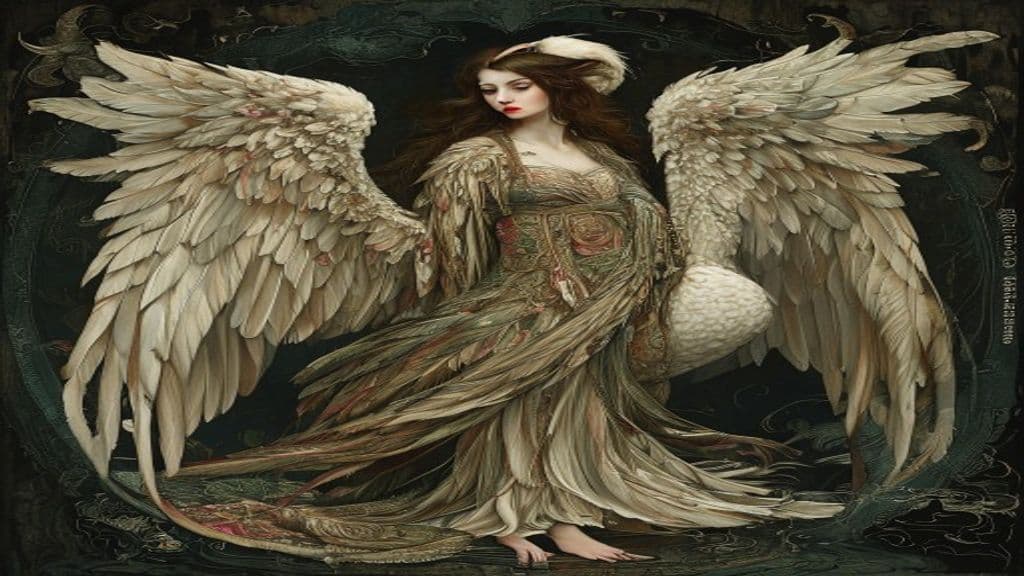
A widespread folktale and mythic figure: a female being who changes between human form and a bird via a feathered garment (feather cloak, swan‑shirt, hagoromo). The motif appears across many cultures and is classed in folktale catalogues under ATU 400 and related 'magic wife' narratives.

Tamamo-no-Mae
Greater

Tamamo-no-Mae

A legendary shape‑shifting fox‑spirit figure in Japanese mythology who, in otogizōshi and later Edo folklore, appears as a favored courtesan in imperial courts, causes a ruler's illness and political disorder, and—after death—was said to embed her spirit in the poisonous Sesshō‑seki stone until Buddhist rites pacified her.

Tamonten
Lesser

Tamonten

Tamonten is a label attested in available sources in two different classificatory contexts: one places the name within the cosmology of Buddhist devas (the Cāturmahārājakāyika, the realm associated with the Four Heavenly Kings), and a separate modern dataset entry links the same label to the category "tengu in Japan." The supplied materials are fragmentary and do not provide a unified account of Tamonten as an individual figure.

Tanuki
Lesser

Tanuki

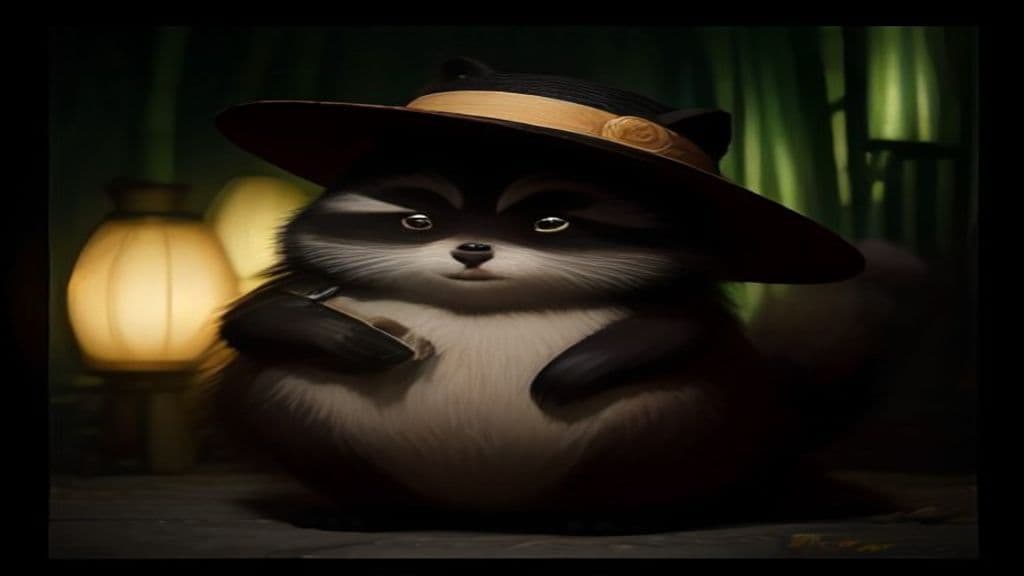
The raccoon-dog spirit of Japanese folklore — a cheerful trickster and master of shape-shifting, less dangerous than the kitsune but far more mischievous. Famous for leaves transformed into money.

Teke Teke
Greater

Teke Teke

A Japanese urban-legend onryō of a young woman split in half by a train; she moves by dragging her upper body and produces a scratching 'teke teke' sound while attacking victims, often by slicing them in half to mirror her own injury. A named variant, Kashima Reiko, haunts bathroom stalls and questions occupants about her missing legs.

Tengu
Greater

Tengu

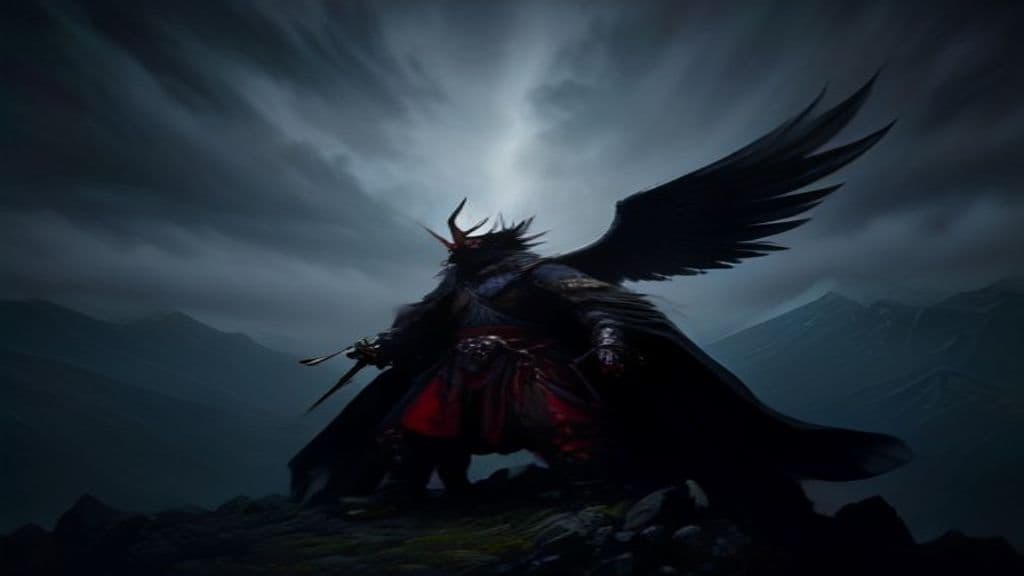
Proud, warrior-like mountain spirits of Japan, associated with martial arts, pride, and the wild mountains. Neither fully good nor evil — they test and train warriors and monks, but punish the arrogant.

Tennin
Lesser

Tennin

Tennin (天人) are celestial, person-like beings in the Japanese Buddhist framework who serve as heavenly attendants, dancers, and companions to Buddhas and bodhisattvas. The concept derives from an Indo-Chinese-Buddhist lineage (compare apsaras) and appears widely in Japanese religious art, Noh theater, and local narrative motifs such as the hagoromo (feather-robe) story.

Tenome
Lesser

Tenome

A Japanese yōkai first popularized as an image in Toriyama Sekien's Edo-period emaki tradition, depicted as an old humanoid whose eyes are located on the palms of its hands. Later regional setuwa elaborate it as a revenant of a wronged blind person; one anecdote links it to the removal of victims' bones.

Tentōki and Ryūtōki
Lesser

Tentōki and Ryūtōki

Tentōki (天燈鬼) and Ryūtōki (龍燈鬼) are small demon‑like attendant figures in Japanese Buddhist temple iconography. Typically shown as oni‑like beings carrying lanterns, they function as subjugated attendants who offer light to the Historical Buddha and symbolize the Shitennō’s power to repel evil.

Tesso (鉄鼠)
Greater

Tesso (鉄鼠)

Tesso (鉄鼠), literally "iron/metal rat," is a Japanese yōkai arising in narrative and pictorial traditions as the rat-shaped manifestation of the vengeful spirit (onryō) of the monk Raigō. In medieval and Edo-period texts the being is associated with destructive eating of sacred books and images and, in onryō narratives, with a haunting that brings illness or death.

Three Great Onryō of Japan (Nihon San Dai Onryō)
Ancient

Three Great Onryō of Japan (Nihon San Dai Onryō)

A commonly cited grouping of three historically prominent vengeful spirits (onryō) in Japanese tradition—Sugawara no Michizane, Taira no Masakado, and Emperor Sutoku—whose deaths and subsequent misfortunes were historically narrated as causing calamities and requiring cultic responses to placate them.

Three-legged crow
Greater

Three-legged crow

A recurrent East Asian mythic bird motif: in Chinese sources a tripedal sun-bird (sanzuwu / Jinwu / Yangwu) embedded in cosmology and imperial symbolism; in Japanese Shinto the Yatagarasu functions as a divine guiding crow. The motif appears across archaeological and literary contexts and carries solar and guiding associations rather than being consistently hostile.

Thánh Trần
Greater

Thánh Trần

Vietnamese venerated ancestor spirit and national hero associated with bravery, loyalty, protection, and national pride. (Note: - Power tier: Minor Spirit (as it is an ancestor spirit and not a deity) - Abilities: add that these qualities are believed to be bestowed upon people through his worship, such as protection from harm)

Tsuchinoko
Lesser

Tsuchinoko

A Japanese folkloric snake‑like cryptid described as a short-bodied serpent with a wide midsection, alleged venom and unusual behaviors (jumping, rolling, speaking). In modern Japan it functions as both a traditional folk creature and a subject of cryptozoological interest, bounty campaigns, and popular-culture adaptations.

Tsurube-otoshi
Lesser

Tsurube-otoshi

A Japanese tree-associated yōkai reported especially in Kansai and Tōkai regional traditions and in Edo-period kaidan collections. It is described variably as a bucket-like object, a severed head, or a ball of fire that drops from large, old trees to menace, abduct, or devour passers-by; some classical sources frame it as a fire-phase manifestation of an aged tree.

Tsurubebi
Lesser

Tsurubebi

A type of fire yōkai depicted in Edo-period compendia and found in regional folklore as dangling bluish-white balls of fire associated with tree branches along mountain paths at night. Treated variously as an atmospheric ghost-light, a tree spirit manifesting as flame, or folkloric analogue to tsurube-otoshi.

Tutelary Deities
Lesser

Tutelary Deities

Tutelary deities are guardians or patrons bound to a particular place, community, office, lineage, or social role. The category spans single local gods, local epithets of major gods, groups of protective deities incorporated into institutional religions, and localized spirits enshrined in temples or shrines.

Tōdaiki / Todaiki
Lesser

Tōdaiki / Todaiki

A Japanese yōkai listed in Toriyama Sekien's Konjaku Hyakki Shūi tradition and referenced in modern summaries and fiction as a lamp- or lighthouse-associated demon/spirit. Accounts vary: Sekien's bestiary labels it with the characters 灯台鬼 (lamp/lighthouse + demon), a fandom source depicts it as a transformed human rendered into a candlestick-like ornament, and a modern manga uses the motif as a prophetic giant lighthouse demon.

Tōfu-kozō
Minor Spirit

Tōfu-kozō

An Edo-period yōkai figure depicted as a childlike attendant carrying a tray of tōfu. Originating in urban printed culture (kusazōshi/kibyōshi) in the An'ei era, it functions in early sources as a comic, timid servant-like supernatural character rather than a dangerous spirit.

Ubagabi
Lesser

Ubagabi

A regional Japanese atmospheric 'ghost light' (姥ヶ火 / 姥火) tied in local legends to the misdeeds of an old woman; appears as a luminous ball of fire (sometimes showing an old woman's face or briefly taking avian form) and is recorded in early modern kaidan and yōkai sources from Kawachi and Tanba provinces.

Umi Zatō
Lesser

Umi Zatō

Umi Zatō (海座頭) is a yōkai — a supernatural figure — attested primarily as an illustrated entry in Toriyama Sekien's Gazu Hyakki Yagyō (1776) and in related Hyakki Yagyō emakimono such as the Matsui Library's Hyakki Yagyō Emaki. Beyond its pictorial attestations, the supplied sources give no narrative, powers, or ritual lore for this figure.

Umibōzu
Lesser

Umibōzu

Umibōzu is a yōkai from Japanese folklore depicted as a giant, dark, human-shaped sea apparition encountered by sailors and coastal communities. Sources classify it within paranormal phenomena/yōkai traditions but the provided materials offer limited detail on its deeds, origins, or countermeasures.

Ushi-oni
Lesser

Ushi-oni

A place‑bound yōkai of western Japan, the ushi‑oni (牛鬼, also gyūki) is depicted as a dangerous ox‑headed monstrous being tied to beaches, stream pools, waterfalls, caves, and mountains. Regional tales portray it as predatory and harmful — spitting poison, devouring humans, or draining a traveler's soul — while some local stories present shape‑shifting variants that may interact with humans in other ways.

Uwan
Lesser

Uwan

A Japanese yōkai primarily attested in Edo-period illustrated compendia as a grotesque, teeth-blackened humanoid associated with a loud, startling cry rendered as "uwan." Primary evidence is visual; later folkloric accounts add speculative behaviors such as selective audibility and a mimicry-based countermeasure.

Vajrāmoghasamayasattva
Lesser

Vajrāmoghasamayasattva

Vajrāmoghasamayasattva is the name of a figure that appears as the subject of one or more paintings listed among the Cultural Properties of Japan for Nara Prefecture. The available source is an art-historical inventory entry and provides no doctrinal, iconographic, or ritual information about the figure.

Vengeful ghost
Lesser

Vengeful ghost

A cross-cultural category for spirits of deceased persons who return to the living world to seek redress for a wrong suffered in life. Commonly tied to violent, unjust, or improperly handled deaths and addressed by culturally specific rites of appeasement, exorcism, or corrective funerary treatment.

Vidyārāja (Myō-ō / Wisdom King)
Greater

Vidyārāja (Myō-ō / Wisdom King)

A class of wrathful, protective figures in East Asian Esoteric (Vajrayāna/mikkyō) Buddhism identified by the Sanskrit term Vidyārāja ("knowledge/spell-king") and commonly rendered in Japanese as Myō-ō. They function as fierce guardians, ritual enforcers of esoteric doctrine, and mandalic emanations tied to buddhas and tantric functions.