Japanese Supernatural Beings

324 documented Japanese supernatural beings from the Evil Eye grimoire, including 179 lesser and 66 greater in power tier.

page 6 of 6

Vināyaka / Ganapati (Ganesha in Buddhism)
Greater

Vināyaka / Ganapati (Ganesha in Buddhism)

A Buddhist tantric deity known variously as Vināyaka, Vighnāntaka, Gaṇapati, tshogs bdag (Tibetan) and Kangiten/Shōten (Japanese). Integrated into Mahāyāna and Esoteric Buddhist cosmologies, he functions as a remover and subjugator of obstacles, protector, and occasional wealth/pleasure‑granting figure and is often treated as an emanation of bodhisattvas such as Avalokiteśvara or of Vairocana.

Wa-nyūdō
Lesser

Wa-nyūdō

Wa-nyūdō is a named yōkai in Japanese folklore attested in illustrated compendia and modern field guides. It appears in Toriyama Sekien's Konjaku Gazu Zoku Hyakki and is described in secondary sources with English renderings such as "Firewheel" and "Soultaker." Earliest reports are said to date to the Heian period.

Waira
Lesser

Waira

The waira (わいら) is a yōkai figure attested primarily in Edo-period Japanese picture-scroll (emaki) compendia. It exists chiefly as a named image-type in visual anthologies (e.g., Hyakkai Zukan, Gazu Hyakki Yagyō) rather than as a well-documented narrative creature; later authors have projected varied behaviors and habitats onto the image.

White Hare of Inaba
Minor Spirit

White Hare of Inaba

A mythic talking hare from the Izumo/Inaba cycle of Japanese myths recorded in the Kojiki and later local traditions. In tales it tricks sea-creatures to cross water, is punished and later aided by the god Ōnamuchi (Ōkuninushi), and in some variants guides Amaterasu to a temporary palace site before revealing a divine identity.

Wisdom King (Vidyārāja / Myōō / Míngwáng)
Greater

Wisdom King (Vidyārāja / Myōō / Míngwáng)

A class of wrathful, fearsome deities in East Asian Vajrayana (esoteric) Buddhism conceived as embodiments or personifications of vidyā (esoteric wisdom, mantras, and dharanis). They function as guardians and pedagogical agents who protect adherents, remove obstacles, and transform passions into wisdom, and are variously depicted as attendants to or fierce manifestations of buddhas and bodhisattvas.

Yama-uba
Lesser

Yama-uba

A Japanese yōkai of the mountains variously depicted as an old mountain crone, a mountain mother/princess, or an ambivalent mountain spirit who may harm travelers or aid the kind. She appears across folktales, Noh drama, and ukiyo-e, occupying roles from man‑eating hag to guardian linked to household fortune in some regions.

Yamabito
Lesser

Yamabito

Yamabito (山人) is a Japanese folkloric category meaning "mountain people." Popularized in Kunio Yanagita's Tōno Monogatari, yamabito are presented there as an othered population associated with mountain residence and with kamikakushi (being spirited away) narratives; the historicity of Yanagita's ethnological hypothesis has been contested by critics such as Minakata Kumagusu.

Yamachichi (Yamajijii)
Lesser

Yamachichi (Yamajijii)

Yamachichi (also Yamajijii) is a Japanese yōkai-type monster presented in modern reference sources as a nocturnal, apelike spirit that attacks sleeping humans and feeds on life-force or souls. Descriptive details of behavior (soul-sucking via the mouth, chest-tapping causing death, possible life-extension if interrupted) are found mainly in contemporary fandom and game wikis; traditional primary ritual material and classic origin tales are not present in the supplied corpus.

Yamajijii
Lesser

Yamajijii

A mountain yōkai from Shikoku (notably Tosa/Kōchi and Tokushima) depicted as an elderly mountain-dweller whose size and appearance vary by tale. Stories portray it ambivalently — sometimes helpful or tameable to hunters, sometimes dangerous — and attribute to it an extraordinarily powerful voice and other localized powers recorded in regional folktales.

Yamawaro
Lesser

Yamawaro

A class of mountain-dwelling yōkai reported in western Japan (especially Kyūshū) that appear as childlike humanoids. They function as explanatory agents for strange mountain phenomena, act as tricksters who harass livestock or intrude on houses and baths, and sometimes help woodcutters in return for exacting food or drink offerings. Many local traditions identify them as kappa that seasonally migrate between rivers and mountains.

Yatagarasu
Lesser

Yatagarasu

Yatagarasu (八咫烏) is a divine crow in Japanese myth and Shinto practice that functions as a heavenly messenger and guide, most famously directing the legendary Emperor Jimmu's eastern expedition. Early narrative sources differ on the sender (Kojiki says Takamimusubi; Nihon Shoki says Amaterasu), and the bird later absorbed continental three‑legged solar‑crow imagery in Heian-period texts.

Yato-no-kami
Lesser

Yato-no-kami

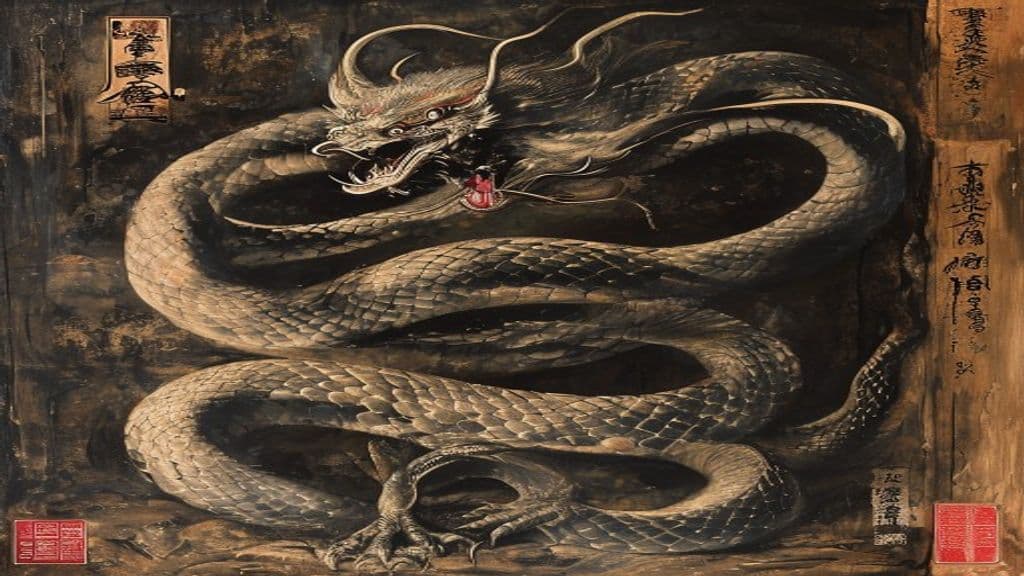
Yato-no-kami (夜刀の神) are local snake deities attested in the Hitachi no Kuni Fudoki tradition, described as araburu-kami (rough, aggressive kami) who lived in fields near the government office of Namegata county and who were both dangerous to households and could be driven off or enshrined by human agents.

Yomotsu-shikome
Lesser

Yomotsu-shikome

Yomotsu-shikome (literally 'Ugly Woman of the Underworld') is an ugly hag or hags of Yomi in early Japanese myth. In the Kojiki she pursues Izanagi as he flees the land of the dead; variant accounts in the Nihon Shoki present alternate names and numbers, sometimes suggesting multiple hags.

Yuki-onna
Greater

Yuki-onna

The Snow Woman of Japanese folklore — a spirit born of blizzards who appears to travelers lost in snowstorms. Beautiful and lethal, she can show mercy or bring death depending on her mood.

Yōkai
Lesser

Yōkai

Yōkai (妖怪) are a broad class of supernatural beings and spirits in Japanese folklore that encompass shapeshifters, tricksters, animal-spirits, possessed objects, humanoid apparitions, and formless uncanny phenomena. Rooted in Shinto and older animistic notions, the category functions as an umbrella term for many locally named entities and has been shaped by historical, artistic, and academic processes.

Yūrei
Lesser

Yūrei

Yūrei (幽霊) are spirits of the dead in Japanese folklore who remain bound to the world of the living rather than having completed transition to an afterlife. They are a culturally specific category of ghost/spirits, often discussed alongside related terms such as bōrei and shiryō and appearing widely in literary, visual, and local legend contexts.

Zashiki-warashi
Lesser

Zashiki-warashi

A class of domestic yōkai from Tōhoku folk belief described as childlike house spirits that inhabit parlors or inner rooms; their presence is traditionally linked to household prosperity and they are known for playful mischief. Scholarly accounts also connect some origin theories to historical practices such as infanticide and craft-related grudges.

Zenki and Goki
Lesser

Zenki and Goki

A paired duo in Japanese legend frequently described as oni- or tengu-like figures who appear in tales of En no Ozuno (En no Gyōja) and Shugendō; in many secondary summaries some legends say they were violent bandit Onis subdued in the age of Emperor Tenmu and thereafter attached as attendants to En no Ozuno. The names were later reused in modern manga and anime.

Zetton
Lesser

Zetton

Zetton (ゼットン, stylized ZETTON) is a Japanese hip‑hop record producer who emerged from the underground hip‑hop scene in Fukuoka in 1996 and later founded Studio Lb12 and the label/enterprise Inside‑Muzic (Takaki Shoten). The name also appears as a string in popular‑culture archives referencing tokusatsu/kaiju media, but the supplied sources do not support any folkloric or supernatural identity for Zetton.

Ōkubi
Lesser

Ōkubi

Ōkubi (大首, おおくび) is a Japanese yōkai typically rendered as a monstrous, disproportionately large head — most often a huge female face with the painted-black teeth of a married woman — and is described in sources as both a discrete apparition and as an externalization of human obsession, vengeance, or sexual guilt. Classical anecdotes present localized harmful effects (for example, causing swelling or sickness after 'blowing' on a person), while modern literary and manga treatments expand the motif into psychologically charged visions and graphic supernatural powers.

Ōmukade
Greater

Ōmukade

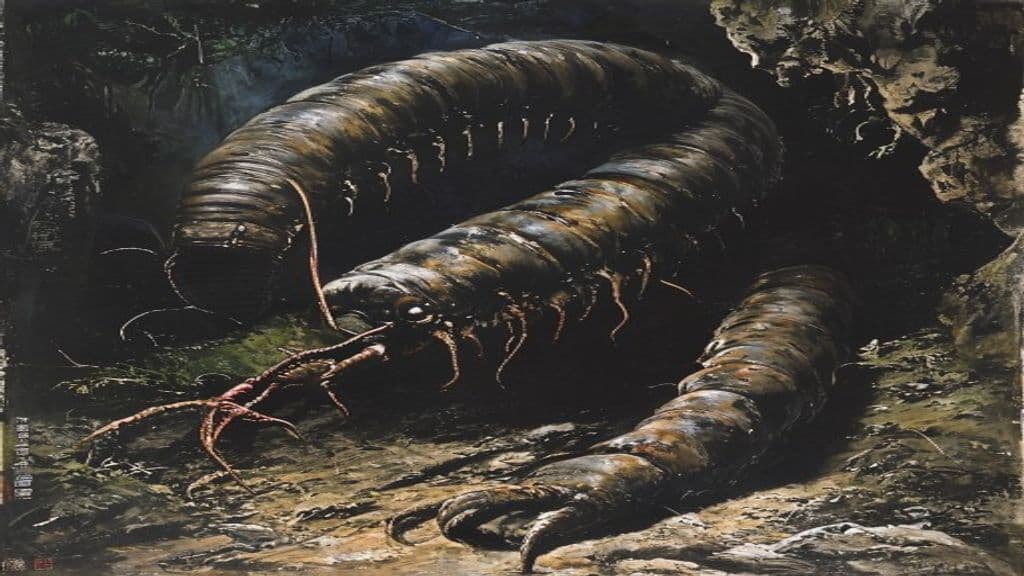
Ōmukade (大百足, おおむかで) is a yōkai of Japanese tradition depicted as a giant, man‑eating centipede that lives in mountains. In classical legend (notably the Tawara Tōda / Fujiwara no Hidesato tale) it preys on humans and on large serpents/dragons and is resistant to ordinary weapons but is killed when an arrow is smeared with a human's saliva.

Ōnyūdō
Lesser

Ōnyūdō

A yōkai-type in Japanese folklore literally named "big monk," described as a disproportionately large monk-like or shadowy humanoid whose form, origin, and behavior vary regionally. Accounts range from frightening apparitions that cause fainting to episodic helpful or ambiguous figures, and many local stories explain sightings as animal shapeshifters, animated objects, or optical phenomena.

Ōtakemaru
Greater

Ōtakemaru

Ōtakemaru (also rendered Takemaru) is a martial supernatural antagonist associated in the provided sources with Suzuka Mountain and with tales of violent combat against named warriors; in later popular media he is reused as an animated-legend style antagonist whose defeat requires exceptional combined force.

Ōyamatsumi
Primordial

Ōyamatsumi

Ōyamatsumi is a Japanese kami associated with mountains, islands, and the sea, presented in core creation genealogies as an elder divine ancestor whose children and descendants populate local and imperial mythic lineages. His principal cult site is Ōyamazumi Shrine on Ōmishima, and he appears prominently in Kojiki/Nihon Shoki narratives such as the Kamiumi birth-cycle and the Tenson Kōrin episode involving Ninigi.