Latin American Folk Supernatural Beings

63 documented Latin American Folk supernatural beings from the Evil Eye grimoire, including 33 lesser and 16 minor spirit in power tier.

page 1 of 2

Alicanto
Lesser

Alicanto

A nocturnal, flightless bird-like being from Chilean Atacama desert folklore whose glowing wings indicate the presence of underground ores; it can guide a stealthy prospector to a mother lode or, if offended or detected, extinguish its light and mislead or endanger the seeker.

Aloja
Minor Spirit

Aloja

Aloja is listed in available sources as a named figure in Catalan legend; beyond a brief disambiguation listing, traditional folkloric details are absent in the consulted material. A contemporary commercial design note reinterprets Aloja as a Mediterranean/sea goddess with energetic yet tender character, but this is explicitly a modern creative description rather than documented folk belief.

Ascalapha odorata (Hawaiian)
Greater

Ascalapha odorata (Hawaiian)

A nocturnal moth associated with death or misfortune in Hawaiian tradition, possibly tied to Central and South American folklore. (Note: - Summary should note that Ascalapha odorata's association with death/misfortune is found in Central and South American folklore, not explicitly mentioned in Hawaiian tradition. - Power tier: Primordi)

Ayizan
Greater

Ayizan

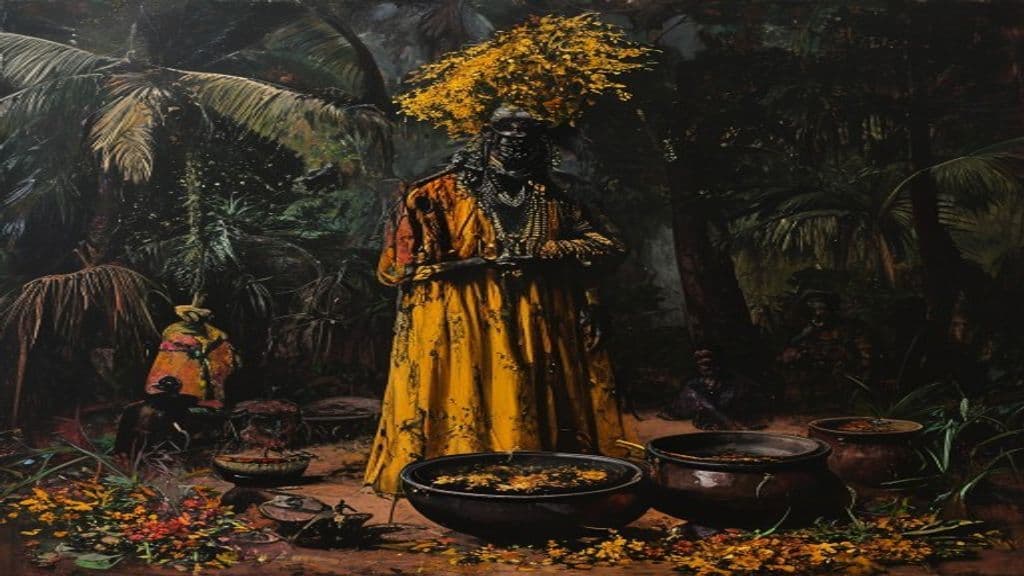
Ayizan is a racine (root loa) in Haitian Vodou and related West African-derived Vodoun traditions, functioning as the archetypal mambo (priestess) and a guardian of ritual order, initiation (kanzo), and the transmission of sacerdotal implements such as the asson. She is also associated with the marketplace and commerce and is syncretized with the Catholic Saint Clare.

Badalona giants
Minor Spirit

Badalona giants

The Badalona giants (Catalan: gegants de Badalona) are eight large, anthropomorphic effigies used in the civic festival life of Badalona, Catalonia. Constructed of wood, plaster and carton, they represent locally prominent historical or mythological figures and are carried and made to 'dance' in processions during the city's spring festival (May), its principal festival around 15 August, and other municipal occasions.

Basilisco chilote
Lesser

Basilisco chilote

A Chilote household parasite: a rooster-crested, serpentine creature hatched from a chicken's egg that lives beneath houses and feeds on inhabitants' phlegm and saliva, causing dehydration and death. Preventive measures call for burning the egg and killing the laying hen; once hatched the documented remedy is to burn the afflicted house.

Birongo
Lesser

Birongo

Birongo (also bilongo) is an Afro‑Venezuelan magico‑religious tradition and folk‑healing repertoire derived from Kongo‑area concepts and syncretized with Catholic saint veneration and local Venezuelan ritual forms. It functions as a lived system of diagnosis, healing, mediumship, and communal ritual practice rather than as an individual supernatural being.

Bizango
Lesser

Bizango

Bizango refers to secret societies in Haiti associated with Vodou practice and rural social governance. Sources portray them as local arbiters with contested reputations, variously remembered as community enforcers, makers of ritual objects, and — in folklore and some ethnographic accounts — practitioners of coercive or secretive magical acts.

Boitatá
Greater

Boitatá

Boitatá is a supernatural guardian creature from Brazilian folklore, originating in Tupi–Guarani tradition and preserved in wider Brazilian popular tradition. Commonly rendered as a fiery serpent that protects forests and fields by punishing people who burn, cut, or otherwise destroy nature, the legend also appears in brief variants that liken it to a will-o'-the-wisp or (less commonly) a bull-like creature.

Bolas
Lesser

Bolas

Bolas are a physical throwing weapon consisting of weights connected by cords, used historically and traditionally to entangle the legs of animals (and occasionally humans) at a distance. They appear in multiple regional traditions—notably in southern South America among Tehuelche and gauchos, in Mapuche and Inca military contexts, and in Inuit bird-hunting practice—under a variety of local names and constructions.

Bonadona i Altemir
Lesser

Bonadona i Altemir

Bonadona i Altemir are a pair of processional giants (gegants) associated with the town of Premià de Dalt in Catalonia. They function as civic effigies carried in public processions and local festivals, part of the municipality's intangible cultural traditions.

Bubota
Minor Spirit

Bubota

Bubota is attested in a small, heterogeneous set of Catalan-language and English-language sources as a feminine ghost or spectral figure invoked in contemporary artistic works and occasional popular references. Available materials classify it as a female-associated spirit and use the term both as a folkloric label and as a cultural/metaphorical signifier; however, primary folkloric narratives, standardized iconography, and ritual practice are not documented in the provided sources.

Cadejo
Lesser

Cadejo

A dog‑shaped nocturnal spirit from Central American and adjacent Mexican popular belief, the cadejo appears on lonely roads as a protective or dangerous companion. Rooted in Mesoamerican ideas of animal companions and psychopomps, modern accounts present white (benevolent) and black (malevolent) variants with regionally variable features.

Caipora
Lesser

Caipora

A Tupi-derived forest-dwelling being in Brazilian folklore depicted as a guardian or controller of wild animals and game; regionally variable in form and temperament, it misleads or punishes hunters who transgress forest norms and may be placated with offerings such as tobacco or alcohol.

Centeōtl
Ancient

Centeōtl

Centeōtl is the Nahua/Aztec maize deity — the divine personification of maize, its growth, cultivation and role in human subsistence. The name (Cintli + teōtl) ties the deity to the maize ear; Centeōtl features centrally in planting and harvest rites, calendrical offices, and Aztec cosmological genealogy.

Chicham spirit-soul traditions (Arutam, Nungüi)
Greater

Chicham spirit-soul traditions (Arutam, Nungüi)

Cluster of interrelated spirit and soul concepts in Chicham (Jivaro) cosmologies, most notably the personal protective soul arutam and the garden/mother spirit Nungüi; beliefs govern protection, sickness, agricultural fertility, shamanic practice, and socially regulated rituals such as killing to renew souls.

Chupacabra
Lesser

Chupacabra

A contemporary legendary creature or cryptid from parts of the Americas, blamed for unexplained livestock deaths and associated with vampiric puncturing of necks. The figure circulates largely through modern rumor, tabloid reportage, and popular culture rather than as part of an older ritual cosmology.

Ciguapa
Lesser

Ciguapa

The ciguapa is a nocturnal humanoid figure from Dominican and neighboring Caribbean folklore, most often depicted as a wild, preternatural woman of the mountain forests and rivers. Tales present her variously as a seductive siren-like being who lures men, a mischievous nature spirit, a jealous and sorrowful literary figure, or—in some variants—a violent or cannibalistic creature; she functions in oral and literary traditions as a cautionary forest figure and a marker in shifting cultural narratives.

Cimbres Marian apparition (Nossa Senhora das Graças)
Minor Spirit

Cimbres Marian apparition (Nossa Senhora das Graças)

A series of reported Marian apparitions near the village of Cimbres, Pesqueira, Pernambuco, Brazil, in 1936–1937 in which two adolescent seers claimed to receive warnings, injunctions to penance and prayer, and devotional prescriptions; the events are associated with a miraculous spring at a rocky inselberg and later diocesan recognition of their supernatural character.
Cipitío
Lesser

Cipitío

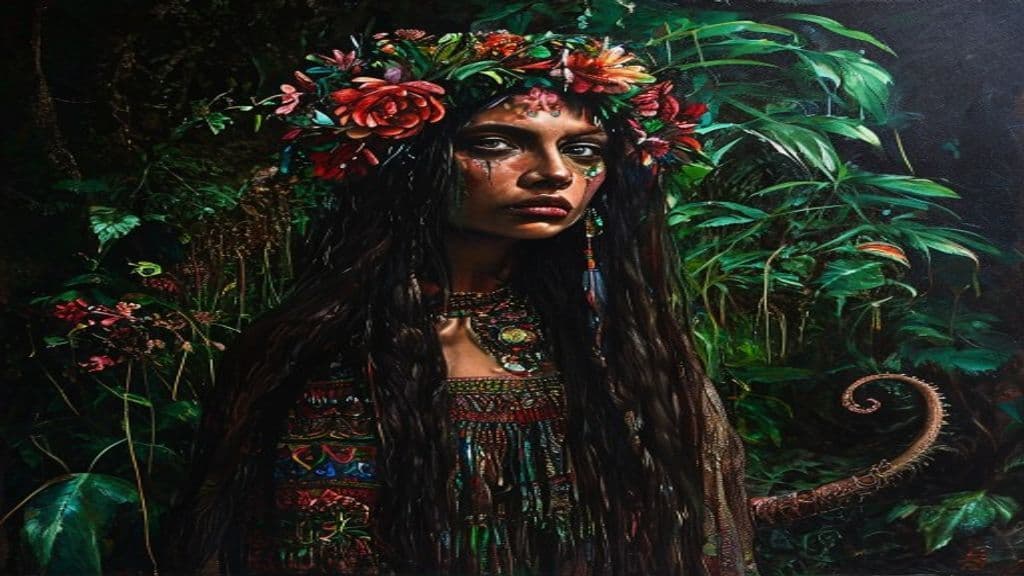
Cipitío is a perennial childlike spirit of Salvadoran and Central American oral tradition: a mischievous, trickster child who wanders rural landscapes, courts or teases people, and functions as a pedagogical folk figure rather than an overtly malevolent being.

Crone
Lesser

Crone

A folkloric character-type of an older woman whose age and gender define her social and symbolic role. The crone appears ambivalently across traditions as a malicious hag, a stern tester or guardian, or a venerated wise woman and keeper of remedies and lore.

Cronopio dentiacutus
Minor Spirit

Cronopio dentiacutus

Cronopio dentiacutus is an extinct small insectivorous mammal species from the early Late Cretaceous of Patagonia (La Buitrera, Argentina). Described from partial skull and jaw material, it is named after Julio Cortázar’s fictional 'cronopios' and the Latin dentiacutus ('sharp-toothed'), and is placed among South American meridiolestidan/dryolestoid mammals.

Curupira
Lesser

Curupira

A Tupi–Guarani–area forest spirit who protects woods and wildlife by misleading, punishing, or rewarding humans according to their behavior; widely attested across Brazil and neighboring regions with many regional variants.

Duende
Lesser

Duende

Duende is a polyvalent category of Iberian and Ibero‑American household and nature spirits comprising many regional types (Anjanas, Busgosos, Diaños, Enanos, Trasgos, Nuberos, etc.). They range from benevolent water‑nymphs and shepherd‑helpers to mischievous household intruders and shapeshifters, and are rooted in rural popular cosmologies where specific places (springs, forests, homes) are inhabited by agents with varied moral dispositions.

El Cucuy
Lesser

El Cucuy

El Cucuy (also rendered Coco or Cucuy) is a Spanish‑language/Latinx folkloric figure functioning as the regional equivalent of the Boogeyman, invoked in lullabies and parental warnings to frighten or discipline children; modern media and paranormal accounts reinterpret it variably as a vigilante creature or an intrusive spirit. Sources show a diffuse folk role rather than a fixed theological identity.

El Silbón
Lesser

El Silbón

El Silbón (Spanish: "The Whistler") is a legendary lost-soul figure from the Llanos of Venezuela and the eastern Colombian plains, known in popular accounts for announcing itself by a distinctive whistle and for haunting open plains landscapes in regional storytelling and media.

El Sombrerón
Lesser

El Sombrerón

El Sombrerón is a legendary folk character best known from Guatemala and also attested in Mexican and Colombian/Venezuelan collections; portrayed as a nocturnal suitor-like figure who courts or troubles young women, braids animal manes and tails, and travels neighborhoods at dusk with a string of mules carrying coal.

Gegant Negre (Cervera)
Lesser

Gegant Negre (Cervera)

The name "Gegant Negre (Cervera)" combines Catalan elements meaning "Black Giant" and a toponym (Cervera), but the supplied sources do not document a coherent traditional supernatural being by that exact name. Available evidence shows the "gegant" motif appearing in contemporary Catalan-language literary and science‑fiction texts as a poetic or apocalyptic image rather than as an ethnographic, ritualized entity tied to Cervera.

Gegants de Calonge
Minor Spirit

Gegants de Calonge

Gegants de Calonge are processional giants — large anthropomorphic effigies — associated with the town of Calonge and used in public processions and festivals. The figures function as ceremonial objects/personifications representing characters or local identity rather than as autonomous supernatural beings.

Gegants de Calvià
Minor Spirit

Gegants de Calvià

The Gegants de Calvià are processional giant figures used in public festivals in the municipality of Calvià, Mallorca. They function as civic festival participants and crowd attractions within Mallorcan popular celebrations rather than as supernatural beings.

Gegants de Ferreries
Lesser

Gegants de Ferreries

Gegants de Ferreries are large human-shaped processional effigies associated with the town of Ferreries. They function as civic festival figures carried in public processions and pageants rather than as autonomous supernatural beings.

Gegants de Guixers
Minor Spirit

Gegants de Guixers

Gegants de Guixers are processional giants (large human-form effigies) associated with the municipality of Guixers in Catalonia. They function as festival artifacts that appear in public processions and civic celebrations; available sources treat them as cultural objects rather than supernatural beings.

Gegants de Sitges
Minor Spirit

Gegants de Sitges

Gegants de Sitges are large processional figures employed in Sitges' civic festival life, notably within the town's Festa Major; they function as symbolic, ceremonial effigies rather than supernatural beings and participate in public processions, choreography, and spectacles.

Ghost Ship (Phantom Ship)
Minor Spirit

Ghost Ship (Phantom Ship)

A ghost ship (or phantom ship) denotes either a physical vessel found adrift with no living crew or a spectral vessel apparition reported in maritime folklore. The motif functions across maritime cultures as omen, memory of catastrophe, and a narrative way to confront unexplained loss at sea.

Gualichu
Lesser

Gualichu

Gualichu (also rendered gualicho) is a harmful, non-worshipped spiritual force in Mapuche and Tehuelche-related folklore blamed for disease, calamity, and general misfortune. The term also extends to mean an evil spell or jinx and survives in regional speech as a noun and verb.

Headless Priest
Lesser

Headless Priest

A restless apparition in Central American and Philippine popular belief: the decapitated Catholic cleric who returns as a night-haunting spirit tied to specific local histories, churches, roads, or buried goods. Stories function as moral warnings about sacrilege, clerical guilt, and improper handling of sacred matters.

Hunzahúa
Ancient

Hunzahúa

Hunzahúa is the legendary first zaque (northern ruler) of the Muisca polity based at Hunza (present-day Tunja). Presented in source material as a foundational cacique and moralizing figure, his myth explains local toponyms and landmarks (the Hunzahúa Well, rocks at Tequendama Falls) through a narrative of incest, communal outrage, and consequent etiological transformations.

La Cegua
Lesser

La Cegua

La Cegua is a Central American folkloric shapeshifting female apparition, commonly told in Nicaraguan and wider Mesoamerican oral traditions. She appears as an attractive woman from behind to lure certain men (notably drunk men and womanizers) along lonely roads at night, then reveals a horrifying true face—often described as a horse head or a skull—preceding harm or dire consequences. The figure functions primarily as a moral cautionary tale enforcing social norms around intoxication and sexual conduct.

La Condená
Minor Spirit

La Condená

A sparsely documented feminine-named restless spirit attested in a small set of tertiary sources. The only clear descriptive line in the supplied corpus calls her a "ghost doomed to walk the earth in penance for carnal sins." Other claims about regional rooting or attributes come from a single unverified fandom entry and are not corroborated in the provided materials.

La Llorona
Greater

La Llorona

The Weeping Woman of Mexican folklore — the ghost of a mother who drowned her children and now wanders rivers and lakes, weeping for them and taking other children she finds at night.

La Patasola
Lesser

La Patasola

La Patasola is a legendary one-legged female monstrous figure from Colombian and northern South American folk narrative who inhabits virgin forests and mountains. She appears as a beautiful woman to lure men, then reveals a single leg with a cleaved hoof and a bestial face, and is portrayed as punitive toward men who transgress social or ecological norms.

La Sayona
Lesser

La Sayona

La Sayona is a Venezuelan popular-legend vengeful female spirit who, according to tradition, appears to men who commit infidelity. Originating in an origin-tale about a woman named Casilda, the figure functions as an avenger of wronged women and is associated with a long white underdress (the 'sayona').

La Vaca
Lesser

La Vaca

La Vaca is not attested in the supplied sources as a supernatural being. In the provided materials the term appears as a Spanish toponym and lexical item: notably a small wetland in Bogotá (Humedal La Vaca / Techovita), an islet on Lake Nicaragua (Isla La Vaca), and as lexical occurrences in media or personal names. No folkloric, mythological, or supernatural attributes are documented in the sources provided.

Maina
Lesser

Maina

The Maina (also spelled Meena) are an indigenous human group traditionally living along the north bank of the Marañón River in the upper Amazon. Historically they spoke varieties of the Omurano language (many now speak Urarina) and were among the first tribes in the upper Amazon to be evangelized by the Catholic Church, lending their name to colonial jurisdictions such as the province of Mainas.

Mallku (mountain condor spirit)
Minor Spirit

Mallku (mountain condor spirit)

The provided source does not describe a supernatural Mallku; it records Mallku as an epithet or name used by a modern Bolivian political figure, Felipe Quispe Huanca. There is insufficient information in the source to characterize Mallku as an entity within Inca or Andean cosmology.

María Lionza
Greater

María Lionza

María Lionza is the central sacred figure of a Venezuelan syncretic popular religion centered on Sorte mountain; venerated as a queen/goddess of nature, love, and healing, she functions as a focal point for mediumship, spirit courts, and pilgrimage.

Maximón (San Simón)
Lesser

Maximón (San Simón)

Maximón is a syncretic Maya folk deity and folk saint venerated in the Guatemalan Highlands (notably Santiago Atitlán and Zunil). He is an ambivalent, worldly figure—commonly represented by household or community effigies—that receives offerings (cigars, liquor, flowers, bread) and serves as a local mediator for petitions and favors. His identity and stories vary by town and combine pre-Hispanic Maya elements with Christian saint imagery, sometimes including associations with Judas Iscariot or Saint Simon.

Midnight Beauty
Minor Spirit

Midnight Beauty

Attested in the supplied corpus only as a terse label — a single-line Wikidata entry calling 'Midnight Beauty' a "temptress ghost of Brazil." No supporting folkloric narratives, rituals, or detailed descriptions are present in the provided materials.

Minhocão
Greater

Minhocão

Minhocão is a legendary monstrous animal in Brazilian folklore described variously as an enormous earthworm, fish-like, or serpentine creature. Folkloric accounts portray it as subterranean or amphibious and associate its passage with large-scale alterations to the landscape (e.g., sinkholes, terrain changes).

Obi Divination
Greater

Obi Divination

A system of divination used in the Yoruba tradition and its derivatives, involving palm nuts or coconut pieces to communicate with ancestors and deities. (Note: 1. Remove "Greater" power tier as Obi divination is a system of divination, not an entity with supernatural abilities. 2. Add sensory cues related to the use of palm or kola nuts/coconut pieces (e.g.,)

Personifications of Death
Greater

Personifications of Death

Named, often anthropomorphic figures across cultures that embody, govern, or mediate death and the realm of the dead. Roles vary from psychopomp guide to judge or sovereign of an underworld, and forms range from skeletal reapers to regal underworld rulers and spirit families.

Pomba Gira
Greater

Pomba Gira

Pomba Gira is an Afro-Brazilian female spirit invoked in Umbanda and Quimbanda who personifies feminine sexuality, desire, and liminality; she functions as a consort to Exu, is petitioned for matters of the heart, and is treated with respect because of her reputed wrath and power in ritual possession.

Pombero (Pombéro)
Lesser

Pombero (Pombéro)

The Pombero is a small-statured nocturnal humanoid figure from Guaraní-derived folk belief in Paraguay and neighboring regions. Portrayed as a forest-dwelling trickster and interlocutor with domestic animals and rural households, the Pombero is blamed for mischief (loosed cattle, stolen eggs) and, in some accounts, for unexpected pregnancies; he is commonly appeased with nightly offerings.

Raimundo
Minor Spirit

Raimundo

Raimundo is documented in the provided sources primarily as a male personal name borne by historical and contemporary individuals and as a modern fictional character name (not as a traditional supernatural being). The materials do not present a coherent mythological or folkloric entity named Raimundo with a consistent cosmology, appearance, powers, or ritual corpus.

Reina Mora
Lesser

Reina Mora

The supplied sources do not document a supernatural entity called 'Reina Mora' in Cantabrian mythology. In the provided material, the phrase appears as the Spanish vernacular name for the Puerto Rican spindalis (a bird) and as the title of a 1954 film; no folkloric description, role, or mythological tradition from Cantabria is attested in these sources.

Saci
Minor Spirit

Saci

Saci is an impish mythical character of Brazilian folk tales, identified in general reference sources as a named figure within Brazilian folklore.

Seventh son of a seventh son
Greater

Seventh son of a seventh son

A folkloric birth-status applied to a male who is the seventh consecutive male child in an unbroken male line whose father was also a seventh son; across several European-derived and Latin American traditions this status is associated variously with exceptional healing or with dangerous supernatural transformations. The figure functions as a social/biological category that explains extraordinary capacities or misfortunes rather than a single mythic individual or species.

Skeleton (undead)
Lesser

Skeleton (undead)

An articulated, physically manifested collection of bones animated as an undead agent. Appears across folklore, visual art, literature, and modern popular media where it functions variously as a personification of death, a symbol in cultural practices, and a commonly used hostile creature in games and fiction.

Tata Duende
Lesser

Tata Duende

A caring spirit that protects animals and the jungle in Maya tradition. (Note: 1. The power tier should be adjusted to "Minor Spirit" based on the description of Tata Duende being a powerful regional entity does not align with its local and caring nature. 2. The sensory cues sec)

Tiyanak
Lesser

Tiyanak

The tiyanak is a malevolent Philippine supernatural being typically depicted as an infant‑shaped spirit that lures people by imitating a baby’s cry and then attacks or abducts them. It is variously understood as the restless soul of an infant who died unnamed or unbaptized and, in older Spanish‑era accounts, as an obstetric spirit (patianac) that obstructs childbirth.