Other Supernatural Beings

842 documented Other supernatural beings from the Evil Eye grimoire, including 352 lesser and 181 minor spirit in power tier.

page 13 of 15

Prothous
Lesser

Prothous

Prothous is a personal name borne by several distinct mortal figures in Greek mythic narrative traditions — including an Arcadian prince (one of Lycaon's sons), a Calydonian hunter, various warriors in the Theban and Trojan cycles (notably a commander of the Magnetes who led forty ships to Troy), and one of the suitors of Penelope. The bearers are ordinary heroic-age mortals whose actions are recorded in different episodic contexts rather than a single supernatural entity.

Pterelaus
Lesser

Pterelaus

Pterelaus is a mytho-historical king of the Taphians (Taphos) in Greek heroic legend whose family’s cattle-raid and defeat are narrated as antecedents to Amphitryon’s expedition and the circumstances of Heracles’ birth. In some variants he is described as invulnerable while a single magical golden hair remained in his head; removal of that hair (by his daughter Comaetho in some summaries) permitted his death.

Pulahan (Pulahanes)
Lesser

Pulahan (Pulahanes)

A late 19th–early 20th century Visayan syncretic religious and militant revival movement in the Philippines whose adherents wore red, combined revived babaylan shamanic practices with Folk Catholic elements, and organized under charismatic 'dios-dios' leaders to pursue healing, prophecy, and armed resistance against colonial authorities.

Qaban
Lesser

Qaban

Qaban is not attested in the provided sources as a supernatural being. The string appears in the supplied corpus as a toponym (Iranian village names) and as an element of personal names in diverse documentary contexts; no myths, powers, appearance descriptions, rituals, or folkloric narratives for a supernatural 'Qaban' are present in these sources.

Qetesh
Ancient

Qetesh

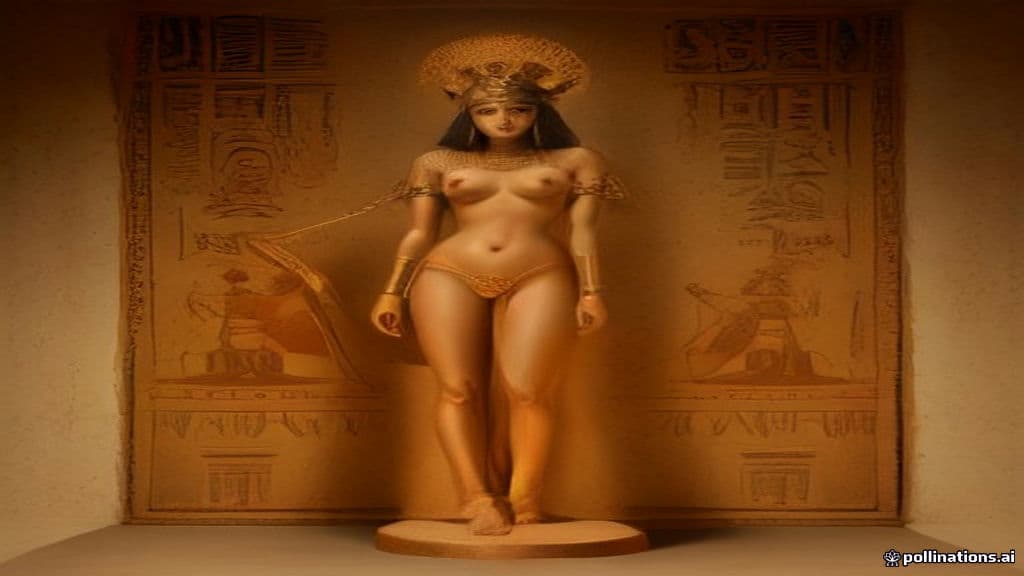
Qetesh is a goddess incorporated into ancient Egyptian religion in the late Bronze Age, attested in Egyptian iconography and inscriptions and bearing a Semitic-derived name (from Q-D-Š). Her epithets and imagery link her to celestial motifs, magic, and major Egyptian gods, while modern scholarship treats her as an Egyptian-developed deity influenced by Canaanite/Syro-Palestinian elements rather than a direct import.

Qin (Mandaeism)
Lesser

Qin (Mandaeism)

Qin is attested in a modern English-language reference as a named inhabitant of the Mandaean underworld. The available source provides only a brief listing that calls Qin "a demon of the Mandaean underworld," without further description or context.

Qudšu-wa-Amrur
Minor Spirit

Qudšu-wa-Amrur

A minor servant-level divine figure in the Ugaritic pantheon, attested in the Baal Cycle and a single ritual prayer (RS 24.271). Described as Athirat’s fisherman and messenger, the name may denote one double-named deity or a paired duo; sources are fragmentary and interpretations vary.

Rapunzel
Minor Spirit

Rapunzel

Rapunzel is a European folktale heroine of the Aarne–Thompson type 310 'Maiden in the Tower', best known from the Brothers Grimm version. She is a human maiden whose confinement in a tower, extraordinary long hair, and eventual rescue and reunion constitute the central motifs of the tale transmitted in early-modern and 19th-century European literary and oral traditions.

Red King (term)
Minor Spirit

Red King (term)

“Red King” is a polyvalent label used across literature, popular media, history, science, and other fields rather than a single, coherent folkloric supernatural being. The term appears as character names (e.g., Lewis Carroll's Through the Looking-Glass), nicknames for historical figures (William II, 'Rufus'), monsters in genre media (Ultraman, comics), and non-supernatural uses (red king crab, scientific hypotheses).

Reina Mora
Lesser

Reina Mora

The supplied sources do not document a supernatural entity called 'Reina Mora' in Cantabrian mythology. In the provided material, the phrase appears as the Spanish vernacular name for the Puerto Rican spindalis (a bird) and as the title of a 1954 film; no folkloric description, role, or mythological tradition from Cantabria is attested in these sources.

Resheph
Ancient

Resheph

Resheph is an ancient Near Eastern deity attested from the third millennium BCE onward and associated primarily with war and plague/fever. He was worshiped across Ebla, Ugarit, Mari, Hurrian and Hittite contexts, adopted into Egyptian religion (ršp/ršpw), and appears in Phoenician/Cypriot inscriptions; in some contexts he is also petitioned as a protective healer.

Reus Vaantjesboer
Lesser

Reus Vaantjesboer

Reus Vaantjesboer is a processional giant — a constructed, anthropomorphic effigy — recorded from Halle, Belgium. The single source presents it as a civic festival figure used in processions rather than as a supernatural being.

Rhinemaidens
Lesser

Rhinemaidens

Three water sprite sisters from Germanic mythology, known for their enchanting singing and association with the Rhine river. (Note: 1. Power tier should be Primordial, as they are associated with a major river and not specified to have regional or local power. 2. Appearance: "No physical description is provided in sources" should )

Ritona
Lesser

Ritona

Ritona (also attested as Pritona) is a named local goddess of Roman‑period Gaul, chiefly attested among the Treveri of the Moselle valley. She is understood from inscriptions and temple remains as a divine patron of fords, river crossings, springs and associated sanctuary spaces, worshipped in formal civic cult contexts at sites such as Augusta Treverorum (Trier) and Contiomagus (Pachten).

Ruach
Ancient

Ruach

Ruach (רוּחַ) is a Hebrew term used in Jewish and related theological discourse to denote spirit, breath, or wind; it functions as the life‑giving principle that animates living beings and as a mode or influence of God's presence (e.g., Ruach Ha‑Kodesh, the Holy Spirit). The term is primarily conceptual and metaphorical rather than an individualized anthropomorphic spirit in the supplied sources.

Ruhurater
Lesser

Ruhurater

Ruhurater (also attested as Lahuratil) is an Elamite city-god of Huhnur attested from the Third Dynasty of Ur through Neo-Elamite and Mesopotamian scholarly texts. He functions primarily as a patron deity invoked as a divine witness in legal and administrative contexts and is described in Elamite sources as capable of bestowing kiten (divine protection).

Runtiya
Ancient

Runtiya

Runtiya is a Luwian deity of the hunt and of deer, venerated in Anatolia from the Bronze Age into the Iron Age and later local contexts. He functions as a protective and hunting patron, depicted anthropomorphically in association with a stag or antlers and receiving offerings (notably gazelles) to secure success in the hunt.

Samyaza
Ancient

Samyaza

Samyaza is a leading heavenly Watcher (one of the grigori) who instigates the descent of angels to mate with human women, transmit forbidden knowledge, and sire the Nephilim. In the Enochic tradition he leads the oath-bound band whose transgression brings divine punishment (binding and imprisonment); later and related traditions adapt his name and role in Manichaean, rabbinic, and legendary materials.

San La Muerte
Lesser

San La Muerte

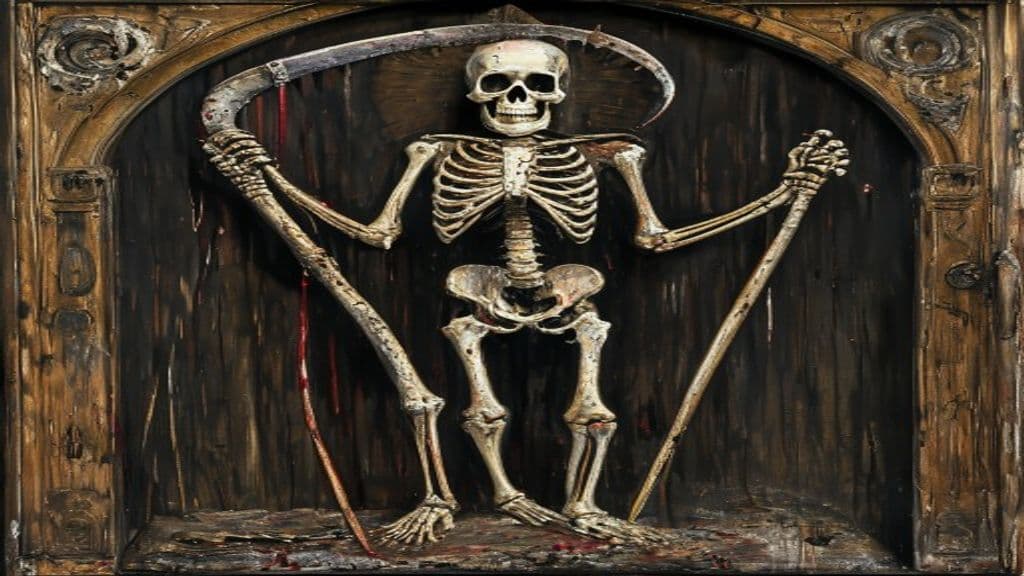
San La Muerte is a skeletal folk saint venerated in Paraguay, northeastern Argentina and southern Brazil. Represented by small standing statuettes ('santitos'), the devotion functions as a transactional, saint-like patron who grants protections, favors (including aid in love, health, luck, and criminal matters) in exchange for offerings and ongoing reciprocal care.

Sangarius (Sakarya River)
Lesser

Sangarius (Sakarya River)

Sangarius is the classical name (with variants) of the river now called the Sakarya in north‑west Anatolia. Attested in Greek literary sources such as the Iliad and Hesiod's Theogony, it is described in modern reference works as the third longest river in Turkey and as running through the ancient region of Phrygia. The name is also reused in modern biological taxonomy as a genus name.

Satyrion
Minor Spirit

Satyrion

Satyrion (Ancient Greek: Σατύριον / Satyria) is attested in classical and later sources as a local nymph and place-name associated with the region of Taras/Tarentum (Taranto) and, secondarily, as a botanical name (certain orchids) and an aphrodisiac materia medica product named 'satyrion.' The figure functions mainly as an eponymous ancestress (mother of Taras by Poseidon) and the toponym anchors springs and local cultic/occupational memory; later herbalists and early modern medical writers use the name for orchids and sexual remedies.

Scapino
Minor Spirit

Scapino

Scapino (also Scapin) is a stock theatrical character from the Italian commedia dell'arte tradition. A zanni (servant) figure, he is a trickster-servant known for scheming, self-preservation, and a tendency to 'escape' from fights and commitments; he appears in commedia performances and in plays derived from that repertoire (notably Molière's Les Fourberies de Scapin).

Scylding
Minor Spirit

Scylding

The Scyldings (Old English Scyldingas; Old Norse Skjǫldungar) are a legendary royal dynasty of early medieval Anglo‑Scandinavian tradition, described in sources such as Beowulf, Norse saga genealogies and Latin chronicles. They function as a mytho‑historical lineage that anchors claims to rulership, heroic identity, and dynastic origin rather than as a singular supernatural being.

Sea monster
Greater

Sea monster

A cross-cultural folkloric category for legendary maritime beings believed to dwell in the sea, commonly imagined as creatures of immense size; the term covers named mythic monsters, reported sightings, and unidentified carcasses (globsters).

Selkie
Lesser

Selkie

A seal-being from northern Atlantic coastal folklore said to shift between seal and human forms by removing or donning a seal skin. Tales focus on intimate relations with humans, the selkie's longing for the sea, and the narrative motif of a hidden skin that prevents return to the ocean.

Seng-gut Deities
Primordial

Seng-gut Deities

Central figures in the Korean shamanic narrative that shape creation and development of the world. (Note: - Power tier: Primordial claims are not supported as no evidence indicates they have cosmic powers (only creation and intervention in human affairs). - Abilities: The description is too broad; specifi)

Senoy, Sansenoy and Semangelof
Lesser

Senoy, Sansenoy and Semangelof

A triad of named spirit-agents in Jewish folkloric summaries attested as protecting women during and shortly after childbirth and safeguarding newborn infants from attacks attributed to the night demon Lilith. Secondary and modern sources sometimes label them as angels or "medicinal angels," but primary ritual, linguistic, and iconographic data are not preserved in the supplied materials.

Shadakshari Lokeshvara
Minor Spirit

Shadakshari Lokeshvara

A particular four-armed manifestation of the bodhisattva Avalokiteśvara associated with compassion and represented as lord of the six realms of existence. In museum and catalogue contexts this form is linked closely to the six-syllable mantra om mani padme hum and to seed-syllable imagery (hrih) in devotional hangings and portable art.

Shadow (concept)
Minor Spirit

Shadow (concept)

A polyvalent term used across optics, psychology, computing/administration, and popular paranormal conversation. In the supplied sources it is primarily an optical phenomenon and a psychological archetype; other uses are metaphorical or technical rather than descriptions of a single, traditional supernatural being.

Shadow person
Lesser

Shadow person

A contemporary popular‑paranormal motif describing animate human‑shaped silhouettes or ‘black mass’ figures, often reported in contexts of sleep paralysis, low light, or substance‑induced delirium. Accounts range from experiential memorates and forum testimony to skeptical clinical explanations that treat sightings as hallucinations.

Sherida
Minor Spirit

Sherida

Sherida is attested in the supplied sources only as a modern female given name; no documented supernatural entity, mythic origin, ritual practice, or folkloric description called 'Sherida' appears in the provided materials. The name appears in contemporary legal, biographical, and news records.

Shipibo-Conibo ayahuasca medicine work
Lesser

Shipibo-Conibo ayahuasca medicine work

A culturally embedded system of healing, ritual, and artistic expression among the Shipibo-Conibo people of the Peruvian Amazon centered on ayahuasca ceremonies and medicine songs. It functions as a mode of diagnosis, healing, and transmission of unseen knowledge rather than as a single personified spirit or being.

Shuten-dōji
Greater

Shuten-dōji

Shuten-dōji is a legendary oni described in Japanese sources as the 'Demon King of Mt. Oe' who terrorized the region in folklore and was slain by the hero Minamoto no Raikō and his companions. In the best-known episode the demon is decapitated, yet the detached head remained animate and attempted to bite the hero, who survived by wearing multiple helmets stacked on his head.

Sidaba Mapu
Primordial

Sidaba Mapu

Sidaba Mapu (also cited as Salailel in the supplied source) is the supreme creator and sky god of the Meitei indigenous religion Sanamahism, presented in the sources as the origin-being responsible for creation of the universe. The deity is linked in the sources to Meitei mytho-philosophical frameworks named Leithak Leikharol Nongsemlon and Leisemlon.

Sihuanaba
Lesser

Sihuanaba

A Central American shapeshifting female spirit from regional oral tradition that lures solitary travelers—often portrayed as beautiful and long‑haired—into isolated or hazardous places before revealing a grotesque true form; the motif functions as a cautionary legend enforcing social norms.

Silaa
Lesser

Silaa

The supplied sources do not attest to a supernatural entity named Silaa. The lexical string "Silaa" appears in the corpus as personal names, a place-name variant (Selaa/Silaa in Lebanon), institutional or project names (film title, architecture firm), and legal case citations; none of the provided materials describe Silaa as a spirit, demon, ghost, or other folkloric being.

Simonside Dwarfs
Lesser

Simonside Dwarfs

A regional race of small, hill-dwelling supernatural beings from Northumberland folklore (Simonside Hills). They are famed for leading travellers astray at night with lighted torches and vanishing at dawn; traditions treat them as a local variety of English/Borders 'dwarfs' or 'brownmen'.

Simut
Greater

Simut

Simut (also attested as imut or Shimut) is an Elamite deity attested in brief sources as the herald of the gods and associated with the planet Mars; he is also reported as closely associated with the rainbow goddess Manzat. Surviving references are short and fragmentary in the provided materials.

Sith
Ancient

Sith

The Sith are a fictional ordered movement of Force-sensitive beings in the Star Wars franchise who embrace and wield the dark side of the Force. Depicted as the primary antagonistic counterpoint to the Jedi, they organize politically and militarily to seize power, destroy the Jedi Order, and rule the galaxy.

Sjtuf
Lesser

Sjtuf

Sjtuf is a Roermond processional giant — a 6‑metre-high anthropomorphic effigy (also called Christoffel) used in Dutch/Flemish giants' processions. It functions as a civic and religious pageant figure personifying Saint Christopher and is documented in archival descriptions and a Wikidata entry as a constructed parade giant rather than an autonomous supernatural being.

Sjörå
Lesser

Sjörå

A female humanoid water spirit of Swedish folklore classed among the rå (place-keepers). Bound to a particular lake, pool, or freshwater site, the sjörå protects the waters and its fish, rewards respectful users with good catches and safety, and may seduce or drown those who are disrespectful.

Skinwalker
Greater

Skinwalker

In Navajo cultural framing, the skinwalker (English label) denotes a harmful witch who can turn into, possess, or disguise themselves as an animal. The English term has also been appropriated in contemporary U.S. paranormal and media contexts (notably the named Skinwalker Ranch), where it labels a cluster of anomalous reports distinct from the Navajo witchcraft meaning.

Skogsrå
Lesser

Skogsrå

A female forest rå in Swedish folklore who rules the woods and its game; she appears as a beautiful woman from the front but reveals non-human features when seen from another angle. She interacts with hunters, woodcutters and charcoal-burners, offering favors (hunting luck, help with work, offspring) or ensnaring men who follow her into the forest.

Sky Father
Ancient

Sky Father

A comparative-mythological archetype denoting a principal sky-being addressed as a paternal figure, often occupying the role of ancestral progenitor or former/senior ruler within a pantheon and frequently paired with an 'earth mother' as a complementary cosmic principle.

Sky deity
Ancient

Sky deity

A class of deities associated with the sky, heavens, or celestial phenomena; commonly high‑ranking divine figures who occupy an 'upper world,' often serving as sovereigns, creators, or luminaries within diverse polytheistic cosmologies.

Solomonari
Greater

Solomonari

Solomonari are weather-controlling magic-workers in Romanian folklore, described as human practitioners trained at a secret school who ride dragons (zmeu or balaur) and cause rain, thunder, or hail. They appear in 19th‑century ethnographic accounts from Transylvania, Bukovina, and adjacent Romanian regions and are associated with an institutionalized craft of magic (Scholomance/Şolomanţă) in several variants.

Speak, Bird, Speak Again
Minor Spirit

Speak, Bird, Speak Again

The book 'Speak, Bird, Speak Again' is a collection of Palestinian folk tales featuring stories that may include supernatural entities from Arabian tradition. (Note: 1. Remove "Hypothetical supernatural entity" as it implies the existence of an entity, which is not confirmed. 2. Change Power tier to Primordial (since it's a book featuring stories that may include )

Steller's sea ape
Greater

Steller's sea ape

An 18th-century naturalist's report of an unfamiliar marine animal observed near the Shumagin Islands, Alaska, on 10 August 1741. Presented in primary sources as a zoological observation (Simia marina) and later treated variously as misidentified pinniped, extinct sirenian classification, or modern cryptid.

Stihi
Greater

Stihi

Stihi is an Albanian folkloric storm-associated female supernatural being described as a fire-breathing demon or dragon that is sometimes represented as a treasure-guardian. Sources present it as a dangerous elemental force linked to storms and compared to the kulshedra.

Su İyesi
Lesser

Su İyesi

Su İyesi is a Turkic water spirit — a localized guardian (iye) of bodies of water such as rivers, lakes, ponds and springs. It appears in male and female personifications (Su Ana, Su Ata) and is associated with both beneficent functions (bringing rain) and dangerous actions (drownings, floods, wrecks) when offended.

Sun Dance (Lakota tradition)
Greater

Sun Dance (Lakota tradition)

A spiritual practice and ritual ceremony practiced by certain Native American and Indigenous communities in North America, emphasizing personal and community sacrifice to reaffirm beliefs about the world and the supernatural. (Note: 1. Remove "certain" from the summary as it's not specified which communities participate. 2. Power tier should be Primordial as the Sun Dance has a more cosmic significance and isn't necessarily tied )

Sun Wukong
Greater

Sun Wukong

Sun Wukong (孫悟空, Sūn Wùkōng), popularly the "Monkey King," is a mythic non-human sapient figure from Chinese literary and religious tradition best known from the 16th‑century novel Journey to the West. Portrayed as an exceptional stone-born monkey who acquires supernatural powers through Taoist practice, he is alternately a rebellious trickster who challenges Heaven and, after punishment, a protector and disciple who accompanies the monk Tang Sanzang on a Buddhist pilgrimage.

Supernatural Beings in Slavic Tradition
Greater

Supernatural Beings in Slavic Tradition

In the Slavic tradition, supernatural beings are a part of the natural world, existing alongside humans and other entities. They have a unique relationship with nature, reflecting an interconnected worldview. (Note: 1. The power tier should be Primordial, as it is implied that these supernatural beings are a fundamental part of the natural world and not limited by human regional boundaries. 2. Remove "Their abili)

Sânziană
Minor Spirit

Sânziană

Sânziene are Romanian seasonal fairies associated with the June 24 Sânziene festival and the Galium verum flower; they bless crops and health, enable potent magic on midsummer night, and can punish humans (especially men) who see them. Their cult is tied to rural Carpathian customs, floral crowns, bonfires, and divinatory crown-throwing over houses.

Sāsān (Sasan)
Lesser

Sāsān (Sasan)

Sāsān is attested in medieval Persian historiography as the eponymous ancestor of the Sasanian (Sassanid) dynasty and is described as a Zoroastrian high priest, warrior, and hunter from Pars (Fars) near the fall of the Arsacid (Parthian) Empire in the early 3rd century. Modern uses of 'Sasan' include a male given name and various contemporary personal and corporate names; no supplied sources treat Sasan as a supernatural being.

Tabris
Lesser

Tabris

Tabris is attested in the provided sources in two unrelated senses: as the 'real name' of the fictional Neon Genesis Evangelion character Kaworu Nagisa (an Angel in that franchise) and as a taxonomic genus name for algae. No traditional folkloric or historical spirit named Tabris is documented in the supplied materials.

Tagroa Siria
Ancient

Tagroa Siria

Tagroa Siria is the supreme deity of pre-Christian Rotuman religion, chiefly associated with the island's fertility cult and the prosperity of its people. He is referred to as 'God Above' or 'God the Highest' and is located in an underworld-like spirit region called 'Oroi ta' or 'Oroi Hanua Favi.'

Taki Unquy
Primordial

Taki Unquy

A millenarian movement in Inca tradition that believed themselves to be reincarnations of ancient rulers and gods, seeking to restore their ancestors' rule over the Andean regions. (Note: * Power tier: Primordial is not plausible given the described abilities (resistance through armed conflict, purification rituals, and cultural revitalization efforts). A more fitting power tier would )

Tarḫunna
Ancient

Tarḫunna

Tarḫunna (Tarḫuna/Tarhun) is the principal Hittite weather and sky deity who presides over thunder, lightning, rain, clouds and storms and functions as a legitimiser and protector of kingship and the Hittite state. He is attested across Anatolian languages and in iconography (notably Yazılıkaya) and appears in mythic combat with the serpent Illuyanka.

Tarḫunz
Greater

Tarḫunz

Tarḫunz (Tarhunz, Tarhunt-) is the chief weather god of the Luwians, an Anatolian storm‑deity associated with thunder, lightning, rain, fertility (notably vineyards), mountains, and martial protection. He appears in Bronze–Iron Age Anatolia and northern Syria and is linguistically and functionally cognate with Hittite Tarḫunna and Hurrian Teshub.