Other Supernatural Beings

842 documented Other supernatural beings from the Evil Eye grimoire, including 352 lesser and 181 minor spirit in power tier.

page 12 of 15

Nicostratus
Lesser

Nicostratus

Nicostratus is attested in Greek mythographic and reference material as a son of Menelaus, variously said to be by Helen of Troy or by a slavewoman. He appears in genealogical listings and name-disambiguation contexts rather than as an active character in surviving narrative episodes.
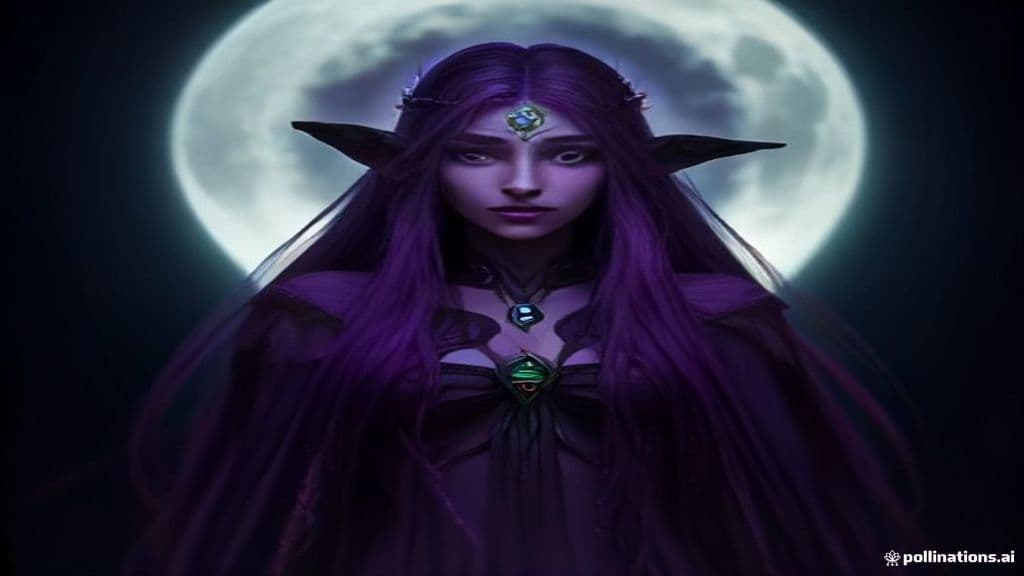
Night Elf (Kaldorei)
Greater

Night Elf (Kaldorei)

A fictional, long-lived, forest-dwelling humanoid people (called the Kaldorei, lit. 'Children of the stars') from Blizzard Entertainment's Warcraft setting, characterized by moon worship (Elune), druidic tradition, and a cultural emphasis on living in harmony with nature. Introduced as a playable race in Warcraft III and later World of Warcraft, they function as a full society rather than a single supernatural entity.

Night raven
Lesser

Night raven

A class of nocturnal raven-shaped folkloric presences from central and northern Europe variously described as giant raven-like birds, skeletal flying revenants, or revenant souls manifesting in bird form; associated with death, unquiet burials, and used in cautionary tales about children at night.

Nikkal
Ancient

Nikkal

Nikkal is a Near Eastern goddess attested in Hurrian, Hittite and Ugaritic sources as the consort of local lunar deities (Kušuḫ/Umbu/Yarikh). She appears in Hurro‑Hittite offering lists and cultic processions and is derived from the Mesopotamian goddess Ningal.

Ninegal
Lesser

Ninegal

Ninegal (Sumerian Ninegalla; Akkadian Belet Ekalli / Belet-Ekallim) is a Mesopotamian tutelary goddess whose domain is the palace. Attested from the Early Dynastic period through the first millennium BCE, she functioned in cult as the divine guarantor of palace integrity and the sovereignty of rulers, and in some literary contexts appears as an epithet or manifestation of Inanna.

Ningal
Ancient

Ningal

Ningal (Sumerian dNIN.GAL, "Great Queen") is a Mesopotamian goddess, chiefly known as the consort of the moon god Nanna/Sin and the tutelary goddess of the city of Ur. She appears across Mesopotamian periods in god-lists, hymns and laments where she functions as wife, mother (commonly attested as mother of Inanna and Utu), mourner of the city, and local protective presence.

Ninlil
Ancient

Ninlil

Ninlil is a principal goddess of ancient Mesopotamia, worshipped chiefly at Nippur and Tummal as the consort of Enlil. She shares with Enlil authority in determining fates and in appointing other deities, is portrayed as mother of major gods in some traditions, and is attested from early Sumerian texts through later Akkadian/Assyrian forms.

Nishi (Nyishi) — ethnographic group
Minor Spirit

Nishi (Nyishi) — ethnographic group

The available sources do not describe a supernatural entity named “Nishi.” The material refers to the Nyishi (often spelled Nishi) as an ethnic group of Arunachal Pradesh, India, who speak a Tani language called Nishi. No folklore, appearance, abilities, rituals, or warding practices for a supernatural Nishi are documented in the provided sources.

Nkisi (minkisi)
Greater

Nkisi (minkisi)

Nkisi (pl. minkisi, mikisi, zinkisi) are Kongo‑region spiritual agents and the material containers that house or activate them. Employed by specialist practitioners (banganga/nganga), minkisi mediate with ancestors and other powers for healing, protection, justice, oath‑sealing, and the punishment or restraint of harmful forces.

Nocnitsa
Lesser

Nocnitsa

A Slavic night spirit or 'night hag' that torments sleepers—especially children—by visiting at night, producing nightmares or sensations of pressure on the chest, and in some accounts drawing life energy from victims.

Nomion
Lesser

Nomion

Nomion is not attested in the provided sources as a coherent supernatural being or folkloric class. The term appears primarily as a taxonomic epithet in lepidoptery and as a modern proper name in popular culture; a single Wikidata label links the name to a supposed ruler in Caria but this is uncited in the supplied materials.

Nuberu (Ñuberu)
Greater

Nuberu (Ñuberu)

A northwest Iberian sky‑spirit or weather being (singular or plural) that controls clouds, storms, rain, wind, hail and lightning; capable of blessing fields with rain or wreaking destructive storms that endanger harvest, livestock and fishermen.

Nure-onna
Lesser

Nure-onna

A Japanese yōkai associated with seas, rivers, and shorelines, portrayed variably as a wet-haired woman, a snake-bodied female, or an ubume-like figure who lures victims with a childlike bundle. Regional tales alternate between depictions of a reclusive, territorial being and a predatory lure often linked with the ushi-oni.

Nyami Nyami
Greater

Nyami Nyami

Mythological deity associated with the Zambezi River, revered by local communities for its protective and providential nature. (Note: 1. Power tier: Based on the source material, Nyami Nyami seems to be a deity-level entity (Ancient), not Greater. 2. Abilities: The draft should specify that its protective and providential nature is )

Nyikaya
Lesser

Nyikaya

Nyikaya is a female river spirit in Shilluk (Silluk) cosmology who is described as the mother of the culture-hero Nyikang and as the river-dwelling recipient of the king's spirit at death. She is depicted in the sources as a hybrid figure — described explicitly as “half-woman, half-crocodile” — and functions in Shilluk ritual and ideology as the maternal river-spirit who must be petitioned to restore or accept the royal spirit during succession rites.

Nü gui (female ghost)
Lesser

Nü gui (female ghost)

A concept in Chinese and comparative folklore of a dead person—often referenced as a female in English-language discussions—who returns after an unjust, cruel, or unnatural death or after being denied proper funerary rites, remaining an 'unhappy' or vengeful spirit that may afflict the living.

Nüwa
Ancient

Nüwa

Nüwa is a primordial mother-goddess and culture-hero in Chinese traditional cosmology who creates humanity in some traditions and repairs the cosmos after catastrophic disruption. She appears across Chinese folk religion, Taoist and Confucian discourse, and in mythic texts such as the Huainanzi, Songs of Chu, and Liezi, often paired with the culture-hero Fuxi.

Ogbanje (West African malevolent spirit)
Greater

Ogbanje (West African malevolent spirit)

A malevolent entity that intentionally causes misfortune for a specific family in Odinani cosmology. (Note: - Power tier should be "Lesser" or possibly "Minor Spirit", given its described abilities and lack of specific powers. - The summary mentions "Odinani cosmology", but the source refers to it simply as)

Oghene
Lesser

Oghene

Oghene is attested in the supplied sources as a modern personal or family name appearing across Nigerian and wider African contexts (music credits, journalism, politics, academia, fashion). The provided corpus contains no evidence treating Oghene as a supernatural, mythological, or folkloric entity.

Ohthere (Vendelcrow)
Lesser

Ohthere (Vendelcrow)

Ohthere (Old Norse Óttarr vendilkráka; modern Swedish Ottar Vendelkråka) is a semi-legendary Swedish king of the Scylfing house, placed by sources in the Germanic Heroic Age, possibly early 6th century (fl. c. 515–c. 530). Literary traditions present him as a warrior-king involved in Swedish–Geatish and Swedish–Danish conflicts; a burial mound in Vendel parish (Ottarshögen) has long been associated with his name. Some narrative details (notably a Danish death in the Limfjord and the story of a wooden "Vendelcrow" of humiliation) are attested only in Snorri's later Ynglinga saga and may represent literary elaboration.

Oicles
Lesser

Oicles

Oicles (Anc. Greek Οἰκλῆς / Οἰκλεύς) is a mortal figure in Greek mythic genealogies and heroic-cycle narratives, known primarily as the father of the seer Amphiaraus and as a warrior who accompanied Heracles. He functions in sources as a heroic ancestor and connective node linking seer-lines, kings, and locales (Troy/Troad, Thebes, Arcadia) rather than as a supernatural being.

Ojáncanu
Lesser

Ojáncanu

The Ojáncanu is a cyclops‑like giant from Cantabrian mythology, described in modern summaries as an embodiment of cruelty and brutality. Sources identify it as part of the mythic corpus of the Cantabri, a pre‑Roman people of northern Iberia.

Okuri-inu
Lesser

Okuri-inu

The Okuri-inu (送り犬, literally "escorting dog") is a Japanese yōkai encountered on mountain paths at night that follows travellers. Regional accounts identify it as a dog or wolf (okuri-ōkami, yama-inu) or as related follower-spirits (okuri-itachi); it behaves ambivalently, sometimes protecting those who comport themselves correctly and sometimes attacking or eating those who fall or panic.

Orestheus
Lesser

Orestheus

Orestheus is a mythic founder-figure in Greek tradition appearing in variant genealogies as either a son of Deucalion and Pyrrha associated with the Ozolian Locrians of Aetolia (noted for a vine-origin wonder-tale) or as one of the fifty sons of Lycaon credited with founding Oresthasion/Oresteion in Arcadia. He functions as an eponymic ancestral figure used to explain place-names and tribal identities.

Orko (Basque Thunder God)
Ancient

Orko (Basque Thunder God)

Deity associated with thunder and the forces of nature in ancient Basque mythology. (Note: * Power tier: Greater (not Ancient), as there's no indication of deity-level powers. * Abilities: Specify exactly what abilities related to weather control are associated with Orko, instead of making )

Ouli
Minor Spirit

Ouli

Ouli is not attested in the supplied corpus as a supernatural being; the string appears across place-names, personal names, institutional and commercial uses, and as a linguistic label in diverse regions. No primary-source folkloric description of an entity called Ouli is present in the provided materials.

Pacha Kamaq
Primordial

Pacha Kamaq

Pacha Kamaq (Pachacámac) is a pan-regional creator and sustaining deity venerated on the central coast of Peru and incorporated into Inca imperial religion. Sources describe him as the creator/animator of the universe and a controller of cosmic balance, variously conceived as a personal god and as an impersonal, unseen principle.

Panbabylonism (Mesopotamian tradition)
Minor Spirit

Panbabylonism (Mesopotamian tradition)

A school of thought that emerged in Mesopotamia, emphasizing the idea that cultures and religions are derived from Babylonian myths. (Note: 1. The power tier should be Primordial, not Minor Spirit (since it's a philosophical/academic concept rather than a supernatural entity). 2. Origin story: incorrect - Panbabylonism actually emerged am)

Papa Isio
Lesser

Papa Isio

Papa Isio (Dionisio Magbuelas, also recorded as Dionisio Seguela or Dionisio Papa y Barlucia) was a historical Filipino leader of a babaylan-influenced social-religious and military movement in Negros Occidental around the Philippine Revolution and the Philippine–American War. He fused indigenous spiritual authority with agrarian reform and anti-colonial nationalism, led armed resistance against Spanish and later American authorities, surrendered on August 6, 1907, and died in Old Bilibid Prison in 1911.

Para Brahman
Primordial

Para Brahman

Para Brahman (Sanskrit: परब्रह्म, parabrahma) is a Hindu metaphysical designation for the Supreme Brahman — the highest, ultimate Reality described as beyond all descriptions and conceptualisations. Depending on school it denotes the attribute‑less absolute (nirguṇa) or the supreme personal God (saguṇa) identified with a sectarian deity.

Paraskeva Friday
Greater

Paraskeva Friday

A personified figure in East Slavic folk Christianity who represents the day Friday and associated saintly cults (notably saints named Paraskeva). She functions as a localized sacred presence linked to prohibitions around women's domestic work, protective healing roles, and punitive interventions when taboos are violated.

Parī (Persian Tradition)
Primordial

Parī (Persian Tradition)

Supernatural entities existing in a realm separate from humans with complex social structures and described as winged creatures of immense beauty. (Note: - Power tier should be Primordial, but the source material does not specifically support this claim; it should be revised to a more accurate assessment based on available information. - Abilities sect)

Peird van Sint-Gillis (Bayard)
Lesser

Peird van Sint-Gillis (Bayard)

A single legendary magical bay horse originating in the medieval chansons de geste and preserved in regional folkloric tradition (notably Belgian). Described as an intelligent, strong mount with the supernatural ability to adjust its size to its riders, serving as a wondrous companion to human heroes.

Pelasgos
Ancient

Pelasgos

Pelasgos is an eponymous ancestral figure (and ethnic label Pelasgians/Pelasgoi) from Greek mythohistory used to account for the antiquity and origins of certain peoples and cults in Greece. He appears across regionally variable traditions as a foundational progenitor rather than a supernatural monster or spirit.

Perchta
Lesser

Perchta

Perchta (also Berchta/Berchta etc.) is a female midwinter supernatural figure of the Alpine folkloric complex (Upper Germany, Austria, South Tyrol, Slovene-Carinthia and adjacent areas). She functions as a seasonal guardian-inspector who enforces proper domestic labour (especially spinning) and fasting observance during the Rauhnächte (the twelve days between Christmas and Epiphany) and is realized both in narrative folklore and in local masquerade traditions (Perchtenlauf).

Peri (Parī / Pari)
Lesser

Peri (Parī / Pari)

A class of supernatural beings from Persian tale literature and wider Asian folklore, the parī (also spelled peri or pari) commonly appear in narratives involving the supernatural and are often described in sources as winged and immensely beautiful, living in societies likened to human social organization.

Perileos
Minor Spirit

Perileos

Perileos (Ancient Greek Περίλεως or Περίλᾱος) is not a single supernatural being but a personal name borne by several distinct mortal characters in Greek mythic and epic tradition. The name appears in genealogical lists and episodic narratives as a son of Icarius, a son of Ancaeus of Samos, a defender of Troy, and (as Perilaus) an alleged inventor of the brazen bull.

Perkwunos
Ancient

Perkwunos

Perkwunos (reconstructed Proto-Indo-European *Perkʷūnos) is a scholarly reconstruction of a Proto-Indo-European thunder- and weather-deity hypothesized to preside over thunder, storms, lightning and fructifying rain. In comparative myth the reconstructed figure appears in a recurring Indo‑European pattern as a sky/thunder hero who combats a multi-headed water-serpent to free life-giving waters; direct PIE cultic texts or iconography are not attested and the reconstruction is inferred from descendant traditions (e.g., Slavic Perun, Baltic Perkūnas, Indic Indra, Norse parallels).

Perkūnas
Ancient

Perkūnas

Perkūnas is the principal Baltic thunder deity attested in Lithuanian, Latvian and Old Prussian/Sudovian traditions, described as the common Baltic god of thunder and cited as the second most important deity in the Baltic pantheon after Dievas. He is associated with sky and storm phenomena as well as social and landscape markers such as law, war, fertility, oak trees, and mountains.

Peryton
Lesser

Peryton

A modern literary chimera combining stag and bird anatomy, originally described by Jorge Luis Borges as a fictional species with a peculiar life-history and a prophetic association; later reused in heraldry, fantasy fiction, and gaming as a winged-deer monster or heraldic charge.

Pesanta
Lesser

Pesanta

A Catalan legendary night creature—usually an enormous black, hairy dog or sometimes a cat—that enters houses at night and presses on sleepers' chests, causing breathing difficulty and nightmares. It is cited in comparative folklore lists alongside other sleep‑oppressive beings and appears in modern culture as an emblem of nocturnal terror.

Phellus
Minor Spirit

Phellus

Phellus is an ancient Lycian hilltop town known from classical sources and archaeology rather than a supernatural being. The site, called Φέλλος (Phellos) in Ancient Greek and recorded in Lycian as Wehnti/Vehinda, preserves substantial funerary architecture, sarcophagi, and city walls and served as a regional inland centre in classical and Byzantine periods.

Philippine mythical creatures
Lesser

Philippine mythical creatures

A broad, plural category of legendary beasts, monsters, and supernatural beings found across more than 140 ethnic groups in the Philippines; these beings occupy local folkloric cosmologies and are distinct from major deities and heroes. They appear in traditional tales and in contemporary retellings and media, which continue to reinterpret and popularize them.

Phosphorus (Morning Star)
Lesser

Phosphorus (Morning Star)

The personified appearance of the planet Venus as it appears before dawn in ancient Greek usage, named Phōsphoros or Eosphoros — literally 'light-bringer' or 'dawn-bringer' — conceived as the herald of morning and later reinterpreted in medieval Christian reception.

Pillan
Ancient

Pillan

Powerful, respected male spirits in Mapuche cosmology associated with the realm of good (Wenumapu) and with volcanoes on Earth; they are moral enforcers and benefactors who receive communal ritual attention (ngillatun) and may punish (or allow the wekufe to punish) with drought, flood, earthquakes, or disease. Antü is named as the most powerful Pillan, and female counterparts called Wangulen accompany them.

Pinikir
Ancient

Pinikir

Pinikir is an ancient Near Eastern astral deity originating in Elamite religion and later incorporated into Hurrian and Hurro-Hittite contexts. Frequently associated with the planet Venus and with love/sexuality in Elam, she also appears with martial and horse-associated attributes in Hurrian/Hittite materials and is sometimes equated with Mesopotamian Venus/Ishtar figures in ritual texts.

Pinni (Punjabi dessert — no documented spirit)
Minor Spirit

Pinni (Punjabi dessert — no documented spirit)

The provided sources contain no evidence of a Punjabi supernatural entity called "Pinni" or "Preta." The only attested usage of the word "Pinni" in the supplied materials refers to a Punjabi winter dessert made from desi ghee, wheat flour, jaggery, and nuts; unrelated archival and technical documents in the materials do not describe any folkloric being by this name.

Pisacha
Lesser

Pisacha

The supplied sources do not document a supernatural entity named Pisacha in Hindu primary texts. In the provided material the lexical form appears in non-mythological contexts: as the scientific name of an insect genus and as a bibliographic/linguistic label (a Dardic/Pisacha language specimen title and the title 'Paishach Bhashya' listed among commentaries). No primary-source descriptions of a demon/ghost called Pisacha (appearance, powers, rituals) are present in the provided excerpts.

Pleione
Minor Spirit

Pleione

Pleione is a name applied to a figure in Greek myth (mother of the Pleiades), a star in the Pleiades cluster (Flamsteed 28 Tauri), and a genus of small orchids named after the mythic mother. Sources treat Pleione across mythic, astronomical, and botanical taxonomies rather than as a single active supernatural being.

Polyboea
Lesser

Polyboea

Polyboea (Ancient Greek Πολύβοια) is a name applied to several related personae in Greek myth and local cult — most notably a maiden of Amyclae (sister of Hyacinthus) who died a virgin and was reputed to have been taken to Elysium or admitted into the train of Artemis. The same name appears elsewhere in mythic genealogies and, in modern taxonomy, as a genus of Asian nursery-web spiders.

Polyctor
Lesser

Polyctor

Polyctor (Ancient Greek: Πολύκτωρ) is a proper name attested in classical Greek literary sources for several mortal figures (an Egyptian prince, a local Ithacan benefactor/father, and as an identity used in a Homeric disguise) and separately as a modern taxonomic name applied to certain butterflies/skippers. The name functions across distinct cultural and biological contexts rather than denoting a single supernatural entity.

Pontianak (Kuntilanak)
Greater

Pontianak (Kuntilanak)

A Southeast Asian female vengeful spirit common in Malay‑language traditions, often portrayed as the restless ghost of a woman who died in traumatic circumstances; she commonly appears as a beautiful woman who may reveal a monstrous form and is associated with banana and banyan trees.

Pontus
Lesser

Pontus

Pontus is attested in the supplied sources primarily as a Greek theonym meaning "sea" (Πόντος, Póntos) and as a geographic/ethnic designation for the region on the southern coast of the Black Sea. The corpus does not provide evidence of Pontus functioning as a discrete, living folkloric spirit with attendant rituals or abilities.

Pop (ghost)
Lesser

Pop (ghost)

Pop (Thai: ปอบ, Pop or Pob) is a Thai folkloric spirit believed to inhabit or possess a living person (commonly a sorceress) and to leave the host at night to feed on human viscera, especially intestines. Village traditions describe types, hereditary or transmissible lines, face-switching deception, and a hierarchical superior spirit (Ha Gom) that commands lesser Pops.

Porphyrion
Ancient

Porphyrion

Porphyrion (Ancient Greek: Πορφυρίων) is a Giant (one of the Gigantes) in ancient Greek myth who is repeatedly marked as one of the greatest of his kind and a principal combatant against the Olympian gods in the Gigantomachy. Ancient authors variously describe him as attacking gods (notably Hera and Heracles) and as being slain by divine force or a hero.

Portunes
Lesser

Portunes

Portunes are a group of small, nocturnal household beings attested in Gervase of Tilbury's Otia Imperialia (medieval Latin). Gervase lists them among uncanny creatures—calling them 'demons' while also allowing they 'might instead be a mysterious ghost'—and describes them as performing heavy domestic work for peasants, warming themselves at hearths, roasting small frogs from their pockets, and sometimes playing malicious pranks on travellers.

Power animal
Lesser

Power animal

A contemporary New Age / Neoshamanic category for animal-form spirit-allies adopted in modern Western shamanic-style practices and also a phrase circulating in popular culture; not a single traditional indigenous entity and lacking a unified cosmology in the provided sources.

Prince Charming
Lesser

Prince Charming

A European-derived fairy-tale stock character archetype: an idealized princely rescuer who appears at the narrative moment of resolution to liberate a heroine (by kiss, recognition, marriage, or quest-completion) and thereby complete the tale's social or romantic reward.

Princess Liễu Hạnh
Primordial

Princess Liễu Hạnh

Liễu Hạnh is a governing figure in the Đạo Mẫu tradition, representing the Heaven realm and overseeing the Earth realm. She is one of The Four Immortals, embodying balance between earthly and divine realms. (Note: - Power tier: Lower to Greater (given the governing role but not cosmic primordial-level abilities explicitly stated) - Abilities: Provide a more specific description or eliminate this section, as no )

Printer's devil
Lesser

Printer's devil

An occupational term and folkloric scapegoat arising in printshop culture: literally a printing apprentice whose ink-stained hands earned the jocular epithet, and folklorically a mischievous devil (often conflated with Titivillus) blamed for typographical errors and textual corruption.