Other Supernatural Beings

842 documented Other supernatural beings from the Evil Eye grimoire, including 352 lesser and 181 minor spirit in power tier.

page 10 of 15

Jean le Messager
Minor Spirit

Jean le Messager

Not an attested supernatural being; rather, a recurring French-language phrase attested across bibliographic, artistic, musical, operatic and sigillographic sources. The corpus shows usages of 'Le Messager' as a title (newspaper, artwork), a role-label in opera, and as part of archival cataloguing ('Jean // le Messager'), with no evidence supporting a folkloric or cosmological entity named Jean le Messager.


Jenglot
Primordial

Jenglot

A supernatural entity from Indonesian tradition, created as a deformed humanoid doll imbued with magical properties through black magic. (Note: 1. Power tier: Lower the power tier from Primordial to Ancient, as the jenglot's abilities are described as "provide protection", "take revenge", and "serve as a good luck charm", which suggests deity)
Jengu
Lesser

Jengu

No focused information on Jengu is present in the supplied sources. The materials available discuss water spirits and aquatic spirit traditions generally (including Mami‑Wata) and Bantu religious frameworks, but do not provide primary or detailed descriptions, rituals, or origins specific to Jengu (Sawa sea spirits).

Jentil
Primordial

Jentil

In Basque mythology, the Jentil are a race of giants associated with pre-Christian civilizations and megalithic monument builders. (Note: - Power tier should be Primordial because the text suggests they are associated with pre-Christian civilizations and megalithic monument builders, but doesn't imply cosmic powers. - Summary should cla)

Jibito
Minor Spirit

Jibito

The Jibito are an indigenous people of Peru. Historical references note first contact with Franciscan missionaries in 1676 near the Huallaga River and later settlement in villages on the river's western bank after conversion to Catholicism.

Jij (word / acronym)
Minor Spirit

Jij (word / acronym)

No folkloric or supernatural entity named "Jij" is attested in the provided sources. The string "jij" appears in Dutch as the informal second-person pronoun and as an acronym or proper name in various modern, non-folkloric contexts.

Jinni (Jinn)
Greater

Jinni (Jinn)

A class of invisible supernatural beings known across Arabic/Islamic traditions, described as moral agents who coexist with humans and may influence, possess, or be summoned by people. The provided corpus is primarily Islamic/Arabic in scope with only fragmentary references to Coptic or regional tale reception.

Jobar
Minor Spirit

Jobar

Jobar (Arabic: جَوْبَر, romanized Jawbar) is primarily a historic village/neighbourhood on the outskirts of Damascus, Syria, noted for its long-standing Jewish synagogue and gardens; in a few modern, derivative contexts the name has been applied to fictional or rhetorical 'monster' figures, but those uses are uncorroborated in the supplied sources.

Judocus de Turfsteker
Lesser

Judocus de Turfsteker

Judocus de Turfsteker is attested in a single cataloguing source as a "processional giant": a large anthropomorphic effigy used in communal processions. The available record is limited to this classification and the name with no further contextual, historical, or ritual detail.

Jumala
Lesser

Jumala

Jumala is a divine name and concept in Finnic and some Volga‑Finnic language communities, referring both to pre‑Christian sky‑deity figures (often associated with sky, thunder, storms and fertility) and, after Christianization, to the Christian God as the ordinary word for 'God'. It functions variably as a proper name, a generic term for deity, or the designation of local sky gods in regional traditions.

Juracán
Greater

Juracán

Juracán is the Taíno term for the violent storm-wind force — the destructive hurricane-force weather produced when the storm zemi Guabancex is displeased. In ethnohistorical accounts juracán names the meteorological violence itself; in some modern retellings it is personified as a storm spirit. The English word "hurricane" derives from this Taíno term.

Jure Grando (štrigon of Kringa)
Lesser

Jure Grando (štrigon of Kringa)

A historical-legendary figure from 17th-century Istria who, according to local accounts recorded by Johann Weikhard von Valvasor and summarized in modern sources, rose from his grave and tormented his village for sixteen years after his death; he is labeled locally as a štrigon and is often discussed as an early vampiric case in European print culture.

Justitia
Minor Spirit

Justitia

Justitia (Lady Justice) is the classical allegorical personification of the moral force in judicial systems, commonly depicted in Western visual culture and used as an emblem in legal, institutional, and commercial contexts rather than as a supernatural being.

Kajamānu (Kayyamanu)
Ancient

Kajamānu (Kayyamanu)

Kajamānu (Akkadian: ka-a-a-ma-nu, glossed 'the constant'), also rendered Kayyamanu, is the ancient Mesopotamian name for the planet Saturn. In Mesopotamian sources the planet is identified as an astral body tracked by astronomer-priests and is attested as being 'regarded as the star of Ninurta'; the name and concept persist in later Near Eastern traditions (Mandaean Kiwan, Persian Kayvan, Syriac Kēwān) as part of the seven-planet schema.

Kalantiaw (tradition)
Lesser

Kalantiaw (tradition)

Kalantiaw is a named pre‑Hispanic ruler presented in early 20th‑century Philippine publications as the author of a penal code dated 1433 and associated with Panay (Aklan). Modern scholarship, beginning with William Henry Scott's research in the 1960s and later formal recognition by Philippine historical institutions, classifies Kalantiaw and the Code of Kalantiaw as twentieth‑century forgeries originating in materials promoted by José E. Marco and others.

Kalku
Greater

Kalku

Kalku (also Calcu) is a Mapuche human practitioner who works with negative powers and harmful spirit-agents (wekufe). Presented in contrast to the benevolent machi, kalku command spirit-servants such as Anchimayen and can manifest powerful spirit-forms like the Chonchon; the role is often described as inherited and transgressive of admapu.

Kamutef
Ancient

Kamutef

Kamutef is attested in Egyptian temple inscriptions and iconography as an epithet/aspect attached to the major god Amun/Amun‑Ra, invoked in contexts of divine maternity, royal status, and creative power rather than as an independently described deity in the supplied sources.

Kamuy
Greater

Kamuy

Kamuy are spiritual or divine beings in Ainu mythology; the term denotes supernatural entities composed of or possessing spiritual energy and is applied widely to personified deities, animal and natural spirits, and powerful qualities. They interact with humans through prayers, songs (yukar), offerings, and formal reciprocal rituals such as the iomante (bear-sending).

Kamuy-huci
Greater

Kamuy-huci

Kamuy-huci is the Ainu kamuy (spirit) of the household hearth, serving as guardian of the home, keeper of the gateway between humans and other kamuy, judge of domestic affairs, and instructor of household ritual knowledge. She is a central, resident spirit who never leaves the hearth and whose welfare depends on the continual care and purity of the domestic fire.

Kan-Laon
Ancient

Kan-Laon

Kan-Laon (variously Laon, Lahon, Lalaon, Lauon, Malaon, Raom, Laonsina) is a supreme female creator anito in Visayan pre-colonial belief whose domain is identified with Mount Kanlaon on Negros Island; she is associated with creation, agriculture, the sky, and divine justice and is attested across multiple Visayan ethnolinguistic groups.

Kao (bull)
Lesser

Kao (bull)

Kao is attested in the provided sources as a 'divine bull' from Meitei (Manipur) mythology. The only direct mention in the supplied corpus is a single-line listing on a Wikipedia disambiguation page; no further descriptive, narrative, or ritual information is present in the provided materials.

Karaka (tree)
Minor Spirit

Karaka (tree)

Karaka is the common name for Corynocarpus laevigatus, a tree species endemic to New Zealand. In the provided sources it is treated as a botanical and toponymic term tied to place-names, gardens, artworks, and memorial plantings rather than a supernatural being.

Karuppannaswamy
Lesser

Karuppannaswamy

Karuppannaswamy is a Tamil folk guardian deity (kāval deivam) revered as a fierce protector, local enforcer of justice and communal guardian in rural and diasporic Tamil communities. He is typically venerated at village-boundary shrines and through oral, festival and shrine practices rather than Sanskritic temple liturgy.

Kassite deities
Ancient

Kassite deities

Kassite deities are the named divine figures attested in Kassite-language and Mesopotamian sources of the second and first millennia BCE. They appear mainly as onomastic elements and occasional cult figures (notably Šuqamuna and Šumaliya), occupying a liminal position between Kassite ethnic identity and the Mesopotamian religious landscape.

Kaukė (mask)
Lesser

Kaukė (mask)

Lithuanian term literally meaning 'mask' (kaukė), attested in Sudovian/East Baltic lexical material and in archival song titles. The supplied sources do not present Kaukė as an autonomous mythic being; instead the word functions as a cultural-linguistic token for masks and masking practices, with lexical links to a verbal root kauk- ('to howl').

Kayeri
Greater

Kayeri

Kayeri is a giant, plant- or mushroom-like humanoid from Cuiba folklore (Colombia and Venezuela). It is tied to forest fungi and tree bases and is held responsible in local narratives for the disappearance and death of cattle.

Kelenken
Greater

Kelenken

Kelenken is both a Tehuelche mythic referent described in the scientific literature as “a spirit… represented as a giant bird of prey” and the name-bearing fossil taxon Kelenken guillermoi, a very large middle Miocene flightless predatory bird (a phorusrhacid) from Patagonia. The cited sources supply extensive paleontological description and taxonomy but provide only the single, brief ethnographic note that the genus name was taken from a Tehuelche spirit-image; no Tehuelche narratives or rituals are recorded in the supplied material.

Khetor
Lesser

Khetor

Khetor (also rendered Khetra; compound Mota Khetor) is a named spirit/ghost-figure attested in ethnographic and health-care sources from Assam. It appears in inventories of locally significant supernatural agents among Bodo and Karbi groups and, in a Tai Khamyang ethnomedical account, a fierce form (Mota Khetor) is implicated specifically in miscarriage and female sterility.

Khita
Lesser

Khita

Khita (also attested Hita) is attested in the supplied sources as an historical/political referent from late third‑millennium BCE Elam — a governor/king of the Awan dynasty and an ethnonym for a people. The provided materials do not treat Khita as a supernatural being and offer no folkloric descriptions, powers, or ritual responses.

Khyah
Lesser

Khyah

Khyah is attested in a single data point as a 'newari mythical creature' in an online linked-data entry. The available source corpus for this dossier contains no descriptive ethnographic, ritual, or narrative material about the entity; other provided materials with the same lexical form refer to a contemporary person (Khyah Harper) and are unrelated to Newar folklore.

Killer in the Backseat
Lesser

Killer in the Backseat

A modern urban-legend narrative in which a concealed human attacker hides in the rear passenger area of an automobile, discovered or exposed when another driver or attendant warns the lone driver (often by flashing high beams) or when she stops and is checked. The tale functions as a late-20th/21st-century cautionary story about solitary travel rather than a supernatural entity.

King Caspian X (tradition)
Minor Spirit

King Caspian X (tradition)

The provided sources do not document King Caspian X as a supernatural or folkloric entity. References to 'Caspian' in the materials pertain to the fictional literary character Prince Caspian from C. S. Lewis's The Chronicles of Narnia, to historical/administrative uses of the toponym 'Caspian Oblast,' and to modern cultural uses of the name.

King asleep in the mountain
Greater

King asleep in the mountain

A widespread folkloric motif in which an ideal ruler or heroic figure is alive but sleeping within or beneath a mountain, preserved in a liminal state and expected to awaken and return in the future. This trope appears in diverse traditions (for example King Arthur and the Kyffhäuser emperor type) and is catalogued in motif-index scholarship.

King in the Mountain
Ancient

King in the Mountain

A widespread folklore motif of a ruler or hero who lies hidden or sleeping inside a mountain and is expected to return in a future time of need. Treated by folklorists as a comparative motif or tale type (e.g., the 'Kyffhäuser type') rather than a single named supernatural being.

Kiririsha
Ancient

Kiririsha

Kiririsha is a major Elamite goddess, frequently glossed as the "great goddess" and called "mother of gods" in Elamite texts. She was a principal divine figure in Elamite state cults, associated with major cult centers such as Liyan and Anshan, and appears in royal temple-building, restoration, and inscriptional practice from the early 2nd millennium BCE through the neo-Elamite period.

Klabautermann
Lesser

Klabautermann

A ship-bound household/ship spirit from North Sea and Baltic coastal folklore (Frisian, German, Dutch) that aids sailors and fishermen in work and warns of a ship's doom; normally unseen and helpful, its visible appearance is traditionally an ill omen.

Komodo dragon (tradition)
Minor Spirit

Komodo dragon (tradition)

The Komodo dragon (Varanus komodoensis) is a real, living species of large monitor lizard endemic to several Indonesian islands. In ethnolinguistic material recorded from the Komodo language the animal is called sebae ('twins'), a name that encodes a local belief tying island people and dragons through a shared spiritual motherhood; beyond this naming note the supplied sources treat the animal primarily in biological, conservation, and museum terms rather than as a spirit or supernatural agent.

Kompira (Konpira / Konpira Gongen)
Lesser

Kompira (Konpira / Konpira Gongen)

Kompira (Konpira, Konpira Gongen) is a locally venerated Japanese protective deity associated primarily with the sea, sailors, and seafaring safety. Centered on the mountain Kotohira in Kagawa Prefecture, the cult is syncretic—embedded in Shinto shrine practice, Shugendō asceticism, and historically described in some texts with Buddhist identifications or foreign-origin narratives.

Korybantes
Greater

Korybantes

A confraternity of armed, crested ritual dancers attached to the Cybele/Rhea mystery traditions in Phrygia and related Anatolian–Greek cults. They perform drumming, stamping and an armored (pyrrhic) dance used in guardianship myths, male initiation and ecstatic cult practice; ancient authors and modern scholars often confuse or conflate them with nearby ritual groups (Kouretes, Idaean Dactyls, Kabeiroi).

Krampus
Lesser

Krampus

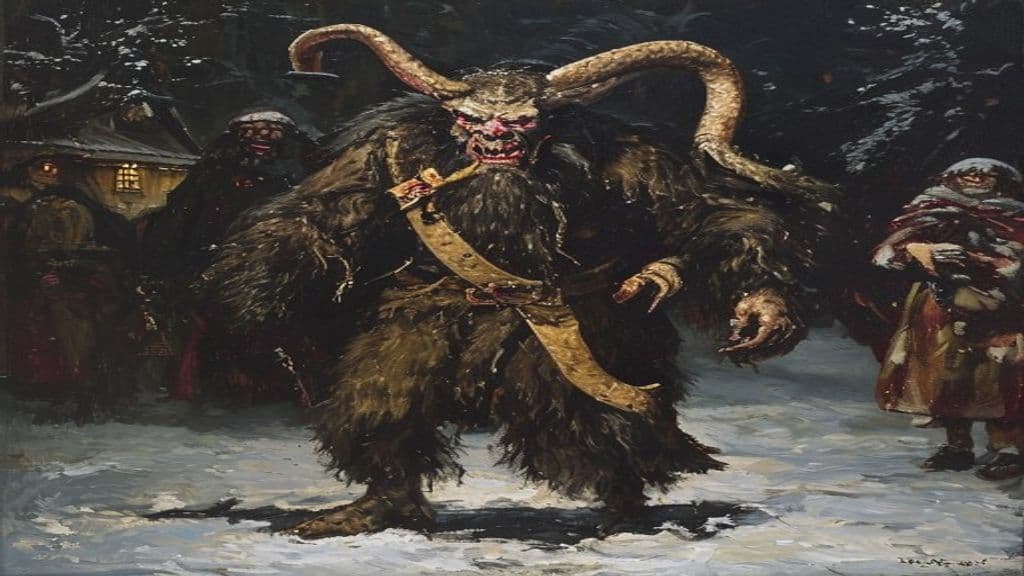
Krampus is a horned, hairy, anthropomorphic figure from Central and Eastern Alpine folk practice who serves as the punitive companion to Saint Nicholas during the winter festival cycle; he appears on Krampusnacht (5 December) and in public Krampuslauf/Perchtenlauf processions to threaten or punish badly behaved children.

Kriwe
Greater

Kriwe

A chief priest in the old Baltic religion, associated with the neo-pagan movement Romuva. (Note: 1. Power tier should be Primordial since it's a chief priest and the article implies a strong connection to the old Baltic religion. 2. The abilities and behaviors of Kriwe are not explicitly stated, )

Kubjikā
Ancient

Kubjikā

Kubjikā is the primary goddess of the Kaula Paścimāmnāya (Western transmission) within Kaula/Kaulism tantra, regarded as an aspect of the supreme feminine principle (Devi/Adi Paraśakti/Durga) and the lineage-tutelary śakti of a specific tantric current historically centered in medieval Kashmir and later preserved in secret Newar transmissions in the Kathmandu Valley.

Kukudh
Greater

Kukudh

Kukudh (definite Kukudhi) is an Albanian undead revenant variably depicted as the restless soul of a miser haunting his house, a disease-carrying female demon, or a chain-borne January corpse in some regional accounts. The term also functions as a moral label for an evil person and as a name for a severe sickness in southern traditions.

Kuladevata
Lesser

Kuladevata

A kuladevata (Sanskrit: कुलदेवता) is an ancestral tutelary deity in Hinduism and Jainism bound to a specific clan (kula), gotra, family line, or household. Kuladevatas function as lineage guardians invoked for family well‑being, protection, vow‑fulfilment, and communal identity; they are distinct from ishta‑devata (personal chosen deity) and grāmadevatā (village deity).

Kuluk / Brahmana Bhoot (unverified occurrence)
Lesser

Kuluk / Brahmana Bhoot (unverified occurrence)

The supplied source materials do not document a Maharashtrian supernatural entity called "Kuluk" or "Brahmana Bhoot." References to the string "Kuluk" in the provided corpus occur only as a geographic place-name (Kuluk Bay), as a brief label in a Wikidata entry, and within an archival item title; none of the supplied sources describe an ancestral village ghost, its attributes, or associated practices.

Kura
Ancient

Kura

Kura is a named deity attested in third‑millennium BCE Ebla. In modern summaries he is described as a principal local cultic figure tied to the city's temple and has been characterized as a local deity associated with prosperity and the civic ritual life of Ebla.

Kwoth
Ancient

Kwoth

Kwoth (also Kuoth, Kuoth Nhial) is the supreme, omnipresent creator deity of the Nuer people of South Sudan and Gambella. Regarded as the 'Spirit of the Sky', Kwoth is the originator of humans, sovereign over celestial bodies and natural phenomena, and the ultimate divine presence invoked in life-cycle and funerary rites.

La Guita Xica
Lesser

La Guita Xica

La Guita Xica is a Catalan mule–dragon figure tied to the Patum de Berga Corpus Christi festivities. Historically described as threatening or demonic, twentieth-century traditions reframe it as a protective festival spirit embodied by large effigies that parade and theatrically spit fireworks.

Lady Meng Jiang
Lesser

Lady Meng Jiang

Lady Meng Jiang (孟姜女; Mèng Jiāng Nǚ) is a legendary Chinese heroine whose sincere mourning for a husband conscripted to build a wall is said in tradition to have caused a portion of the wall to collapse and reveal his remains. Originating in early anecdote and moral-biographical literature, the tale evolved across centuries into popular balladry, temple cult, and local commemorative practices tied to sections of the Great Wall.

Lagamal
Ancient

Lagamal

Lagamal (Akkadian, literally 'no mercy') is a named Mesopotamian divinity chiefly attested at Dilbat, Terqa, and later at Susa (Elam). The deity is associated with the underworld and—in texts from Susa—appears in roles connected with postmortem judgment or an accusatory/adversarial function; Lagamal had temples, cult statues, and local theophoric devotion in multiple cities.

Laonome
Minor Spirit

Laonome

Laonome (Ancient Greek: Λαονόμη) appears in classical Greek sources as a mortal woman who functions within multiple heroic-age genealogies and as an eponym in one fragmentary account. Separately, Laonome is also the modern zoological genus name for a group of sabellid polychaete worms; ecological literature treats Laonome species as marine/estuarine organisms with invasive potential.

Laophonte
Minor Spirit

Laophonte

Laophonte (Ancient Greek: Λαοφόντη) is attested in Greek mythographic genealogies as a mortal woman — daughter of Pleuron and Xanthippe and sister of Agenor, Sterope, and Stratonice. Some traditions name her as wife of Thestius and mother of Iphiclus, Leda, and Althaea; other authors (e.g., Alcman) offer conflicting parentage for Leda. The name is also reused in zoological taxonomy as a genus of copepods (family Laophontidae).

Lares Familiares
Minor Spirit

Lares Familiares

Lares Familiares are the household Lares of ancient Roman religion: protective domestic spirits tied to a specific house or household locus, attended by daily cult and offerings and involved in the welfare and prosperity of all household members.

Last Judgment
Primordial

Last Judgment

The Last Judgment (Day of Judgment, Final Judgment; Arabic: Yawm al-Qiyamah) is an eschatological event in Abrahamic traditions in which God publicly adjudicates the eternal fate of all humans, accompanying a general resurrection and the final vindication of divine justice.

Leleges
Lesser

Leleges

Leleges are an autochthonous, pre-Hellenic people named in ancient Greek literature and historiography as former inhabitants of parts of the Aegean and western Anatolia. Classical authors use the category to account for older place‑names, cults, ruins, and social remnants encountered by later Greeks rather than ascribing to them supernatural status.

Lethus
Lesser

Lethus

Lethus is not attested as a single traditional supernatural being in the supplied sources; the lexical form appears in multiple unrelated contexts: as a Greek mythic personal name (father of Pylaeus), as a taxonomic label in entomology, as modern personal/user names, and as a single modern fan-made fictional monster (the "Lethus Dragon" on a D&D wiki). No coherent folkloric ontology, rituals, or traditional powers are documented for an entity called Lethus.

Leucosia
Lesser

Leucosia

Leucosia is a name applied in the source corpus to multiple distinct referents: a possible name for one of the Sirens of Greek mythology (a sea-associated, singing female figure), a modern taxonomic genus of small 'pebble' crabs (family Leucosiidae), and several modern/pop-cultural uses. The supplied sources do not preserve a standalone ancient narrative or ritual corpus specifically attached to a Siren named Leucosia.

Leđan (Slavic tradition)
Ancient

Leđan (Slavic tradition)

An ancient and magical city from Croatian mythology and folklore. (Note: 1. Power tier: downgrade to Greater (since Leđan is described as an "ancient" city, but its magical nature and lack of explicit abilities suggest it may be less powerful than Ancient). 2. Appearance: )

Libat
Lesser

Libat

Libat is the Mandaic name for the planet Venus and one of the Seven (šuba) planetary beings who form part of Ruha's entourage in the Mandaean World of Darkness. Treated both as the astronomical Venus and as an agentive supernatural being, Libat is associated with love and reproduction yet is often framed negatively as a demonic power (daiuia) and sometimes identified with Ruha or her epithets such as Amamit and ʿstira/Estira.

Lietuvēns
Lesser

Lietuvēns

Lietuvēns is a harmful nocturnal spirit from Latvian folk belief: the restless soul of someone who died violently or an unbaptized child, said to ride and strangle sleeping people and domestic animals and to enter houses through small openings.