Other Supernatural Beings

842 documented Other supernatural beings from the Evil Eye grimoire, including 352 lesser and 181 minor spirit in power tier.

page 9 of 15

Gunungsin (War Gods)
Primordial

Gunungsin (War Gods)

Korean deities associated with war and conflict, possibly connected to the Jakjaegeon myth. (Note: 1. Power tier should be Primordial only if it's supported by source material; based on the provided sources, the power level is unspecified. 2. Abilities are unknown or unspecified in source material,)

Gupna (Gufna)
Greater

Gupna (Gufna)

In Mandaean cosmology, the gupna or gufna is described in secondary sources as an uthra — a personified, heavenly grapevine that resides in the World of Light. References are brief and present the figure as a sacralized vine elevated into the register of luminous beings rather than as a terrestrial plant.

Gurzil
Ancient

Gurzil

Gurzil is an ancient Berber (Amazigh) sacred figure attested in late‑antique and medieval sources and in archaeological remains from Tripolitania. Best known from Corippus’s mid‑6th‑century poem Iohannis as a war‑associated cult image carried into battle by the Laguatan, and attested archaeologically at the site commonly identified as Ghirza.

Gütel
Lesser

Gütel

A variable household and folk spirit from German regional belief-forms that appears as a domestic sprite, hay-loft manikin, little earth-being, or the soul of an unbaptized child; its character ranges from helpful household attendant to mischievous or harmful tormenter depending on locality.

HMS Friday
Lesser

HMS Friday

HMS Friday is an urban myth — a contemporary maritime legend that purports to tell of a Royal Navy ship deliberately commissioned and sailed on Fridays to disprove the superstition that beginning a voyage on a Friday is unlucky. The story is false: there was never a Royal Navy ship named HMS Friday, and the tale functions as a folkloric cautionary anecdote rather than a historical event.

Hagbard and Signy
Greater

Hagbard and Signy

Hagbard and Signy (also Habor and Sign(h)ild) are legendary human lovers of Scandinavian heroic tradition whose tragic saga—preserved in medieval prose (notably Saxo's Gesta Danorum) and in a long-lived ballad tradition (TSB D 430)—was widely sung and commemorated in place-names and monuments across Scandinavia.

Hainuwele
Greater

Hainuwele

In Indonesian origin myth, Hainuwele is a figure associated with the creation of humans on Seram Island. (Note: 1. Power tier: Given that Hainuwele's abilities are associated with significant events in human history and development on Seram Island, a Greater power tier might be inaccurate; considering her role )

Hamr (Norse)
Primordial

Hamr (Norse)

In Norse mythology, Hamr is a manifestation of one's mental or spiritual essence that can take shape outside the body, enabling magical transformation and disguise. (Note: 1. Power tier: Downgrade to Lesser (local spirit) - Primordial implies cosmic or universal power, which doesn't match the description. 2. Origin story: Add "According to some interpretations" or rephr)

Hanasaka Jiisan
Lesser

Hanasaka Jiisan

A Japanese folktale figure centered on a beloved dog whose postmortem agency, conveyed in dreams and by the ashes of a burned mortar, rewards a kind old couple (making rice turn to gold and causing cherry trees to bloom) while an envious neighbor who copies the actions is punished. The tale emphasizes kindness to animals, dreams as channels of guidance, and the miraculous efficacy of ordinary materials associated with the dog.

Hannahannah (Ḫannaḫanna)
Ancient

Hannahannah (Ḫannaḫanna)

Ḫannaḫanna (rendered here as Hannahannah) is identified in the supplied sources as a Hittite/Hurrian mother or grandmother goddess — an elder maternal figure whose name has been etymologically connected to words meaning 'grandmother.' The available material is limited to classificatory and etymological statements; no primary myths, cult practices, iconography, or ritual texts are supplied in the provided sources.

Hasinaw-uk-kamuy
Greater

Hasinaw-uk-kamuy

Hasinaw-uk-kamuy is an Ainu kamuy (deity/spirit) associated with the hunt, hunting tools and success in subsistence activities; she is invoked by hunters and fishermen and is also associated in sources with aid in childbearing.

Hawkeye Collins and Amy Adams
Minor Spirit

Hawkeye Collins and Amy Adams

A paired duo of fictional twelve-year-old child detectives who appear as protagonists in the children's puzzle-mystery book series Can You Solve the Mystery? (originally published 1983–1985) credited to the pseudonym M. Masters. The books invite readers to solve short investigative puzzles by using narrated clues and a sketch attributed to 'Hawkeye' Collins, with mirror-printed solutions provided at the back.

Hayyi Rabbi
Primordial

Hayyi Rabbi

Hayyi Rabbi (Hiia Rbia, "The Great Life") is the supreme, singular divine Principle in Mandaean religion — the First Life and ultimate source of the Worlds of Light from which emanations, souls, and salvific guidance proceed. In Mandaean cosmology Hayyi is transcendent yet the origin of the Great Mana (over-soul) and presides as sovereign over lesser emanations who may act under delegation (e.g., Ptahil) in the formation of the material world.

Headless Rider (Kubinashi Rider)
Lesser

Headless Rider (Kubinashi Rider)

A modern urban-legend revenant of a motorcyclist who suffered a decapitating accident and is said to reappear along the route or at the time of death, often riding a motorcycle without a head. The cycle adapts older headless‑rider motifs to motorized roadways and functions as a contemporary cautionary and liminal apparition.

Healfdene (Halfdan)
Lesser

Healfdene (Halfdan)

Healfdene (Old English) / Halfdan (Old Norse) is a legendary human king of the Scylding/Skjöldung lineage appearing in Old English and Old Norse sources. He functions as an ancestral ruler whose descendants (notably Hrothgar/Hróarr and Halga/Helgi) and the feuds around his succession structure later narrative events such as Beowulf and several Norse sagas.

Hecate
Ancient

Hecate

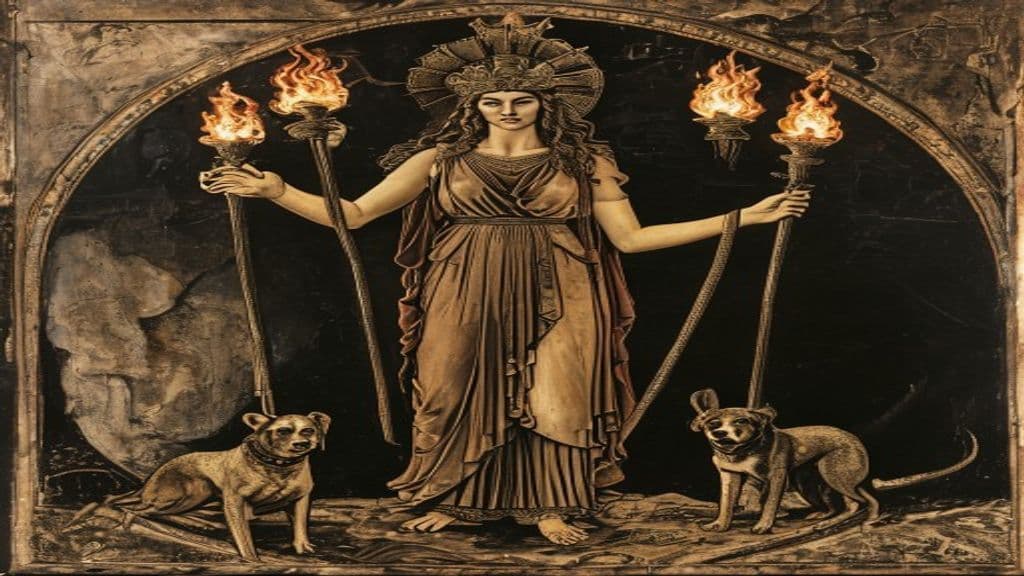
Hecate (Ancient Greek: Ἑκάτη) is a liminal goddess in ancient Greek religion associated with crossroads, night, light, magic/witchcraft, the Moon, and household protection. She appears in early Greek poetry (Hesiod) with broad domains and in later traditions (notably the Chaldean Oracles) with expanded cosmological roles; she retained important regional cults, especially in Anatolia (Lagina) and had popular associations with witches in Thessaly.

Helios
Ancient

Helios

Helios is the ancient Greek personification and god of the Sun who drives his horse-drawn chariot across the sky each day, serves as an all-seeing witness and guardian of oaths, and figures in Homeric myth and later syncretic solar cults. He was the patron deity of Rhodes and had important cult presence at Corinth; relatively minor in Classical Greece, his prominence increased in late antiquity through identification with Apollo and the Roman Sol.

Hellhound
Greater

Hellhound

A class of mythic canine beings associated across many cultures with the boundary between the human world and the underworld or otherworld. Depending on tradition they function as guardians or attendants of the realm of the dead, members of spectral hunts, omens of death, or emissaries of diabolic forces.

Hibil (Hibil Ziwa)
Ancient

Hibil (Hibil Ziwa)

Hibil Ziwa is a luminous uthra (lightworld being) in Mandaean religion who serves as a salvific agent. Created by Manda d‑Hayyi, he is sent into the World of Darkness to confront and bind hostile powers, retrieve dangerous elements, and secure the return of souls to the World of Light; he is also reflected as a human archetype cognate with Abel.

Hippo (term; zoological and toponymic usages)
Lesser

Hippo (term; zoological and toponymic usages)

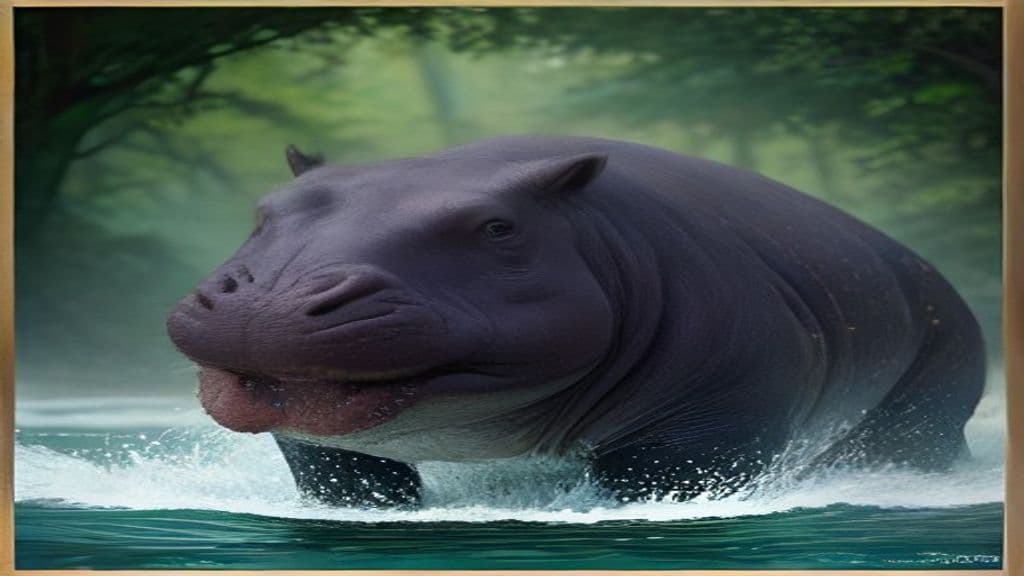
Hippo is not presented in the provided sources as a single supernatural entity. The term appears primarily as (1) an English short form for the hippopotamus (the large semiaquatic mammal), (2) an ancient North African place-name (Hippo Regius, Hippo Diarrhytus), and (3) an epithet indicating origin or episcopal see (e.g., Augustine of Hippo). Modern technical and popular-culture uses also occur.

Hiroim
Greater

Hiroim

Hiroim is a fictional Marvel Comics character portrayed as a member of the Shadow People who trained as a Shadow Priest tied to the Sakaaran story of the Sakaarson. He serves as a gladiator and a member of the Warbound; after Caiera's death he inherits her ability to manipulate the Oldpower and later absorbs the Shadow Priests' powers following Sakaar's destruction, accompanying the Hulk to Earth.

Hito-gitsune
Minor Spirit

Hito-gitsune

A household-associated small carnivore spirit from western Japan (Chūgoku region) that attaches to certain families, providing wealth in belief but causing illness, behavioral change, social stigma, and transmission across households. It is represented in regional traditions as a marten/fox/weasel‑like possessing spirit rather than a singular individualized deity.

Holy Living Creatures
Greater

Holy Living Creatures

A class of heavenly attendants appearing in Jewish and Christian throne-vision literature (notably Ezekiel and Revelation) who perpetually worship and stand before the divine presence; later traditions (merkabah, Zohar, patristic exegesis) adapt and symbolically associate them with four archetypal forms.

Homer (tradition)
Lesser

Homer (tradition)

Homer is the traditional name given to the poet or poets credited with composing the Iliad and the Odyssey. Treated in ancient and later writings as an authorial identity that can be a historical individual, a rhapsodal role, or a legendary figure, Homer functions as a foundational cultural and educational authority in Greek literary tradition.

Horned Serpent
Greater

Horned Serpent

A recurring mythic serpent-being attested across multiple cultures, typically depicted as a large horned snake associated with water, storms, fertility/regeneration, and sacred crystalline or iridescent bodily accoutrements that serve as ritual power-objects.

Howler Monkey Gods
Ancient

Howler Monkey Gods

Paired supernatural patrons in Classic and Postclassic Maya religion who oversee scribal arts, sculpture, music, and related ritual knowledge; personifications of the day-sign Batz in calendrical/divinatory contexts and remembered in colonial-era narratives such as the Popol Vuh and accounts by Bartolomé de las Casas.

Huldufólk (Hidden People)
Greater

Huldufólk (Hidden People)

Huldufólk is a broad, loosely defined category of place‑bound hidden people in Nordic and Insular Scots traditions—beings who live in a parallel, concealed layer of the landscape and who look and behave much like humans. They are tied to mounds, rocks, mountains, forests, and waters, and traditions emphasize respect, avoidance, and occasional interaction or retaliation when their habitat is disturbed.

Huminodun
Ancient

Huminodun

Huminodun is a sacred ancestral maiden in the Nunuk Ragang cycle of Kadazan‑Dusun tradition whose voluntary sacrifice ends a famine and, according to the legend, gives rise to cultivated staple crops (especially rice) and the ritual institutions of Momolianism including the bobohizan priesthood. Her story is commemorated in the Kaamatan harvest festival and the Unduk Ngadau pageant.

Hutena and Hutellura
Lesser

Hutena and Hutellura

Hurrian divine female figures associated with fate and with birth/midwifery. Frequently attested as part of the court of the goddess Ḫepat (Hebat), they appear in ritual offering lists and in mythic narratives as attendants who determine destiny and assist at births.

Hwanung
Primordial

Hwanung

Divine being in Korean tradition, son of Hwanin, Lord of Heaven. Associated with human development and progress. (Note: - Power tier: Primordial may be too high given the description of abilities (institution of laws, teaching arts and medicine) which more closely align with a Greater (deity-level, but not cosmic) or A)

Hylaeus
Minor Spirit

Hylaeus

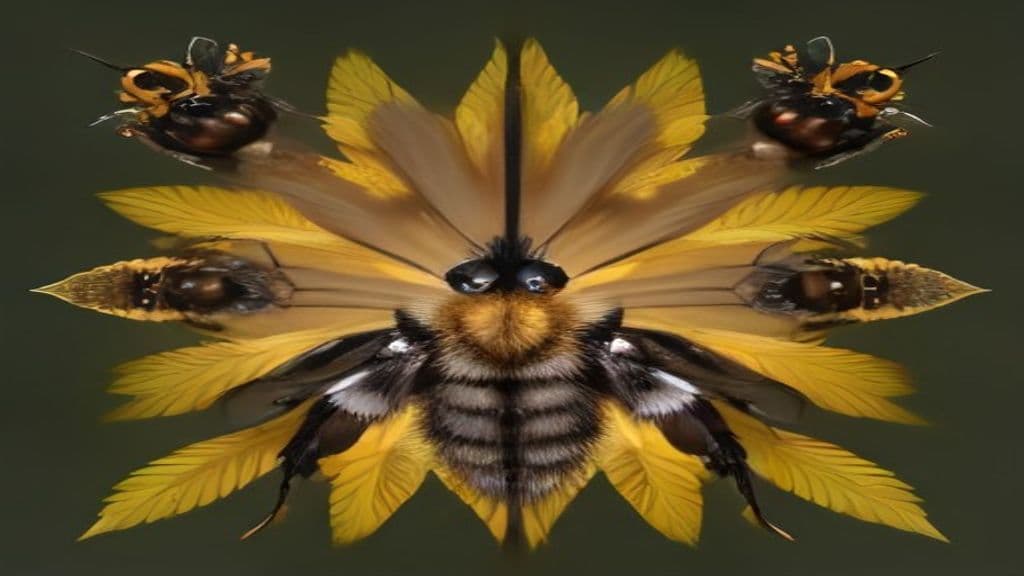
Hylaeus is a name attested across unrelated referents in classical myth, biological taxonomy, and popular culture rather than a single supernatural being: brief mythic proper names (a centaur and one of Actaeon’s dogs), a cosmopolitan genus of bees (yellow‑face or masked bees), and a named pet dog in the videogame Caves of Qud.

Hyottoko
Lesser

Hyottoko

Hyottoko is a comical masked character in Japanese folk performance, symbolically tied to fire and the household hearth. Primarily a stock clown in dengaku and festival dances, in some regional traditions he is also regarded as a local fire-deity or household talisman associated with luck and productive fire (ironworking).

Hyperion
Ancient

Hyperion

Hyperion is a polysemous proper name attested in ancient Greek myth as both a Titan (one of the twelve Titans) and as a byname of the Sun-god Helios, and reused widely in modern scientific, literary, and commercial contexts. The available sources treat 'Hyperion' primarily as a name applied to multiple distinct referents rather than as a single, describable folkloric being.

Hypermnestra
Lesser

Hypermnestra

Hypermnestra is a mythological mortal from ancient Greek tradition, a daughter of Danaus who alone refused her father's command that the Danaids kill their husbands. By sparing Lynceus she becomes ancestress of the Abantiad line and an exemplar of individual moral refusal within the Danaid narrative.

Hypermnestra of Aetolia
Lesser

Hypermnestra of Aetolia

Hypermnestra of Aetolia is a legendary mortal royal woman in Greek mytho‑genealogical tradition, attested as a daughter of King Thestius of Pleuron and sister of figures such as Leda and Althaea. She is remembered in local topography (a tomb cited by Pausanias) and appears in genealogical lists; the name Hypermnestra also occurs elsewhere in Greek myth (notably among the Danaids) and must be disambiguated from those other figures.

Hypsistos (Theos Hypsistos)
Ancient

Hypsistos (Theos Hypsistos)

Hypsistos (Θεός Ὑψιστος) is an ancient divine epithet and cultic designation meaning "God Most High" attested in inscriptions, votive altars, and occasional temple dedications in Asia Minor, the Black Sea region, and the eastern Mediterranean from the Hellenistic period into late antiquity. It functions as a titulary focus of worship — sometimes attached to established gods (e.g., Zeus Hypsistos) and sometimes invoked more abstractly by groups later called Hypsistarians in fourth‑century Christian writings.

Hyrnetho
Minor Spirit

Hyrnetho

Hyrnetho is a mortal woman in Greek mytho-historical tradition, daughter of Temenus and wife of Deiphontes, whose violent death during a dynastic struggle was commemorated with a tomb and a heroum (hero-shrine) and sacred grove shown at Epidaurus and Argos.

Hồn Ma (wandering spirit)
Lesser

Hồn Ma (wandering spirit)

Hồn ma (also rendered ma, hồn, vong, or bóng ma) refers to wandering human souls in Vietnamese belief whose failure to be ritually integrated into the ancestor line leaves them roaming the living world. They are socially significant, implicated in everyday ritual practice, missing‑person searches, and the work of spirit mediums and ritual specialists.

Idaea
Lesser

Idaea

Idaea (Ancient Greek: Ἰδαία) is a toponymic female name/epithet in ancient Greek tradition applied to several distinct figures associated with Mount Ida (Cretan or Phrygian). Bearers include nymphs and mortal/legendary women (e.g., a wife of Phineus), and the form also occurs as an epithet of the Anatolian mother-goddess often identified with Cybele.

Ik Onkar
Minor Spirit

Ik Onkar

Ik Onkar (Gurmukhi: ੴ) is a foundational theological phrase in Sikhism expressing the oneness of the Divine. It opens the Mul Mantar and the Guru Granth Sahib and functions as a liturgical, scriptural, and emblematic affirmation of the singular, formless Supreme Reality in Sikh thought.

Iku-Shamagan
Lesser

Iku-Shamagan

Iku-Shamagan was a historical king (lugal) of the second Mariote kingdom in ancient Mari, attested in an inscribed votive statue and in vessel dedications dating to the early 3rd millennium BC. He is known from archaeological context and inscriptions linking his reign to temple cultic practice rather than from any supernatural or folkloric tradition.

Ilib
Ancient

Ilib

Ilib (Ugaritic ‘l’b) is an ambivalent ancient Ugaritic term attested as both a primordial ancestral theogonic figure placed before El in ritual lists and as a generic designation for household ancestor-spirits honored by families. Evidence for Ilib is primarily ritual and onomastic: the name occurs early in offering lists, in temple sacrificial contexts, and in literary instruction about filial memorials.

Imp
Lesser

Imp

An imp is a small supernatural being in European folklore, typically characterized as a mischievous, lesser spirit or attendant rather than a major deity. Traditionally associated with pranks and household or local disturbance, the concept shifted over time toward associations with familiars and infernal attendants in Christianized contexts.

Imra
Ancient

Imra

Imra (Kati: Imro) is the chief creator deity in pre-Islamic Nuristani religion who was believed to have created the earth and, by his breath, the other main deities of the pantheon; he also functions as guardian of the subterranean gates of the dead, preventing the return of the dead to the living.

Inca Tradition
Ancient

Inca Tradition

Polytheistic framework with pan-regional, regional, and local divinities influencing daily activities and grand ceremonies in the Inca Empire. (Note: 1. Power tier: Primordial (not Ancient), as it's a pan-regional framework influencing daily activities. 2. Appearance: Add information from source material about what the Inca deities looked like or h)

Inshushinak
Ancient

Inshushinak

Inshushinak is the principal tutelary deity of the city of Susa in Elamite tradition, functioning as the city's lord, protector, royal legitimizer, and divine judge with associations extending into funerary and underworld contexts.

Inugami
Minor Spirit

Inugami

Inugami (犬神) are Japanese household-associated dog-spirits that appear in western Japan. In folklore they may be intentionally created by kodoku/kojutsu rituals or become hereditary household possessors that attach to people, animals, or objects and produce illness, jealousy, or social stigma.

Inzak
Ancient

Inzak

Inzak is the principal deity of the ancient Dilmun pantheon and the tutelary god of the place called Agarum (also attested as Akarum/Failaka in some sources). He functions as a municipal and royal patron whose cult legitimized rulers of Dilmun and who was integrated into Mesopotamian and Elamite religious contexts where he was sometimes equated with or associated with foreign gods.

Iphitus of Oechalia
Lesser

Iphitus of Oechalia

Iphitus (Iphitos) of Oechalia is a mortal prince in Greek myth, son of King Eurytus and brother of Iole, sometimes counted among the Argonauts. He is best known as the named victim whom Heracles kills during a fit of madness, an act that precipitates Heracles' search for purification and eventual servitude to Omphale.

Ishmekarab
Ancient

Ishmekarab

Ishmekarab (Išmekarab / Išnikarab) is a Mesopotamian deity associated with justice, oath‑enforcement, and divine judgment. Attested in Assyrian lists of divine judges and in Elamite/Susa contexts, the figure is invoked in legal and curse formulas and appears in scholarship as participating in juridical/afterlife roles in some Susa texts.

Isimud
Lesser

Isimud

Isimud (Akkadian Usmû; Hurrian Izzummi) is a minor Mesopotamian deity who functions as the sukkal (personal attendant, messenger, and doorkeeper) of the god Enki (Ea). Attested in mythic and ritual texts from the Early Dynastic through the Late Assyrian periods and adopted into Hurrian and Hittite contexts, he is best known for his distinctive two-faced iconography and his role conveying messages and performing household duties for Enki.

Istrus
Lesser

Istrus

Istrus is not attested in the provided sources as a mythological being; the only direct occurrence in the corpus is a 1932 auction catalogue phrase referring to "Istrus Münzen" (a find of Istrus coins), suggesting a toponymic or numismatic usage rather than a spirit or creature. Possible connections to classical place-names (e.g., Histria/Ister) are explicitly uncertain given the available material.

Izhma (forest spirit)
Minor Spirit

Izhma (forest spirit)

Izhma is a putative name sometimes discussed in secondary sources in relation to the Izhma River and the Izhma Komi people, but the provided materials contain no primary folkloric attestations describing an entity named Izhma as a forest spirit. References to spirits and landscape beings exist in the regional cultural context, but an Izhma spirit is not documented in the supplied sources.

Išḫara
Greater

Išḫara

Išḫara is a polyvalent ancient Near Eastern goddess first attested at Ebla in the third millennium BCE, later incorporated into Mesopotamian, Hurrian, Hittite and other regional religious traditions. She functioned as a tutelary royal deity, an authority over love and the institution of marriage, an oath- and divination-linked divine figure, and was associated symbolically with reptiles and, in some Mesopotamian contexts, scorpions.

Jabiru
Minor Spirit

Jabiru

Jabiru primarily denotes a large Neotropical stork species (Jabiru mycteria). The word, from Tupi–Guaraní meaning "swollen neck," is also used as a place-name (Jabiru, Northern Territory) and as a modern commercial/technical name (e.g., Jabiru Aircraft, rocket/vehicle names, and a bacteriophage). The provided sources do not document any supernatural or mythic entity named Jabiru.

Jack o' the Bowl
Lesser

Jack o' the Bowl

A Swiss household spirit (described in sources as a brownie or kobold) who, in exchange for a nightly bowl of sweet cream or milk, guides cows to safe grazing — even on otherwise dangerous mountainsides — and is maintained by a routine domestic offering.

Jambavan
Ancient

Jambavan

Jambavan is a long-lived rājā of the bears in Hindu epic tradition who acts as warrior, strategist, and wise elder; he aids avatars of Vishnu (notably Rama and Krishna), appears across multiple yugas, and is associated with narrative episodes such as the Kishkindha counsel to Hanuman and the Syamantaka gem combat with Krishna.

James Bartley (whale story)
Minor Spirit

James Bartley (whale story)

A late-19th-century maritime wonder tale circulated in newspapers claiming a whaler named James Bartley was swallowed whole by a sperm whale and later found alive in its stomach; later investigation and archival evidence cast significant doubt on the historicity of the incident. The story functions culturally as a 'modern Jonah' sea yarn rather than as an account of a supernatural being.

Janjanbi
Lesser

Janjanbi

Janjanbi (じゃんじゃん火) is a Japanese local tradition of onibi — animate ghost‑lights tied to human deaths and unsettled spirits. Documented variants from Nara Prefecture present janjanbi as balls of fire or hitodama that appear at specific sites, make a characteristic "jan‑jan" sound, and are woven into local rites and avoidance customs.

Japhetites
Primordial

Japhetites

In the Jewish tradition, Japhetites refer to the descendants of Japheth, one of the three sons of Noah in the Book of Genesis. (Note: - Power tier: Primordial is not supported by the source material; a more accurate power tier would be Greater (powerful regional). - Abilities: The abilities section should be removed or rephrased to )