Chinese Supernatural Beings

184 documented Chinese supernatural beings from the Evil Eye grimoire, including 65 lesser and 50 greater in power tier.

page 3 of 4

Kumbhāṇḍa
Lesser

Kumbhāṇḍa

Kumbhāṇḍas are a class of dwarfish, misshapen lesser deities or spirit-entities in Buddhist cosmology, commonly listed among the retinues of the Four Great Kings and placed under the Guardian of the South (Virūḍhaka). Their name and traditional imagery link them to gourd- or pot-like bodily forms.

Kung Jin
Minor Spirit

Kung Jin

Kung Jin is a modern fictional character from the Mortal Kombat video game franchise (debuting in Mortal Kombat X, 2015). He is presented as a Shaolin-trained archer and relative of Kung Lao who joins a new generation of Earthrealm defenders; he is a human narrative character created by NetherRealm Studios, not a traditional spirit or folkloric entity.

Kölün (name attested; no folkloric data in provided sources)
Minor Spirit

Kölün (name attested; no folkloric data in provided sources)

The provided source set contains a toponymic and regional signal for the string Kölün / Kolun but includes no ethnographic, mythic, or folkloric descriptions of a supernatural being by that name. References place related strings in geographic and database contexts (Hulunbuir region entry; a Wikidata item labeled Kolun) but supply no information about appearance, powers, rituals, or cultural practices tied to a water spirit called Kölün.

Lady Meng Jiang
Lesser

Lady Meng Jiang

Lady Meng Jiang (孟姜女; Mèng Jiāng Nǚ) is a legendary Chinese heroine whose sincere mourning for a husband conscripted to build a wall is said in tradition to have caused a portion of the wall to collapse and reveal his remains. Originating in early anecdote and moral-biographical literature, the tale evolved across centuries into popular balladry, temple cult, and local commemorative practices tied to sections of the Great Wall.

Li Hong (李弘)
Minor Spirit

Li Hong (李弘)

Li Hong (652–675) was a historical Tang dynasty prince and crown prince under Emperor Gaozong. The supplied sources treat him as a historical political figure noted for studiousness, charity, and his early death; they do not document any role for him as a supernatural or eschatological figure in Taoist tradition.

Lingji (灵吉)
Lesser

Lingji (灵吉)

Lingji (灵吉; Língjí) is a fictional Bodhisattva figure invented by Wu Cheng'en in the 16th‑century novel Journey to the West. In the novel he resides on Little Sumeru Mountain and is called upon to subdue wind‑based demons; he provides two named magical items, the Flying Dragon Staff (飞龙杖) and the Wind‑Calming Pill (定风丹), which are used to capture or protect against powerful winds.

Linh hồn (sông) — research notes
Minor Spirit

Linh hồn (sông) — research notes

Notes on the concept of 'linh hồn' as found in three Hồng Hoang (xianxia) excerpts; sources discuss disembodied, transmigrating souls and cosmic mechanisms but do not provide material specifically about Vietnamese river spirits ('linh hồn sông' or 'thủy quỷ').

Little Crown Prince Zhang
Greater

Little Crown Prince Zhang

Little Crown Prince Zhang (小张太子, Xiǎozhāng Tàizǐ) is a literary character from the 16th-century novel Journey to the West who, in regional popular religion of the lower Yangtze, was later syncretized with a local flood-protecting tutelary figure worshipped as the 'Sizhou Zhang Great Sage' (泗州张大圣). He appears in narratives as a martial Buddhist disciple and in ritual contexts as a protector invoked in rites addressing water calamities.

Longma (龍馬)
Ancient

Longma (龍馬)

The longma is a mythological Chinese dragon-horse: a horse-bodied, dragon-scaled creature (sometimes winged) that appears as a portent, most famously bearing the Hetu (Yellow River chart) from the river to culture-heroes and sage-rulers. It functions as a liminal, quasi-divine sign linking rivers, Heaven, and legitimate rulership in classical Chinese sources.

Luanniao (luan bird)
Lesser

Luanniao (luan bird)

The luan (luanniao) is a mythological, auspicious bird in Chinese tradition described in classical lexica and mythographic sources as a divine or semi-divine bird whose appearance and song are omen-bearing and ritually significant to rulers and paradisiacal realms.
Mahāsthāmaprāpta
Greater

Mahāsthāmaprāpta

Mahāsthāmaprāpta is a Mahāyāna bodhisattva associated with the Pure Land devotional tradition, commonly represented alongside Amitābha and Avalokiteśvara. His name is glossed in sources as 'arrival of the great strength' or 'one who has attained great power' and he is understood as embodying or representing the power of wisdom.

Mazu
Ancient

Mazu

Mazu (媽祖) is a deified female protector of seafarers originating in Fujianese popular religion as the historical/legendary Lin Moniang. Venerated across Chinese folk religion, Taoist and Buddhist registers, and in coastal and diasporic Chinese communities (notably Taiwan), she functions as a tutelary sea goddess whose cult includes temples, imperial honorific titles, and large popular pilgrimages.
Mellified Man
Primordial

Mellified Man

A medicinal substance created by steeping a human cadaver in honey. (Note: * Power tier should be Lesser (given it's a medicinal substance created by humans) rather than Primordial. * Abilities should reflect that Mellified Man has no supernatural or paranormal abilities, bu)

Meng Po (Lady of Forgetfulness)
Lesser

Meng Po (Lady of Forgetfulness)

Meng Po (孟婆; Mèng Pó, literally 'Old Lady Meng') is a deity-like underworld official in Chinese folk religion who administers a brew—the Five Flavored Soup (迷魂汤; míhúntāng, 'waters of oblivion')—to newly dead souls on the Bridge of Oblivion so they forget prior lives before reincarnation.

Menshen (門神)
Lesser

Menshen (門神)

Menshen, or "door gods," are paired guardian deities in Chinese popular religion and related practices placed at thresholds to repel harmful influences and encourage beneficial ones. They appear as images, tablets, or statues affixed to doors and gates and are commonly replaced each Chinese New Year as part of household renewal.

Momu
Lesser

Momu

Momu is a figure in Chinese legendary tradition described as a legendary empress and goddess, remembered as a wife of the Yellow Emperor and traditionally credited with inventing the mirror and with a healing episode that led to her involvement in divine administration. Later popular traditions also group her among a set called the "Five Ugliest Women of Ancient China."

Moon Rabbit (Maya Tradition)
Primordial

Moon Rabbit (Maya Tradition)

A mythical figure associated with lunar mythology, said to pound elixir or medicine for mortals and occasionally foodstuffs. (Note: 1. Power tier: Downgrade to Ancient, as while it's associated with lunar mythology, its abilities are not cosmic in scope. 2. Abilities: Add that the contents of the mortar differ among cultural tradi)

Mōryō
Lesser

Mōryō

Mōryō (魍魎, also written 罔両 or 美豆波/mizuha in some sources) is a collective term found in East Asian textual and folkloric traditions for spirits tied to natural features and liminal places; literary Chinese sources depict them as corpse‑afflicting beings while Japanese usage can treat the label more broadly for various uncanny yōkai associated with mountains, rivers, trees, rocks, and graves.

Na Tuk Kong (Datuk/Datuk Gong)
Lesser

Na Tuk Kong (Datuk/Datuk Gong)

Na Tuk Kong, commonly called Datuk or Datuk Gong, are place-bound guardian spirits venerated in parts of the Malay Peninsula and nearby areas. Practised mainly among overseas Chinese communities in Malaysia and Singapore, the cult blends Malay animistic/keramat practices with Chinese folk-religious forms and honours individual local guardian presences tied to particular features of landscape or neighbourhood.

Nian (Year Beast)
Lesser

Nian (Year Beast)

A folkloric monstrous beast in modern Chinese popular accounts that is said to emerge annually at the turn of the year to raid villages. The legend functions as an etiological explanation for many Chinese New Year customs—fireworks, red decorations, loud noises, and the lion dance—though explicit references to a named creature called nian in older textual sources are scarce.

Nine-tailed Fox
Greater

Nine-tailed Fox

A long-lived fox-spirit figure from Chinese myth (九尾狐) that appears across East Asia (e.g., kitsune, kumiho). Associated with age-linked transformation, shapeshifting into humans, ambiguous morality (trickster/seducer or occasionally honorable), and in some doctrinal sources a celestial/ritual role with talismans and jiao rites.

Nü gui (female ghost)
Lesser

Nü gui (female ghost)

A concept in Chinese and comparative folklore of a dead person—often referenced as a female in English-language discussions—who returns after an unjust, cruel, or unnatural death or after being denied proper funerary rites, remaining an 'unhappy' or vengeful spirit that may afflict the living.

Nüwa
Ancient

Nüwa

Nüwa is a primordial mother-goddess and culture-hero in Chinese traditional cosmology who creates humanity in some traditions and repairs the cosmos after catastrophic disruption. She appears across Chinese folk religion, Taoist and Confucian discourse, and in mythic texts such as the Huainanzi, Songs of Chu, and Liezi, often paired with the culture-hero Fuxi.

Preta (Hungry Ghost)
Lesser

Preta (Hungry Ghost)

A post-mortem supernatural being associated with extreme, unremitting hunger and thirst. In Hindu usage the Sanskrit term can mean a deceased person, while Buddhist traditions develop the category into a distinct realm of hungry spirits whose condition illustrates karmic consequences for demeritorious action.

Pulao (蒲牢)
Lesser

Pulao (蒲牢)

Pulao (蒲牢) is a named mythic creature in Chinese tradition commonly listed among the 'nine sons of the dragon.' Textual references identify it as a dragon-son notable for its fondness for roaring and as an established decorative motif in Chinese material culture.

Pāṇḍara-vāsinī (White-Robed Guanyin / Baiyi Guanyin)
Ancient

Pāṇḍara-vāsinī (White-Robed Guanyin / Baiyi Guanyin)

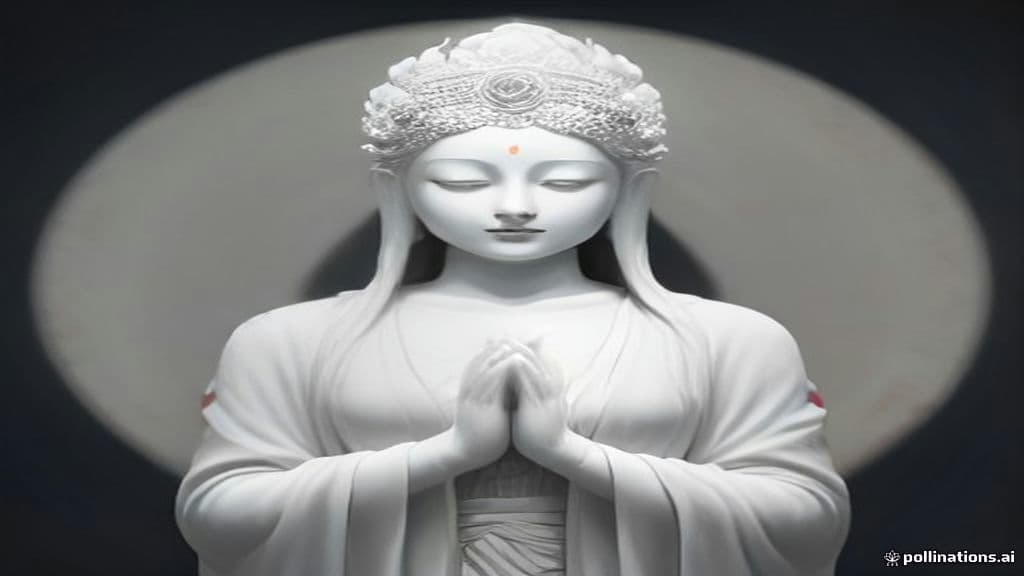
A figured form of Avalokiteśvara/Guanyin known in East Asian Mahāyāna devotional and mandalic contexts as the White-Robed (Baiyi) Guanyin. Associated in sources with garbhadhātu (womb) mandala inclusion and maternal/childbirth devotional functions rather than as a hostile spirit.

Qi
Lesser

Qi

Qi (氣/气) is a foundational concept in Chinese thought referring to a ubiquitous vital substance or vapor-like principle—commonly glossed as 'vital energy' or 'breath'—thought to underlie living beings, health, and cosmological processes. It is treated as an impersonal, polysemous principle rather than an individualized spirit or deity, and is central to practices that aim to cultivate or balance it (e.g., qigong, traditional Chinese medicine).

Qilin
Greater

Qilin

A legendary hooved chimerical creature of Chinese literary tradition (麒麟, qílín) whose appearances in classical accounts function as auspicious omens tied to the birth, arrival, or death of sages and illustrious rulers. The creature is part of a broader East Asian set of correspondents (Japanese kirin, Korean girin) and was historically conflated with the real giraffe in Ming-dynasty court encounters.

Qiuniu
Lesser

Qiuniu

Qiuniu is one of the traditional "nine sons of the Dragon" in Chinese popular and devotional imagery, represented as the patron of music whose head is used as an ornamental motif on musical instruments. Sources present Qiuniu principally as a symbolic figure used in material culture rather than as an independently narrated deity with stories or ritual prescriptions.

Sexual vampire (Daoist sexual vampirism)
Lesser

Sexual vampire (Daoist sexual vampirism)

A conceptual category and set of practices in Chinese Daoist sexual-alchemical literature describing the absorption of another person's qi and jing through sexual techniques; also a literary motif comparing seductress spirits to practitioners who 'feed' on vital substances. It functions as both an esoteric technique aimed at longevity and a mythic trope of sexual predation in stories of fox spirits and reanimated corpses.

Shachihoko
Minor Spirit

Shachihoko

A Japanese mythic sea-creature and roof-ornament (shibi) combining a predator head (dragon or tiger) with a carp body. In Japanese architectural and folkloric contexts it functions as an apotropaic roof guardian believed to store water and control rain, used primarily to protect wooden buildings from fire and as a status emblem.

Shangdi (上帝)
Ancient

Shangdi (上帝)

Shangdi is the name of the Highest Deity or 'Lord Above' in classical Chinese theology. In Shang dynasty practice he was the supreme spiritual power invoked by the ruling elite for polity-scale outcomes; in Zhou thought he increasingly overlaps with Tiān and functions as an ethical cosmic authority who grants or withdraws the Mandate of Heaven.

Shōjō
Lesser

Shōjō

A figure derived from the Chinese xing‑xing/shengsheng—an ape‑like marvelous creature—later adapted in Japanese culture as a red‑faced, sea‑associated spirit famed for its love of alcohol and its appearance in Noh drama.

Six‑Eared Macaque
Greater

Six‑Eared Macaque

A supernatural primate antagonist from the Ming‑dynasty novel Journey to the West who impersonates Sun Wukong. Described in the text as one of four special "spiritual primates," he demonstrates near‑omniscience and perfect mimicry of the Monkey King until revealed and subdued by the Buddha.

Spirit Turtle (靈龜 / 霊亀)
Lesser

Spirit Turtle (靈龜 / 霊亀)

An East Asian sacred turtle category originating in Chinese textual tradition and adopted into Japanese and Korean cultural contexts; the spirit turtle denotes extreme longevity and auspicious sacred status and appears chiefly as a symbolic or cultic emblem rather than an explicitly hostile supernatural agent.

Suiko (水虎)
Lesser

Suiko (水虎)

Suiko (水虎, literally "water tiger") is a Chinese legendary river creature described in the cited sources as inhabiting river systems in areas such as Hubei Province. The available descriptions are minimal and chiefly record its riverine habitat and a single physical detail: it is said to be the size of a three- or four-year-old child.

Sun Wukong
Greater

Sun Wukong

Sun Wukong (孫悟空, Sūn Wùkōng), popularly the "Monkey King," is a mythic non-human sapient figure from Chinese literary and religious tradition best known from the 16th‑century novel Journey to the West. Portrayed as an exceptional stone-born monkey who acquires supernatural powers through Taoist practice, he is alternately a rebellious trickster who challenges Heaven and, after punishment, a protector and disciple who accompanies the monk Tang Sanzang on a Buddhist pilgrimage.

Swan maiden
Lesser

Swan maiden

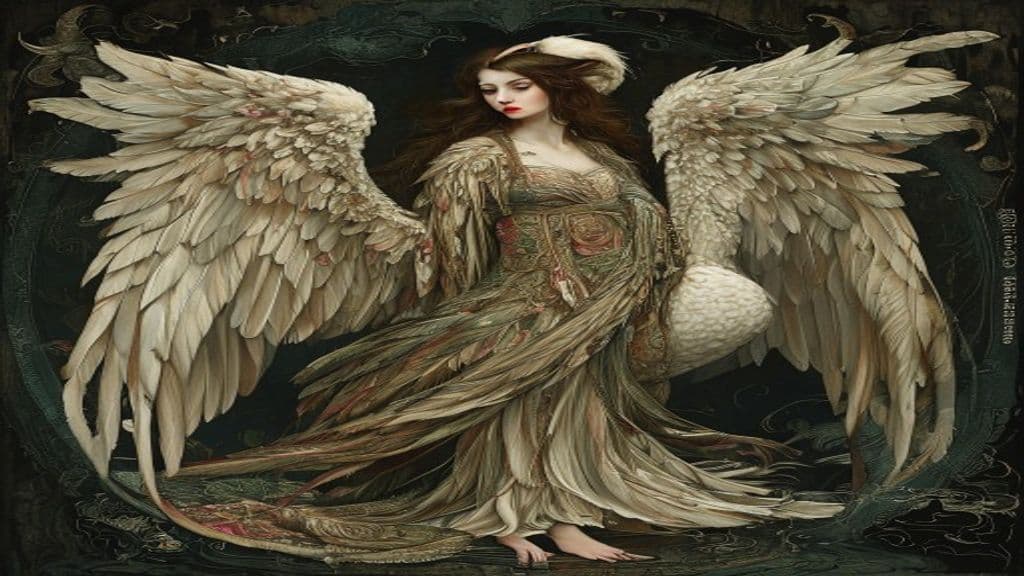
A widespread folktale and mythic figure: a female being who changes between human form and a bird via a feathered garment (feather cloak, swan‑shirt, hagoromo). The motif appears across many cultures and is classed in folktale catalogues under ATU 400 and related 'magic wife' narratives.

Taishang Laojun
Ancient

Taishang Laojun

Taishang Laojun (also rendered Daode Tianzun) is a principal deity in the Taoist pantheon, identified in the sources as a deified form of the philosopher Laozi and as one of the Three Pure Ones (highest immortals) in Taoist cosmology. He is traditionally associated with moral teaching and is the legendary author-attributor of the didactic text 'Tai Shang’s Treatise on Action and Response.'

Tam Kung
Lesser

Tam Kung

Tam Kung (譚公; Tam Tai Sin 譚大仙) is a localized immortal and sea patron in southern Chinese popular religion, particularly in Hong Kong, Macau and diaspora communities. He is traditionally invoked for weather forecasting, healing, maritime protection, and community welfare and is celebrated in temples and annual birthday festivals.

Tang Sanzang
Lesser

Tang Sanzang

Tang Sanzang is the fictionalized monk-protagonist of the 16th-century novel Journey to the West, modelled on the historical Xuanzang. In the novel he is a devout, compassionate pilgrim sent from Chang'an to Tianzhu to retrieve the Tripiṭaka; portrayed as a reincarnation of the Golden Cicada, he is protected by supernatural disciples and is ultimately elevated to the Buddha of Sandalwood Merit.

Thousand-Armed Thousand-Eyed Avalokiteśvara
Greater

Thousand-Armed Thousand-Eyed Avalokiteśvara

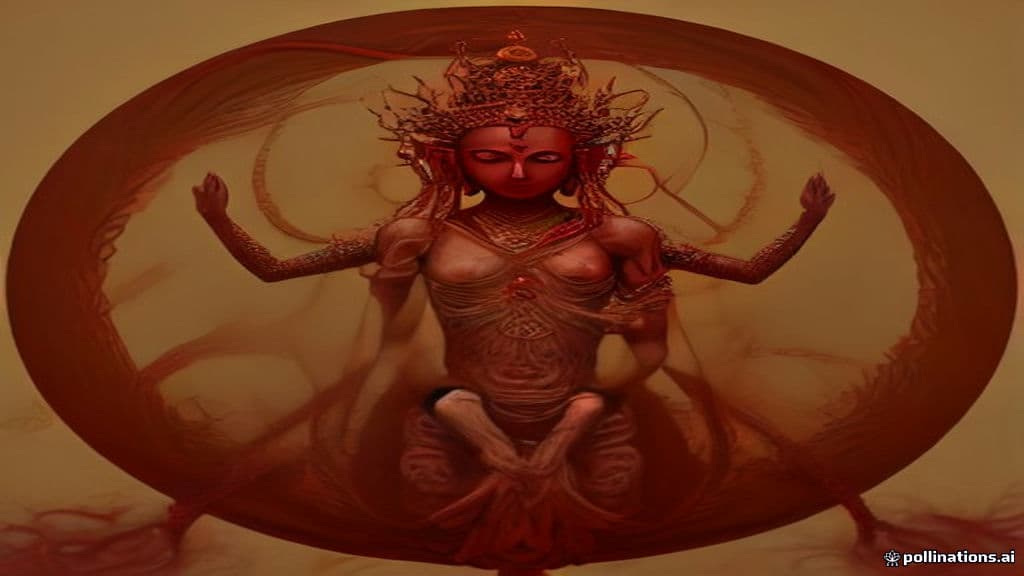
A specific manifestation (emanation) of the bodhisattva Avalokiteśvara associated with Great Compassion (mahākaruṇā), described in modern references as a form emphasizing vast perceptual and active capacity through many arms (noted in sources as having a thousand arms) and presented across Mahayana and Vajrayana traditions in diverse cultural iconographies.

Three-legged crow
Greater

Three-legged crow

A recurrent East Asian mythic bird motif: in Chinese sources a tripedal sun-bird (sanzuwu / Jinwu / Yangwu) embedded in cosmology and imperial symbolism; in Japanese Shinto the Yatagarasu functions as a divine guiding crow. The motif appears across archaeological and literary contexts and carries solar and guiding associations rather than being consistently hostile.

Thánh Tông di thảo
Primordial

Thánh Tông di thảo

A collection of 19 tales in the truyền kỳ (traditional Vietnamese folktales) genre, written by Emperor Lê Thánh Tông during his reign in 15th-century Vietnam. (Note: 1. Power tier: Lowered to Greater, as there's no indication of Primordial-level powers. 2. Origin story: Simplified to focus on Lê Thánh Tông's promotion of Confucian learning and his writing in Liter)

Tiangou
Greater

Tiangou

Tiangou (天狗, tiāngǒu, 'Heavenly Dog') is a Chinese legendary canine associated with eclipses and with an asterism in traditional Chinese astronomy. Sources present Tiangou in two contrasting roles: a hostile black dog thought to devour the Sun or Moon during eclipses, and a benevolent guardian spirit (sometimes a white-headed fox) associated with protection and welfare.

Tiger spirit (Hu jing)
Lesser

Tiger spirit (Hu jing)

A provisional, research-note reconstruction: no direct primary or secondary sources in the supplied corpus document a discrete Taoist entity named "Hu jing" (虎精). The entry frames how a hypothetical "tiger spirit" might be situated within Chinese yaoguai and Taoist cosmological templates based only on general sources about animal-spirits and Taoist practice.

Toyol
Minor Spirit

Toyol

A malevolent fetal spirit used as a supernatural familiar in Malay and Javanese black magic — typically stolen or purchased from a dukun, fed blood, and set to steal from neighbors.

Tutelary deity (tradition)
Lesser

Tutelary deity (tradition)

A tutelary is a divine or spirit figure regarded as a guardian, patron, or protector tied to a specific domain (place, household, person, lineage, occupation, or polity). Across cultures the term names a functional role—embodied by gods, spirits, ancestors, or meditational deities—rather than a single ontological type.

Vengeful ghost
Lesser

Vengeful ghost

A cross-cultural category for spirits of deceased persons who return to the living world to seek redress for a wrong suffered in life. Commonly tied to violent, unjust, or improperly handled deaths and addressed by culturally specific rites of appeasement, exorcism, or corrective funerary treatment.

White Dragon Horse
Greater

White Dragon Horse

A dragon prince from the West Sea who, after punishment and Guanyin's intervention, is transformed into and serves as Tang Sanzang's steed in the 16th‑century Chinese novel Journey to the West; by the pilgrimage's end he is ordained as a bodhisattva and resumes dragon status in a temple role.

Wrathful Deities
Greater

Wrathful Deities

In Mahayana and especially Vajrayana Buddhism, wrathful deities are fierce or wrathful forms (Tibetan: trowo; Sanskrit: krodha) of enlightened Buddhas, Bodhisattvas, or Devas. They function as protectors and transformative meditational yidams whose terrifying imagery is a skillful means (upaya) to remove obstacles, protect the Dharma, and transform afflictive emotions into wisdom.

Wu Fu (Wufu, Five Blessings)
Minor Spirit

Wu Fu (Wufu, Five Blessings)

Wu Fu (Wufu, "five blessings") is a Chinese cultural concept and auspicious motif representing a bundle of five desirable fortunes. It appears widely in decorative arts, rebuses, and charms as an emblem intended to signify or attract good luck rather than as an independent sentient spirit.

Wu Gang
Primordial

Wu Gang

A supernatural being in traditional Chinese folklore associated with endless labor and punishment, similar to Sisyphus. (Note: 1. Power tier should be Ancient (deity-level) as Wu Gang's punishment involves being confined to the Moon. 2. No information about sensory cues is provided in the source material. 3. No information ab)

Wufu (五福) — The Five Blessings
Minor Spirit

Wufu (五福) — The Five Blessings

Wufu (五福), literally "Five Blessings," is a Chinese cultural concept grouping five auspicious life goods (such as longevity, wealth, offspring, virtue, and peace). It functions as a moral‑cosmological template expressed in textual enumerations, visual rebuses, household displays, and New Year greetings rather than as a personified supernatural being.

Xuan Wu (Xuanwu Dadi)
Ancient

Xuan Wu (Xuanwu Dadi)

Xuan Wu, often titled Xuan Wu Dadi, is a Taoist deity associated with the north and with water who functions as a protective and martial tutelary figure; he was venerated in popular Taoist religion and incorporated into state cult practice (notably honored as a tutelary patron during the Ming dynasty).

Yama (King of the Dead)
Ancient

Yama (King of the Dead)

Yama (Sanskrit: Yamarāja; Chinese: 閻魔/閻王/閻羅王, Yánmó/Yánwáng/Yánluó Wáng) is a death‑king and judicial official in Buddhist cosmologies who presides over Naraka and the adjudication of post‑mortem karmic retribution. In East Asian Buddhist popular religion he is incorporated into a Ten Kings/purgatorial itinerary central to funerary and ancestral rites.

Yaoguai
Greater

Yaoguai

Yaoguai is a broad, catch‑all category of uncanny supernatural beings in Chinese folklore and mythology, defined by possession of supernatural powers and by being weird, strange, or unnatural. They are associated with transformation and enchantment and are often reported to dwell on the margins of human settlement where they cause mischief, unexplainable phenomena, and sometimes harm.

Yellow Emperor (Huangdi / Xuanyuan)
Ancient

Yellow Emperor (Huangdi / Xuanyuan)

The Yellow Emperor (Huangdi, 黃帝), also known by the clan/name Xuanyuan, is a legendary culture-hero and thearchic sovereign in Chinese tradition who is venerated as an ancestral ruler and cosmic deity associated with the central/earth (yellow) phase, the Yellow Dragon, and certain astral identities. He is traditionally credited with foundational cultural, calendrical, medical, and political knowledge and is incorporated into the Five Regions Highest Deities scheme.

Youdu
Primordial

Youdu

Capital city of Hell or Diyu in Chinese mythology, surrounded by darkness. (Note: - The power tier should be Ancient (deity-level) instead of Primordial (cosmic), as Youdu is described as the capital of Hell, not a fundamental aspect of the universe. - The abilities listed are corr)

Yu Shi
Lesser

Yu Shi

Yu Shi (雨師; Yǔ Shī, "Master of Rain") is a named rain master in Chinese religion and mythology—an agent or deity associated with producing and governing rain. Yu Shi appears in mythic narratives (for example aiding Chiyou at the Battle of Zhuolu in alliance with wind and thunder deities) and is also a focus of ritual prayer ceremonies for rain among Han Chinese, Maonan, and other groups in southwest China.