Germanic Supernatural Beings

252 documented Germanic supernatural beings from the Evil Eye grimoire, including 139 lesser and 34 minor spirit in power tier.

page 3 of 5

Hagbard (Hagbarðr)
Minor Spirit

Hagbard (Hagbarðr)

Hagbard (Old Norse Hagbarðr) is a legendary Scandinavian sea-king and heroic figure in Old Norse saga and skaldic tradition, best known for the tragic love-and-feud narrative with Signy that ends in his hanging. He appears as a human martial leader associated with kin-groups, raiding, and the heroic age preserved in medieval Icelandic compilations.

Hagen
Lesser

Hagen

Hagen (German; Old Norse Hogni; Old English Hagena; Latin Hagano) is a named Burgundian warrior and retainer in the corpus of Germanic heroic legend, prominently attested in the Nibelung material. He functions as an important counselor and martial figure within the Burgundian court and is implicated in central narrative conflicts of the cycle, including enmity with figures such as Siegfried.

Haki
Lesser

Haki

Haki (also attested Hake, Haco, Hako) is a legendary Scandinavian sea‑king and heroic war‑leader attested in medieval saga and saga‑historical texts. He is portrayed as a brutal and successful raider who assembled a band of champions (including Starkad), briefly gained the Swedish kingship, defeated rival champions on the Fyrisvellir, and died in a staged burning ship‑funeral that secured his fame.

Hannikel (Jakob Reinhard)
Minor Spirit

Hannikel (Jakob Reinhard)

Hannikel was the nickname of Jakob Reinhard (c.1742–17 July 1787), an 18th‑century German outlaw who led a gang active in the Northern Black Forest and adjacent borderlands. Documented as a criminal leader whose career ended in arrest, imprisonment, escapes and a public hanging, his persona was later adopted into Swabian‑Alemannic carnival and literary/radio retellings.

Hans von Sagan
Minor Spirit

Hans von Sagan

Hans von Sagan is a legendary heroic figure from East Prussian folklore associated with the Kneiphof district of Königsberg. Presented as a journeyman shoemaker who seized a fallen standard at the Battle of Rudau (1370) and rallied forces to victory, his legend explains a civic custom (annual beer, Schmeckbier, on Ascension Day) and was commemorated in monuments, a weathervane, street-names and statues.

Haymon
Lesser

Haymon

A giant from Germanic folklore associated with the founding of Stift Wilten, a premonstratensian abbey. (Note: 1. The power tier should be Primordial, as it is described as a "giant" from Germanic folklore and associated with founding an abbey, implying a significant level of cosmic influence. 2. Add origin st)

Heardred
Lesser

Heardred

Heardred is a youthful Geatish prince who briefly becomes king of the Geats in the Old English epic Beowulf and related narrative traditions. He succeeds Hygelac after the latter's death, grants asylum to exiled Swedish princes, and is killed when King Onela of Sweden attacks to settle dynastic scores, leaving Beowulf to succeed him.

Heimchen
Lesser

Heimchen

Heimchen is a German folk-term applied to a range of related domestic and liminal beings: the house cricket (insect), tiny household or earth-spirits dwelling in mouse-holes/hearths, a Vogtland mountain folk living in a gem-lit cavern, and in Thuringian lore a retinue of wailing souls of unbaptized children who accompany Perchta.

Heinzelmännchen
Lesser

Heinzelmännchen

Local Cologne household spirits portrayed as small nocturnal helpers who performed citizens' work at night until offended by human curiosity and left permanently. They are classed in German folklore with kobold/brownie-type domestic little folk and have been popularized in literature, theatre, and civic memorials in Cologne.

Helgi Hundingsbane
Greater

Helgi Hundingsbane

Helgi Hundingsbane is a legendary Old Norse heroic figure attested in the Poetic Edda and related saga material. Presented as a mortal warrior famed for slaying Hunding, his story includes valkyrie love, death in vengeance, presence among the einherjar in Valhalla, and motifs of rebirth with his lover Sigrún.

Helhest
Lesser

Helhest

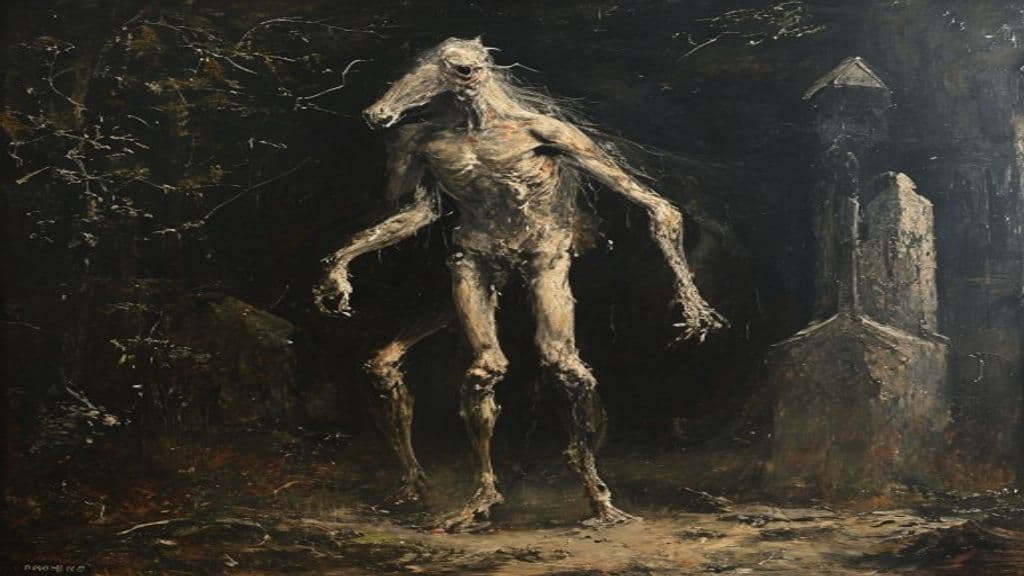
A three‑legged supernatural horse in Danish folklore associated with Hel, graveyards, and outbreaks of disease; it functions in tradition as an omen and agent linked to death rather than as a moralized devil-figure.

Hemann
Lesser

Hemann

The Hemann is a cluster of German-language folk spirits and restless-soul motifs best known for a distinctive, frightening shout; usually heard rather than seen, variants range from boundary-offender ghosts to field sprites and small household helpers. Its hallmark behavior is a characteristic cry that can harass passersby and—if imitated—cause the entity to 'aufhocken' (leap upon a person's back).

Heodenings
Lesser

Heodenings

A named princely household/retinue in the Germanic heroic-legend tradition, remembered chiefly for its association with a legendary, recurring battle cycle (Hjaðningavíg, the legend of Heðinn and Hǫgni) and cited in Old English poetry as a hall where a poet once held bardic office.

Heorogar
Minor Spirit

Heorogar

Heorogar is a legendary Danish king attested in the Old English poem Beowulf as an elder member of the Scylding (Skjöldung) dynasty. He is presented as the eldest son of Healfdene and is notable in the poem chiefly for former possession of martial regalia later held by Hrothgar and given to Beowulf. He is not described as supernatural in the cited sources and is absent from surviving Norse attestations.

Heoroweard
Lesser

Heoroweard

Heoroweard is a human figure of Germanic heroic legend attested in Old English and Norse sources as a claimant and rival within the Scylding/Skjöldung dynasty. He appears in Beowulf as a genealogical mention and in Norse and medieval chronicles/sagas (under forms Hjörvarðr/Hiartuar) as a pretender who rebels against and in some accounts kills Hrólf Kraki, with his origins, seat, and fate varying between traditions.

Heremod
Greater

Heremod

Heremod is a legendary early king attested in Old English poetry (Beowulf), medieval genealogies, and later Latin historiography. Presented as a human ruler whose pride, violence, and failure of kingship lead to banishment and death, he functions as a cautionary exemplar within Germanic/Nordic heroic-historical tradition.

Hildebrand
Lesser

Hildebrand

Hildebrand is a named heroic human figure in the Germanic Dietrich/Theodoric cycle, presented in medieval Old High German, Middle High German, and Old Norse poems and sagas as a warrior, armourer, and fatherly companion to Dietrich von Bern. The traditions centre on martial skill, mentorship, loyalty, and tragic kin-conflicts (notably a duel with his son).

Hildeburh
Minor Spirit

Hildeburh

Hildeburh is a human literary character in the Old English heroic-material cycle (the Finnsburg episode as preserved in Beowulf and related fragmentary material). In the narrative she functions as a freothuwebbe or 'peace-weaver'—a marriage-link between royal houses—whose story exemplifies marriage-as-peace-weaving, kin-feud, and funerary response after battle.

Hinzelmann
Lesser

Hinzelmann

Hinzelmann is a northern German household spirit (kobold-type) attached to the noble household of Hudemühlen, known from a 1704 account summarized by the Grimms. He performs domestic tasks, gives advice, and brings good luck while tolerated, but can punish, play tricks, and be vindictive if insulted or driven off.

Hothbrodd
Lesser

Hothbrodd

Hothbrodd (Old Norse Höddbroddr, Hǫðbroddr) is a legendary human king or prince in the Norse Helgi/Volsung cycle, presented across Poetic Edda poems, the Volsunga saga and Saxo's Gesta Danorum as a dynastic rival whose betrothal to the valkyrie Sigrún precipitates war and who is slain by the hero Helgi Hundingsbane.

House of Yngling
Minor Spirit

House of Yngling

The House of Yngling is a dynastic lineage named in early medieval Scandinavian literary tradition and later genealogical documents. Primarily attested through the poem Ynglingatal and referenced in works like Beowulf (as the Scylfings), the Ynglings function in sources as an ancestral royal house providing genealogical legitimacy for rulers in Sweden and later Norway.

Hrólfr Kraki
Greater

Hrólfr Kraki

Hrólfr Kraki is a semi-legendary early 6th-century Danish king of the Scylding lineage preserved in Anglo-Saxon and Old Norse sources. He appears as Hroðulf in Beowulf and is expanded into a fuller heroic-biographical figure in Scandinavian saga material and in Saxo's Gesta Danorum.

Hug (Norse Tradition)
Primordial

Hug (Norse Tradition)

In Norse tradition, the Hug represents various aspects of human consciousness, encompassing spirit, will, prudence, thought, understanding, reason, and the soul as the seat of thoughts, feelings, and will. (Note: - The Power tier should be revised to Ancient (Hug is a concept related to human consciousness, not cosmic or deity-level). - The Origin story, Appearance, Sensory cues, Weaknesses, and Wards sections)

Hundings
Primordial

Hundings

A legendary tribe or clan in Germanic tradition, known for their conflict with the Wulfings. (Note: * Power tier should be Ancient (deity-level) is too high; given the lack of supernatural powers and behaviors associated with the Hundings. * The article incorrectly states that no physical descriptio)

Hvitserk
Lesser

Hvitserk

Hvitserk (Old Norse Hvítserkr, 'White-Shirt') is a figure from Norse legendary‑historical tradition presented as one of the sons of the legendary 9th‑century Viking Ragnar Lodbrok and his wife Aslaug. Attested in the Tale of Ragnar's Sons (Ragnarssona þáttr), he appears as a warrior and raider who traveled to Garðaríki and pillaged with the Rus; the saga tradition records that, when faced with an overwhelming foe, he chose to be burned alive on a pyre of human remains.

Hygd
Lesser

Hygd

Hygd is a legendary queen of the Geats attested in the Old English epic poem Beowulf. In the poem she functions as an ideal hostess and cup-bearer and as a wise political counselor who models queenly virtues and intervenes in a succession crisis following King Hygelac's death.

Háma (Hama / Heime / Heimir)
Lesser

Háma (Hama / Heime / Heimir)

Háma (also rendered Hama, Heime, Heimir) is a named figure of the Germanic heroic-legend tradition attested in Anglo‑Saxon and continental Germanic sources. He appears as a legendary warrior or retainer — often associated with the companion Witige — in poems such as Beowulf and Widsith and in later Germanic epic material (Alpharts Tod, Þiðreks saga). A single secondary source records a variant identification of the name with a mythic watchman figure linked to Heimdallr and the Bifrost; this identification is presented in the available material as a distinct, unverified tradition.
Hödekin
Lesser

Hödekin

A medieval German household/castle spirit described in Latin and vernacular sources as a kobold-like sprite notable for wearing a small felt cap; accounts record it speaking familiarly with people, aiding or warning its household, and violently avenging insults before eventually being expelled by episcopal exorcism.

Höðr
Lesser

Höðr

Höðr (Old Norse Hǫðr) is a figure in Norse mythic corpus most famously known as the blind son of Odin whose unwitting striking of Baldr with a mistletoe dart—guided by Loki—results in Baldr's death; traditions vary between treating him as an Æsir god (Poetic and Prose Edda) and as a euhemerized human/hero (Saxo's Gesta Danorum).

Idis (Germanic)
Lesser

Idis (Germanic)

The idis (Old Saxon; pl. idisi) is a term for a divine or supernatural female being in the pre-Christian Germanic linguistic and poetic record. Cognate with Old High German itis and Old English ides, the term carries senses of a dignified or well‑respected woman and appears in poetic, folkloric, and comparative discussions alongside related female figures such as the Norse dísir.

Ilmarinen
Greater

Ilmarinen

Ilmarinen is a Finnic divine artificer and sky-associated being from Finnish and broader Finno-Ugric tradition, known as the archetypal smith who forges cosmological works such as the dome of the sky and the Sampo. He appears throughout oral rune-song material and in the Kalevala corpus and is invoked in several incantation runes.

Ingeld
Lesser

Ingeld

Ingeld (Old Norse Ingjaldr; Latin Hinieldus) is a legendary heroic prince of the pan‑Germanic Scylding/Heaðobard cycle known from early English and Norse literary sources. He appears as a warrior and dynastic actor whose narrative role centers on marriage diplomacy, feuding, and cycles of vengeance rather than any supernatural agency.

Ingjald Illråde
Lesser

Ingjald Illråde

Ingjald (Old Norse Ingjaldr), known by the byname Illråde ('ill-ruler' / 'ill-adviser'), is a semi-legendary early Swedish king attested in medieval saga-chronicles (notably Snorri Sturluson's Ynglinga saga and related lists). He is remembered for treacherous expansion — most famously the burning of rival kings in a hall — and for dying by self-immolation when confronted by a superior force.

Interpretatio germanica
Primordial

Interpretatio germanica

Process by which Germanic peoples identified Roman gods with their own deities, facilitating cultural exchange and syncretism. (Note: - Power tier should be Ancient (deity-level) instead of Primordial (cosmic), as it's a cultural exchange process rather than an otherworldly power. - Appearance and sensory cues sections are missing; )

Irrwurz (herbe d'égarement)
Lesser

Irrwurz (herbe d'égarement)

A legendary plant in German- and French-speaking folk traditions whose presence, contact, or carriage causes people to lose their sense of direction, retrace steps, or wander aimlessly. Regional variants identify it with different botanicals (fern, special roots, rattlesnake plantain) and sometimes associate it with an inhabiting spirit.

Jack o' the Bowl
Lesser

Jack o' the Bowl

A Swiss household spirit (described in sources as a brownie or kobold) who, in exchange for a nightly bowl of sweet cream or milk, guides cows to safe grazing — even on otherwise dangerous mountainsides — and is maintained by a routine domestic offering.

Jean le Messager
Minor Spirit

Jean le Messager

Not an attested supernatural being; rather, a recurring French-language phrase attested across bibliographic, artistic, musical, operatic and sigillographic sources. The corpus shows usages of 'Le Messager' as a title (newspaper, artwork), a role-label in opera, and as part of archival cataloguing ('Jean // le Messager'), with no evidence supporting a folkloric or cosmological entity named Jean le Messager.

Johann Georg Faust
Lesser

Johann Georg Faust

Johann Georg Faust is a historically attested itinerant early modern practitioner — variously an alchemist, astrologer, physician, teacher and performer — whose life and unusual death were rapidly mythologized in chapbooks and later literature (notably Marlowe and Goethe). Documentary records show a learned background and contested reputation; later pamphlet tradition transformed him into the legendary 'Faust' figure associated with diabolism.

Jonakr's sons (Hamdir, Sörli, Erpr)
Lesser

Jonakr's sons (Hamdir, Sörli, Erpr)

Three brothers—Hamdir (Hamðr), Sörli (Sǫrli), and Erpr—of the Völsung lineage in Germanic heroic legend who, at their mother Guðrún's urging, attempt to avenge their half‑sister Svanhildr by attacking King Jörmunrekr/Ermanaric. Their deed and tragic deaths are attested across Norse poetic and saga sources and continental chronicles.

Jötunn (Jotun / Giant)
Ancient

Jötunn (Jotun / Giant)

A jötunn (Old Norse jǫtunn; plural jötnar) is a class of powerful non-human beings in Norse/Germanic myth that exist alongside gods, dwarfs, elves, and humans. They commonly dwell across boundaries (e.g., Jötunheimr) and appear ambivalently as adversaries, kin, spouses, and participants in cosmological narratives.

King Goldemar
Lesser

King Goldemar

A named subterranean/household supernatural figure in Germanic tradition described in folktale and literary sources as a dwarf or kobold who lived with a human household, bringing prosperity in exchange for hospitality but capable of lethal vengeance if violated.

King Laurin
Ancient

King Laurin

Supernatural being from South Tyrolean saga associated with explaining natural phenomena through mythological stories in the Dolomites. (Note: - Power tier: Primordial (since it involves natural phenomena and shaping mountain landscapes) - Abilities: Add detail that he possibly influences optical phenomena such as alpenglow - Weaknesses: Non)

King asleep in the mountain
Greater

King asleep in the mountain

A widespread folkloric motif in which an ideal ruler or heroic figure is alive but sleeping within or beneath a mountain, preserved in a liminal state and expected to awaken and return in the future. This trope appears in diverse traditions (for example King Arthur and the Kyffhäuser emperor type) and is catalogued in motif-index scholarship.

Klabautermann
Lesser

Klabautermann

A ship-bound household/ship spirit from North Sea and Baltic coastal folklore (Frisian, German, Dutch) that aids sailors and fishermen in work and warns of a ship's doom; normally unseen and helpful, its visible appearance is traditionally an ill omen.

Klagmuhme
Lesser

Klagmuhme

A female supernatural figure in German-speaking folklore who heralds imminent death by wailing and whining; she functions as an omen-figure closely compared to the Irish banshee and appears in varied regional guises across Germanic areas.

Knucker
Greater

Knucker

A type of water dragon in Germanic tradition, said to inhabit knuckerholes in Sussex, England. (Note: 1. Power tier should be changed to Lesser, as the Knucker is described as a local water spirit. 2. Add sensory cues from knuckerholes in Sussex, England (e.g., strange noises, eerie feelings). 3. Note)

Kobold
Minor Spirit

Kobold

The German household and mine spirit — a mischievous but potentially helpful small being who attaches to a household, bringing luck or disaster depending on how it is treated.

Krampus
Lesser

Krampus

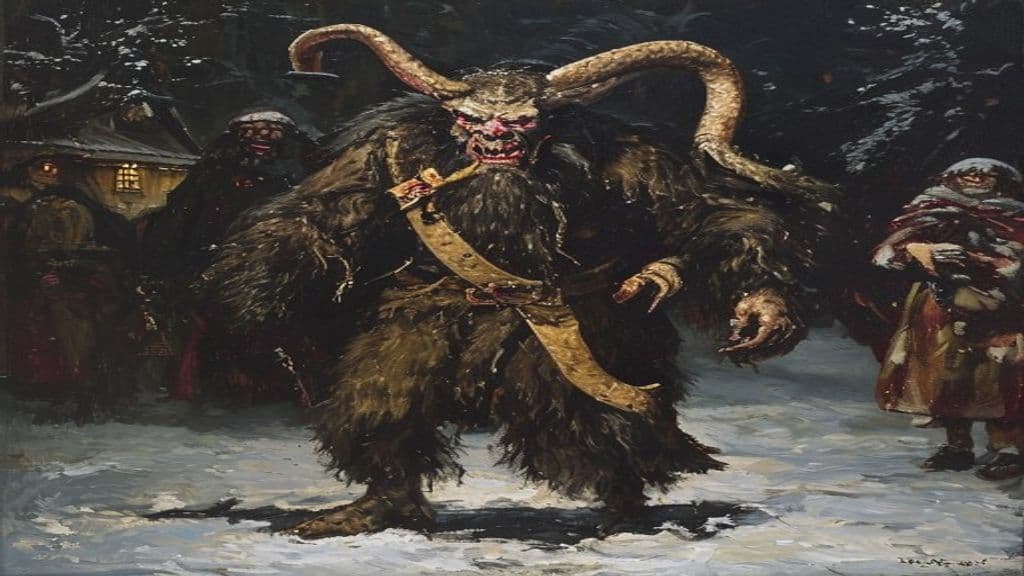
Krampus is a horned, hairy, anthropomorphic figure from Central and Eastern Alpine folk practice who serves as the punitive companion to Saint Nicholas during the winter festival cycle; he appears on Krampusnacht (5 December) and in public Krampuslauf/Perchtenlauf processions to threaten or punish badly behaved children.

La Chasse-galerie (The Flying Canoe)
Lesser

La Chasse-galerie (The Flying Canoe)

A French-Canadian folktale about a bewitched or enchanted bark canoe that flies through the night after men make a pact with a malign supernatural agent (often identified as the Devil). The story functions as a Wild Hunt–type narrative fused with Indigenous legends of a flying canoe and serves as a moral test about taboos, sobriety, and bargaining with otherworldly powers.

Lady Midday (Poludnitsa)
Lesser

Lady Midday (Poludnitsa)

Poludnitsa, often called Lady Midday or Noonwraith in English, is a Slavic field spirit personifying the dangers of the hottest part of summer days. She is associated with grain fields and midday heat and appears in diverse regional tales as a young woman, hag, or girl who harasses or injures people working or resting at noon.

Laguz
Minor Spirit

Laguz

Laguz is a polyvalent term attested as the name of the runic l‑sign (reconstructed Proto‑Germanic *Laukaz; attested in medieval rune poems as lagu/lögr), used in modern occult rune interpretation as an archetypal symbol of water and transformation, and appropriated in contemporary fantasy (notably the Fire Emblem series) as the name of a sentient, shape‑shifting beast tribe.

Lime Tree (Germanic Tradition)
Greater

Lime Tree (Germanic Tradition)

The lime tree is a sacred and symbolic plant in Germanic tradition, associated with protection, peace, and healing. (Note: - Power tier: Primordial (Given its association with protection from harm, evil spirits, or negative energies, which suggests a more cosmic level) - Abilities: Remove "good dreams" as it is not suppor)

Lindworm
Greater

Lindworm

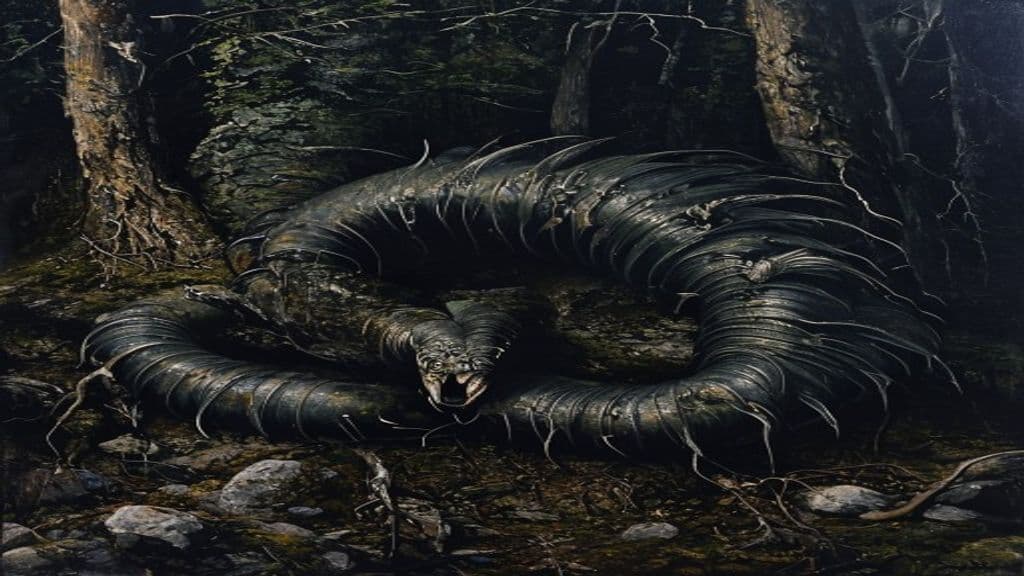
The lindworm is a European serpent/dragon‑like monster attested across Northern, Western and Central Europe. Varieties range from limbless giant forest serpents in Scandinavian lore to two‑limbed or winged dragonic forms in Central European art and legend; it appears in both treasure‑guardian and cursed‑bridegroom narrative cycles.

Loathly Lady
None

Loathly Lady

In Germanic folklore, the Loathly Lady is a narrative device used in medieval literature to convey transformation and redemption. She appears unattractive but becomes desirable upon being approached by a man. (Note: - Power tier: Greater (deity-level abilities not specified, but transformative power implies regional or greater scope) - Appearance: Clarify that physical description is implied to be ugly/unpleasant)

Lorelei
Lesser

Lorelei

Lorelei is both a steep slate rock on the right bank of the River Rhine at Sankt Goarshausen and a literary-derived legendary woman associated with that place; the name (from German lureln + ley) evokes the rock's murmuring/echoing, and 19th‑century poems and songs personified that place as an enchanting woman who distracts boatmen and became a widespread cultural motif.

Lorsch Bee Blessing
Lesser

Lorsch Bee Blessing

A Christian prayer invoking a benevolent entity to bring good health to honey bees and their hives, reflecting Germanic folklore's appreciation for nature and balance. (Note: 1. Power tier should be reassessed, as the entity's influence on bee health and guidance may indicate a Greater power level. 2. The source material does not support the claim that the Lorsch Bee Bless)

Mannus
Primordial

Mannus

Central figure in Germanic creation myths, entrusted with starting humanity; abilities and characteristics unknown. (Note: 1. Power tier should be Ancient (deity-level) as it's implied that Mannus has a significant role in the creation myth and is entrusted by the gods. 2. No information on appearance, sensory cues, wards)

Mara
Lesser

Mara

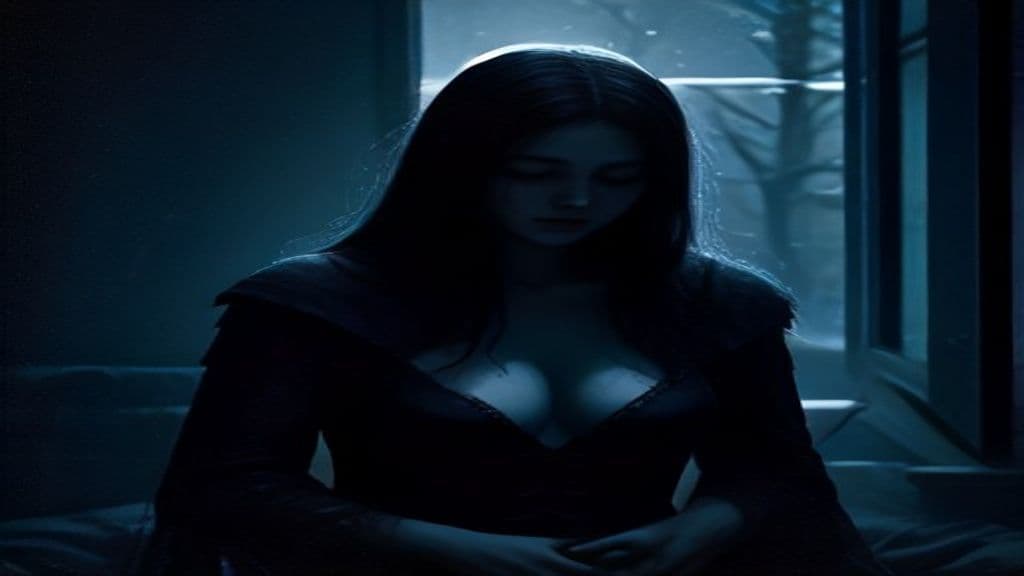
The nightmare spirit of Northern European tradition who rides sleeping people at night, causing suffocation, terror, and the sensation of an invisible weight on the chest.

Mara
Lesser

Mara

A nocturnal malevolent spirit in Germanic and Slavic folk belief that sits on or 'rides' sleepers' chests to produce nightmares and the sensations associated with sleep paralysis. Frequently depicted as female and possessing magical abilities such as shapeshifting, the mara functions as an agentive folk explanation for oppressive nocturnal experiences.

Mare (folklore)
Lesser

Mare (folklore)

A nocturnal malicious spirit from Germanic and neighboring Slavic popular belief that afflicts sleepers and animals by 'riding' or pressing on chests, producing nightmares, sleep‑suffocation, night‑sweats, and exhausted animals. The mare overlaps with related Germanic night‑beings (alp, Mahr, Trute/Drude) and appears in varied regional tale forms and household practices.