Germanic Supernatural Beings

252 documented Germanic supernatural beings from the Evil Eye grimoire, including 139 lesser and 34 minor spirit in power tier.

page 2 of 5

Dando's Dogs
Lesser

Dando's Dogs

Dando's Dogs are an English folkloric pack of spectral hounds tied to the tale of a sinful huntsman named Dando. They are classed among English 'black dog' apparitions and described as taking part in the Wild Hunt; tradition reports their sounds on early Sunday mornings as they pursue game or search for their master after his abduction.

Deor
Minor Spirit

Deor

A poet and subject of an Old English poem found in the Exeter Book, reflecting on misfortune attributed to him. (Note: 1. Power tier should be Primordial, as it's an Old English poem and subject, not a supernatural entity with defined abilities. 2. Add description of Deor's reflection on misfortune from Source 1 as se)

Deutsche Mythology
Ancient

Deutsche Mythology

A collection of mythological narratives representing the collective myths, legends, and beliefs of ancient Germanic cultures. (Note: 1. Power tier: Primordial (Deutsche Mythology as a collective mythological narratives does not have supernatural abilities and behaviors attributed to it; rather, it contains those of individual Germa)

Devil's Grandmother
Greater

Devil's Grandmother

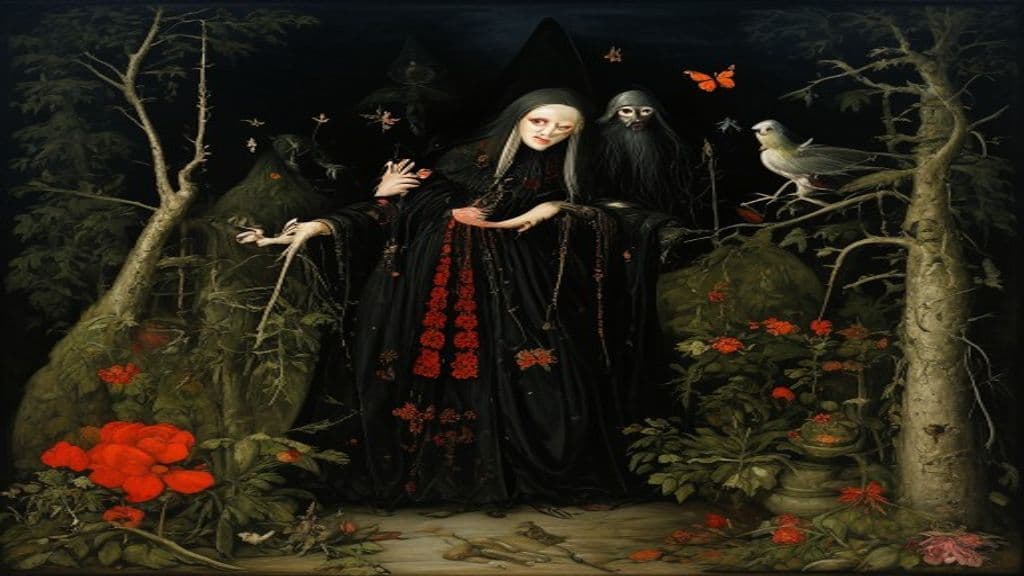
A named folkloric figure in Northern European (especially German-speaking) tradition who appears in fairy tales and proverbs as the Devil's grandmother (Teufels Großmutter / Teufels Mutter) or regional variants (die alte Frick, alte Fuik). She is ambivalent in function: in some tale cycles a helpful elder who intervenes for mortals, in other regional lore a fearsome sorceress who presides over witch-sabbaths and commands dangerous supernatural entourage.

Dietrich (tradition)
Minor Spirit

Dietrich (tradition)

Dietrich is not presented in the supplied sources as a supernatural being but as an ancient Germanic dithematic personal name meaning 'ruler of the people', used historically as both a given name and a surname and appearing in literary tradition as the name of legendary heroes such as Dietrich von Bern.

Dietrich von Bern
Lesser

Dietrich von Bern

A legendary Germanic heroic figure formed by the folkloric transformation of the historical Ostrogothic king Theoderic the Great; he appears across medieval heroic poems and sagas as an exiled king of 'Bern' (medieval Verona), a great warrior, and opponent of both human and monstrous foes.

Disa
Lesser

Disa

Disa is a legendary Swedish saga heroine and wise woman whose clever solution to a king's impossible test averts a planned mass culling and leads to a policy of drawing lots and resettlement. In the saga tradition her counsel becomes associated with the Midwinter blót (Disablot) and the Disting, and later early modern authors and artists memorialized her role in lawgiving and ritual memory.

Doppelgänger
Lesser

Doppelgänger

A supernatural double or look‑alike of a living person, frequently reported in folklore and literature as a haunting counterpart or an omen of misfortune. The motif appears across cultures with related but distinct concepts (e.g., Egyptian ka, Norse vardøger, Finnish etiäinen, Muslim karin/qareen).

Drak
Lesser

Drak

The Drak is a household spirit in German folklore, attested under several regional names and frequently identified with the kobold or the devil (Teufel). Surviving references are brief and primarily classificatory, indicating a household-associated supernatural figure with variable local naming and associations.

Drude
Lesser

Drude

A female nocturnal spirit in German folklore associated with causing nightmares and the sensation of being pressed in sleep (Alpdruck). Treated as a kind of alp or witch-hag in southern German and alpine traditions, with household apotropaics and local counter-practices recorded.

Dwarf (folklore)
Lesser

Dwarf (folklore)

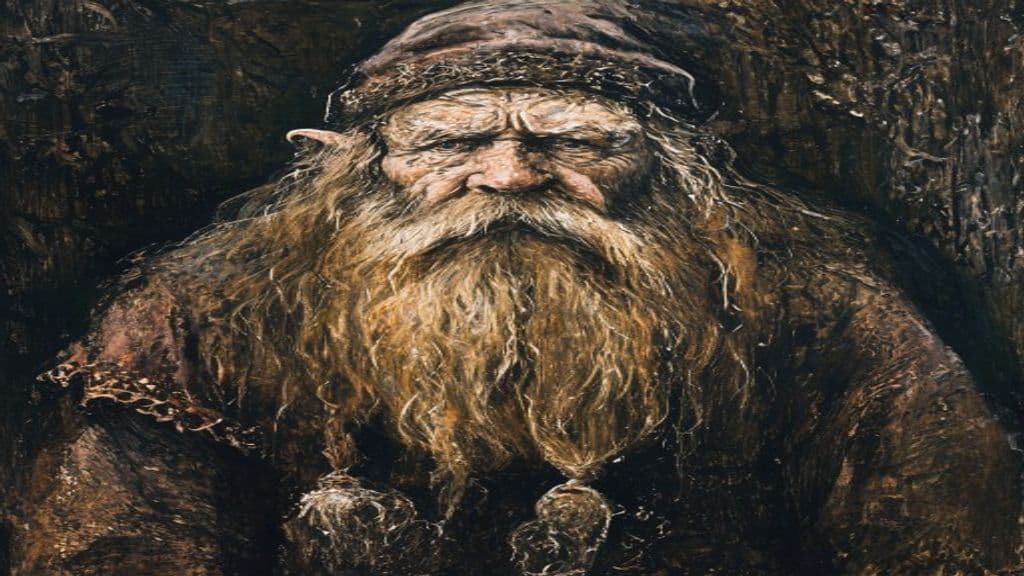
A type of supernatural, human-shaped being in Germanic tradition associated with subterranean places, craft (notably metalwork), and a liminal role between nature and culture. In Norse mythic sources dwarfs function as artisan-makers of powerful objects for gods and occasionally appear in folktales as magical servants bound to objects.

Dísir
Lesser

Dísir

In Norse tradition, the dísir are a class of female supernatural beings associated with fate, fertility, and the welfare of kin; they may be protective guardians of clans or ambivalent/hostile toward mortals and are venerated in rites called dísablót.

Easter Bunny (Easter Hare / Osterhase)
Minor Spirit

Easter Bunny (Easter Hare / Osterhase)

A folkloric figure originating in German-speaking communities, depicted as an anthropomorphic hare or rabbit that brings or hides decorated eggs and treats for children at Easter. Functioning in domestic and seasonal custom rather than liturgy, the figure was historically associated with child-focused gift-giving and moral evaluation and was popularized in visual culture from the 19th century onward.

Easter witch (påskkärring / påskhäxa / trulli)
Lesser

Easter witch (påskkärring / påskhäxa / trulli)

A Swedish and Finnish folkloric figure of an old-woman witch associated with Holy Week who, in traditional belief, flies on brooms to a diabolic gathering at Blåkulla/Blockula on Maundy Thursday and returns at Easter; in modern practice the image has become a benign costume tradition in which children dress as witches to go door-to-door for greetings and treats.

Ecgþēow
Lesser

Ecgþēow

Ecgþēow is a human figure in the Old English poem Beowulf, presented as the father of the hero Beowulf and a member of the Wægmundings. He functions in the poem as an exemplar of warrior status, kin obligations, and the social mechanisms (wergild, exile, fosterage, and oath‑bonding) that settle blood‑feuds and create inter‑household loyalties.

Ekke Nekkepenn
Minor Spirit

Ekke Nekkepenn

Ekke Nekkepenn is a North Frisian folkloric figure, presented in 19th-century sources as a composite character: Christian Peter Hansen depicted him as a sea-dwelling 'merman' with a wife Rahn, while Theodor Storm later used a similar name for a small fiery, maleficent being. The figure combines a local water-man legend with a Rumpelstiltskin-type name-motif in Hansen's retelling.

Elegast
Greater

Elegast

Elegast is the noble robber figure from the Middle Dutch epic Karel ende Elegast, portrayed as a forest-dwelling outsider whose name and attributes align him with Germanic 'elf' (and in some northern parallels 'dwarf') traditions. In the poem he possesses magical faculties (sleep‑casting, lock‑opening, a herb enabling speech with animals), lives as an outlaw yet shows loyalty to Charlemagne and moral concern for the poor.

Elwetritsch
Lesser

Elwetritsch

A regional legendary chimera reported in southwestern Germany (especially the Palatinate): a bird‑like, chicken‑sized imaginary creature assembled from parts of different animals and embedded in local mock‑hunts and folk identity. One scholarly interpretation traces the modern motif to a linguistic and cultural miniaturization of older night‑pressure spirits (Albdrude/Albdruck), though this continuity is presented in sources as an interpretation rather than uncontested fact.

Eoten (ēoten)
Ancient

Eoten (ēoten)

Eoten (Old English ēoten) is the Old English term glossed as 'giant' and cognate with Old Norse jötunn. In Anglo‑Saxon and Norse literary traditions the word is used within a wider family of large non‑human beings (jötnar, þurs, risi, troll) that often occupy liminal or primeval roles in myth and saga.

Eotenas
Greater

Eotenas

Eotenas (Old English eotenas) are a race-class of other-than-human beings attested in Anglo-Saxon poetic contexts, notably Beowulf, where they appear among a catalogue of hostile or monstrous stocks. Philological traditions link the term to Old Norse jötnar/ettins (often rendered "giants" in modern summaries), but primary Old English lines give little concrete physical description.
Eppelein von Gailingen
Lesser

Eppelein von Gailingen

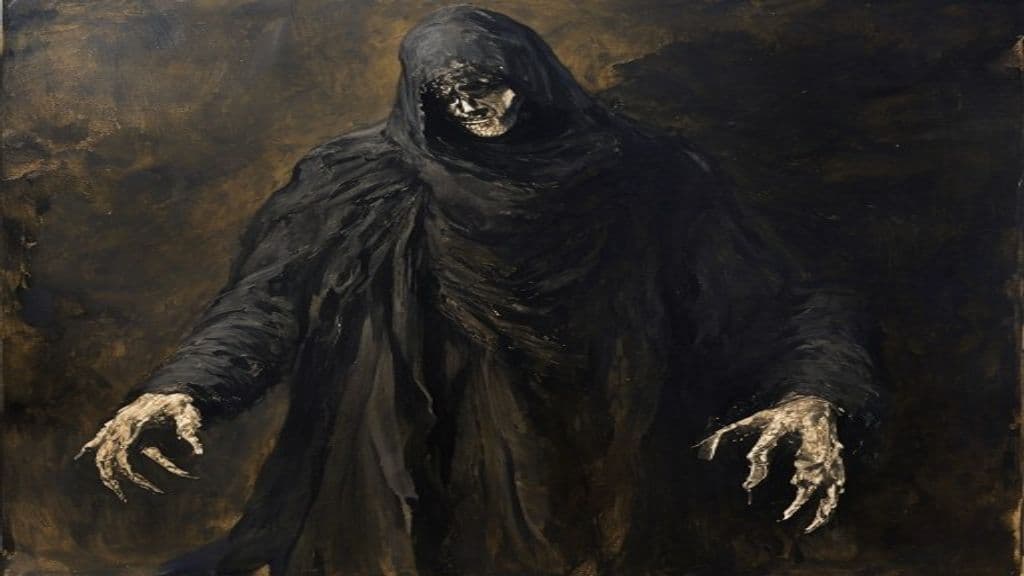
A historical 14th-century German robber baron whose life and deeds were transformed into regional legend and ballads; remembered for raids on merchant traffic around Nuremberg, an enduring tall tale of a daring escape on horseback, and his eventual capture and execution in 1381.

Erda
Lesser

Erda

Erda is a polyvalent modern name attested in the provided sources with multiple unrelated referents: a toponym (Erda, Utah), a mythic/operatic figure in Richard Wagner’s Der Ring des Nibelungen (linked on a disambiguation page to Urðr and Jörð), a Marvel Comics adaptation of a Wagnerian figure, and several institutional or fandom uses (acronyms, fanwiki entries). The supplied materials do not document a single, continuous folkloric supernatural entity called Erda.

Erdhenne
Lesser

Erdhenne

The Erdhenne (German: 'Earth Hen') is a German house spirit from Alpine, Upper Palatinate, and Bavarian folk tradition that usually remains unseen but communicates by loud clucking to warn households of danger. When it becomes visible it is regarded as an omen of death—tradition records death within a year, often of the person it shows itself to.

Erlking
Lesser

Erlking

A sinister Germanic spirit of forest and mist who takes children — appearing to them as a welcoming figure while adults see nothing, the child dying in its parent's arms.

Erlkönig (Erlkönig / Erlenkönig)
Greater

Erlkönig (Erlkönig / Erlenkönig)

A supernatural, kingly figure in Goethe's ballad who addresses, lures, and ultimately causes the death of a child during a night ride. Presented in the sources as a 'king of the fairies' or a demonic, otherworldly ruler who speaks promises and threats while his manifestations are ambiguously perceived as natural phenomena.

Ewiger Jäger
Lesser

Ewiger Jäger

A spectral huntsman from German, Belgian and Pennsylvania Dutch folklore condemned to an unending hunt. Usually portrayed as a formerly human hunter bound by oath, curse, sacrilege, or a dying injunction to pursue quarry ceaselessly, the figure is a local variant of the European wild hunt motif.

Eyfura
Minor Spirit

Eyfura

Eyfura is a legendary Norse princess attested in Hervarar saga and in Saxo Grammaticus’s Gesta Danorum; she marries the warrior Arngrim and is mother to twelve sons who are slain by the Swedish champion Hjalmar and his companion Orvar-Odd. Accounts vary on her parentage and the circumstances of her marriage, which serve dynastic and narrative functions in the sagas.

Fairy
Lesser

Fairy

A class of anthropomorphic supernatural beings found across multiple European folk traditions, fairies are magical, liminal entities variously described as spirits, an older race, or enchanted people; their depiction ranges from human-sized to diminutive and their attributes and moral alignment vary by region and period.

Family Trees of the Norse Gods
Primordial

Family Trees of the Norse Gods

The complex relationships between Norse gods, as portrayed in the Eddas and other sources, reveal a network of family ties and kin connections that shape their interactions and powers. (Note: 1. Power tier should be Primordial (too general) -> change to Ancient=deity-level. 2. The statement that no sensory cues are explicitly described in the source material is misleading, as it implies no)

Fasolt
Lesser

Fasolt

A giant or knight in Norse mythology, Fasolt is involved in the creation of the world and appears alongside other supernatural beings. (Note: - Power tier should be Greater, not Lesser, given Fasolt's involvement in creation and appearance alongside supernatural beings. - Summary should mention his involvement in Das Rheingold more accurate)

Faust
Lesser

Faust

Faust is the human protagonist of a long-standing German legend, based on a probable historical figure (Johann Georg Faust, c. 1480–1540), whose central motif is making a pact with an infernal representative (commonly named Mephistopheles) at a crossroads to exchange his soul for unlimited knowledge and worldly pleasures. The figure functions as a moral and literary archetype warning against preferring human/occult knowledge and worldly gain over divine order; later usages yield the adjective “Faustian.”

Feirefiz
Lesser

Feirefiz

Feirefiz is a human knight-character in Wolfram von Eschenbach’s medieval Arthurian poem Parzival. Son of Gahmuret and the Moorish queen Belacane, he appears as Parzival’s half-brother and equals him in knightly skill; within Wolfram’s narrative he is a non-Christian noble who must undergo baptism to participate fully in the Grail community.

Feldgeister
Lesser

Feldgeister

Feldgeister are a class of German agricultural spirits or 'field spirits' associated with cereal crops, harvest processes and weather. The category groups many named local types (animal, human, and hybrid forms) implicated both in fertility of fields and in hazards such as child-stealing, illness, spoilage and storm phenomena.

Fenixmännlein
Lesser

Fenixmännlein

A class of small subterranean earth‑sprites or dwarf‑like beings from Silesian and Lusatian German folklore. They dwell beneath hills and in caves, bake and perform domestic crafts, sometimes exchange human infants for changelings, and are credited with steering a ship on subterranean waters that can abduct people.

Feuermann
Lesser

Feuermann

A German-language folkloric luminous apparition described as a "fire man" or "fiery ghost," known in regional dialects by several synonymous names that emphasize burning, glowing, or flickering qualities. The Feuermann is presented in the supplied sources primarily as a named class of luminous phenomenon rather than through detailed narratives, rituals, or functions.

Fext
Greater

Fext

A Fext is an undead revenant figure recorded in modern summaries of Central European/Slavic popular tradition associated with the Thirty Years' War; it is chiefly noted for practical invulnerability to ordinary weapons, with a single folkloric vulnerability to bullets made of glass.

Fossegrim
Greater

Fossegrim

A water spirit or troll in Scandinavian folklore, associated with music and enchantment. (Note: 1. Power tier: Lowered from Greater to Lesser, as it's described as a local spirit. 2. Origins story: Clarify that it's rooted in Scandinavian cultural values, but more specifically mention the Old No)

Foundling-Bird (Fundevogel)
Minor Spirit

Foundling-Bird (Fundevogel)

Fundevogel (Foundling-Bird) is a proper-name character and origin-motif from the Brothers Grimm tale “Fundevogel,” describing a human boy found in a bird's nest and raised by a forester. Within the ATU 313A transformation‑chase context, the character participates in a sequence of metamorphoses used to evade pursuers rather than representing a distinct supernatural race.

Frankish Paganism
Minor Spirit

Frankish Paganism

A polytheistic tradition that evolved among the Franks until the 7th century, influenced by Germanic and Greco-Roman components. (Note: - Remove "Minor Spirit" power tier (inconsistent with polytheistic tradition and influence from Greco-Roman components) - Summary should include Frankish paganism's decline and eventual replacement by)

Frau Holle
Greater

Frau Holle

Frau Holle (also Hulda, Holda, Holla, Perchta/Berchta and regional variants) is a persistent Germanic folkloric female figure associated with household arts (spinning and linen-making), nocturnal spirit-processions of women, and a winter/snow motif (the Grimm tale of shaking featherbeds). She appears across medieval canonical texts and later folklore, where she functions as a domestic protector/teacher, a leader of nocturnal female companies, and an agent of moral reward and punishment.

Freyr
Ancient

Freyr

Freyr is a major Vanir deity in Old Norse myth associated with kingship, fertility, prosperity, fair weather, peace, and good harvests; he is attested in medieval Icelandic sources (Snorri) and continental reports (Adam of Bremen) and figures in myths of courtship, possession of magical artifacts, and eschatological death at Ragnarök.

Friar Rush
Greater

Friar Rush

A popular narrative figure from late medieval and early modern northern Europe: a supernatural intruder who assumes the guise of a friar, infiltrates a monastery, and causes mischief, vice, and disorder until expelled by ecclesiastical ritual. The tale circulated in Low German, High German, Scandinavian, Dutch and English print from the late 15th century onward.

Frigg
Ancient

Frigg

Frigg is an Old Norse goddess of the Æsir, foremost among the pantheon as Odin's wife, associated with marriage, motherhood and foresight. She dwells in Fensalir and is attested across North and West Germanic traditions (Old Norse Frigg; Old English Frīg; Old High German Frīja; Lombardic Frea). Her name survives in the weekday Friday and persisted in Scandinavian folklore after Christianization.
Frijjō (Hypothetical Love Goddess)
Primordial

Frijjō (Hypothetical Love Goddess)

Reconstructed epithet of a hypothetical Common Germanic love goddess, spouse of Wōdanaz. (Note: - Power tier: should be "Ancient" instead of "Primordial", as a love goddess is more likely to be on a deity-level power tier. - Sensory cues: no information provided in source material - Weaknesses a)

Fulla
Lesser

Fulla

Fulla (Old Norse Fulla; Old High German Volla/Folla) is a named goddess (ásynja) in the Germanic tradition, attested as Frigg's trusted attendant and confidante in Old Norse sources and as a named singer in the Old High German Merseburg horse-healing charm.

Fáfnir
Greater

Fáfnir

In Old Norse heroic legend Fáfnir is a kin-figure who, after killing his father Hreiðmarr over a cursed hoard, withdraws into the wilderness and takes the hamr of a worm/dragon to brood over treasure; he is slain by the hero Sigurð (Sigurd).

Fänggen
Greater

Fänggen

Fänggen (sing. Fängge/Fangga/Fanggin) are forest-dwelling members of the 'wild folk' in German-speaking Alpine folklore. They are described variously as anthropomorphic tree-personifications (wood-mothers), giant hairy wild women, or—in other regional variants—as smaller, powerful wood-dwellers (Waldfänken/Fankerl). Their lives are traditionally understood as bound to particular large or old trees; when a tree dies or is felled the corresponding Fangga likewise dies or disappears.

Gaut
Minor Spirit

Gaut

Mythical ancestor and national god with significant cultural and symbolic significance in Germanic tradition, associated with the Geats and Goths. (Note: * Power tier should be Primordial, given that Gaut is described as a mythical ancestor and national god, suggesting a higher level of power and influence. * Abilities section should be removed or revi)

Geist
Lesser

Geist

A German-language term with overlapping senses: a ghostly or haunting presence, an immaterial religious spirit (e.g., the Holy Spirit), and an intellectual or cultural animating principle (mind, Weltgeist, Zeitgeist). Its precise meaning depends on context and historical usage.

Germanic Dragon
Primordial

Germanic Dragon

A large, serpentine creature from Germanic mythology that hoards gold and shares characteristics with cosmic beings. (Note: 1. Power tier should be Ancient instead of Primordial, as the source describes them sharing characteristics with "other dragons in European mythology", implying a level below cosmic. 2. Remove "venomo)

Germanic Heroic Age
Minor Spirit

Germanic Heroic Age

A cultural and historical period in Germanic societies, reflected in their poetry and stories, which often expressed the values and customs of the time. (Note: 1. "Minor Spirit" is an incorrect power tier; no mythological beings are associated with this entity. 2. Remove mention of appearance and abilities as they do not apply to a historical/cultural period)

Giselher of Burgundy
Lesser

Giselher of Burgundy

Giselher of Burgundy (also Gislaharius) is a historical and literary Burgundian prince attested in early medieval genealogies and as a character in the Middle High German epic the Nibelungenlied. He is presented as a son of King Gebicca and brother to Gundomar/Gernot and Gundaharius/Gunther; in the Nibelungenlied he is betrothed to Dietlind of Bechelaren. Historical sources place him among Burgundian rulers of the 410s and note that he died before 436.

Gjenganger
Lesser

Gjenganger

A Scandinavian revenant — a deceased person who 'goes again' and returns to the realm of the living. Historically depicted as a corporeal, often violent returning dead in saga material and later as a more ghost‑like or disease‑associated presence in post‑medieval folklore.

Gnome (tradition)
Lesser

Gnome (tradition)

A class of animate subterranean beings from early-modern European natural-philosophical and miners' lore. Treated by Paracelsus as earth elementals (gnomi) and recorded in German mining tradition as Bergmännlein / Berggeist, these small, humanlike mountain-spirits explain and personify phenomena in mines — from mischief to the discovery of ore.

Goldemar
Lesser

Goldemar

Goldemar is a named figure in medieval German tradition attested both as a dwarf‑king in a thirteenth‑century Middle High German poem and as a later popular household or subterranean sprite associated with Hardenstein castle. The poem presents him as a leader of dwarfs in a mountain and an antagonist in the Dietrich cycle; separate folk accounts cast him as an intimate house‑spirit who plays the harp and influences household fortune.

Gríðr
Greater

Gríðr

Gríðr is a female jötunn in Old Norse sources who appears as a donor figure: she is named mother of the god Víðarr, listed as a consort/partner of Óðinn in genealogical material, and in the Prose Edda equips Thor with a belt of strength, an iron glove, and the staff Gríðarvöl for his journey to Geirröðr.

Gróa
Greater

Gróa

Gróa is an Old Norse völva (seeress) and practitioner of seiðr attested in the Eddic and Prose Edda traditions. She appears as a living practitioner asked to remove embedded shards from Thor's head in Skáldskaparmál and as a dead necromantic consultant summoned by her son in the poem Grógaldr (part of Svipdagsmál), where she delivers nine protective charms from her burial mound.

Gudrun / Kriemhild
Lesser

Gudrun / Kriemhild

Gudrun (Old Norse Guðrún) — called Kriemhild in the Middle High German tradition — is a legendary human heroine/anti-heroine of Germanic epic cycles whose marriages, rivalries, and acts of vengeance drive the ruin of royal houses in the Norse and Continental (Nibelungenlied) traditions.

Gunther
Minor Spirit

Gunther

Gunther is a historical early 5th-century king of the Burgundians (Gundaharius/Gundahar) who was later absorbed into medieval Germanic heroic tradition as a legendary king (Middle High German Gunther, Old Norse Gunnarr). He functions in literature as a royal leader whose historical downfall and role in courtly-martial narratives link him to cycles involving Siegfried/Sigurd, Brunhild, Hagen, and Attila/Etzel.

Gütel
Lesser

Gütel

A variable household and folk spirit from German regional belief-forms that appears as a domestic sprite, hay-loft manikin, little earth-being, or the soul of an unbaptized child; its character ranges from helpful household attendant to mischievous or harmful tormenter depending on locality.