Hindu Supernatural Beings

465 documented Hindu supernatural beings from the Evil Eye grimoire, including 153 ancient and 130 greater in power tier.

page 7 of 8

Nāga (Nag/Nagini)
Greater

Nāga (Nag/Nagini)

Nāgas are a class of divine or semi-divine serpent beings in South Asian tradition, occupying a liminal space between human and snake, associated with water and the netherworld (Patala). They appear in varied forms from ordinary snakes to half-human, half-serpent figures and have a long ritual history across South Asia.

Nāgas
Greater

Nāgas

Nāgas are serpent-associated nonhuman beings in South Asian religious literature. In the Mahāvaṃsa and related scholarship they appear as salient 'snake-beings' who act as otherworldly agents, sometimes depicted as devoted worshippers of the Buddha and elsewhere as hoarders of relics.

Padma (Vishnu)
Primordial

Padma (Vishnu)

One of the four attributes of the Hindu deity Vishnu, representing creation and birth. (Note: * Power tier should be Ancient, as it represents a deity-level aspect of Vishnu. * Abilities: Padma doesn't have distinct abilities itself; the description should be revised to reflect its association)

Padmāvatī
Greater

Padmāvatī

Padmāvatī is a polyvalent South Asian female name and identity applied across Hindu, Jain, and literary-legendary contexts — used for a Vaishnava consort (Alamelu Manga), a Jain yakṣiṇī (attendant goddess), and multiple legendary or historical queens and heroines (notably the Rani Padmini/Padmāvati of the Padmavat tradition). The figure functions variously as a devotional goddess, attendant protective figure in Jainism, and as a narrative heroine across classical and modern media.

Panchamukha
Greater

Panchamukha

A Hindu deity or manifestation with five faces, representing the multifaceted nature and attributes of various divine beings. (Note: 1. Power tier should be Ancient (deity-level) to match the description of representing various divine beings. 2. Add sensory cues for detecting Panchamukha's presence, such as unusual iconography or m)

Pandava
Greater

Pandava

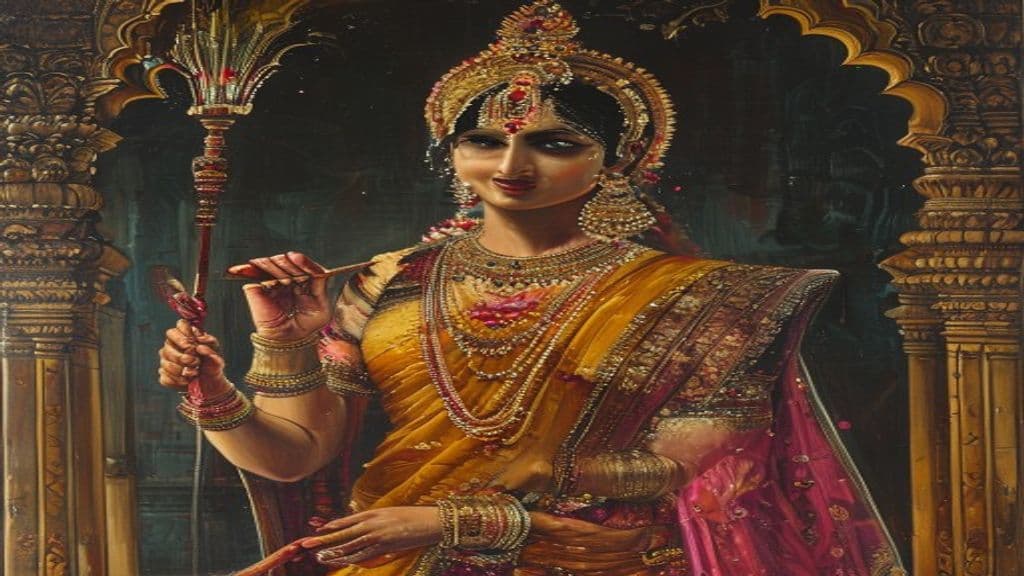
The Pandavas are five legendary royal brothers who are central protagonists of the Indian epic the Mahabharata. They are mortal princes of the Kuru line whose births are supernaturally sanctioned by different gods and whose lives (education, exile, war, and rule) illustrate dilemmas of dharma, kinship, and kingship.
Pandubba
Lesser

Pandubba

The 'water-drowner' of UP and Bihar — a jal pret (water ghost) that lurks in wells, ponds, and river bends, grabbing the ankles of swimmers and washing those who lean over still water. The most feared water-edge presence in Bhojpuri folk belief.

Para Brahman
Primordial

Para Brahman

Para Brahman (Sanskrit: परब्रह्म, parabrahma) is a Hindu metaphysical designation for the Supreme Brahman — the highest, ultimate Reality described as beyond all descriptions and conceptualisations. Depending on school it denotes the attribute‑less absolute (nirguṇa) or the supreme personal God (saguṇa) identified with a sectarian deity.

Parashurama
Ancient

Parashurama

Parashurama is the sixth avatara of the god Vishnu in Hindu tradition: an axe-bearing warrior-sage who appears to correct systemic wrongdoing (especially abusive Kshatriya power), later performs Vedic rites and retires to ascetic practice. He is counted among the Chiranjivi (immortals) and is said to reappear as the guru of the future avatara Kalki.

Parijaat Tree, Kintoor
Primordial

Parijaat Tree, Kintoor

A revered and sacred baobab tree in Hindu tradition, specifically located in Uttar Pradesh, India. Its significance is unclear due to the lack of explicit details about its abilities or behaviors. (Note: 1. Power tier: Based on the lack of explicit details about its abilities or behaviors, a Primordial power tier seems excessive. A Lower power tier (e.g., Lesser) would be more appropriate. 2. Summary:)

Parvati
Ancient

Parvati

Parvati is a principal goddess in Hindu tradition, worshipped as the consort of Shiva and as his shakti (divine power). She embodies a range of roles — devoted wife and mother, fertility and nourishment-giver, and in other manifestations a ferocious protector who destroys evil.

Parīkṣit
Lesser

Parīkṣit

Parīkṣit is a legendary-historical Kuru king of classical north Indian tradition attested in Vedic, epic and Purāṇic materials. He is portrayed as a sacrificial sponsor and righteous ruler whose life intersects with sages, Nāgas, and divine protection; his death by the Nāga Takṣaka and the subsequent snake-sacrifice of his son Janamejaya form central narrative episodes.

Petni
Lesser

Petni

The female equivalent of the Bengali bhoot — the ghost of a young woman who died unmarried or before fulfilling her expected life. The Petni is more volatile and less predictable than the Shakchunni (married woman's ghost), driven by the particular bitterness of a life foreclosed rather than interrupted.

Pichal Peri
Lesser

Pichal Peri

Shared across North Indian and Pakistani folklore — a female spirit with reversed feet who lures lone travellers off roads at night. One of the most cross-cultural supernatural figures in the subcontinent, appearing in Hindu, Muslim, and Sikh communities alike.

Pippalada
Primordial

Pippalada

In Hindu tradition, Pippalada is a sage and philosopher who represents an incarnation of Shiva, guiding seekers of truth with deep knowledge. (Note: - Power tier should be Ancient, as being an incarnation of Shiva and attributed authorship of a key Upanishad suggests deity-level abilities. - Appearance and origin story are missing; add relevant in)

Pisacha
Lesser

Pisacha

The supplied sources do not document a supernatural entity named Pisacha in Hindu primary texts. In the provided material the lexical form appears in non-mythological contexts: as the scientific name of an insect genus and as a bibliographic/linguistic label (a Dardic/Pisacha language specimen title and the title 'Paishach Bhashya' listed among commentaries). No primary-source descriptions of a demon/ghost called Pisacha (appearance, powers, rituals) are present in the provided excerpts.

Pishach
Greater

Pishach

Among the oldest classified demon-types in Hindu tradition — flesh-eating entities of the cremation ground first named in the Atharva Veda. The Pishach inhabits fresh corpses and possesses the living, causing the specific Ayurvedic condition of 'pishachabadha': madness, speaking in unknown languages, consuming impure things.

Pishacha
Lesser

Pishacha

Flesh-eating spirits of Hindu mythology that haunt cremation grounds and are associated with disease, madness, and possession. The lowest class of demon in the Vedic hierarchy.

Pishacha-graha
Lesser

Pishacha-graha

The possessing variety of pishacha described in classical Ayurvedic and tantric texts — a grasping spirit (graha) that seizes the body of a victim, producing symptoms of madness and compulsion.

Pishachini
Greater

Pishachini

Pishachini is attested in the provided sources both as the central antagonist in a contemporary Hindi television drama (a formerly human woman cursed after death into a malign supernatural female being) and as an indexed term in a corpus of tantric/vedic sadhana listings (Pankaj Oudhia archival entries) where Pishach‑related sadhana and herbal ingredients are named. The materials do not provide a classical canonical account, so description remains provisional across a fictional and an indexical ritual register.

Pitṛ (Pitris)
Ancient

Pitṛ (Pitris)

In Hindu religious tradition the pitṛs (Sanskrit: पितृ, pl. pitṛs or pitris) are the departed ancestors regarded as a class of beings whose welfare depends on ritual duties performed by living descendants. They occupy Pitrloka (and in some accounts Devaloka or other lokas), are sustained by offerings such as piṇḍa and śrāddha, and—when properly propitiated—are believed to confer blessings and social-religious benefits on the living.

Pleiades
Lesser

Pleiades

The Pleiades is an asterism — the open star cluster Messier 45 — visible as a compact group of bright stars and, in many cultures, personified as a set of mythic figures (notably the Seven Sisters in Greek myth). It functions both as a concrete astronomical object and as a widespread cultural calendrical and mythic motif used to mark seasons, navigation, and genealogies.

Prahasta
Greater

Prahasta

Prahasta (Sanskrit: प्रहस्त, IAST: prahasta, lit. "he who has extended hands") is a powerful rakshasa warrior in the Ramayana tradition, presented there as Ravana's chief commander who leads Lanka's armies in campaigns against gods, asuras, and the invading forces of Rama. Variants across traditions differ on his precise kinship to Ravana and on ethical portrayal, with some later retellings depicting him as a virtuous figure who counsels restraint.

Prajapati
Primordial

Prajapati

Prajapati (Sanskrit: प्रजापति) is a Vedic-Brahmana creator figure whose name means "lord of creatures." In Vedic and Brahmana texts he functions as a primordial creative principle and progenitor; in later Puranic layers the term becomes a flexible title applied to multiple creator‑figures (including Brahma and others).

Preta (Bhūt)
Minor Spirit

Preta (Bhūt)

A bhoota (bhūt) is a supernatural being in Indian popular culture and some ancient texts, typically understood as the restless or perturbed spirit of a deceased person that has not properly moved on after death. Their existence is linked to failures in funerary practice, violent death, or unresolved matters in life.

Preta (Hungry Ghost)
Lesser

Preta (Hungry Ghost)

A post-mortem supernatural being associated with extreme, unremitting hunger and thirst. In Hindu usage the Sanskrit term can mean a deceased person, while Buddhist traditions develop the category into a distinct realm of hungry spirits whose condition illustrates karmic consequences for demeritorious action.

Prithvi
Ancient

Prithvi

Prithvi (Sanskrit: पृथ्वी, Pṛthvī) is the Vedic personification of the Earth, a maternal cosmic principle who is simultaneously the physical ground, the universal Mother who nourishes life, and manifest matter participating in cosmogony. She is commonly paired with the sky (Dyaus) as the dyadic parents Dyavaprithivi and later becomes identified or merged with Bhūmi in classical Hindu and Buddhist contexts.

Puṣpadanta
Lesser

Puṣpadanta

Puṣpadanta is a name attested in South Asian religious literatures with at least two distinct roles in the supplied sources: (1) in Digambara Jain tradition as Ācārya Puṣpadanta, credited (with Bhūtabali) for committing the oral teachings of Mahāvīra to writing in the Ṣaṭkhaṇḍāgama; and (2) in Vaishnava/Śrīmad-Bhāgavatam-type devotional lists as one named attendant/associate among a retinue of divine or semi-divine companions.

Pūtanā
Lesser

Pūtanā

Pūtanā is a female rakṣasī (demoness) in the Krishna infancy cycle who, disguised as a beautiful woman, attempts to kill the infant-god Krishna by breastfeeding him poisoned or drugged milk; when Krishna kills her, contact with the divine cleanses her. She functions simultaneously as a child-killing spirit, a symbolic personification of infant disease, and—in some readings and ritual prescriptions—as a figure whose worship or propitiation is invoked protectively for children.

Radha
Ancient

Radha

Radha (Sanskrit: Rādhā; also Rādhikā) is a central goddess-figure in Vaishnavite devotional literature, portrayed as the chief gopi and beloved of Krishna and in many traditions as the supreme feminine principle (an aspect of Lakshmi or the hlādini-śakti). She is a paradigmatic emblem of devotional love (bhakti) whose prominence grows in medieval and early modern Bhakti poetry.

Rakshasa (Himalayan variants)
Greater

Rakshasa (Himalayan variants)

A Himalayan reception of the pan-Indian rakshasa motif: hostile or disruptive non‑human beings known from Sanskrit epic and Puranic literature, here noted where Himalayan sources and discussions intersect with the broader epic tradition. The supplied sources do not document distinct, well‑attested Himalayan folklore variants; the entry therefore presents primarily the epic/legendary profile as transmitted into Himalayan contexts in general references.

Raktabīja
Greater

Raktabīja

Raktabīja is an asura antagonist in the Puranic/Devi narrative cycle (notably the Devi Mahatmya) whose boon causes any drop of his blood that falls to the ground to generate a new identical Raktabīja. He is sent by the asura kings Shumbha and Nishumbha and is defeated when the goddess Durga instructs Kali (Cāmuṇḍā) to consume his blood so no drop falls and Durga then beheads him.

Rambha (asura)
Lesser

Rambha (asura)

Rambha is a Danava (asura) figure in Hindu mythic genealogies presented as a leaderly member of the descendants of Danu and Kashyapa; in several accounts he performs penance to obtain boons and is linked in origin narratives to the birth of the buffalo-bodied asura Mahishasura. Sources vary on details of his death and the precise mechanics of his son's birth.

Rati
Ancient

Rati

Rati is the Hindu goddess who personifies sexual love, desire, and sensual enjoyment. Presented in Puranic and epic accounts as the consort of Kama (Kamadeva), she appears in origin narratives, the episode of Kama's burning and rebirth, and in the Mayavati/Sambara story where she functions as nanny and eventual consort to Kama's rebirth, Pradyumna.

Renuka (Reṇukā)
Greater

Renuka (Reṇukā)

Renuka is a Hindu goddess venerated in several South and West Indian regional traditions. She is described in the supplied sources as the wife of the sage Jamadagni and the mother of Parashurama, and is regarded in those regional devotional contexts as a manifestation of the Mother Goddess (Shakti).

Ribhus
Lesser

Ribhus

A class of divine/semidivine artisan-sages in Vedic literature, the Ribhus are skilled creators whose works benefit gods and humans; early Vedic texts and later commentators place them in solar/seasonal registers and as three named artisan-sages who attain immortality and partake in sacrifices.

Rohini
Lesser

Rohini

Rohini is a Hindu divine figure who personifies the nakshatra (lunar mansion) identified with the bright star Aldebaran in Taurus and is described in sources as the favorite consort of Chandra (the Moon). She appears in genealogical lists as one of the twenty-seven daughters of Daksha and Asikni and functions primarily as an astronomical-mythic partner whose union with the Moon is used in some modern interpretive accounts as a temple-symbolic metaphor.

Rudras
Greater

Rudras

A plural class of Vedic divine beings regarded as manifestations or attendants of the god Rudra (later identified with Śiva). They function as atmospheric/wind deities, vital forces within the human body, and ritually important gods occupying an intermediate place among the Vedic divinities.

Rukmavati
Minor Spirit

Rukmavati

A minor mythological figure in Hindu tradition, connected to Krishna's lineage as the daughter and wife of Pradyumna. (Note: 1. Power tier: Given that Pradyumna's mother (Rukmini) is mentioned as Krishna's chief wife and an important figure in Hindu mythology, it suggests that Rukmavati may be a more significant character t)

Rukmini
Ancient

Rukmini

Rukmini is a Hindu goddess and the chief/primary consort of Krishna, revered as an avatar of Lakshmi. She appears in Puranic and epic narratives as a princess of Vidarbha who arranges her marriage to Krishna, later becoming queen of Dvaraka and mother of Pradyumna; she is venerated across multiple Indian devotional traditions and regional cults.

Rāma
Ancient

Rāma

Rāma is a major divine-hero in Hindu tradition, worshipped as the seventh avatar of Viṣṇu and the central protagonist of the Ramayana. He is portrayed both as the ideal man (maryāda puruṣottama) and, in Rama-centric sects, as the Supreme Being; his life-story (birth in Ayodhyā, 14-year exile, Sītā's abduction, and the defeat of Rāvaṇa) functions as a primary exemplar of dharma.

Sacca-kiriyā (Hindu tradition)
Primordial

Sacca-kiriyā (Hindu tradition)

A solemn declaration or utterance in Hindu and Buddhist traditions with truth-empowering properties. (Note: 1. Remove "Primordial" power tier - while the Sacca-kiriyā has significant effects, they are described as depending on truthfulness, not necessarily being equivalent to cosmic-level powers. 2. Add sen)

Sadyojata
Ancient

Sadyojata

Sadyojata (Sadyojāta) is one of the five primary faces or 'mouths' (pañcānana / pañcabrahma) of the Hindu deity Śiva. As an aspect within Śaiva theology and tantra, Sadyojata functions as one of Śiva's operative energies manifested in iconography (pancha-mukha liṅga), liturgy, and doctrinal schemata rather than as an independent being.

Sanjna
Ancient

Sanjna

Sanjna (also Samjñā, Saranyu) is a Hindu goddess best known as the chief consort of the sun-god Vivasvant/Surya whose mythic actions (flight, transformation into a mare, and leaving a substitute/Chhaya) link her to themes of motion, identity, and the origins of several important progeny (Yama, Yami, Manu, the Ashvins).

Saptarishi
Lesser

Saptarishi

The Saptarishi (Sanskrit: saptarṣi) are the seven seers of ancient India extolled in Vedic literature and later Hindu texts; they are canonical rishis whose identity is preserved across Vedic and Puranic layers and commonly associated in tradition with the seven bright stars of the Big Dipper (Ursa Major).

Saraswati
Ancient

Saraswati

Saraswati is a principal Hindu goddess (Devi) whose portfolio encompasses knowledge, learning, speech (vac), the arts (poetry, music), language and purification. Originating in Vedic literature as a river goddess, later texts reframe her primarily as the divine personification and patron of speech, learning and creative/intellectual order; she is venerated across Hindu, Buddhist and Jain contexts.

Sarpa Kavu
Greater

Sarpa Kavu

Sacred site or grove in Hindu tradition, inhabited by nagas and other snakes. (Note: - Power tier: Primordial (Sarpa Kavu is a sacred site with deep cultural significance, not just a regional power) - Sensory cues: Provide specific details on how one might sense the presence or energy)

Sati
Ancient

Sati

Sati (Sanskrit: सती) is a Hindu goddess traditionally identified as the daughter of Daksha and the first wife of Śiva. In the sources provided she functions as a divine exemplar of marital felicity, chastity, and longevity; her self‑immolation at Daksha's sacrifice is a pivotal Puranic episode that shapes later narratives in which she is identified with Dakshayani and with the goddess who later appears as Parvati.

Satyabhāmā
Ancient

Satyabhāmā

Satyabhāmā is a goddess in the Krishna-centered Vaishnava tradition, presented as one of Krishna's chief/third consorts and as an incarnation of Bhūmi (the Earth) and an aspect of Lakshmi; she appears in scriptural episodes (notably the pārijāta episode in Śrīmad-Bhāgavatam) and in living devotional and performative contexts (temples, classical dance).

Shakchunni
Lesser

Shakchunni

Bengali ghost of a married Brahmin woman who died before her husband — identifiable by her white sari and conch-shell bangles, she possesses living married women and refuses to relinquish domestic life.

Shakini
Greater

Shakini

Tantric goddess presiding over the Vishuddha (throat) chakra — she governs speech, truth, and poison. Disturbed, she afflicts voice and communication; correctly propitiated, she grants eloquence, clairvoyance, and the power to speak what cannot be unsaid.

Shankha
Lesser

Shankha

A sacred symbol associated with Lord Vishnu, used in Hindu rituals and ceremonies as a conch shell trumpet or horn. (Note: - Power tier should be Greater, as it plays a crucial role in Hindu rituals and ceremonies, implying deity-level power. - Appearance should mention that it's often made from a large conch shell, but d)

Shashank (Hindu Tradition)
Primordial

Shashank (Hindu Tradition)

In Hindu tradition, Shashank is a poetic and mythological epithet for the Moon, derived from Sanskrit. (Note: - Power tier: Primordial (inconsistent with the fact that it's an "epithet" or descriptor of the Moon, not a separate entity with cosmic power) - Origin story: Not mentioned in the source material - A)

Shatarupa
Primordial

Shatarupa

The first woman created by Brahma, considered the first ancestor of humanity in Hindu cosmology. (Note: - Power tier should be Ancient (Shatarupa's role in Hindu cosmology is important but not considered a primordial being) - Abilities statement should be revised to "There is no evidence of supernatural)

Shiva
Ancient

Shiva

Shiva (Sanskrit: Śiva) is one of the principal deities of Hinduism, central to Shaivism and pan-Hindu worship. Portrayed as a paradoxical figure—ascetic yogi, householder, warrior and cosmic agent—he is described as the auspicious One who creates, protects and transforms the universe and is commonly associated with dissolution within the Trimurti framework.

Shreedhar Pandit
Primordial

Shreedhar Pandit

A devoted follower of Shaktism and discoverer of the holy cave-shrine of Sri Mata Vaishno Devi. (Note: - Power tier should be Greater, not Primordial (discovery of a cave-shrine is significant but not cosmic in scale). - Abilities should include the actual abilities or powers associated with Shreedhar )

Shuka (Śuka / Shukadeva)
Ancient

Shuka (Śuka / Shukadeva)

Shuka is a rishi (sage) in Hindu tradition, son of Vyasa, famed as the principal narrator of the Bhagavata Purana and an exemplar of renunciation (sannyāsa) and immediate liberation (moksha). Many texts present him as born under miraculous circumstances linked to a parrot motif and as possessing innate scriptural knowledge.

Shumbha and Nishumbha
Greater

Shumbha and Nishumbha

Shumbha (शुम्भ) and Nishumbha (निशुम्भ) are a pair of asura brothers in the Devi Māhātmya (Durga Saptashati) who, after long penance and a boon from Brahmā, usurp power over the three worlds until the Goddess (Devi/Kaushiki/Durga) manifests in martial form and destroys them. They function in the narrative as archetypal antagonists whose arrogance and domination precipitate the Goddess’s salvific martial intervention.

Sinhabahu
Ancient

Sinhabahu

Legendary king of ancient India and father of Prince Vijaya, who founded Sri Lanka. (Note: 1. Source 1 does not provide enough information to confirm Sinhabahu's abilities as a legendary king, so "Abilities" section should be removed or revised. 2. Power tier: Ancient is plausible given tha)

Sita
Ancient

Sita

Sita is a central goddess-figure and heroine of the Hindu epic the Ramayana, traditionally regarded as the consort of Rama and an incarnation of the goddess Lakshmi; her narrative links earth/fertility imagery, marital devotion and royal legitimacy.