West African Supernatural Beings

45 documented West African supernatural beings from the Evil Eye grimoire, including 18 lesser and 12 ancient in power tier.

A ƭat Roog
Ancient

A ƭat Roog

A term attested in the vocabulary surrounding Roog within the Serer religious system; the provided sources do not supply a clear definitional account of an entity by this exact name. Material available situates the term in the wider context of Serer cosmology in which Roog is the universal supreme deity and ancestor cult (pangool) and priestly mediation (o yaal pangool) structure ritual life.
Abena Mansa
Minor Spirit

Abena Mansa

A name attested in a single contemporary Ghanaian blog anecdote as a 'mysterious being'; available sources do not establish Abena Mansa as a coherent, traditional supernatural figure or provide corroborating ethnographic detail.

Abonsam
Lesser

Abonsam

Abonsam is a malevolent spirit name used in accounts from the Gold Coast (modern Ghana) to explain community-level misfortune such as accidents and disease. When local ritual specialists diagnose Abonsam as the cause, communities perform a prolonged communal expulsion ritual intended to drive the spirit into the sea.

Adze
Greater

Adze

A vampiric firefly of the Ewe people of West Africa — a spirit that takes the form of a firefly by night and a malicious possessing being by day, drinking the blood of sleeping children and spreading disease.

Adze (Folklore)
Lesser

Adze (Folklore)

Vampiric being in Ewe folklore, transforming into human shape upon capture. (Note: 1. Power tier should be Greater, as "deity-level" powers are implied by the ability to possess humans. 2. Add sensory cues (e.g., glowing lights) based on its firefly form. 3. Add weaknesses and wards)

Agbọghọ Mmụọ Masquerade
Lesser

Agbọghọ Mmụọ Masquerade

An Igbo masquerade category—literally 'Maiden Spirits'—in which masked (traditionally male) dancers embody the spirits of deceased unmarried girls, performing idealized adolescent feminine comportment and beauty in annual dry‑season civic ceremonies and at funerals and initiation rites in the Nri–Awka region.

Alusi
Lesser

Alusi

Alusi (also spelled arusi) are spirit-agents or divinities in the traditional religion of the Igbo people, each responsible for specific domains such as health, agriculture, rivers, justice, and the sky. They are worshipped and served through localized cults with priests and devotees and are distinct from clan ancestors (Ndichie).

Anansi
Ancient

Anansi

The spider trickster god of Akan folklore — cunning, mischievous, and wise. Keeper of stories and teacher of human beings, brought through the slave trade into Caribbean and African-American tradition.

Asanbosam
Greater

Asanbosam

The Asanbosam (also Sasabonsam, Asasabonsam) is an Akan folkloric humanoid creature that dwells in trees and is described as vampire-like, feeding on people who enter its forest territory and enforcing localized rules of the woodland.

Asase Ya / Asase Afua
Ancient

Asase Ya / Asase Afua

Asase Ya (Asase Yaa) or Asase Afua (Asaase Afua) is the Akan personified Earth-deity of fertility, land, truth, peace and the reception of the dead. She appears in a dual-aspect as an aged mother of the dead and as a youthful fertility-bringing woman and is central to agricultural, funerary and truth-rite practices among Akan peoples.

Asase Yaa
Ancient

Asase Yaa

Asase Yaa (also Asase Afua, Asaase Yaa, Asaase Afua, Asase Efua, Asaase Aberewa) is the Akan personification of the earth in Ghana and Ivory Coast, regarded as an earth-mother figure associated with fertility, procreation, love, peace, truth, and the dry and lush earth. She is also described in sources as the 'Mother of the Dead' or Mother Earth, occupying a central moral and material place in Akan thought.

Asiman
Lesser

Asiman

A nocturnal, shape‑changing predatory luminous spirit known from West African accounts; presented in sources as the Dahomey counterpart to the Ashanti obayifo, capable of inhabiting humans by day and manifesting as phosphorescent lights or a flying ball of light by night.

Ayida Wedo
Primordial

Ayida Wedo

Ayida Wedo is a primordial rainbow-serpent loa of Haitian Vodou (with counterparts in Fon and Ewe vodun) associated with water, the rainbow, and the elemental forces; she often appears paired with Damballa as the dual cosmic serpent that assisted the creator in forming and upholding the world.

Ayizan
Greater

Ayizan

Ayizan is a racine (root loa) in Haitian Vodou and related West African-derived Vodoun traditions, functioning as the archetypal mambo (priestess) and a guardian of ritual order, initiation (kanzo), and the transmission of sacerdotal implements such as the asson. She is also associated with the marketplace and commerce and is syncretized with the Catholic Saint Clare.

Aziza
Lesser

Aziza

In West African traditional belief the Aziza are a beneficent class of small, forest-dwelling supernatural beings who aid people—especially hunters—by providing 'good magic' and practical and spiritual knowledge. They are associated with anthills and silk‑cotton (kapok) trees and are portrayed as helpful rather than hostile.

Birongo
Lesser

Birongo

Birongo (also bilongo) is an Afro‑Venezuelan magico‑religious tradition and folk‑healing repertoire derived from Kongo‑area concepts and syncretized with Catholic saint veneration and local Venezuelan ritual forms. It functions as a lived system of diagnosis, healing, mediumship, and communal ritual practice rather than as an individual supernatural being.

Br'er Rabbit
Lesser

Br'er Rabbit

Br'er Rabbit is an African-American folktale trickster — an anthropomorphic rabbit/hare who survives and triumphs by cunning rather than strength. Originating in oral traditions of enslaved Africans in the American South and related Caribbean communities, the character features in story cycles that teach, entertain, and comment on social relations.

Chukwu
Primordial

Chukwu

Chukwu is the supreme creative reality in traditional Igbo religion (Odinani), the source of all existence from which personal chi and lesser alusi derive. Chukwu functions as the ultimate authority, creator, and sustaining principle whose will is mediated in practice through intermediaries such as chi, alusi, diviners and the Arochukwu oracle.

Damballa (Damballah)
Ancient

Damballa (Damballah)

Damballa is one of the most important loa (spirits) in West African Vodun and its New World continuations such as Haitian Vodou and related African-diasporic practices. Traditionally associated with serpentine imagery and sometimes depicted as a rainbow, Damballa represents a central, revered presence transmitted from the Whydah/Ouidah region of modern Benin into Caribbean Vodou practice.

Faro
Ancient

Faro

Faro is identified in the supplied sources as a deity prominent in the Mandé creation narrative. Beyond a single disambiguation reference, the provided material contains no further ethnographic or mythic details about Faro's attributes, stories, or rituals.

Hira (mythical monster)
Greater

Hira (mythical monster)

A legendary buffalo-like creature from West African tradition, known for its incredible force and brutality. It is a feared entity among hunting and fishing communities along the Niger River. (Note: 1. Origin story should be included in the article based on the source material (mentioning the Songhai people, Bozo people, and M. A. Dupuis Yakouba's collection). 2. Power tier may need reevaluation;)

Ijana (Ijana Otta) / Onijana
Lesser

Ijana (Ijana Otta) / Onijana

Ijana is attested in the provided sources as a place-name (Ijana Otta) and as the basis of a traditional chiefly title, Onijana, within the Awori/Ota sociopolitical landscape in southwestern Nigeria. The term appears in civic and ceremonial contexts rather than as a supernatural being.

Jengu
Lesser

Jengu

No focused information on Jengu is present in the supplied sources. The materials available discuss water spirits and aquatic spirit traditions generally (including Mami‑Wata) and Bantu religious frameworks, but do not provide primary or detailed descriptions, rituals, or origins specific to Jengu (Sawa sea spirits).

Kalûnga
Ancient

Kalûnga

Kalûnga (Kalûnga Line) is a foundational concept in West-Central African Bantu cosmologies—most prominently Ambundu, Kongo, and Chokwe—referring both to Kalûnga as the Supreme God and to a watery, energetic boundary separating the land of the living from the spiritual realm of deceased ancestors.

Kuino
Lesser

Kuino

In Guinean (West African) folklore, a kuino is described as an evil spirit whose life or heart is placed in a material object called a sambio; destruction of that sambio by a wizard is said to cause the death of the spirit.

Kwaku Ananse
Lesser

Kwaku Ananse

Kwaku Ananse (Anansi, Ananse) is a central spider-associated trickster and culture-bearing figure from Akan (including Ashanti) folklore of southern Ghana. Presented in oral tale cycles, songs, children’s literature, and modern media, he embodies wisdom, wit, cunning, and mischievousness and functions as a narrative teacher who both questions and ultimately reinforces social norms.

La Sirène
Greater

La Sirène

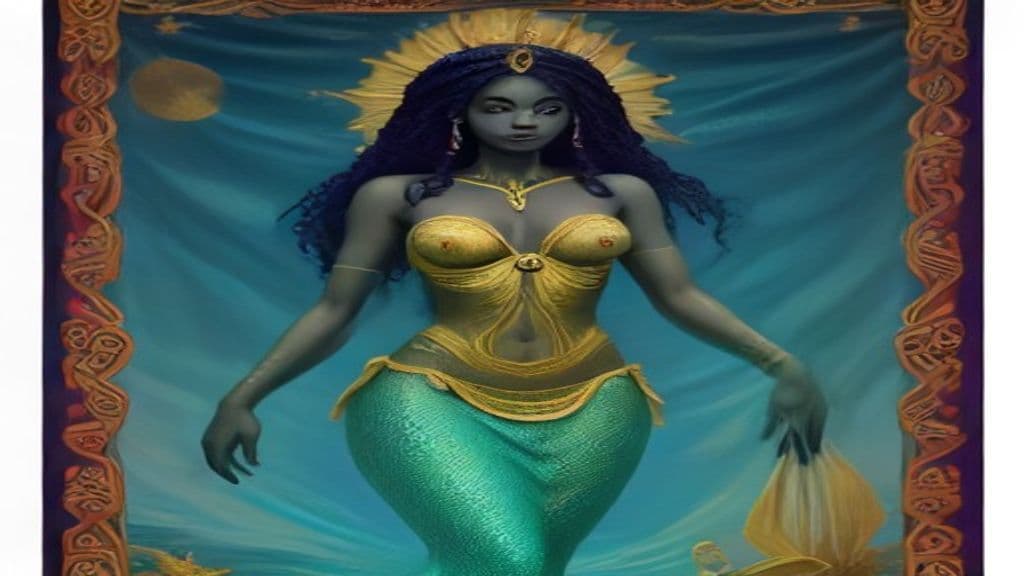
La Sirène is a mermaid-like water spirit (lwa) within Haitian Vodou, represented in ritual art and drapo (Vodou flags) and situated in Vodou pantheon lists alongside other named lwa. She is associated with marine imagery and participates in the visual and religious culture of Haitian Vodou rather than appearing only as a folkloric sea creature.

Madam Koi Koi
Lesser

Madam Koi Koi

Madam Koi Koi is a Nigerian urban-legend apparition — a vengeful, site-bound female ghost associated with boarding schools, known for the distinctive clicking of red high heels. Tales present her as a punitive presence that haunts dormitories, hallways and toilets at night and as a cultural warning about nocturnal transgressions and unresolved injustice.

Mengues / Mengue
Lesser

Mengues / Mengue

The term 'Mengues' (also attested as 'Mengue') is documented in the provided sources only as an onomastic item — a surname, a village toponym in Cameroon, and as a name/title used in Spanish-language and contemporary artistic works. The sources contain no evidence that 'Mengues' denotes a supernatural or folkloric entity.

Moussa Gname
Greater

Moussa Gname

A revered culture hero of the Songhai people, celebrated for his pivotal role in shaping West African folklore and mythology. (Note: * Power tier: Unclear, but likely Lesser or Minor Spirit given the lack of specific abilities * Origin story: Should be revised to "Origin unknown" as no detailed origin story is found in the source m)

Nommo (West African Tradition)
Ancient

Nommo (West African Tradition)

Primordial ancestral spirits considered sacred by the Dogon people of Mali, associated with water and spiritual guidance. (Note: - Power tier: Primordial (matches description in source material) - Abilities: Remove redundancy, keep only one ability mentioned in source material (Masters of the Water) - Sensory cues: Add informat)

Oba
Minor Spirit

Oba

Oba is principally attested in the provided sources as a West African royal title (Yoruba and Bini) meaning 'ruler' and as a widespread modern proper name and toponym. The corpus contains no sustained folkloric account of an independent supernatural being called 'Oba'; references to ritual or religious function concern human office-holders rather than a nonhuman spirit.

Obalufon Alayemore
Greater

Obalufon Alayemore

Obalufon Alayemore (Ọbalùfọ̀n II, Alayemore) is a historical Ooni of Ile Ife who was deified after death and is venerated in the Yoruba religious-cultural corpus as an oríṣa and patron of art, weaving, and bronze/brass casting. He appears in royal succession lists as the third Ooni of Ife and is associated with material-culture representations such as brass heads and masks.

Obatala
Ancient

Obatala

Obatala is a high-ranking primordial orisha in the Yoruba religious framework, widely described as the sculptor of humankind who molds human bodies and is regarded as father of humanity and owner of all heads. He is associated with wisdom, coolness of thought, and senior or royal status among the orisha; some traditions connect him to the founding of Ife.
Obayifo
Primordial

Obayifo

A supernatural entity from Ashanti folklore that inhabits the bodies of humans, emitting a phosphorescent light and exhibiting vampiric/witch-like qualities. (Note: - Power tier: Lesser (inhabiting human bodies, not cosmic/Primordial) - Abilities: Remove "exhibiting supernatural powers" as it's not mentioned in the source material - Weaknesses: Add information ab)

Obia (West African Folklore)
Lesser

Obia (West African Folklore)

A monstrous entity sent by witches to commit heinous crimes against humanity, described as a massive animal. (Note: - Power tier: Primordial (given its cosmic-level impact on human society) - Origin story: Needs to be added from source material - Sensory cues: Unknown is not sufficient; needs to be revised or more )

Sasabonsam
Ancient

Sasabonsam

A vampiric entity in West African folklore, enforcing rules of renewal in the forests. (Note: 1. Power tier: Lesser (not Ancient) - The Sasabonsam's abilities are more consistent with a regional spirit rather than a deity-level entity. 2. Abilities: remove "enforcing rules of renewal" - The so)

Simbi
Ancient

Simbi

Guardian spirit of water and nature in Central African tradition. (Note: - Add source material on origin story. - Clarify sensory cues to be presence of water features or aquatic animals associated with Simbi's transformative appearance, rather than just their presence. - )

Tano (Ta Kora)
Lesser

Tano (Ta Kora)

Tano (also written Tanoɛ), identified in one source as Ta Kora (also Tando in Fante), is an Abosom in Akan/Asante religion associated with war and strife and, in Asante accounts, with thunder and lightning. The supplied materials treat Tano primarily as a named member of the Akan Abosom category rather than providing extended mythic narratives or iconography.
Werecat
Lesser

Werecat

A werecat is a folkloric category of therianthropic beings or people associated with transformation between human and feline forms. The motif appears across Europe, Africa, South and Southeast Asia, and China, with locally specific explanations (witchcraft, hereditary curse, sorcery, ghostly influence, or divine/royal descent).

Yumboes (Benevolent Supernatural Beings)

Yumboes (Benevolent Supernatural Beings)

In Wolof mythology, Yumboes are benevolent supernatural beings referred to as 'good people' or Bakhna Rakhna. (Note: * Power tier: Not mentioned in source material; however, based on the context and the fact that they're referred to as 'good people' or Bakhna Rakhna, it's likely they should be classified as Minor Sp)

Zangbeto
Ancient

Zangbeto

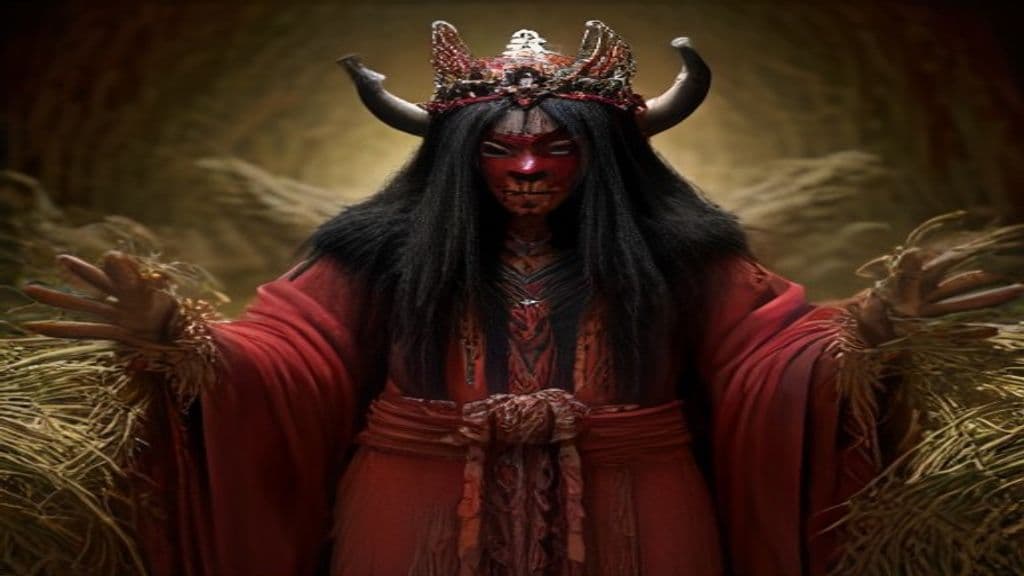
Zangbeto are the traditional Vodún guardians of the night among the Ogu (Egun) people of Benin, Togo, and Nigeria. Treated as members of a secret society and as sacred beings in local tradition, they patrol at night to protect communities from thieves, witches, and social evils and appear publicly in ritual festivals wearing dense raffia costumes.

Zin (Water Spirits)
Greater

Zin (Water Spirits)

Mythical water spirits in West African Songhai mythology. (Note: * Power tier should be Lesser or Minor Spirit, as there is no mention of their powers or abilities. * Appearance description is missing; however, since it's not provided in the source material, it can)

Zār
Lesser

Zār

Zār (also zar) names a class of possessing spirit and the associated ritual system found across the Horn of Africa and adjacent Middle Eastern communities. Governed socially and ritually, Zār possession is treated as an ongoing relationship to be managed through communal rites (the zār ritual or zār cult) that reconcile spirit and person rather than forcibly expelling the spirit.

Ògún
Primordial

Ògún

Ògún (also Ogum, Gu, Egu) is a major West African and diaspora deity (orisha/vodun) associated with iron, metalworking, hunting, war and the crafts that use iron. In Yoruba cosmology he is described in some traditions as an Irunmọlẹ (primordial orisha) who cleared a path for other orisha and functions as patron and protector for blacksmiths, hunters, warriors, drivers and related occupations.