Buddhist Supernatural Beings

258 documented Buddhist supernatural beings from the Evil Eye grimoire, including 82 greater and 69 ancient in power tier.

page 1 of 5

Acala
Greater

Acala

Acala (Sanskrit: अचल, 'The Immovable') is a wrathful protective deity (dharmapala) in Vajrayāna and East Asian esoteric Buddhism, classed among the Wisdom Kings (Vidyārāja). He functions as a ritual focus for visualization and mantra practice intended to remove obstacles and bind or destroy hostile forces.

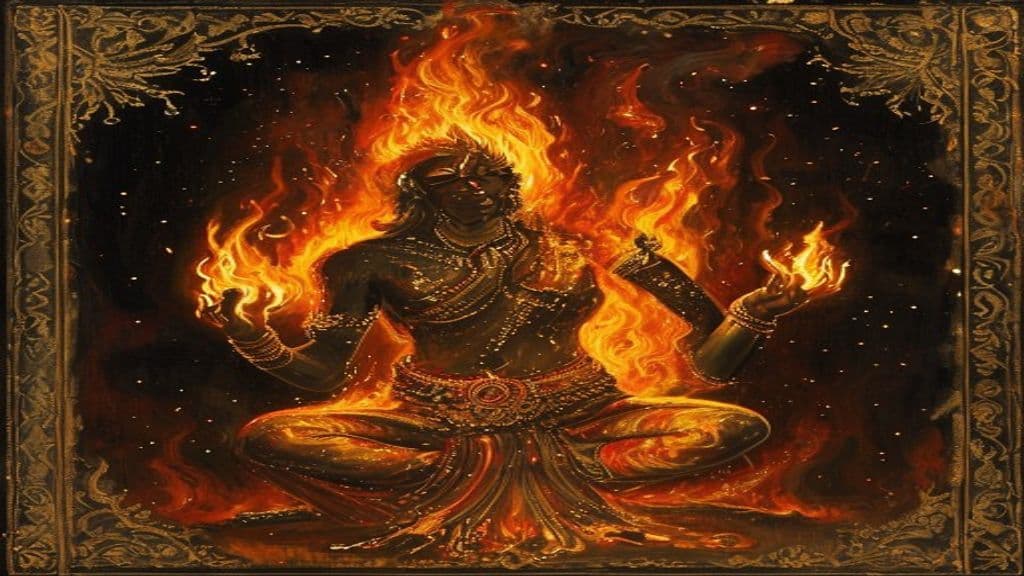
Acalanātha (Acala / Achala)
Greater

Acalanātha (Acala / Achala)

Acalanātha (also Acala or Achala) is a wrathful deity and dharmapāla — a protector of the Dharma — prominent in Vajrayana and East Asian Mahayana Buddhist contexts. Presented as a fierce, non‑human or semi‑divine protector-figure, Acalanātha functions to defend the teaching and practitioners by removing obstacles and confronting threats to the transmission and practice of Buddhism.

Agni
Ancient

Agni

Agni is the Vedic personification of fire in Hindu tradition: a sacred, mediating principle that manifests as terrestrial fire, atmospheric lightning, and celestial sun, and that receives and conveys sacrificial offerings. Prominent in the Rigvedic corpus, Agni functions as sanctifier, witness of rites of passage, and a transformational inner principle in later Upanishadic literature.

Aizen Myō-ō (Rāgarāja)
Greater

Aizen Myō-ō (Rāgarāja)

Aizen Myō-ō corresponds to the deity Rāgarāja, a wrathful/transformation-oriented figure venerated in Esoteric and Vajrayāna Buddhist traditions. The figure is especially revered in Chinese Esoteric Buddhism in Chinese communities and in the Japanese Esoteric schools Shingon and Tendai.

Akhu Tönpa
Ancient

Akhu Tönpa

A Tibetan trickster figure, sent by Chenrezig to teach the art of being shrewd and witty, while championing the common man against social hierarchies. (Note: - Power tier should be Lesser or Minor Spirit, not Ancient, as it's more aligned with local spirit level of trickster figures. - The ability to outwit those in positions of power suggests Greater or P)

Akshobhya
Ancient

Akshobhya

Akshobhya is a transcendent buddha of Mahāyāna and Vajrayāna Buddhism, one of the Five Wisdom (Dhyāni) Buddhas. He personifies 'mirror knowledge' (ādarśa-jñāna), is conventionally placed in the East, and is lord of the eastern Pure Land Abhirati; in esoteric texts he is associated with the eastern Vajra division and invoked in mantra/mandala ritual contexts.

Akuma
Greater

Akuma

Akuma (悪魔/あくま) in Japanese sources is an evil spirit, devil, or demon associated with misfortune and mental disturbance. The term appears in Buddhist texts and Heian-period literature and was later used to translate the Christian figure of Satan, as well as the Buddhist Mara.

Amanojaku
Minor Spirit

Amanojaku

Amanojaku (天邪鬼 / あまのじゃく) is a Japanese yōkai-type being portrayed as a contrarian, heart-reading trickster. Treated in different contexts as a small ogre (ko-oni), a wicked demon (jaki) in Buddhist iconography, and a folkloric spirit that provokes human vice, it appears across regional tales with variable roles from malicious kidnapper to household oddity.

Amida Nyorai
Ancient

Amida Nyorai

Amida Nyorai (Amitābha / Amitāyus) is a principal Mahayana Buddha venerated across East Asia as the embodiment of Infinite Light and Infinite Life who presides over a Western Pure Land and is invoked as the savior who receives the dying into rebirth there.

Amitābha
Ancient

Amitābha

Amitābha is a central celestial Buddha of Mahayana Buddhism who presides over the western Pure Land called Sukhāvatī. Devotional practices invoking his 'measureless' light and life (nianfo/nembutsu) are presented in Pure Land traditions as a path by which beings may be reborn in his buddhafield and quickly attain Buddhahood.

Amitābha Buddha
Ancient

Amitābha Buddha

Amitābha is a principal Mahayana Buddha who presides over the Western Pure Land (the Land of Ultimate Bliss). Devotional practices—most centrally recitation of his name and chanting of Pure Land sutras—are presented in sources as the means by which Amitābha welcomes practitioners for rebirth in his hindrance-free realm.

Amoghapāśa
Lesser

Amoghapāśa

Amoghapāśa is recorded in the supplied sources as a named manifestation or form of the bodhisattva Avalokiteśvara/Lokeśvara attested in Mahāyāna and Vajrayāna contexts. The evidence in the provided material is archival and bibliographic (sūtra/dhāraṇī/maṇḍala filenames and database entries) rather than descriptive narrative or doctrinal exposition.

Amoghasiddhi
Ancient

Amoghasiddhi

Amoghasiddhi is one of the Five Tathāgatas (Five Wisdom Buddhas) in Mahayana and Vajrayana/Esoteric Buddhism, representing the Karma family and the quality of "unfailing accomplishment". He functions as an archetypal, protective, and contemplative buddha-body within tantric mandalas, presiding over the northern quarter and invoked in mantras and ritual iconography.

Amrita (Buddhist tradition)
Primordial

Amrita (Buddhist tradition)

In the context of Indian religions, particularly within Hinduism and Buddhism, Amrita is a divine elixir that grants immortality and eternal life. (Note: - Power tier should be Ancient (deity-level), not Primordial. - Origin story appears accurate but lacks specificity on when Amrita was first mentioned in the Rigveda; add more detail. - Abilities are )

Anantacāritra
Greater

Anantacāritra

Anantacāritra (Sanskrit: अनन्तचारित्र) is a bodhisattva figure in the Lotus Sūtra, identified as one of the four great perfected bodhisattvas who attend Gautama Buddha. The name is glossed as "Boundless Practice" and, in Tiantai commentary, is read as representing eternity.

Angiras
Ancient

Angiras

Angiras (Sanskrit Aṅgiras/Aṅgirāḥ) is primarily a Vedic rishi (sage) and eponymous lineage (Angirasa) associated with authorship of Vedic hymns, priestly/fire functions, and transmission of mantras; later Puranic accounts multiply his identities in genealogies and lists of sages.

Anuruddha
Lesser

Anuruddha

Anuruddha is presented in the supplied sources primarily as a personal name borne by two overlapping non‑supernatural figures: (1) Anuruddha the Theravādin elder — one of the Buddha’s eminent disciples appearing in suttas and Vinaya anecdotes; and (2) Anuruddha the ruler — a chronicle figure in Pali/Thai histories associated with the Dvaravati cultural sphere and Arimadhanaburi (Nakhon Pathom). The materials do not treat Anuruddha as a spirit or other supernatural creature.

Anuruddha (Aniruddha)
Greater

Anuruddha (Aniruddha)

Anuruddha (Sanskrit: Aniruddha) is a historical disciple of the Buddha, counted among the ten principal disciples and later an arahant. He is repeatedly identified in the sources as foremost among monks possessing the meditative faculty called 'divine vision' (divyacakṣur) and figures prominently at the Buddha's parinirvāṇa and the First Buddhist Council.

Aoi no Ue
Minor Spirit

Aoi no Ue

Aoi no Ue is a Heian-period noblewoman character in The Tale of Genji who becomes the victim of mono no ke (spirit possession). In the narrative she is portrayed as a high-ranking court wife of Hikaru Genji whose body is afflicted by the jealous spirit of Lady Rokujō and other wandering phantoms; the episode was later adapted into a Noh play titled Aoi no Ue.

Apalāla
Greater

Apalāla

Apalāla is a water-dwelling nāga king in Buddhist-associated legend, best known from tales that the Buddha converted him. The story is tied to the Swat River region and appears in later Buddhist literature and art as a demonstration of the Buddha's influence over non-human beings.

Aparajita (Wisdom King)
Greater

Aparajita (Wisdom King)

Aparajita is named in secondary sources as a member of the broad class of East Asian Buddhist 'wisdom kings'—wrathful protective emanations associated with Buddhas and bodhisattvas. The supplied materials do not provide a focused, primary textual profile for an individual Aparajita; most attestations address the wisdom-king category and the protective powers of dharani/mantra (notably the Shurangama Mantra).

Apsara
Lesser

Apsara

Celestial dancers and water nymphs of Hindu cosmology — beautiful semi-divine beings who dance at the court of Indra and, by his command, descend to earth to distract sages from excessive asceticism.

Arhat
Lesser

Arhat

An arhat (Sanskrit: arhat; Pāli: arahant) is in Buddhist traditions a human practitioner who has gained insight into the true nature of existence, attained nirvāṇa, and been liberated from the cycle of rebirth. The status and valuation of arhatship vary by school: some traditions equate it with full liberation, while others treat it as distinct from or inferior to the bodhisattva/buddha ideal.

Ashiya Dōman Ōuchi Kagami
Lesser

Ashiya Dōman Ōuchi Kagami

A compound cultural tradition surrounding the Heian-period onmyōji Ashiya Dōman and a hugely popular kabuki drama (Ōuchi Kagami) that stages supernatural episodes—notably a kitsune (Kuzunoha) who is rescued and later marries a human, Abe no Yasuna. The term is primarily attested as the title of a kabuki play and as the theatrical depiction of a historical/mythic onmyōji figure.

Asita
Lesser

Asita

Asita is a name applied to one or more ancient Indian sages: in Buddhist sources a forest-dwelling tāpasa and seer who perceived the birth of the Bodhisattva Siddhartha and prophesied his destiny; in Vedic and Purāṇic lists Asita appears as a rishi/pravara within gotra genealogies. Traditions sometimes distinguish or conflate these figures.

Asura
Greater

Asura

Asura (Sanskrit: असुर) are a class of supernatural beings in Indian religious traditions. In Hinduism they are described as power-seeking beings related to, and often oppositional toward, the Deva; in Buddhist cosmology they form a demigod/titan class characterized by passions such as wrath and envy. Individual asura figures (notably the asura Svarbhānu) appear in myths that produce the eclipse-entities Rahu and Ketu.

Atago Gongen
Greater

Atago Gongen

Atago Gongen (愛宕権現) is a syncretic mountain guardian venerated around Mount Atago as a local gongen (manifestation) of the bodhisattva Jizō and as a protective kami. Traditionally worshipped by Shugendō practitioners, townspeople, and samurai, the cult emphasizes protection from fire, theft, and disaster and developed through honji-suijaku fusion of Buddhist and Shinto ideas.

Avalokiteshvara of Chaiya (Padmapānī torso)
Lesser

Avalokiteshvara of Chaiya (Padmapānī torso)

A Srivijaya-era bronze torso identified as a pratimā of Avalokiteshvara (Padmapānī), discovered at Chaiya in southern Thailand and now in the Bangkok National Museum. It functions in its sources as a consecrated devotional image whose visage has been used in modern practice to calm and inspire compassion in viewers.

Avalokiteśvara
Ancient

Avalokiteśvara

A central Mahāyāna and Vajrayāna bodhisattva who embodies great compassion (mahākaruṇā), Avalokiteśvara hears the cries of sentient beings and manifests in many forms to relieve suffering. Venerated across South, Central, and East Asia, the figure functions devotionally (mantra and sutra recitation) and iconographically in multiple gendered and regional guises.

Azure Dragon (Qīnglóng)
Ancient

Azure Dragon (Qīnglóng)

The Azure Dragon (青龙 / 青龍 Qīnglóng) is one of the Four Symbols of Chinese constellations and a principal astral/territorial guardian associated with the eastern quarter of the sky and the season of spring. It functions as a cosmological and civic protective emblem appearing in temple iconography, tomb murals, and syncretic links to named Dragon Kings.

Aṅgulimāla
Lesser

Aṅgulimāla

Aṅgulimāla is a figure from early Buddhist literature: a notorious human brigand who wore a 'finger necklace' and, after an encounter with the Buddha at Sāvatthī, renounced violence, ordained as a monk, and is presented in the tradition as attaining liberation. In later South and Southeast Asian popular religion he is also invoked as a protector in childbirth and associated with fertility.

Bai Longma (White Dragon Horse)
Greater

Bai Longma (White Dragon Horse)

A dragon-being from the 16th-century Chinese novel Journey to the West who serves as the monk Tang Sanzang's steed during the pilgrimage and is later ordained to the Buddhist office Babu Tianlong Guangli Bodhisattva. Presented in the narrative as a dragon in horse form or a dragon who takes on the role of a horse/servant.

Bayon
Primordial

Bayon

A Theravada Buddhist temple and monument in Angkor, Cambodia, embodying the principles of Mahayana Buddhism. (Note: 1. Power tier: The draft article assigns Bayon to the Primordial power tier, but given that it's a temple with no mentioned ability to affect reality on a cosmic scale, this should be adjusted to Anci)

Benzaiten
Ancient

Benzaiten

Benzaiten (弁才天/弁財天), often shortened to Benten, is an East Asian Buddhist protective goddess derived from the Indian Sarasvatī. In Japan she was syncretized with Shinto kami and local serpent/dragon spirits, functioning as a patron of speech, music, learning, wealth, and a protective deity whose vows in the Golden Light Sutra promise protection to those who recite or copy it.

Beyul Guardian Spirits
Greater

Beyul Guardian Spirits

Place‑bound guardian spirits associated with beyul (Tibetan sBas yul), the concealed or hidden valleys of the Himalayas and Tibetan plateau. They function as protectors and gatekeepers of these sacred, fortress‑like lands and are integrated into Nyingma treasure (terton) traditions and local Himalayan ritual practice.

Bhagavatī
Ancient

Bhagavatī

Bhagavatī is an honorific Sanskrit epithet applied to revered female divinities in Hinduism and Mahayana Buddhism rather than a single individualized spirit. The title functions as a respectful form of address for goddesses such as Sarasvati, Lakshmi, Parvati and certain Buddhist female deities (e.g., Cundā) and is the feminine counterpart to Bhagavān.

Bhairava
Ancient

Bhairava

Bhairava is a fierce Shaivite deity and tantric figure—an intense manifestation of Shiva—worshipped across Hindu and Vajrayāna Buddhist traditions as executor of divine punishment, guardian of sacred sites, and a tantric teacher/meditational yidam.

Bhairavi
Ancient

Bhairavi

Bhairavi (Sanskrit: भैरवी) is a Mahāvidya — a fierce form of the Great Mother in Hindu tantric and Puranic traditions. She appears both as a deity, consort of Bhairava, and as a title or attainment for a female tantric adept (a realized yogini). Iconography and texts portray her as awe-inspiring and ambivalently maternal: protective to devotees and terrible to the wicked.

Bhaisajyaguru
Primordial

Bhaisajyaguru

Bhaisajyaguru (Bhaiṣajya‑guru; Medicine Buddha) is a Mahāyāna buddha associated with healing, medicine, and a pure land called Vaiḍūryanirbhāsa (Pure Lapis Lazuli). He functions as a therapeutic savior whose remedies operate through the "medicine of his teachings," vows, devotional practice, and radiance associated with lapis‑lazuli light.

Bhaiṣajyarāja (Medicine King Bodhisattva)
Ancient

Bhaiṣajyarāja (Medicine King Bodhisattva)

Bhaiṣajyarāja (Sanskrit: Bhaiṣajyarāja; Chinese: 藥王 Yào Wáng) is a Mahāyāna bodhisattva associated with healing, medicine, and supreme self‑offering. He appears in the Lotus Sūtra and in visualization/contemplation sutras and is often connected ritually and iconographically with the Medicine Buddha (Bhaiṣajyaguru) and with the paired bodhisattva Bhaiṣajyasamudgata.

Bhaiṣajyasamudgata
Greater

Bhaiṣajyasamudgata

A Mahāyāna bodhisattva associated with the therapeutic activity of the Buddha and invoked in visualization (Guan) sūtras. He is named alongside the Medicine King (Bhaiṣajyarāja) and is the co-subject of a dedicated contemplation sūtra used in meditative-healing practice.

Bharadvaja
Ancient

Bharadvaja

Bharadvaja is a canonical Vedic maharṣi (sage) and eponymous progenitor of a lineage and multiple textual corpora in ancient Indian tradition. Treated as an authoritative seer, teacher, and recipient/attributor of ritual, technical, and ethical knowledge, his name appears across Vedic, epic, Purāṇic, and Buddhist literature as an individual sage and as a clan/author label.

Bhrikuti
Ancient

Bhrikuti

Bhrikuti is a historic-legendary 7th-century Nepali princess of the Licchavi line who became queen-consort to the Tibetan king Songtsen Gampo and, in Tibetan religious imagination, is represented iconographically and devotionally as an emanation or incarnation of Green Tara. Sources credit her with bringing sacred Buddhist images, skilled Newar craftsmen, and patronage that aided the establishment of Buddhism in Tibet; she is not presented in the sources as a harmful folk spirit.

Bhuta (Bhoot)
Lesser

Bhuta (Bhoot)

Bhuta (also rendered Bhoot or Bhoota) is a South Asian lexical term with at least two related senses in the cited source: a 'bhoota' as the ghost or spirit of a deceased person (a disembodied spirit), and 'mahābhūta' as the term for the classical elements or primordial states of matter (and related Bhuta-Shakti). The supplied source treats the term primarily as a lexical/definitional entry rather than an ethnographic account of regional cults.

Bhutesvara Yakshis
Minor Spirit

Bhutesvara Yakshis

A set of carved yakshi reliefs on stone railing pillars from the Bhuteshwar (Bhutesvara/Bhutesar) mound near Mathura, dated to the 2nd century CE and associated with a Buddhist stupa. The figures are art-historical representations of female yakshis incorporated into the decorative program of a sacred Buddhist enclosure; backs of the same pillars bear Buddha-life and Jataka narrative reliefs.

Bhīṣmagarjitasvararāja
Ancient

Bhīṣmagarjitasvararāja

Bhīṣmagarjitasvararāja is attested in the provided sources as an ancient buddha named in the Lotus Sūtra. The Sanskrit compound of the name emphasizes majestic or imposing sound and sovereignty.

Bidadari
Lesser

Bidadari

Bidadari is a Southeast Asian regional term related to the South Asian apsara: a class of celestial/ethereal female beings originally associated with clouds and water in Hindu and Buddhist cosmology, later represented in regional art and performance as nymph- or fairy-like figures. The term is also widely used in modern Southeast Asian toponymy and popular culture (place names, media, vessel names), distinct from detailed mythic narratives in the provided sources.

Black Turtle‑Snake (Xuánwǔ / Genbu)
Greater

Black Turtle‑Snake (Xuánwǔ / Genbu)

A composite cosmological guardian from East Asian tradition (Chinese: 玄武, Xuánwǔ; Japanese: Genbu) that functions as the northern member of the Four Symbols. Represented iconographically as a tortoise intertwined with a snake, it orders sky and landscape (north, winter, seven lunar mansions) and is venerated in temples, palace gates, and funerary contexts as a protective presence.

Bodhisattva
Greater

Bodhisattva

A bodhisattva is a being or practitioner in Buddhist thought who has generated bodhicitta — the wish and compassionate intention to attain awakening (bodhi) for the benefit of all sentient beings. In Early/Theravāda contexts the term often denotes the Buddha in his pre‑awakening lives, while Mahāyāna expands it into an ideal and category of spiritually advanced, active helpers and devotees.

Brahmayu
Primordial

Brahmayu

A former Brahmin who converts to Buddhism after an encounter with the Buddha, exemplifying personal transformation within Buddhist teachings. (Note: 1. Power tier: Primordial seems implausible given that there is no mention of supernatural powers or abilities; reevaluate as Lesser or Minor Spirit. 2. Appearance: Since no specific description exist)

Brahmā
Ancient

Brahmā

Brahmā is the personified Creator god in Hindu textual tradition, presented as the creative member of the Trimurti (with Viṣṇu and Śiva). In Purānic cosmogonies he is said to emerge as Svayambhu from Hiranyagarbha (the golden egg) and to produce the world and living beings; the term is distinct from the impersonal metaphysical brahman.

Budai (Qieci)
Greater

Budai (Qieci)

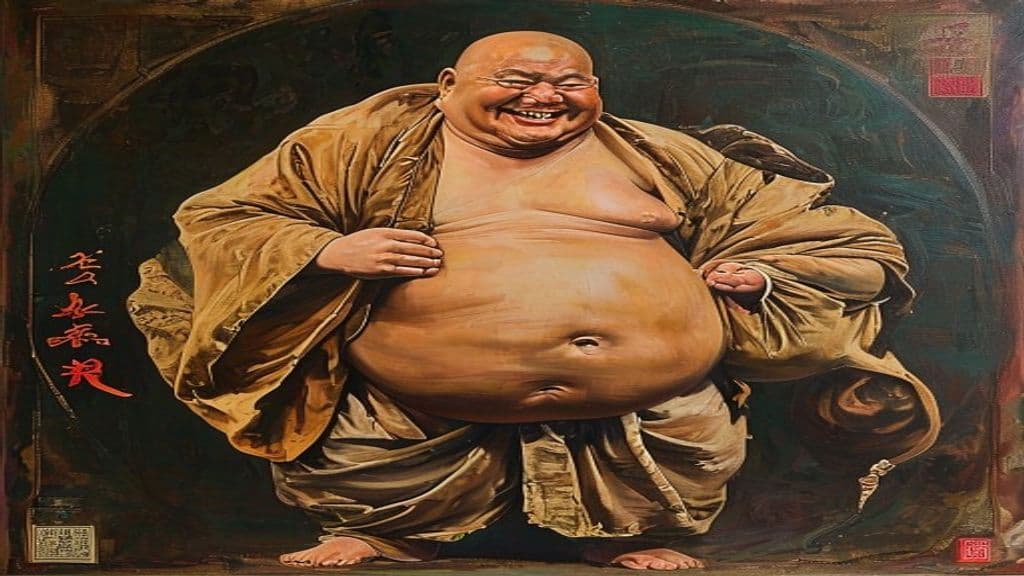
Budai is the nickname of the historical Chinese monk Qieci (契此), a jovial, sack-carrying mendicant whose persona was incorporated into Chan (Zen) Buddhist popular practice and often identified with the future Buddha Maitreya. He functions in tradition as a folkloric saint-monk and pedagogical symbol of abundance, contentment, and accessible awakening rather than as an abstract hostile spirit.

Buddha (Siddhartha Gautama)
Minor Spirit

Buddha (Siddhartha Gautama)

Siddhartha Gautama, most commonly called the Buddha, is presented in the provided sources as a historical wandering ascetic and religious teacher of the 6th–5th century BCE who attained nirvana, taught Dharma, and founded the monastic community (sangha) that became Buddhism.

Buddhas of the Ten Directions (Shífāng Fó)
Ancient

Buddhas of the Ten Directions (Shífāng Fó)

A doctrinal and devotional designation for the manifold buddhas present throughout the Buddhist cosmological field (the 'ten directions'), invoked as fully awakened presences and used as objects of contemplation and repentance in devotional practice.

Bull Demon King
Greater

Bull Demon King

A powerful literary spirit-king from the 16th-century Chinese novel Journey to the West; a sentient bull-form ruler who commands a grotto-domain, maintains a household (including consorts and a son), and fights both mortal and celestial opponents within the novel’s cosmology.

Byssa
Lesser

Byssa

Byssa (Ancient Greek: Βύσσα, Bússa) is a woman of Meropis on the island of Kos in Greek myth who, according to surviving summaries of a myth preserved in metamorphosis compilations, refused to honor Artemis, Athena, and Hermes and was punished by being transformed into a bird.

Bönpo Lu (local mountain spirits)
Lesser

Bönpo Lu (local mountain spirits)

A research label for local mountain-associated spirits situated in Himalayan/Tibetan ritual worlds; the term as presented is not documented in detail in the supplied sources. The available materials place such landscape spirits within a broader Bön and Tibetan Buddhist milieu where mountains and local non-human agents are engaged through offerings and ritual specialists.

Chakravarti
Primordial

Chakravarti

An ideal universal ruler in Indian historiography and religion, holding supreme power over various geographical regions. (Note: - Power tier: Should be "Primordial" -> Incorrect; a Primordial entity would have cosmic powers. Revisit and assign a more fitting power tier based on abilities (e.g., Greater or Ancient). - Origin )

Chang'e
Ancient

Chang'e

Chang'e (嫦娥), originally attested as Heng'e and linked to the older name Chang Xi, is the female lunar immortal of Chinese myth who resides in the Moon Palace (廣寒宮). Best known from the elixir-of-immortality tale in which she ascends to the Moon and is accompanied there by the Jade Rabbit, she functions across religious and literary contexts as a lunar goddess/immortal and a poetic symbol of solitude and longing.

Chenghuangshen (City God)
Greater

Chenghuangshen (City God)

Chenghuangshen (城隍神), commonly called the City God, is a tutelary deity in Chinese folk religion tied to a specific settlement. Historically associated with a city's walls and moat, the deity functions as protector of local affairs and as a local official in the postmortem ordering of souls for that place.