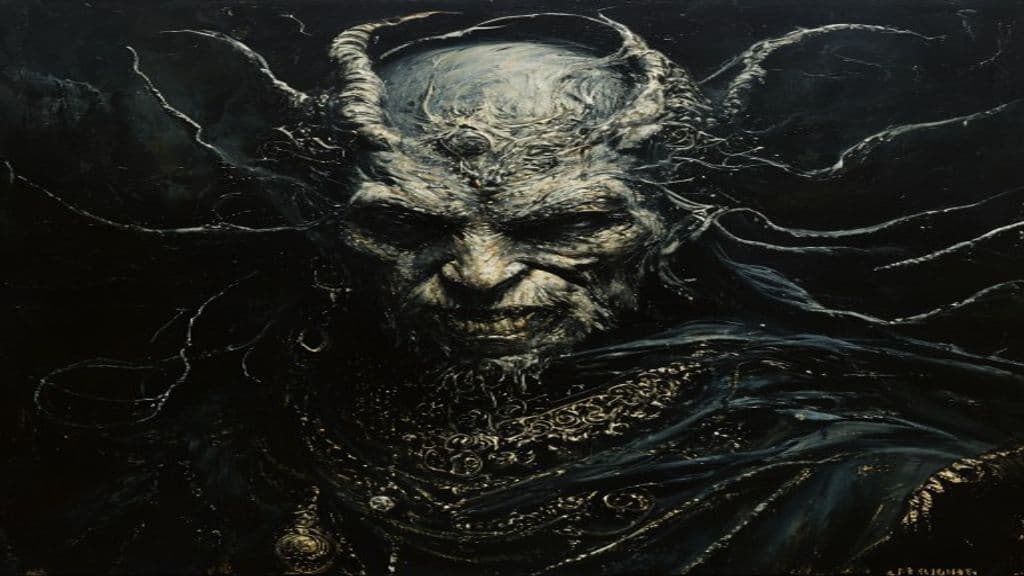
Tibetan Supernatural Beings

40 documented Tibetan supernatural beings from the Evil Eye grimoire, including 12 lesser and 11 greater in power tier.

Amoghapāśa
Lesser

Amoghapāśa

Amoghapāśa is recorded in the supplied sources as a named manifestation or form of the bodhisattva Avalokiteśvara/Lokeśvara attested in Mahāyāna and Vajrayāna contexts. The evidence in the provided material is archival and bibliographic (sūtra/dhāraṇī/maṇḍala filenames and database entries) rather than descriptive narrative or doctrinal exposition.

Amoghasiddhi
Ancient

Amoghasiddhi

Amoghasiddhi is one of the Five Tathāgatas (Five Wisdom Buddhas) in Mahayana and Vajrayana/Esoteric Buddhism, representing the Karma family and the quality of "unfailing accomplishment". He functions as an archetypal, protective, and contemplative buddha-body within tantric mandalas, presiding over the northern quarter and invoked in mantras and ritual iconography.

Arunachal macaque (Macaca munzala)
Minor Spirit

Arunachal macaque (Macaca munzala)

A biological species of high‑altitude macaque native to the Eastern Himalaya, treated in the sources as a natural history and conservation subject rather than a supernatural being. It is a compact, brown, short‑tailed macaque found in deep montane forests of Arunachal Pradesh, Bhutan and adjacent China, and is considered endangered.

Asura
Greater

Asura

Asura (Sanskrit: असुर) are a class of supernatural beings in Indian religious traditions. In Hinduism they are described as power-seeking beings related to, and often oppositional toward, the Deva; in Buddhist cosmology they form a demigod/titan class characterized by passions such as wrath and envy. Individual asura figures (notably the asura Svarbhānu) appear in myths that produce the eclipse-entities Rahu and Ketu.

Beyul Guardian Spirits
Greater

Beyul Guardian Spirits

Place‑bound guardian spirits associated with beyul (Tibetan sBas yul), the concealed or hidden valleys of the Himalayas and Tibetan plateau. They function as protectors and gatekeepers of these sacred, fortress‑like lands and are integrated into Nyingma treasure (terton) traditions and local Himalayan ritual practice.

Bhairava
Ancient

Bhairava

Bhairava is a fierce Shaivite deity and tantric figure—an intense manifestation of Shiva—worshipped across Hindu and Vajrayāna Buddhist traditions as executor of divine punishment, guardian of sacred sites, and a tantric teacher/meditational yidam.

Bhaisajyaguru
Primordial

Bhaisajyaguru

Bhaisajyaguru (Bhaiṣajya‑guru; Medicine Buddha) is a Mahāyāna buddha associated with healing, medicine, and a pure land called Vaiḍūryanirbhāsa (Pure Lapis Lazuli). He functions as a therapeutic savior whose remedies operate through the "medicine of his teachings," vows, devotional practice, and radiance associated with lapis‑lazuli light.

Bhīṣmagarjitasvararāja
Ancient

Bhīṣmagarjitasvararāja

Bhīṣmagarjitasvararāja is attested in the provided sources as an ancient buddha named in the Lotus Sūtra. The Sanskrit compound of the name emphasizes majestic or imposing sound and sovereignty.

Black wolf
Minor Spirit

Black wolf

A melanistic colour variant of the gray wolf (Canis lupus) documented in zoological and regional observational sources. The term is used both for living black-coated wolves—whose coloration is now known to trace to a dog-origin mutation in some populations—and as a modern cultural label (titles, team names, etc.). The provided sources do not document a discrete supernatural being called “Black Wolf.”

Bönpo Lu (local mountain spirits)
Lesser

Bönpo Lu (local mountain spirits)

A research label for local mountain-associated spirits situated in Himalayan/Tibetan ritual worlds; the term as presented is not documented in detail in the supplied sources. The available materials place such landscape spirits within a broader Bön and Tibetan Buddhist milieu where mountains and local non-human agents are engaged through offerings and ritual specialists.

Dayan Deerh
Ancient

Dayan Deerh

Dayan Deerh (also Dayan Degereki) is a locally venerated shamanic and protective divinity of Khövsgöl Province, Mongolia, associated with fertility (granting cattle and children), shamanic patronage, and communal protection. His cult occupies a syncretic position between indigenous shamanism and Tibetan Buddhist (Yellow) practice and is centered around sites such as Tsagaannuur, a cave shrine near the Russia–Mongolia border, and communities around Lake Khövsgöl.

Five Tathāgatas
Lesser

Five Tathāgatas

A canonical group of five principal celestial Buddhas in Mahāyāna and Vajrayāna Buddhism, treated as inseparable co-equals and used as meditative foci and mandalic deities in tantric initiation and practice.

Gautama Buddha (Siddhartha Gautama)
Ancient

Gautama Buddha (Siddhartha Gautama)

Siddhartha Gautama, most commonly called the Buddha, is presented in the supplied sources as a historical awakened teacher who founded Buddhism by attaining nirvana and teaching a monastic path. His life narrative—birth in Lumbini, renunciation, enlightenment at Bodh Gaya, teaching across the Indo‑Gangetic Plain, and parinirvana at Kushinagar—serves as the canonical model and institutional origin for Buddhist doctrine and the sangha.

Green Tara
Ancient

Green Tara

Green Tara (Tārā, Ārya Tārā, Jetsün Dölma) is a central female buddha/bodhisattva figure in Mahāyāna and especially Vajrayāna Buddhism, venerated as a liberator who grants swift assistance, removes obstacles, and functions as a meditation deity (yidam) embodied in green form.

Hungry Spirit of Mahāmāyā
Lesser

Hungry Spirit of Mahāmāyā

A proposed label for a 'hungry spirit' (preta) associated with the name Mahāmāyā mentioned in some modern queries; the supplied sources do not document any such named entity. The materials provided only place the general notion of postmortem experiential states within Tibetan bardo literature and do not describe a Mahāmāyā preta.

Jhākri
Lesser

Jhākri

Jhākri is the Nepali term for a shamanic practitioner or diviner found among several Himalayan ethnic groups (notably Tamang, Gurung, Magar) and in adjacent Indian regions (Sikkim, West Bengal). In the documented sources Jhākri are human ritual specialists who may act as channels or mediums (dhaamee) for Hindu gods or goddesses to provide answers and solutions to devotees.

King Gesar
Lesser

King Gesar

Central figure in the Tibetan epic, embodying bravery, wisdom, and spiritual power. (Note: * Power tier should be Primordial (cosmic level) given King Gesar's embodiment of bravery, wisdom, and spiritual power, which suggests a higher plane of existence. * The origin story is missing entire)

Kinnara
Minor Spirit

Kinnara

A benevolent, part-human and part-bird entity from Tibetan tradition associated with music and protection. (Note: - Power tier: Primordial (due to its association with Hindu and Buddhist mythology) - Appearance: The exact description isn't provided, but it's mentioned that they are part human and part bird; more )

Lha
Greater

Lha

Lha is a Tibetan term used in Buddhist and related Himalayan contexts to denote local or regional deities and divine presences that have been incorporated into the ritual and popular religion of Tibet and neighbouring areas. The category overlaps with indigenous spirits and classical Buddhist beings (devas, yakshas) and functions within ritual life as objects of veneration, territorial sacralization, and protective or beneficent cult practice.

Lākhe
Lesser

Lākhe

Lākhe (Nepal Bhasa: लाखे, lā-khé) is a type of demon in Newar (Kathmandu Valley) folklore. Lākhe appear as ferocious masked figures in public festival performances; some named Lākhe, notably Majipa Lakhey, are ritually worshipped and function as civic protectors during festivals such as Yenya (Indra Jatra) and Gunla.

Mahavidya (the Ten Great Wisdoms)
Ancient

Mahavidya (the Ten Great Wisdoms)

The Mahavidya (Sanskrit: Mahāvidyā, "Great Wisdoms") are a canonical group of ten distinct goddesses or facets of the Divine Mother in post‑Puranic Shakta/Tantric traditions. They function as salvific, often paradoxical modes of Adi Parashakti (variously Mahākālī or Tripura Sundarī) and are central to Tantric sādhanā, yogini worship, and cross‑currents with Shaiva, Vaiṣṇava and Vajrayāna Buddhist practices.

Mahāsthāmaprāpta
Greater

Mahāsthāmaprāpta

Mahāsthāmaprāpta is a Mahāyāna bodhisattva associated with the Pure Land devotional tradition, commonly represented alongside Amitābha and Avalokiteśvara. His name is glossed in sources as 'arrival of the great strength' or 'one who has attained great power' and he is understood as embodying or representing the power of wisdom.

Mara (Tagin)
Lesser

Mara (Tagin)

Mara (also rendered Mra or Mura) is an ethnonym for a human subgroup of the Tagin (Na) peoples of Arunachal Pradesh, India. Attested sources describe the Mara as inhabitants of Limeking in Upper Subansiri (just south of Taksing), with cultural ties to the indigenous Donyi Polo religion and considerable Tibetan Buddhist influence; the supplied corpus contains no documentation of a supernatural being named Mara within Tagin belief.

Phurba (kīla) spirits / Phurba (kīla)
Greater

Phurba (kīla) spirits / Phurba (kīla)

The phurba (Tibetan) or kīla (Sanskrit) is principally a three‑sided ritual stake/knife used in Indo‑Tibetan Vajrayāna and Bön ritual repertoires as the implement through which hostile or disruptive spiritual forces are bound, restrained, or transformed. Sources describe the instrument as embodying the transformative, wrathful power associated with the meditational deity Vajrakīlaya.

Rainbow Body (Tibetan tradition)
Primordial

Rainbow Body (Tibetan tradition)

In the Tibetan Buddhist tradition, the Rainbow Body is a level of realization where the physical body transmutes into light, indicating profound spiritual attainment. (Note: 1. Remove Primordial power tier as it's not supported by the source material, which doesn't indicate a cosmic or deity-level power. 2. Add more specific information about the Rainbow Body phenomenon a)

Ro-langs
Lesser

Ro-langs

A Tibetan folkloric animate corpse — a dead body reanimated by ritual or an evil spirit that moves among the living. Accounts emphasize corpse-like rigidity, inability to bend joints or speak, and two main origin types: tantric (raised to serve a practitioner) and demonic (occupied by an evil spirit that may infect others).

Sagaan Ubgen (White Old Man)
Greater

Sagaan Ubgen (White Old Man)

Sagaan Ubgen (Tsagaan Ubgen / Tsagan Evgen) is an elder male guardian figure in Mongolian and Buryat shamanic and syncretic Buddhist contexts associated with longevity, fertility, wealth, and prosperity. He appears as a kindly white-bearded old man in ritual performance (tsam/cham), where he enacts renewal and blessing, and has been adapted into Tibetan cham repertoires.

Samantabhadra
Ancient

Samantabhadra

Samantabhadra is a sacred name used across Indian-origin traditions. In Mahāyāna Buddhism it denotes a major bodhisattva associated with practice, vows, and the transfer of merit; in Tibetan Buddhism the name (Tibetan: Kuntu Zangpo) is also used for an Adi‑Buddha or primordial principle in Dzogchen contexts; separately, Samantabhadra is the name of a historical second‑century Digambara Jain monk and author of works such as the Ratnakaranda Gaurav.

Shadakshari Lokeshvara
Minor Spirit

Shadakshari Lokeshvara

A particular four-armed manifestation of the bodhisattva Avalokiteśvara associated with compassion and represented as lord of the six realms of existence. In museum and catalogue contexts this form is linked closely to the six-syllable mantra om mani padme hum and to seed-syllable imagery (hrih) in devotional hangings and portable art.

Thousand-Armed Thousand-Eyed Avalokiteśvara
Greater

Thousand-Armed Thousand-Eyed Avalokiteśvara

A specific manifestation (emanation) of the bodhisattva Avalokiteśvara associated with Great Compassion (mahākaruṇā), described in modern references as a form emphasizing vast perceptual and active capacity through many arms (noted in sources as having a thousand arms) and presented across Mahayana and Vajrayana traditions in diverse cultural iconographies.

Tibetan Mountain Spirit (Lu / Srin)
Lesser

Tibetan Mountain Spirit (Lu / Srin)

Lu (klu) and srin (srin / srin sngon) are classes of local mountain, earth, and water-associated spirits in Tibetan cosmology. They function as site deities, ancestral/household spirits, and ambiguous local powers that may be beneficent or dangerous depending on ritual relations; tantric adepts in Buddhist tradition are recorded as subjugating or oath-binding them into protector roles.

Tibetan Rakshasa (Dämo / Takma)
Lesser

Tibetan Rakshasa (Dämo / Takma)

Rakshasa (Sanskrit: rākṣasa) in the supplied materials appears as a class of malevolent non‑human beings — rendered in English as “demons” or “ogres” — known from South Asian epic literature and referenced in Himalayan/Tibetan geographic and popular materials. The sources do not provide a single, systematic Tibetan doctrinal account; instead rakshasas appear across epic narrative (e.g., Ravana) and place‑names (e.g., Lake Rākṣasatāla / Rakshastal), suggesting their presence in a shared South Asian–Himalayan imagination as antagonistic beings associated with danger and certain locales.

Vairocana
Primordial

Vairocana

A principal cosmic Buddha in Mahayana and Vajrayana Buddhism identified with the Dharmakāya (Dharma-body) of all Buddhas; portrayed in sutric literature as an all-pervasive, illuminating principle whose body contains innumerable world-systems and who functions as the source or universal principle from which other buddhas emanate.

Vajrapāṇi
Greater

Vajrapāṇi

Vajrapāṇi is a bodhisattva in Buddhist textual and iconographic traditions who personifies and protects the Buddha’s power. Appearing in early Mahāyāna and some Theravāda texts and in wide-ranging artistic forms (including Greco-Buddhist Gandhāran renderings), he functions as a Dharmapāla, a companion to the historical Buddha, and a tantric yidam associated with the vajra and the seed syllable hūṃ.

White Tara
Greater

White Tara

White Tara (Skt. Sītā Tārā; Tib. Jetsün Dölma) is a principal form of the bodhisattva/buddha Tara in Mahāyāna and Vajrayāna Buddhism, venerated as an enlightened female meditation deity associated with long life, healing, and the pacification of disease and defilement. She is invoked in mandala visualization, mantra recitation, and initiation/empowerment practices.

Wrathful Deities
Greater

Wrathful Deities

In Mahayana and especially Vajrayana Buddhism, wrathful deities are fierce or wrathful forms (Tibetan: trowo; Sanskrit: krodha) of enlightened Buddhas, Bodhisattvas, or Devas. They function as protectors and transformative meditational yidams whose terrifying imagery is a skillful means (upaya) to remove obstacles, protect the Dharma, and transform afflictive emotions into wisdom.

Yeti
Lesser

Yeti

A Himalayan legendary apelike humanoid—large, hairy, bipedal—embedded in pre‑Buddhist and local Himalayan folklore and later incorporated into Tibetan Buddhist classificatory schemes; it is variably described in local terms as a 'man‑bear' or 'wild man' and has been reinterpreted in modern popular culture as the 'Abominable Snowman.'

Zanam Zindé
Ancient

Zanam Zindé

Mythical king of Tibet, the 16th Tsenpo in Tibetan mythology. (Note: 1. The power tier should be Greater, not Ancient (Ancient is deity-level), given the described abilities imply significant authority but not necessarily cosmic in scope. 2. The origin story section sh)

Ādi‑Buddha (tradition)
Primordial

Ādi‑Buddha (tradition)

The Ādi‑Buddha is a tantric Mahāyāna concept of the primordial or 'first' Buddha that functions as the dharmakāya or ground of awakened mind. In Tibetan traditions it is variously personified (e.g., Samantabhadra, Vajradhāra, or the Kalachakra figure) and is principally a doctrinal and meditative focus rather than a theistic creator god.

Ākāśagarbha
Greater

Ākāśagarbha

A Mahāyāna bodhisattva personifying the element of space (ākāśa) revered across Chinese, Japanese, Korean and Tibetan esoteric traditions as a treasury of boundless wisdom; traditionally invoked by dhāraṇī, mantra and visualization practices—most famously in the Gumonjihō—for memory, learning, purification and the fulfillment of requests.