Siberian Supernatural Beings

34 documented Siberian supernatural beings from the Evil Eye grimoire, including 10 lesser and 9 greater in power tier.

Abaasy
Lesser

Abaasy

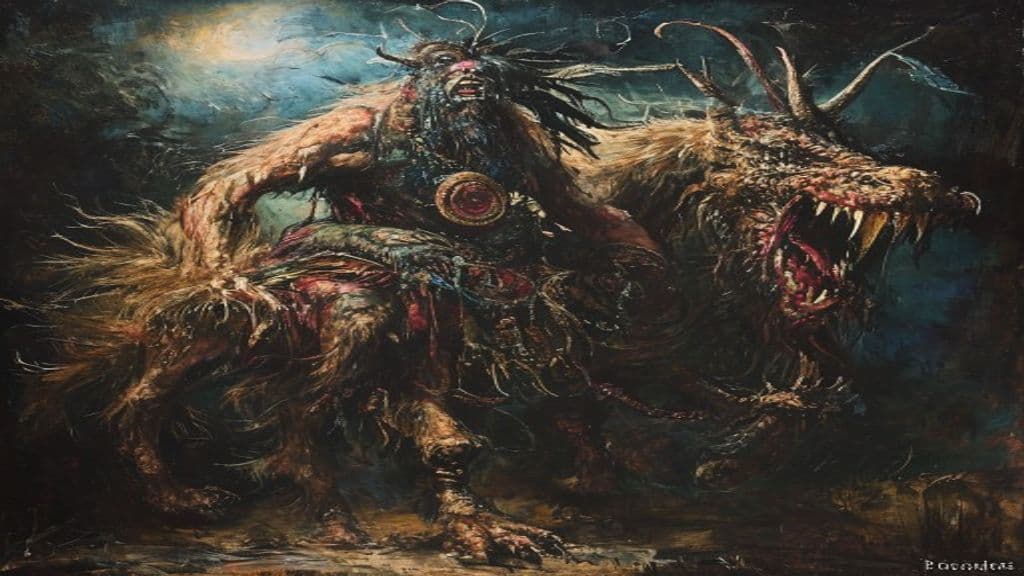
Abaasy (Abaahy, Abasy; Yakut: Абаасы, Abaası) are beings of the Sakha (Yakut) underworld, depicted in sources as destructive underworld spirits or demons associated with the long deceased. They inhabit the lower cosmic layer, serve an underworld ruler, are blamed for disease and madness, and may be appeased by blood sacrifice.
Aiy (Aiy-auk)
Lesser

Aiy (Aiy-auk)

Aiy (also rendered Aiy-auk) is a name mentioned in relation to Siberian contexts in the queryer's sources, but the provided documents do not contain usable folkloric descriptions or ethnographic data about the entity. This entry records what the supplied materials do and do not establish and points to the research gap.

Ak Ana
Primordial

Ak Ana

Ak Ana (also Ağ Ana, Ak Ene) is the primordial water-mother of Turkic and some Siberian (Khanty, Mansi) traditions: a holy maternal creator principle associated with the pre-earth expanse of water, fertility of the land, and the threshold to the spirit world.

Ama (Mother of Waters)
Minor Spirit

Ama (Mother of Waters)

No documentation for a Siberian supernatural figure called 'Ama' or 'Mother of Waters' was found in the supplied sources. The reviewed materials either list unrelated senses of the string 'Ama' or are unrelated recordings titled 'AMA.'

Buga
Ancient

Buga

Buga (BUGA) is identified in the consulted sources as an Evenki (Evenk) sky or heaven god, rendered in brief tertiary references as the Evenki 'god of the heaven' and labelled by one popular summary as the 'Evenki Supreme God.' Available documentation in the provided set is fragmentary and supplies no detailed myths, rituals, or iconography for Buga.

Burkut
Ancient

Burkut

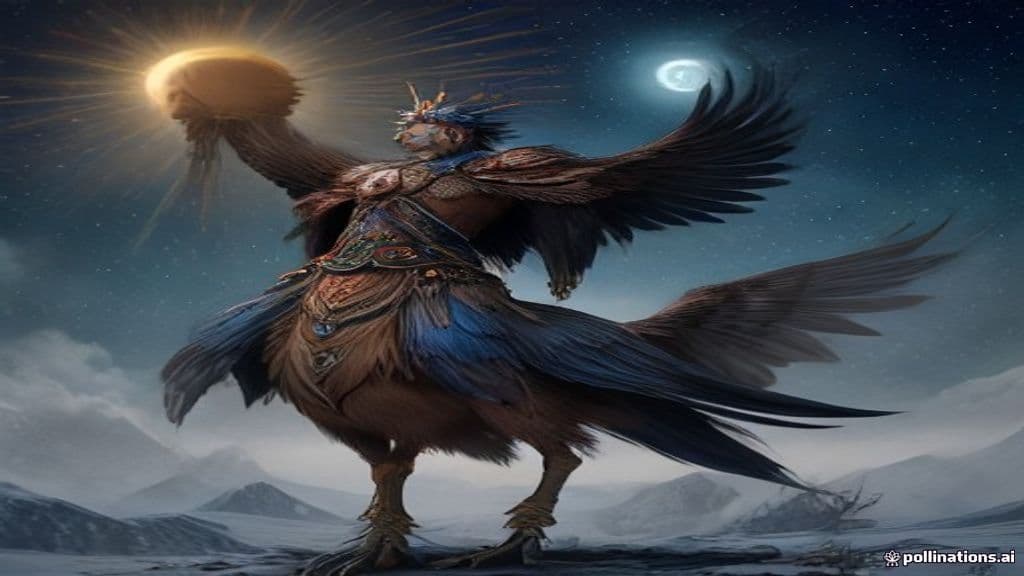
Burkut (also Bürküt, Merküt) is a sacred eagle figure in Turkic mythic cosmology associated with the sun, rulership, and protective authority. Treated as an emblematic or quasi-divine bird rather than a mundane animal, it appears in shamanic rites, world-tree iconography, folk performance, and modern heraldic motifs.

Burut
Minor Spirit

Burut

Burut (also attested as a clan name Burutia in some modern mentions) is documented in the supplied sources not as a supernatural being but as a social/lineage name attested in Central Asian ethnographic records (Kirghiz / Khakassian contexts). The provided corpus contains no evidence identifying Burut or 'Burutia' as an Assamese folk spirit, nor does it record myths, powers, or rituals for such an entity.

Chud
Ancient

Chud

The Chud (Russian: Чудь) are an ancient, mythic people in Russian and several Finno‑Ugric oral traditions. Presented as a pre‑modern population, they appear in legends as a displaced, assimilated, or subterranean society whose disappearance and former condition help explain features of landscape and cosmology in regional folklore.

Dayak Bahau
Lesser

Dayak Bahau

Dayak Bahau (Bahau, Kayan Mekam) is an ethnic / sub-ethnic group of the Apo Kayan (Apokayan) family in Borneo, documented in sources as inhabitants of parts of East Kalimantan (notably West Kutai Regency) with living ritual traditions such as Hudoq and locally specific practices like Apang Aruq. The supplied materials do not describe a supernatural being named 'Dayak Bahau.'

Erkliğ Han
Greater

Erkliğ Han

Erkliğ Han is a Turkic–Altai celestial lord associated with space, stars, meteorites (falling stars), and the planet Venus. Traditionally titled a Han (ruler), he is described in source material as responsible for visible stellar phenomena, linked in some lists with virility and read as a martial symbol by analogy to his action at sunrise.

Golden Woman (Zolotaya baba / Zlata baba)
Lesser

Golden Woman (Zolotaya baba / Zlata baba)

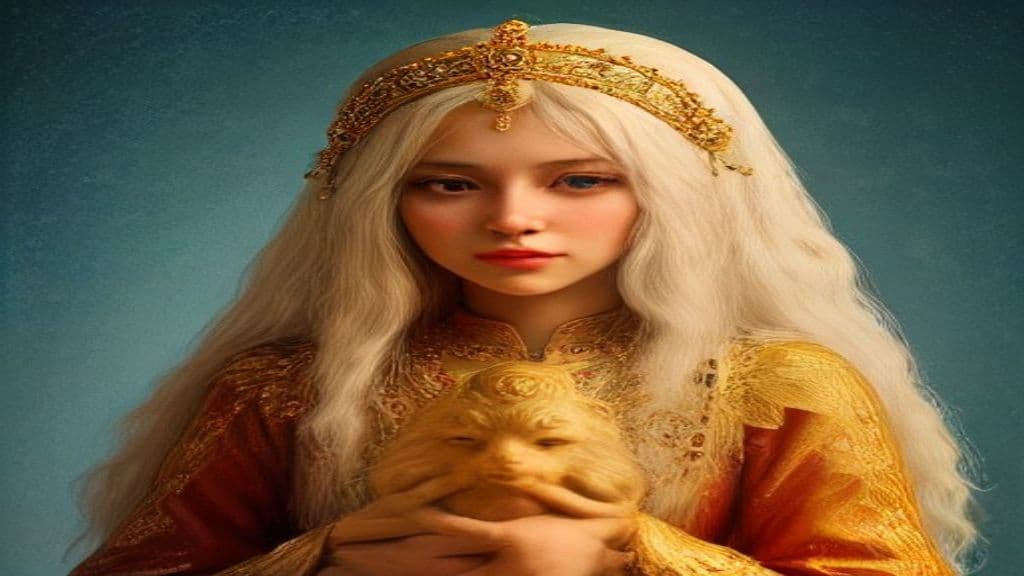
A prominent sacred image attested in early modern European accounts of northeastern Europe / northwestern Siberia, described as a large female-form idol or a rock resembling an old woman. Recorded functions include obligatory offerings by passersby and, in some reports, use as an oracle or in local sorcery.

Goose Wife
Lesser

Goose Wife

A bird‑woman figure from Inuit and other Arctic oral traditions who alternates between human and avian form by removing or donning a feathered skin; she may become a human wife when her skin is taken and later return to the bird realm by reclaiming or fashioning feathers.

Hasinaw-uk-kamuy
Greater

Hasinaw-uk-kamuy

Hasinaw-uk-kamuy is an Ainu kamuy (deity/spirit) associated with the hunt, hunting tools and success in subsistence activities; she is invoked by hunters and fishermen and is also associated in sources with aid in childbearing.

Hortdan
Lesser

Hortdan

A Turkic folkloric figure denoting a troubled soul of the dead that rises from the grave; in older accounts a mournful grave-apparition, and in later popular retellings sometimes recast as a vampire- or zombie-like undead.

Izhma (forest spirit)
Minor Spirit

Izhma (forest spirit)

Izhma is a putative name sometimes discussed in secondary sources in relation to the Izhma River and the Izhma Komi people, but the provided materials contain no primary folkloric attestations describing an entity named Izhma as a forest spirit. References to spirits and landscape beings exist in the regional cultural context, but an Izhma spirit is not documented in the supplied sources.

Kamuy
Greater

Kamuy

Kamuy are spiritual or divine beings in Ainu mythology; the term denotes supernatural entities composed of or possessing spiritual energy and is applied widely to personified deities, animal and natural spirits, and powerful qualities. They interact with humans through prayers, songs (yukar), offerings, and formal reciprocal rituals such as the iomante (bear-sending).

Kamuy-huci
Greater

Kamuy-huci

Kamuy-huci is the Ainu kamuy (spirit) of the household hearth, serving as guardian of the home, keeper of the gateway between humans and other kamuy, judge of domestic affairs, and instructor of household ritual knowledge. She is a central, resident spirit who never leaves the hearth and whose welfare depends on the continual care and purity of the domestic fire.

Kara Su ("Black Water" spirit)
Lesser

Kara Su ("Black Water" spirit)

No attested information for an entity called Kara Su or “Black Water” spirit appears in the supplied sources. The corpus contains only general material on Siberian shamanic practice that provides contextual background about spirit-relationships but does not mention Kara Su, its attributes, or associated rites.

Karash Han
Minor Spirit

Karash Han

A name attested in modern popular compilations as “Karash Han, the god of darkness.” The provided research corpus contains no independent traditional ethnographic description of a deity called Karash Han; the only well-attested traditional underworld figure in the set is the Turkic Erlik (Erlik Khan).

Kayra
Primordial

Kayra

Kayra (also Kaira; Old Turkic: 𐰴𐰖𐰺𐰀) is the supreme creator-being in Turkic mythic cosmology. Presented as the originative power who orders the world, plants the tree of life (Ulukayın), and directs fate from the seventeenth heaven, Kayra appears in some accounts as a non-human, liminal creator and a parent of other divine figures.

Ke'let
Greater

Ke'let

Ke'let (singular ke'le) are a category of hostile spirit-beings in Chukchi tradition that can denote cannibalistic giants/ogres, personifications of disease and death, or (in some uses) spirits summoned by shamans. A regional variant near the Pacific is called Re'kkenit (singular Re'kken), with distinctive local features.

Kichwa-Lamista tradition
Minor Spirit

Kichwa-Lamista tradition

The Kichwa-Lamista tradition refers to the cultural, linguistic, ritual, and spiritual lifeways of the Kichwa-speaking people of Lamas (San Martín Region, Peru). Their worldview combines Catholic practice with indigenous shamanic practices, is deeply embedded in forest-based subsistence (healing, farming, fishing, hunting), and preserves specialist esoteric registers and ritual knowledge within community life.

Kubai (Kübey)
Greater

Kubai (Kübey)

Kubai (Turkish: Kübey) is a maternal birth and child-protecting figure in Turkic mythology. Traditionally described as a daughter of Kayra who lives in the Ulukayın (world tree) and draws life-water (Bengisu), she bestows souls, gives healing milk to newborns, eases birth pains, and guards infants until key developmental milestones.

Sagaan Ubgen (White Old Man)
Greater

Sagaan Ubgen (White Old Man)

Sagaan Ubgen (Tsagaan Ubgen / Tsagan Evgen) is an elder male guardian figure in Mongolian and Buryat shamanic and syncretic Buddhist contexts associated with longevity, fertility, wealth, and prosperity. He appears as a kindly white-bearded old man in ritual performance (tsam/cham), where he enacts renewal and blessing, and has been adapted into Tibetan cham repertoires.

Silap Inua
Primordial

Silap Inua

A pervasive Inuit cosmological principle—often called Sila—understood as breath/spirit, the animating medium of life, and the force of sky, wind, and weather. It is generally formless and impersonal, functions as the source or category for certain shamanic powers and helping spirits, and shows regional variations in depiction and emphasis.

Su İyesi
Lesser

Su İyesi

Su İyesi is a Turkic water spirit — a localized guardian (iye) of bodies of water such as rivers, lakes, ponds and springs. It appears in male and female personifications (Su Ana, Su Ata) and is associated with both beneficent functions (bringing rain) and dangerous actions (drownings, floods, wrecks) when offended.

Ulu Toyon
Minor Spirit

Ulu Toyon

The provided source does not present Ulu Toyon directly; it instead documents Tygyn Darkhan, a legendary Yakut (Sakha) hero and chief of the Kangalas ulus called 'the king of the Yakuts.' Whether Ulu Toyon is a title, alternative name, or distinct entity related to Tygyn Darkhan is not attested in the cited material.

Uumarnituq and Aakulujjuusi
Ancient

Uumarnituq and Aakulujjuusi

Uumarnituq and Aakulujjuusi are the pair of first human parents in a corpus of Inuit unipkaaqtuat (origin tales). In overlapping Netsilik, Iglulingmiut, Natsilingmiut, Cumberland Sound and Greenlandic variants they re‑populate the earth after a pre‑historical destruction and act as progenitors whose actions (including performance of magic songs called irinaliuti) explain childbirth, gender transformation in specific tellings, and certain social conditions in particular variants.

Velikiy Poloz (The Great Snake)
Greater

Velikiy Poloz (The Great Snake)

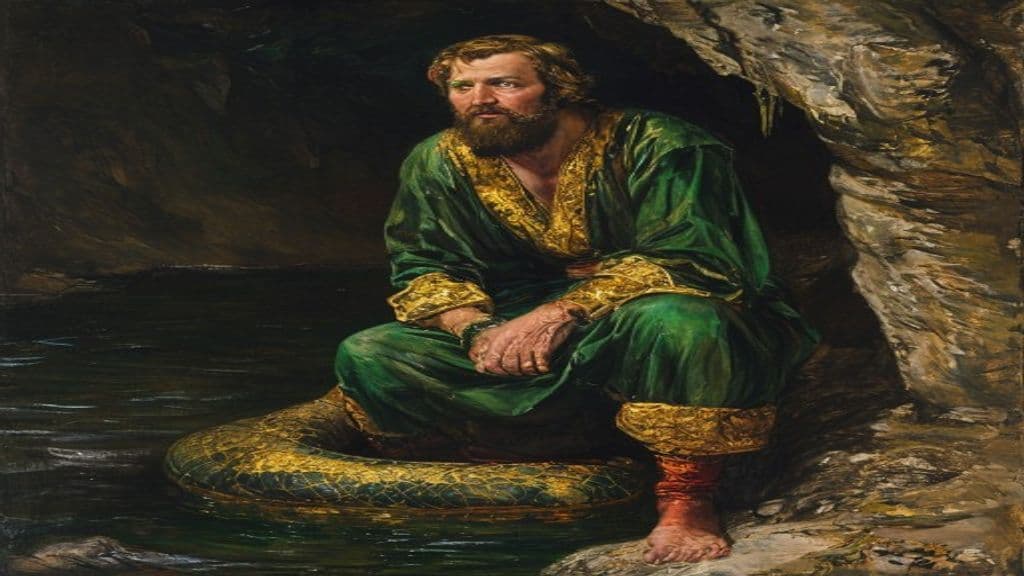
A powerful snake-ruler from Ural miners' folklore as rendered in Pavel Bazhov's skaz "The Great Snake." Poloz is depicted as the proprietor and guardian of underground gold who can reveal or withdraw veins and who reacts to human behavior around claims.

World Tree
Ancient

World Tree

A widespread mythic motif of a colossal, central tree that structures the cosmos by linking heaven, earth, and the underworld and, in some traditions, organizing the cardinal directions and sources of life or wisdom.

Yer Tanrı
Ancient

Yer Tanrı

Yer Tanrı (also attested Yertengri, Certenger) is the earth-as-divinity in Turkish and broader Altaic folk belief, an immanent Earth or World power associated with fertility, nourishment, household protection (via related household spirit Yereh), and transformative healing. It functions alongside the sky deity (Gök Tengri) as the terrestrial counterpart and is variably represented as a cosmic principle, a feminine Mother‑Earth figure, and as linked household guardian manifestations.

Yer iyesi
Lesser

Yer iyesi

Yer iyesi is the familiar spirit or guardian of the earth and specific territory in Turkic/Tatar and related Tengrism traditions. Conceived as a land-attached iye, it appears in male and female forms (Yer Ata and Yer Ana) and is associated with protection of land and, in the female aspect, fertility and primordial presence at cosmogony.

Zasa Mergen Baatar
Greater

Zasa Mergen Baatar

Zasa Mergen Baatar is a figure in Buryat mythology described in sources as the 'tornado-god' and as the eldest son of the sky-deity Han Hormasta; he is attested riding a brown hawk-horse and is described in a marriage episode in which he wrestled the three sons of Atai Ulaan and thereby obtained Sesegen Nogoon as his bride.

Zduhać (Zduhac)
Lesser

Zduhać (Zduhac)

Zduhać (also spelled Zduhac) appears in a modern compiled list of flying mythological creatures; the supplied sources provide no ethnographic description, rituals, or origin accounts. Aside from its listing among flying and weather-affecting beings, available excerpts contain only general material on shamanism that does not mention Zduhać specifically.