Buddhist Supernatural Beings

258 documented Buddhist supernatural beings from the Evil Eye grimoire, including 82 greater and 69 ancient in power tier.

page 4 of 5

Nāgas
Greater

Nāgas

Nāgas are serpent-associated nonhuman beings in South Asian religious literature. In the Mahāvaṃsa and related scholarship they appear as salient 'snake-beings' who act as otherworldly agents, sometimes depicted as devoted worshippers of the Buddha and elsewhere as hoarders of relics.
Oni
Greater

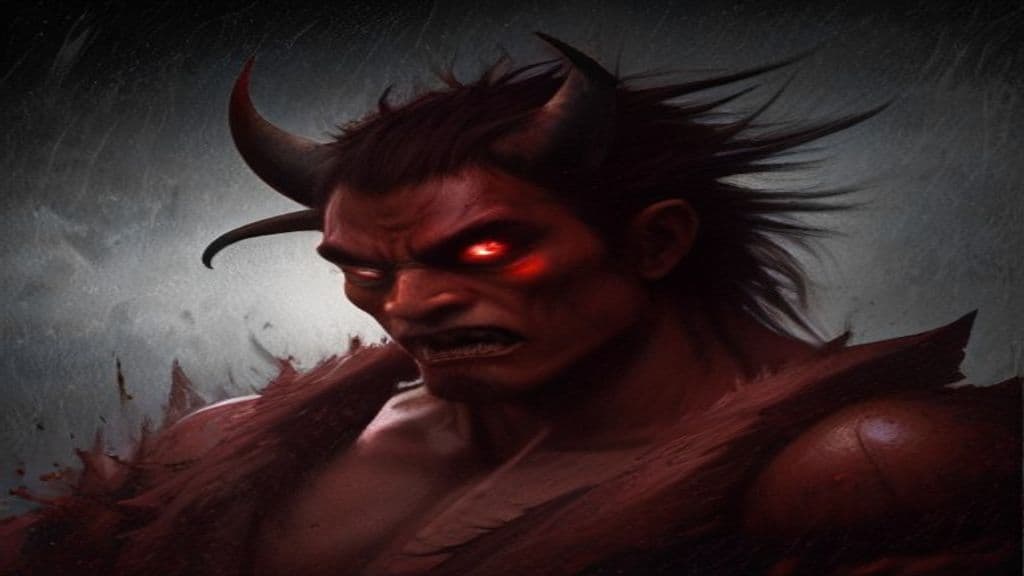
Oni

Powerful supernatural beings of Japanese folklore — associated with misfortune, disease, and the punishment of sinners in hell. Fearsome, often depicted as guardians of the underworld.

Onryō
Greater

Onryō

Onryō are vengeful spirits in Japanese folklore who return after death to redress wrongs suffered in life by harming the living; they are commonly portrayed in literature and film as wronged individuals—frequently women—whose resentment manifests as lethal retribution, and in some accounts as causing wider calamities.

Otake Dainichi Nyorai
Primordial

Otake Dainichi Nyorai

Japanese manifestation of Vairocana, embodying wisdom and compassion. (Note: 1. Power tier should be Ancient (deity-level) rather than Primordial (cosmic). 2. Appearance should be noted as "Not specified" due to lack of source material. 3. Abilities, sensory_cues, weaknesses, )

Phi Krasue
Lesser

Phi Krasue

Phi Krasue is a nocturnal female spirit in Thai/Isan popular belief, depicted as a floating disembodied woman's head with trailing internal organs. Situated within Buddhist-syncretic and local animist worldviews, it functions as a visceral, boundary-enforcing specter in village and regional folklore and continues to appear in contemporary media.

Phra Malai
Primordial

Phra Malai

A legendary Buddhist monk and Arhat from Sri Lanka, revered in Thai Theravada Buddhism for his enlightenment and understanding of Buddhist teachings. (Note: 1. Power tier: Lowered to Ancient (deity-level) as Arhat is typically considered a being with great spiritual power, but not necessarily on a cosmic scale. 2. Abilities: Clarified that Phra Malai's ab)

Phurba (kīla) spirits / Phurba (kīla)
Greater

Phurba (kīla) spirits / Phurba (kīla)

The phurba (Tibetan) or kīla (Sanskrit) is principally a three‑sided ritual stake/knife used in Indo‑Tibetan Vajrayāna and Bön ritual repertoires as the implement through which hostile or disruptive spiritual forces are bound, restrained, or transformed. Sources describe the instrument as embodying the transformative, wrathful power associated with the meditational deity Vajrakīlaya.

Pishacha
Lesser

Pishacha

Flesh-eating spirits of Hindu mythology that haunt cremation grounds and are associated with disease, madness, and possession. The lowest class of demon in the Vedic hierarchy.

Preta (Hungry Ghost)
Lesser

Preta (Hungry Ghost)

A post-mortem supernatural being associated with extreme, unremitting hunger and thirst. In Hindu usage the Sanskrit term can mean a deceased person, while Buddhist traditions develop the category into a distinct realm of hungry spirits whose condition illustrates karmic consequences for demeritorious action.

Prithvi
Ancient

Prithvi

Prithvi (Sanskrit: पृथ्वी, Pṛthvī) is the Vedic personification of the Earth, a maternal cosmic principle who is simultaneously the physical ground, the universal Mother who nourishes life, and manifest matter participating in cosmogony. She is commonly paired with the sky (Dyaus) as the dyadic parents Dyavaprithivi and later becomes identified or merged with Bhūmi in classical Hindu and Buddhist contexts.

Pāṇḍara-vāsinī (White-Robed Guanyin / Baiyi Guanyin)
Ancient

Pāṇḍara-vāsinī (White-Robed Guanyin / Baiyi Guanyin)

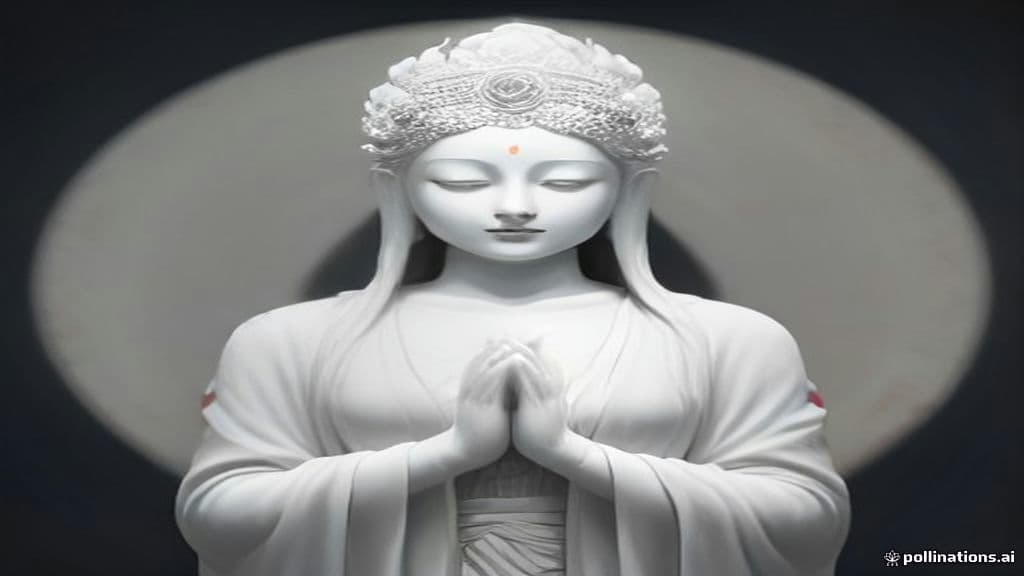
A figured form of Avalokiteśvara/Guanyin known in East Asian Mahāyāna devotional and mandalic contexts as the White-Robed (Baiyi) Guanyin. Associated in sources with garbhadhātu (womb) mandala inclusion and maternal/childbirth devotional functions rather than as a hostile spirit.

Radha
Ancient

Radha

Radha (Sanskrit: Rādhā; also Rādhikā) is a central goddess-figure in Vaishnavite devotional literature, portrayed as the chief gopi and beloved of Krishna and in many traditions as the supreme feminine principle (an aspect of Lakshmi or the hlādini-śakti). She is a paradigmatic emblem of devotional love (bhakti) whose prominence grows in medieval and early modern Bhakti poetry.

Rainbow Body (Tibetan tradition)
Primordial

Rainbow Body (Tibetan tradition)

In the Tibetan Buddhist tradition, the Rainbow Body is a level of realization where the physical body transmutes into light, indicating profound spiritual attainment. (Note: 1. Remove Primordial power tier as it's not supported by the source material, which doesn't indicate a cosmic or deity-level power. 2. Add more specific information about the Rainbow Body phenomenon a)

Rakshasa (Buddhist contexts)
Lesser

Rakshasa (Buddhist contexts)

A rakshasa is commonly referred to in secondary literature as a type of malevolent supernatural being found in South and East Asian traditions; the supplied sources do not contain direct, sourced descriptions of rakshasa within Buddhist canonical texts. Available excerpts only allow cautious placement of rakshasa within the broader English-language category of 'demon' as that term is discussed in the provided materials.

Rakshasa (Himalayan variants)
Greater

Rakshasa (Himalayan variants)

A Himalayan reception of the pan-Indian rakshasa motif: hostile or disruptive non‑human beings known from Sanskrit epic and Puranic literature, here noted where Himalayan sources and discussions intersect with the broader epic tradition. The supplied sources do not document distinct, well‑attested Himalayan folklore variants; the entry therefore presents primarily the epic/legendary profile as transmitted into Himalayan contexts in general references.

Riri Yaka (Riri Deviyo)
Lesser

Riri Yaka (Riri Deviyo)

Riri Yaka (also rendered Riri Deviyo) is a named entity in Sri Lankan folkloric queries but the supplied source excerpts do not provide descriptive material about its nature, appearance, powers, or cult. Available excerpts reference Sri Lankan ritual calendar items (Esala Poya, Vassa) but do not substantively discuss Riri Yaka.

Ro-langs
Lesser

Ro-langs

A Tibetan folkloric animate corpse — a dead body reanimated by ritual or an evil spirit that moves among the living. Accounts emphasize corpse-like rigidity, inability to bend joints or speak, and two main origin types: tantric (raised to serve a practitioner) and demonic (occupied by an evil spirit that may infect others).

Rāhula
Primordial

Rāhula

Historical figure and son of the Buddha Siddhartha Gautama, illustrating key Buddhist concepts through his story. (Note: 1. Remove "Primordial" power tier, as it implies cosmic-level abilities, which is not supported by source material. 2. Add sensory cues and weaknesses consistent with Rāhula's character in Buddhist te)

Sacca-kiriyā (Hindu tradition)
Primordial

Sacca-kiriyā (Hindu tradition)

A solemn declaration or utterance in Hindu and Buddhist traditions with truth-empowering properties. (Note: 1. Remove "Primordial" power tier - while the Sacca-kiriyā has significant effects, they are described as depending on truthfulness, not necessarily being equivalent to cosmic-level powers. 2. Add sen)

Sadāparibhūta (Bodhisattva Never Despising)
Minor Spirit

Sadāparibhūta (Bodhisattva Never Despising)

A bodhisattva figure appearing in Chapter 20 of the Lotus Sūtra whose defining practice is never to despise any person and to declare the future Buddhahood of those he meets; his story functions as an avadāna illustrating karmic consequences and the soteriological efficacy of reverent faith in the Lotus teaching.

Samantabhadra
Ancient

Samantabhadra

Samantabhadra is a sacred name used across Indian-origin traditions. In Mahāyāna Buddhism it denotes a major bodhisattva associated with practice, vows, and the transfer of merit; in Tibetan Buddhism the name (Tibetan: Kuntu Zangpo) is also used for an Adi‑Buddha or primordial principle in Dzogchen contexts; separately, Samantabhadra is the name of a historical second‑century Digambara Jain monk and author of works such as the Ratnakaranda Gaurav.

Samantabhadri
Primordial

Samantabhadri

Samantabhadri is a female Buddha and dakini in the Vajrayana (Tibetan) Buddhist tradition, described as the primordial Mother Buddha and the dharmakaya dakini aspect of the Trikaya. She functions doctrinally as the feminine, non-dual ground of awakening and is identified as the consort and counterpart of Samantabhadra.

Sanki Daigongen (三鬼大権現)
Lesser

Sanki Daigongen (三鬼大権現)

Sanki Daigongen (三鬼大権現) is a named gongen — a syncretic manifestation concept in Japanese religion — cited in festival and shrine listings for Itsukushima (Miyajima). The name literally combines characters for "three" (三), "oni/spirits" (鬼), and "great gongen" (大権現), placing the figure within the cultural category of a buddha manifesting as a local kami in the shinbutsu‑shūgō framework.

Saraca asoca (Buddhist tradition)
Primordial

Saraca asoca (Buddhist tradition)

A sacred tree in Buddhist tradition, significant to Buddha's life and the Four Trees of his life. (Note: - Power tier should be Ancient (associated with Buddha's life and significant spiritual value) - Origin story needs more detail or context from source material - Appearance is not supported by source )

Saraswati
Ancient

Saraswati

Saraswati is a principal Hindu goddess (Devi) whose portfolio encompasses knowledge, learning, speech (vac), the arts (poetry, music), language and purification. Originating in Vedic literature as a river goddess, later texts reframe her primarily as the divine personification and patron of speech, learning and creative/intellectual order; she is venerated across Hindu, Buddhist and Jain contexts.

Sarvanīvaraṇaviṣkambhin
Greater

Sarvanīvaraṇaviṣkambhin

A Mahāyāna bodhisattva named for his function of removing or blocking 'all hindrances' (sarva-nivāraṇa). He appears in Mahāyāna sutras and tantric texts and is invoked in mantra and dhāraṇī practice to purify obstacles to meditation and spiritual attainment.

Saṃjñā (Pali: Saññā)
Minor Spirit

Saṃjñā (Pali: Saññā)

Saṃjñā (Pali saññā) is a technical term in Buddhist psychology naming the mental factor of perception/recognition responsible for noting or 'making a mark' on objects so they can be identified again. It is classed among the five aggregates and as a universal mental factor in Abhidharma analyses and is a primary object of contemplative investigation in vipassanā practice.

Seng-gut Deities
Primordial

Seng-gut Deities

Central figures in the Korean shamanic narrative that shape creation and development of the world. (Note: - Power tier: Primordial claims are not supported as no evidence indicates they have cosmic powers (only creation and intervention in human affairs). - Abilities: The description is too broad; specifi)

Shadakshari Lokeshvara
Minor Spirit

Shadakshari Lokeshvara

A particular four-armed manifestation of the bodhisattva Avalokiteśvara associated with compassion and represented as lord of the six realms of existence. In museum and catalogue contexts this form is linked closely to the six-syllable mantra om mani padme hum and to seed-syllable imagery (hrih) in devotional hangings and portable art.

Shakini
Greater

Shakini

Tantric goddess presiding over the Vishuddha (throat) chakra — she governs speech, truth, and poison. Disturbed, she afflicts voice and communication; correctly propitiated, she grants eloquence, clairvoyance, and the power to speak what cannot be unsaid.

Shakyamuni Buddha
Ancient

Shakyamuni Buddha

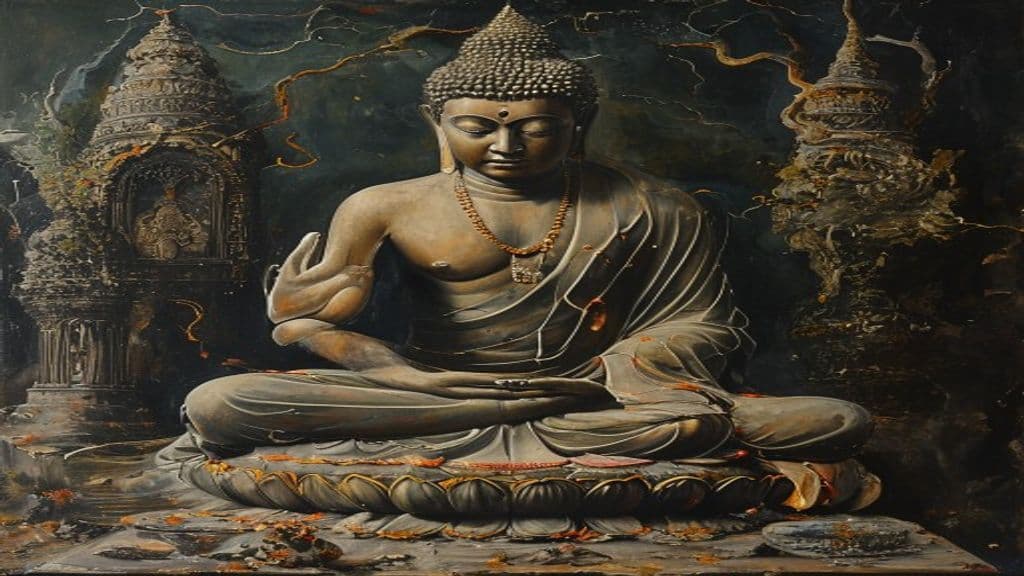
Shakyamuni Buddha (Siddhartha Gautama) is the historical founder of Buddhism, an awakened teacher (muni) of the Shakya clan whose life—birth in Lumbini, awakening at Bodh Gaya, teaching across the Indo-Gangetic plain, and parinirvāṇa at Kushinagar—forms the foundation of Buddhist doctrine, monastic order, and much devotional practice. In material religion he is also represented in images and texts that serve as loci of sacred presence and ritual efficacy.

Singha Sartha Aju
Primordial

Singha Sartha Aju

Previous incarnation of the Buddha, associated with Newar society in Kathmandu, Nepal. (Note: * Power tier should be Greater (powerful regional) instead of Primordial (cosmic), as it's associated with Newar society and not cosmic powers. * Description in Source 1 does not mention adaptability,)

Six‑Eared Macaque
Greater

Six‑Eared Macaque

A supernatural primate antagonist from the Ming‑dynasty novel Journey to the West who impersonates Sun Wukong. Described in the text as one of four special "spiritual primates," he demonstrates near‑omniscience and perfect mimicry of the Monkey King until revealed and subdued by the Buddha.

Skanda
Ancient

Skanda

Skanda is a prominent South Asian divine figure: in Hinduism he is the war-god son of Śiva and Pārvatī (also worshipped regionally as Murugan, Kartikeya, Subramanya) and the eponym of the large Skanda Purāṇa; in East Asian Mahāyāna Buddhism he appears as a monastery guardian known as Weituo (韋馱) or Idaten (韋駄天).

Solosmasthana (Buddhist tradition)
Local Spirit

Solosmasthana (Buddhist tradition)

In the Buddhist tradition of Sri Lanka, Solosmasthana refers to 16 sacred places believed to have been visited by Gautama Buddha. (Note: 1. Power tier should be "Greater" or possibly even "Ancient" considering they are considered important religious locations and associated with deity-level events (Buddha's visits). 2. Origin story is )

Spirit Turtle (靈龜 / 霊亀)
Lesser

Spirit Turtle (靈龜 / 霊亀)

An East Asian sacred turtle category originating in Chinese textual tradition and adopted into Japanese and Korean cultural contexts; the spirit turtle denotes extreme longevity and auspicious sacred status and appears chiefly as a symbolic or cultic emblem rather than an explicitly hostile supernatural agent.

Straw Millionaire
Primordial

Straw Millionaire

A supernatural entity representing moral lessons in frugality and cleverness, appearing in Japanese Buddhist folk tales to illustrate the power of resourcefulness and determination. (Note: - Power tier: Lower to Greater (The Straw Millionaire's abilities are more in line with a regional entity, given its focus on moral lessons and resourcefulness rather than cosmic power.) - Origin stor)

Sumedha
Primordial

Sumedha

Previous life of Gotama Buddha, demonstrating selflessness and spiritual dedication. (Note: - Power tier should be Ancient (deity-level), not Primordial (cosmic). Sumedha's abilities are remarkable but not cosmic in scope. - The article doesn't mention any sensory cues, wards, or weaknesses )

Sun Wukong
Greater

Sun Wukong

Sun Wukong (孫悟空, Sūn Wùkōng), popularly the "Monkey King," is a mythic non-human sapient figure from Chinese literary and religious tradition best known from the 16th‑century novel Journey to the West. Portrayed as an exceptional stone-born monkey who acquires supernatural powers through Taoist practice, he is alternately a rebellious trickster who challenges Heaven and, after punishment, a protector and disciple who accompanies the monk Tang Sanzang on a Buddhist pilgrimage.

Svāhā
Greater

Svāhā

Svāhā is both the Vedic oblation-formula uttered when offering into the sacred fire and a personified goddess associated with sacrificial power (śakti) and the fire-god Agni. As formula she functions as the consummatory invocation in yajña and as a mantric ending in Mahāyāna Buddhist dhāraṇīs; as goddess she is described in Upanishadic and Purāṇic materials as the power that makes oblation effective and as a divine consort and mother in various narratives.

Takṣaka
Greater

Takṣaka

Takṣaka is a named serpent- or dragon-figure in South Asian epic, Purāṇic, and Buddhist literature. He functions as a serpent-king among the nāgas, an actor in Mahābhārata cycle episodes (notably the death of King Parīkṣit and the subsequent sarpa-yajña), and appears in Buddhist Avataṃsaka commentary as a Dragon King who praises the Buddha.

Tamonten
Lesser

Tamonten

Tamonten is a label attested in available sources in two different classificatory contexts: one places the name within the cosmology of Buddhist devas (the Cāturmahārājakāyika, the realm associated with the Four Heavenly Kings), and a separate modern dataset entry links the same label to the category "tengu in Japan." The supplied materials are fragmentary and do not provide a unified account of Tamonten as an individual figure.

Tang Sanzang
Lesser

Tang Sanzang

Tang Sanzang is the fictionalized monk-protagonist of the 16th-century novel Journey to the West, modelled on the historical Xuanzang. In the novel he is a devout, compassionate pilgrim sent from Chang'an to Tianzhu to retrieve the Tripiṭaka; portrayed as a reincarnation of the Golden Cicada, he is protected by supernatural disciples and is ultimately elevated to the Buddha of Sandalwood Merit.

Tanuki
Lesser

Tanuki

The raccoon-dog spirit of Japanese folklore — a cheerful trickster and master of shape-shifting, less dangerous than the kitsune but far more mischievous. Famous for leaves transformed into money.

Tengu
Greater

Tengu

Proud, warrior-like mountain spirits of Japan, associated with martial arts, pride, and the wild mountains. Neither fully good nor evil — they test and train warriors and monks, but punish the arrogant.

Tennin
Lesser

Tennin

Tennin (天人) are celestial, person-like beings in the Japanese Buddhist framework who serve as heavenly attendants, dancers, and companions to Buddhas and bodhisattvas. The concept derives from an Indo-Chinese-Buddhist lineage (compare apsaras) and appears widely in Japanese religious art, Noh theater, and local narrative motifs such as the hagoromo (feather-robe) story.

Tentōki and Ryūtōki
Lesser

Tentōki and Ryūtōki

Tentōki (天燈鬼) and Ryūtōki (龍燈鬼) are small demon‑like attendant figures in Japanese Buddhist temple iconography. Typically shown as oni‑like beings carrying lanterns, they function as subjugated attendants who offer light to the Historical Buddha and symbolize the Shitennō’s power to repel evil.

The Great Renunciation
Minor Spirit

The Great Renunciation

A pivotal event in Buddhist tradition, marking Gautama Buddha's transition from a life of luxury to one of asceticism. (Note: 1. Power tier: Minor Spirit is incorrect; The Great Renunciation is not an entity with powers or behaviors, so it should be classified as none or Primordial (since it's a pivotal event). 2. Sensory cu)

The Sixteen Dreams of King Pasenadi
Primordial

The Sixteen Dreams of King Pasenadi

A series of sixteen disturbing dreams experienced by King Pasenadi, as interpreted by the Gautama Buddha in Buddhist literature. (Note: - Power tier should be Primordial=cosmic, but given no evidence of direct cosmic intervention or power beyond a mere interpretation, it may be more fitting as Ancient=deity-level (still high, but not )

Thepphanom
Primordial

Thepphanom

A devata in Buddhist tradition embodying the Añjali Mudrā hand gesture, symbolizing respect and devotion. (Note: - Power tier should be Minor Spirit, as Primordial implies a much higher level of power than embodying a symbolic gesture. - No physical description or appearance information is present in the source )

Thousand-Armed Thousand-Eyed Avalokiteśvara
Greater

Thousand-Armed Thousand-Eyed Avalokiteśvara

A specific manifestation (emanation) of the bodhisattva Avalokiteśvara associated with Great Compassion (mahākaruṇā), described in modern references as a form emphasizing vast perceptual and active capacity through many arms (noted in sources as having a thousand arms) and presented across Mahayana and Vajrayana traditions in diverse cultural iconographies.

Tibetan Mountain Spirit (Lu / Srin)
Lesser

Tibetan Mountain Spirit (Lu / Srin)

Lu (klu) and srin (srin / srin sngon) are classes of local mountain, earth, and water-associated spirits in Tibetan cosmology. They function as site deities, ancestral/household spirits, and ambiguous local powers that may be beneficent or dangerous depending on ritual relations; tantric adepts in Buddhist tradition are recorded as subjugating or oath-binding them into protector roles.

Trailokyavijaya
Primordial

Trailokyavijaya

Buddhist wrathful deity and manifestation of the bodhisattva Vajrapāṇi, associated with fierce power and protection. (Note: - Power tier: Trailokyavijaya is not described as Primordial in the source material. Given his association with Vajrapāṇi and being a Wisdom King, it would be more accurate to categorize him as Ancien)

Tārā
Ancient

Tārā

Tārā is a major female sacred figure in Mahāyāna and Vajrayāna Buddhism — variably described as a bodhisattva, a Buddha, a yidam (meditation deity), and a motherly saviouress who rescues beings from worldly and spiritual danger. She functions as both an object of devotion and a meditational realization, with prominent forms such as Green and White Tārā and a liturgical corpus centered on mantras and sadhana practice.

Ucchuṣma
Greater

Ucchuṣma

Ucchuṣma is presented in the cited sources as a Vidyārāja within Mahāyāna and Vajrayāna Buddhism. The available materials confirm the figure appears in ritual/liturgical contexts and that there exist ritual texts for a wrathful form of Ucchuṣma.

Uchchhishta Ganapati
Greater

Uchchhishta Ganapati

A Tantric vamachara manifestation of the Hindu god Ganesha (Ucchiṣṭa Gaṇapati) worshipped within the Uchchhishta Ganapatya sect; his cult centers on ritual impurity (uchchhishta) and Shakti‑Ganesha erotic iconography and is associated with both beneficent boons and six specific abhichara rites.

Vairocana
Primordial

Vairocana

A principal cosmic Buddha in Mahayana and Vajrayana Buddhism identified with the Dharmakāya (Dharma-body) of all Buddhas; portrayed in sutric literature as an all-pervasive, illuminating principle whose body contains innumerable world-systems and who functions as the source or universal principle from which other buddhas emanate.

Vajrapāṇi
Greater

Vajrapāṇi

Vajrapāṇi is a bodhisattva in Buddhist textual and iconographic traditions who personifies and protects the Buddha’s power. Appearing in early Mahāyāna and some Theravāda texts and in wide-ranging artistic forms (including Greco-Buddhist Gandhāran renderings), he functions as a Dharmapāla, a companion to the historical Buddha, and a tantric yidam associated with the vajra and the seed syllable hūṃ.

Vajrāmoghasamayasattva
Lesser

Vajrāmoghasamayasattva

Vajrāmoghasamayasattva is the name of a figure that appears as the subject of one or more paintings listed among the Cultural Properties of Japan for Nara Prefecture. The available source is an art-historical inventory entry and provides no doctrinal, iconographic, or ritual information about the figure.

Vamana
Primordial

Vamana

Avatar of Vishnu in Buddhist tradition, representing a physical manifestation or descent into the world. (Note: - Summary: The article should clarify that Vamana is an avatar of Vishnu primarily in Hindu tradition (not Buddhist), representing a divine descent into the world. - Power tier: Based on the source ma)