English Supernatural Beings

294 documented English supernatural beings from the Evil Eye grimoire, including 186 lesser and 54 minor spirit in power tier.

page 2 of 5

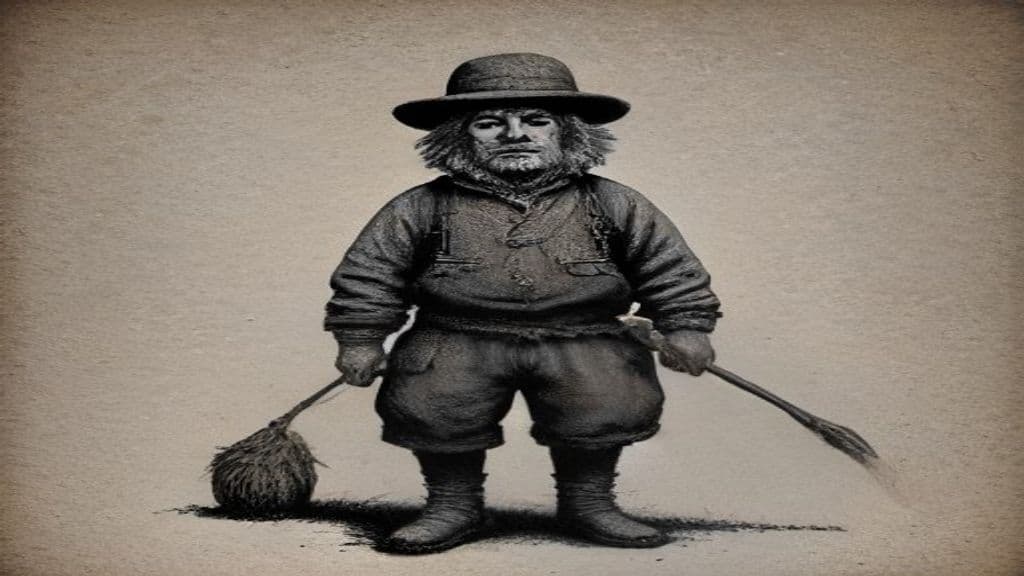
Bogeyman
Lesser

Bogeyman

A folkloric, non‑canonical monster figure invoked across cultures as a disciplinary device to frighten children into compliant behaviour; presented in sources as a flexible category rather than a single, systematized being and often used figuratively as a personification of terror.

Boggart
Lesser

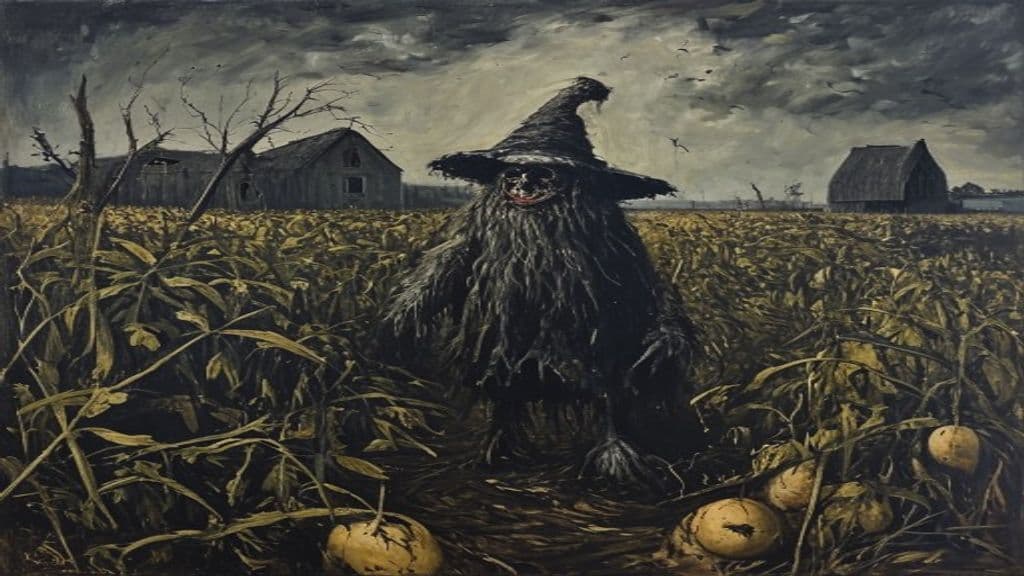
Boggart

A polyvalent supernatural being in north‑west English and adjacent dialect traditions, the boggart can be a household spirit attached to a family or dwelling or a localized landscape spirit tied to a particular place. Accounts vary widely by locality, recording mischievous, malicious, and sometimes frightening behaviours rather than a single fixed form.

Bogle
Lesser

Bogle

A Northumbrian, Cumbrian and Scots folkloric being reputed to perplex and frighten humans. Bogles are a polyvalent category in northern-British tradition, applied to scarecrows, household troublemakers and other uncanny creatures whose chief orientation is mischief rather than systematic harm.

Boobrie
Greater

Boobrie

A shapeshifting, water-associated supernatural creature from Scottish (particularly Argyllshire/west coast) tradition, the boobrie manifests as a gigantic water-bird, a colossal water-bull, a water-horse, or (rarely) a large blood‑sucking insect and is typically held to prey on livestock and otters in sea‑lochs and adjacent heathered ground.

Brag
Lesser

Brag

A Northumbrian mischievous shapeshifting being tied to ponds, hedges, lanes, and other liminal localities; it commonly appears as a horse or donkey to entice riders, then bucks them off into water or underbrush and flees, often laughing.

Bree
Minor Spirit

Bree

Bree is a proper name and toponym attested across multiple geographic and cultural referents (places in Belgium, France, Ireland, the Netherlands, South Africa) and as a personal and fictional name (including a village in J. R. R. Tolkien's Middle-earth). It is not presented in the supplied sources as a supernatural or folkloric being.

Brennius
Ancient

Brennius

Brennius is a legendary royal figure from medieval British historiography, best known from Geoffrey of Monmouth's Historia Regum Britanniae. Presented as a human king and conqueror, his narrative links British legendary genealogy with continental events—notably campaigns in Gaul and the (legendary) capture and rule of Rome.

British big cats
Lesser

British big cats

A modern folkloric and cryptozoological category in Britain referring to reported sightings of large non-native felines (panthers, pumas, lynx, 'black cats') across the United Kingdom; treated variously as escaped exotic animals, media-driven urban legend, and a continuation of older large-cat motifs in local tradition.

Brown Lady of Raynham Hall
Lesser

Brown Lady of Raynham Hall

A recurring house-ghost reported at Raynham Hall in Norfolk, England, traditionally identified with Dorothy Walpole and famed for a claimed 1936 photograph of a female apparition on the main staircase. Accounts range from 19th-century eyewitness reports to 20th-century photographic claims; the case has been subject to later re-examination and debate.

Brown Man of the Muirs
Lesser

Brown Man of the Muirs

A moorland guardian figure from Anglo-Scottish Border folklore. In a field account he appears as a solitary dwarf who reproves hunters and claims custodianship of upland animals; in later fairy-tale literature he appears as (or is related to) a tribe—the Brown Men of the Moors and Mountains—associated with stronger, more violent motifs and a compulsion-incantation.

Brownie
Lesser

Brownie

A household spirit from Scottish and related British traditions that performs nocturnal domestic labour in return for small offerings left by the hearth. Brownies are protective, place-tied domestic beings who work while humans sleep and will depart or become mischievous if offended.

Brunor
Lesser

Brunor

Brunor is a personal name applied to several human knights in medieval Arthurian romance, most notably a young knight nicknamed La Cote Mal Taillée (the 'badly cut coat') who arrives at King Arthur's court wearing his murdered father's bloodied surcoat and seeks to prove himself by deeds. The name functions as a narrative role within the Tristan/Arthurian cycles rather than as a supernatural being.

Brutus Greenshield
Minor Spirit

Brutus Greenshield

A legendary king of the Britons attested in Geoffrey of Monmouth's pseudo‑historical account and later reinterpreted in Elizabethan literature as a martial founder figure. In Geoffrey he is an otherwise unremarked dynastic successor; in sixteenth‑century sources he is magnified into a warrior who led an expedition to Hainaut.

Brutus of Troy
Lesser

Brutus of Troy

Brutus of Troy is a legendary ancestral founder-king in medieval British pseudo-history, presented as the eponymous progenitor of the Britons and first ruler/founder of Britain in narratives that link Britain to Trojan and, in some recensions, biblical genealogies. Best known from Geoffrey of Monmouth’s Historia Regum Britanniae and earlier mentions in the Historia Brittonum, the figure functions as a culture-ancestor and legitimizing founder rather than a supernatural being.

Bucca
Lesser

Bucca

A class of place‑bound supernatural beings attested in Cornish folklore, associated in surviving sources with coastal and mining landscapes and with local occupational culture; the surviving packet of sources is fragmentary and primarily cites an anthology excerpt (Mabel Quiller Couch).

Bugbear
Minor Spirit

Bugbear

A folkloric scare-figure historically invoked to frighten disobedient children, classed among boogeyman-type beings. Medieval descriptions in English sources portray it as a creepy, bear-like lurker in woods; modern popular culture and gaming have reimagined it as a large goblinoid monster.
Buttons (pantomime)
Lesser

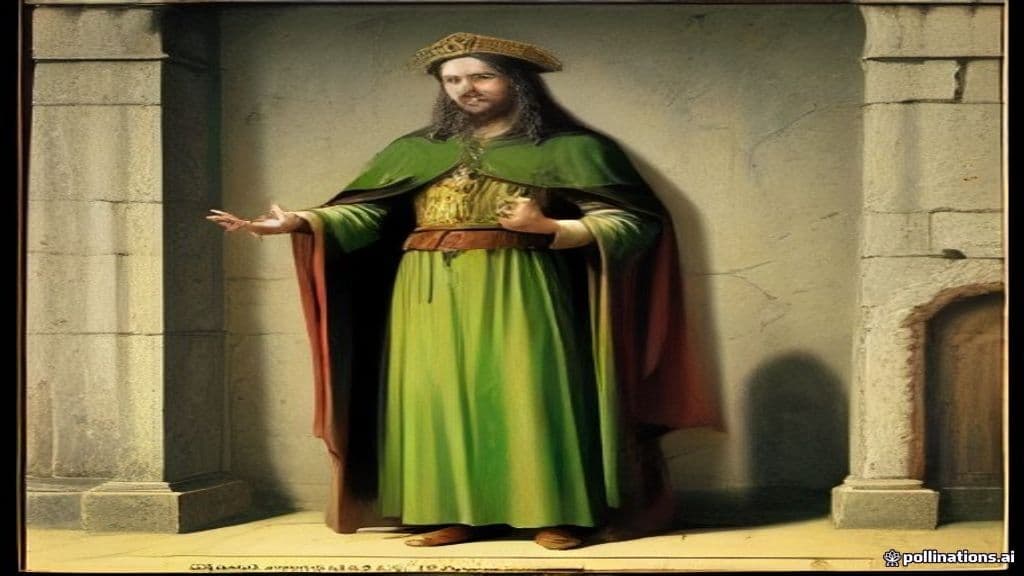
Buttons (pantomime)

Buttons is a stock theatrical character in British and Australian Cinderella pantomimes, typically a male household servant who helps Cinderella, expresses affection for her, and provides comic and emotional engagement with the audience. The role is conventional to stage pantomime practice rather than a supernatural being.
Böðvildr
Minor Spirit

Böðvildr

Böðvildr is a human princess of Germanic heroic legend, daughter of a king (Níðuðr / Niðhad / Niðung) whose fate is entwined with the smith Wayland (Völundr). In older poetic sources she is presented as a tragic figure—victim of the smith's revenge (murder of her kin and rape)—while later prose redactions (Þiðrekssaga) report that she bore Wayland a son (Viðga) and later married him.

Cador
Lesser

Cador

Cador (Latin Cadorius; early forms Cado, Cadwy) is a legendary aristocratic figure of the Arthurian and early British pseudo‑historical tradition, portrayed in medieval sources as a duke/earl/king and a military commander allied with King Arthur. His historicity is uncertain and debated by scholars; details derive from Geoffrey of Monmouth, later medieval poets (Layamon, Mannyng) and later genealogical interpretations.

Caelia
Minor Spirit

Caelia

Caelia is a literary name used by early modern and later authors for two distinct female figures: a fairy-queen in Richard Johnson's romance Tom a Lincoln who rules an island of women, and an allegorical personification of a heavenly, maternal spirit in Edmund Spenser's The Faerie Queene who rules the House of Holiness and aids the Redcrosse Knight. The name also appears in early modern song broadsides as a beloved figure and exists independently as a Roman gens name.

Calogrenant
Lesser

Calogrenant

Calogrenant is a human knight of the Round Table from medieval Arthurian romance. First attested in Chrétien de Troyes' Yvain as the teller of the episode of the magic spring in the forest of Brocéliande, he appears in various Old French, German, Welsh, and Middle English cycles with differing fates (defeat by Esclados in the fountain episode; death on the Grail Quest in Vulgate and Malory; a gender-transformation episode in Claris et Laris).

Cap-o'-Rushes
Lesser

Cap-o'-Rushes

Cap-o'-Rushes is the title and heroine of an English folktale collected by Joseph Jacobs. The story is classed among international folktale types (principally ATU 510B) and opens with the 'Love Like Salt' motif; it tells of a daughter who disguises herself in a garment of rushes, works as a kitchen maid, attends secret balls, causes recognition by hiding a ring in a dish, and engineers reconciliation by ordering a saltless wedding feast so her father remembers his earlier words.

Capys
Minor Spirit

Capys

Capys is a personal name in Greco‑Roman legendary history borne by several legendary human figures connected to the Trojan and early Roman genealogies. Bearers of the name appear as a king of Dardania, a Trojan who warned against bringing the wooden horse into Troy, and a mythic king of Alba Longa in Roman annalistic tradition; a later Victorian poet (Macaulay) renders a Capys figure as a prophetic elder.

Caradoc
Lesser

Caradoc

Caradoc is a semi-legendary heroic/ancestral figure from Welsh and Arthurian tradition, remembered in medieval genealogies and romances as a ruler of Gwent and as a Knight of the Round Table. He is treated in the sources as a human hero whose life is affected by wondrous events (enchantment, serpent-affliction, knightly tests) rather than as an independently supernatural being.

Caradocus (Karadawc)
Lesser

Caradocus (Karadawc)

Caradocus (Middle Welsh: Karadawc) is a legendary Cornish ruler attested in medieval pseudo‑histories, principally Geoffrey of Monmouth's Historia regum Britanniae, where he functions as a noble counselor, envoy, and peacemaker in the narrative linking Britain and Magnus Maximus. He is presented as a historical/legendary human figure rather than a supernatural being.

Catellus
Lesser

Catellus

Catellus (Welsh: Kadell map Geraint) is a legendary, pseudo‑historical king of the Britons attested in Geoffrey of Monmouth's Historia Regum Britanniae and in Welsh redactions (Brut y Brenhinedd). He functions as a dynastic/chronological figure used to order genealogies rather than as a supernatural being.

Catigern
Lesser

Catigern

Catigern is a legendary/historical early medieval British warrior-prince remembered chiefly for dying fighting the Saxons at the Battle of Epsford/Aylesford. He appears in medieval chronicles and genealogies (notably the Historia Brittonum and various Welsh pedigrees) as a son or kinsman within ruling lineages and is used in later tradition for dynastic legitimation and local topographical memory.

Catskin
Minor Spirit

Catskin

Catskin is the name/title of an English and related folk-tale heroine type (ATU 510B) who escapes an unwanted marriage by disguising herself in a catskin coat. The figure functions as a narrative motif: a noble-born girl reduced to servitude by wearing an animal-derived garment, secretly appearing at court in splendid dresses, and ultimately being recognized and restored.

Cauld Lad of Hylton
Lesser

Cauld Lad of Hylton

A localized North‑East English folk being tied to Hylton Castle, variously described as the ghost of a murdered stable boy or as a domestic brownie/elf/barghest; known for nighttime kitchen mischief, crying "I'm cauld," and being "laid" by the gift of clothing.

Caïssa
Minor Spirit

Caïssa

Caïssa is a literary personification and poetic invention associated with the game of chess, originating in Renaissance and later European poetry. Presented as a dryad- or nymph-like figure (Vida's Schacchia; Jones's Caïssa), she functions in literature and modern chess commentary as an emblematic patron or metaphor for luck and inspiration in the game rather than a claimed folk spirit.

Celtic Mythological Beings
Greater

Celtic Mythological Beings

A pantheon of supernatural entities from ancient Celtic mythology, associated with various aspects of nature and the cosmos. (Note: - Power tier: Reduce to Lesser (some Greater entities are mentioned, but overall Celtic mythological beings are more regional or local spirits) - Weaknesses: Add "Disruption of natural cycles" as a we)

Champ
Lesser

Champ

Champ (or Champy) is a named lake‑dwelling monster from regional Anglo‑American and Franco‑Canadian popular folklore associated with Lake Champlain. Presented in modern sources as a persistent local cryptid, Champ is documented through historical newspaper reports, eyewitness accounts, photographs, video, and occasional acoustic recordings, and functions as a tourism and identity emblem for communities around the lake.

Changeling
Lesser

Changeling

A changeling is a human-like substitute left by nonhuman beings (fairies, trolls, demons, etc.) after they abduct a human—most often an infant. Found throughout much of European folklore, the changeling functions as an uncanny domestic replacement whose presence explains sickness, developmental difference, or sudden loss.

Cherin
Minor Spirit

Cherin

Cherin is attested in medieval pseudo-history as a legendary king of the Britons in Geoffrey of Monmouth's Historia Regum Britanniae; later the string appears as a modern given name and surname in various secular contexts. The available sources record genealogical placement and modern name usages but do not present Cherin as a supernatural being.

Christmas elf
Lesser

Christmas elf

A modern English-language folkloric figure: a diminutive humanoid helper associated with Santa Claus, depicted as Santa's workshop workforce who assist in toy-making, reindeer care, and seasonal logistics. The figure is a syncretic, commercialized descendant of older household-spirit traditions (álfar, tomte/nisse, kobolds, brownies).

Church Grim
Lesser

Church Grim

A site-bound guardian spirit in English, Scottish and Nordic/Scandinavian folklore that watches over an individual Christian church and its churchyard, defending the consecrated ground from profanation and hostile spirits. Forms and origin accounts vary by region, including a large black dog in English tradition, the bound spirit of an animal (often a lamb) in Scandinavian accounts, and in some Scottish strands the spirit of the most recently buried person acting as a temporary watcher.

Cingris
Primordial

Cingris

Semi-historical and mythological Pharaoh in Celtic tradition. (Note: - Power tier: Lesser (based on being described as a "mythological Pharaoh" and not having deity-level abilities) - Abilities: Inconsistencies in draft article - should mention that no explicit descrip)

Claudas
Lesser

Claudas

Claudas is a literary, mortal king in Arthurian romance who functions as a hostile royal antagonist: a conqueror of neighboring realms (the Terre Deserte in the Berry), captor of heirs, and later defeated ruler whose family is partially assimilated into the chivalric order.

Cledaucus (Clydog)
Lesser

Cledaucus (Clydog)

Cledaucus (Welsh: Clydog) is a legendary/pseudo‑historical king of the Britons recorded in medieval regnal lists derived from Geoffrey of Monmouth and later redactions. He is attested only as a name within sequences of rulers — commonly placed between Eliud (predecessor) and Clotenus/Cletonus (successor) — and is not described with deeds, appearance, or supernatural attributes in the supplied sources.

Cleone
Minor Spirit

Cleone

Cleone is attested in the provided sources primarily as a feminine given name, a literary character/title (notably Robert Dodsley's 1758 tragedy), a subject of poetry (Henry Kendall), and a California place name. The supplied materials do not provide evidence of Cleone functioning as a folkloric supernatural being; a Wikipedia disambiguation line mentions a mythological Naiad named Cleone but no supporting primary or descriptive sources are present in the provided set.

Clyte
Minor Spirit

Clyte

Clyte is attested across the supplied materials primarily as a proper name and literary persona rather than a single, coherent supernatural being: appearances include poetic/mythic characters in literature, a historical personal name (born Clyte Cosper), online usernames/handles, and an alias reported in criminal/news contexts. No ritual lore or consistent folkloric powers or protections are documented in the provided sources.

Clṻd
Lesser

Clṻd

Clṻd (reconstructed Brittonic: Clṻd / Clọ:tā; Latin: Clōta) is a hypothesised, place-bound river-goddess inferred for the River Clyde basin. The figure is a scholarly reconstruction from hydronymy, regional archaeology (notably a 1967 tricephalic statue near the Clyde), and the widespread Celtic pattern of female water-deities; direct evidence of cult or rites is not preserved in the cited sources.

Coblyn (coblynau / coblynod)
Lesser

Coblyn (coblynau / coblynod)

A small, mine-associated Welsh spirit (plural coblynau or coblynod) that inhabits mines and quarries. Coblynau make peculiar knocking sounds used by miners to locate rich veins, imitate miners' work ineffectually while dressed in miner-like clothes, are generally considered helpful and lucky, but withdraw assistance if miners act greedily or are disrespectful.

Cocidius
Lesser

Cocidius

Cocidius is a Romano-British local deity attested in northern Britain (Hadrian's Wall corridor and Cumbria). Roman writers and inscriptions equate him with Mars and Silvanus; archaeological remains (inscriptions, carved figures, rock-face shrines) indicate a localized cult associated with martial and woodland functions.

Coel Hen
Ancient

Coel Hen

Coel Hen (Old Welsh: Coil, "Coel the Old") is a legendary ancestral-king and eponymous founder in medieval Welsh and Brittonic tradition, placed by genealogies in the Hen Ogledd (the Old North) in the late Roman / early post‑Roman period. He appears at the head of multiple royal pedigrees as progenitor of the Coeling and is later conflated in twelfth‑century pseudo‑histories with a Colchester/Helena strand linking him to Roman narratives.

Cofgod
Lesser

Cofgod

An Old English term attested as a gloss for the Roman penates, used to denote a household god or domestic spirit in Anglo-Saxon context. The concept is fragmentarily attested and reconstructed largely by analogy with Roman Penates and later household spirits such as kobolds, hobs, and brownies.

Coilus (Coel)
Lesser

Coilus (Coel)

Coilus (also rendered Coel or Coelus in Latinized forms) is a legendary king of the Britons presented in the medieval pseudo‑history tradition, most notably in Geoffrey of Monmouth's Historia Regum Britanniae. In those accounts he is a human dynastic ruler associated with Roman upbringing, peaceful relations with Rome, and succession within a Geoffreyian royal sequence leading to Lucius.

Colt Pixie
Lesser

Colt Pixie

A regional variety of pixie from Southern and South West English folklore (notably the New Forest and Dorset) that appears as a scruffy pale horse or pony and is said to lead travellers and livestock astray, often compared to a Will‑o'‑the‑wisp and associated with the trickster figure Puck.

Computer Warrior (Eagle comic)
Lesser

Computer Warrior (Eagle comic)

A fictional comic-strip character-type from the British Eagle comic (1985–1994): a human youth who, after access to a special activation code/device, can enter an alternate videogame realm called the Nightmare Zone and undertake game-based trials with real-world stakes. The role functions as a narrative champion/contestant and can be institutionalized within the strip's internal polity (e.g., the Computer Warlord).

Comus (Miltonic / Classical tradition)
Lesser

Comus (Miltonic / Classical tradition)

Comus is the personification of revelry and nocturnal dalliances in Greek antiquity and a later Renaissance/early modern dramatic tempter in John Milton's 1634 masque. In classical sources he appears as a minor Dionysian spirit associated with drinking-processions (komoi); Milton reimagines him as an embodied licentious figure who uses enchantment and temptation to test chastity.

Conan Meriadoc
Lesser

Conan Meriadoc

Conan Meriadoc is a legendary ancestral founder and early medieval royal leader credited in Welsh and Breton tradition with founding Brittany (Llydaw). Presented in medieval literary and genealogical sources as a historicized king or prince associated with Magnus Maximus/Macsen Wledig, he functions primarily as a dynastic progenitor and a figure in brittonic prophetic expectation rather than as a supernatural spirit.

Conomor
Minor Spirit

Conomor

Conomor is a mid-6th-century Breton/Cornish ruler who in historical sources appears as a violent, ambitious political actor and in later Breton hagiography and folklore becomes a stock villain—an excommunicated count/king accused of murdering rivals, wives and children and opposed by saints such as Samson and Gildas.

Cordelia of Britain
Lesser

Cordelia of Britain

Cordelia is a legendary British queen from the Matter of Britain (notably recounted in Geoffrey of Monmouth's tradition) remembered as the youngest daughter of King Leir who refuses flattering speech, goes into exile in Gaul, returns with an army to restore her father, rules as queen, and is ultimately captured and dies; later literary adaptations (notably Shakespeare's King Lear) rework these events for dramatic effect.

Corineus
Lesser

Corineus

Corineus is a legendary human culture-hero and founding ruler associated with Cornwall in medieval British pseudo-history. Presented most fully in Geoffrey of Monmouth’s accounts and later medieval redactions, he is famed as a prodigious warrior who wrestled and killed the chief giant (Gogmagog/Goemagog) and so secured Cornwall for Brutus’s settlers.

Cormoran
Lesser

Cormoran

Cormoran is a giant of Cornish folklore associated with St. Michael's Mount. In local tales he is credited etiologically with building the Mount and blamed for raiding cattle and people; he appears in chapbook versions of 'Jack the Giant Killer' and regional Cornish narratives such as the Tom the Tinkeard cycle.

Corn Spirit
Lesser

Corn Spirit

A vegetation or field spirit associated with cereal crops (especially maize/corn and grain) that embodies plant fertility, seasonal death-and-rebirth, and the continued productivity of fields. Appears in various forms across Indigenous North American and European peasant traditions and is sustained by ritual housing, vows, and harvest rites.

Cornish Mythological Entities
Lesser

Cornish Mythological Entities

In Cornish mythology, a collection of supernatural entities are found in folk traditions developed in Cornwall and other Celtic-speaking regions. These entities share characteristics with gods, goddesses, spirits, and lesser supernatural beings from Welsh and Breton mythologies. (Note: 1. Summary: The summary should mention that Cornish mythological entities are not a distinct category, but rather are similar to gods, goddesses, spirits, and lesser supernatural beings from other Cel)

Count Dracula
Greater

Count Dracula

Count Dracula is the undead Transylvanian nobleman and antagonist of Bram Stoker's 1897 novel Dracula; a centuries‑old vampire who feeds on blood, can create other vampires by biting, possesses learned occult knowledge, and relocates his predatory influence from his Carpathian castle into urban settings. Later popular adaptations (e.g., Castlevania) reframe him as a recurring Dark Lord whose periodic resurrections endanger successive ages.

Coventina
Lesser

Coventina

Coventina is a Romano-British water goddess attested at a single large votive spring complex (Coventina's Well) at Carrawburgh (Brocoliti/Procolitia) on Hadrian’s Wall. Archaeological evidence shows Roman-style altars, reliefs and large votive deposits indicating a localized cult in which the spring functioned as a focus for offerings and dedications.

Creiddylad
Minor Spirit

Creiddylad

Creiddylad is a named figure from early medieval Welsh narrative tradition, presented in Culhwch ac Olwen as a noblewoman of Arthur's court and daughter of King Lludd (Lludd Llaw Ereint). In the surviving tale she is the object of rivalry between two warriors whose annual May Day combat for her possession has been interpreted by later writers as a seasonal or 'May Queen' motif.