English Supernatural Beings

294 documented English supernatural beings from the Evil Eye grimoire, including 186 lesser and 54 minor spirit in power tier.

page 4 of 5

Grant
Lesser

Grant

The Grant (also attested as Gyant) is a creature attested in Gervase of Tilbury's Otia Imperialia (medieval Latin) described as a kind of demon resembling a yearling colt that runs through towns as a warning of fire. Later commentators have debated its identification, comparing it to horse-like bogies or suggesting it may reflect a hare omen, but the sole medieval description is equid-like and portentous.

Green Knight
Greater

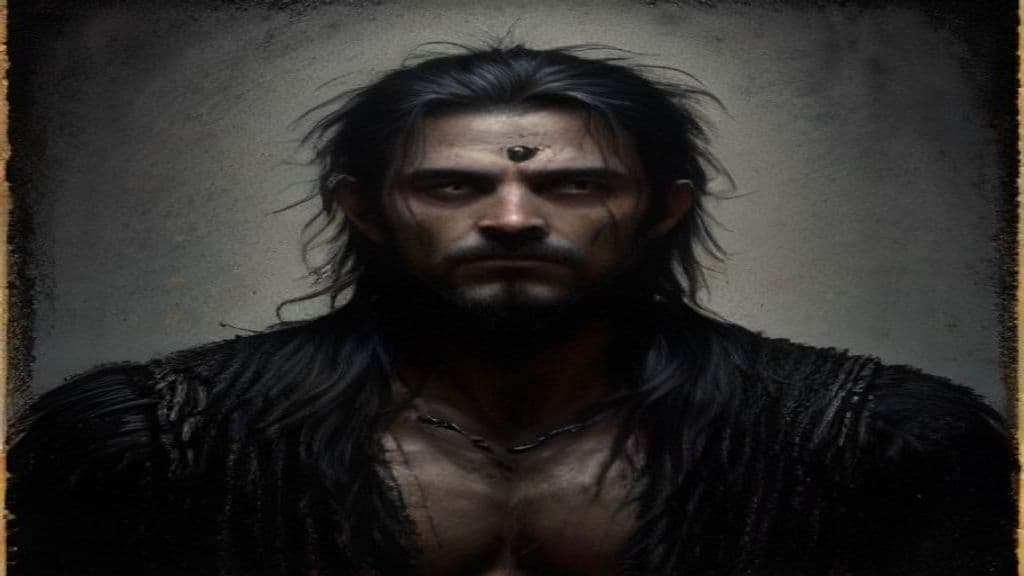
Green Knight

A late-medieval Arthurian figure who functions as a supernatural challenger and tester of knightly virtue. In key narratives he appears at King Arthur’s court to issue a beheading challenge and is revealed in some versions to be the enchanted lord Bertilak de Hautdesert (or Bredbeddle in other variants).

Grendel
Greater

Grendel

A hostile supernatural figure from the Old English epic Beowulf who raids King Hroðgar’s mead‑hall Heorot. Presented as a night‑dwelling, exiled being variously classified with Germanic eotenas/þyrs and described in the poem as descended from the Biblical Cain; his defeat by Beowulf restores communal order.

Grendel's mother
Greater

Grendel's mother

A principal antagonist in the Old English epic Beowulf, presented as the mother of Grendel and a member of the poem's category of Cain-descended “monsters.” She attacks Heorot in vengeance for her son and is slain by Beowulf in her underwater lair.

Griflet
Lesser

Griflet

Griflet is a human narrative figure of the Arthurian literary tradition, appearing across medieval romances and later retellings as a loyal young squire who rises to become a knight of the Round Table. He is a recurring martial attendant of King Arthur, notable in sources for battlefield service, frequent captures and rescues, and variant fates at the end of the cycle.

Guinevere
Lesser

Guinevere

Guinevere is a named human royal figure in the Arthurian literary tradition: an early-medieval princess who becomes Queen of Britain as the wife of King Arthur. In medieval and later romance she functions as a central human agent whose relationships (notably with Arthur, Lancelot, and Mordred) and narrative experiences (abduction, adultery, rescue) drive major plot consequences for the kingdom.

Guy
Lesser

Guy

Guy is primarily an English-language lexical item: a male given name and surname, a colloquial/slang term for a man, several place-names in North America, technical terms (e.g., guy-wire, sailing guy), and a modern cultural object in the form of "The Guy," the effigy burned on Guy Fawkes Night. The supplied sources do not describe Guy as a supernatural being or part of a traditional cosmology.

Gytrash
Lesser

Gytrash

A regional English folk spirit or spectre, the Gytrash is a shape‑changing roadside apparition from northern England—chiefly the West Riding of Yorkshire—most commonly reported in the form of animals (horses, mules, dogs, even an 'evil cow') that appear to travelers on lonely roads and may either mislead or guide them. The creature appears in dialect scholarship and 19th‑century Brontë family notes and fiction.

Hag
Greater

Hag

A hag is a folkloric figure typically depicted as an old, wizened woman who appears across European traditions in multiple roles: a nightmare spirit, a witch-like or fairy-type being, a river or household monster, or (in some cases) a form adopted by sovereignty or storm goddesses. The figure functions variously as a cautionary monster, an explanation for sleep paralysis and nightmares, and a liminal test-figure in myth.

Hagbard and Signy
Greater

Hagbard and Signy

Hagbard and Signy (also Habor and Sign(h)ild) are legendary human lovers of Scandinavian heroic tradition whose tragic saga—preserved in medieval prose (notably Saxo's Gesta Danorum) and in a long-lived ballad tradition (TSB D 430)—was widely sung and commemorated in place-names and monuments across Scandinavia.

Headless Ghost
Lesser

Headless Ghost

An apparition motif in modern folklore and popular media in which a once-living person manifests in the world of the living without a head. Attestations in the supplied sources include localized English hauntings (e.g., Faringdon churchyard, a Wiltshire lane), a claimed photograph, and a 1959 fictional film in which the spirit's head is reunited with its body.

Healfdene (Halfdan)
Lesser

Healfdene (Halfdan)

Healfdene (Old English) / Halfdan (Old Norse) is a legendary human king of the Scylding/Skjöldung lineage appearing in Old English and Old Norse sources. He functions as an ancestral ruler whose descendants (notably Hrothgar/Hróarr and Halga/Helgi) and the feuds around his succession structure later narrative events such as Beowulf and several Norse sagas.

Heardred
Lesser

Heardred

Heardred is a youthful Geatish prince who briefly becomes king of the Geats in the Old English epic Beowulf and related narrative traditions. He succeeds Hygelac after the latter's death, grants asylum to exiled Swedish princes, and is killed when King Onela of Sweden attacks to settle dynastic scores, leaving Beowulf to succeed him.

Hector de Maris
Lesser

Hector de Maris

Hector de Maris is a human knight of the Round Table in the medieval Arthurian prose cycles (Vulgate and Post-Vulgate) and in later retellings. Presented as an illegitimate son of King Ban of Benoic and the half-brother of Lancelot, he is a prominent martial figure: a tournament champion, leader of Lancelot's faction during the court scandal, and a participant in the Grail Quest and subsequent wars.

Hellawes
Lesser

Hellawes

Hellawes is a sorceress in Thomas Malory's Le Morte d'Arthur associated with the Castle Nigramous and the episode set at the 'Chapel Perilous'. She attempts to seduce Sir Launcelot and, in the narrative, obstructs the healing of a wounded knight until specified quest actions recover items from a corpse.

Hengest
Greater

Hengest

Hengest is a legendary early leader in Anglo‑Saxon tradition, presented in poetry and chronicles as a warrior‑chief and the putative founder or first king of Kent. He appears in Old English heroic material (the Finn/Hengest episodes of Beowulf tradition) and in later historiographical narratives (Anglo‑Saxon Chronicle, Vortigern story) as a culture‑hero and dynastic ancestor.

Hengist and Horsa
Lesser

Hengist and Horsa

Legendary brotherly chieftains presented in Anglo‑Saxon and later medieval sources as the eponymous founders and military leaders who initiated Anglo‑Saxon settlement in parts of southeastern Britain; modern scholarship treats them as likely mythical or literary constructs rather than verifiable historical individuals.

Heodenings
Lesser

Heodenings

A named princely household/retinue in the Germanic heroic-legend tradition, remembered chiefly for its association with a legendary, recurring battle cycle (Hjaðningavíg, the legend of Heðinn and Hǫgni) and cited in Old English poetry as a hall where a poet once held bardic office.

Heorogar
Minor Spirit

Heorogar

Heorogar is a legendary Danish king attested in the Old English poem Beowulf as an elder member of the Scylding (Skjöldung) dynasty. He is presented as the eldest son of Healfdene and is notable in the poem chiefly for former possession of martial regalia later held by Hrothgar and given to Beowulf. He is not described as supernatural in the cited sources and is absent from surviving Norse attestations.

Heoroweard
Lesser

Heoroweard

Heoroweard is a human figure of Germanic heroic legend attested in Old English and Norse sources as a claimant and rival within the Scylding/Skjöldung dynasty. He appears in Beowulf as a genealogical mention and in Norse and medieval chronicles/sagas (under forms Hjörvarðr/Hiartuar) as a pretender who rebels against and in some accounts kills Hrólf Kraki, with his origins, seat, and fate varying between traditions.

Heremod
Greater

Heremod

Heremod is a legendary early king attested in Old English poetry (Beowulf), medieval genealogies, and later Latin historiography. Presented as a human ruler whose pride, violence, and failure of kingship lead to banishment and death, he functions as a cautionary exemplar within Germanic/Nordic heroic-historical tradition.

Herne the Hunter
Lesser

Herne the Hunter

Herne the Hunter is a place-bound ghost of English folklore associated with Windsor Forest and the Great Park in Berkshire, tied to a specific oak known as Herne's Oak. Sources describe him as a horned, mounted spectral figure who rattles chains, torments cattle, and blasts or withers trees; many later details derive from 19th–20th century literary elaboration.

Hildeburh
Minor Spirit

Hildeburh

Hildeburh is a human literary character in the Old English heroic-material cycle (the Finnsburg episode as preserved in Beowulf and related fragmentary material). In the narrative she functions as a freothuwebbe or 'peace-weaver'—a marriage-link between royal houses—whose story exemplifies marriage-as-peace-weaving, kin-feud, and funerary response after battle.

Hippolyta
Lesser

Hippolyta

Hippolyta is a figure of Greek myth traditionally described as queen of the Amazons, daughter of Ares and Otrera, and a participant in heroic-cycle narratives involving Heracles and Theseus. In classical sources she is a royal human/divine-adjacent personage associated with a distinctive war-belt (zoster); later literature and modern popular culture adapt her as a dramatic or superheroic figure.

Hippomedon
Lesser

Hippomedon

Hippomedon (Ancient Greek: Ἰππομέδων) is a personal name borne by multiple mortal figures in Greek myth and epic cycles, including one of the Seven against Thebes and several minor warriors associated with the Trojan War; the name is also transmitted in medieval romance under forms such as Ipomedon/Ipomadon.

Hob
Lesser

Hob

A household and local helpful spirit in northern English / northern Britain folklore, the hob is a capricious but essentially kindly presence associated with farms, households, and named local sites (e.g., 'hob-holes'). Hobs assist with domestic labour and healing when kept on good terms, but may withdraw their help if offended by particular actions (notably the gift of clothing).

Hobbit
Lesser

Hobbit

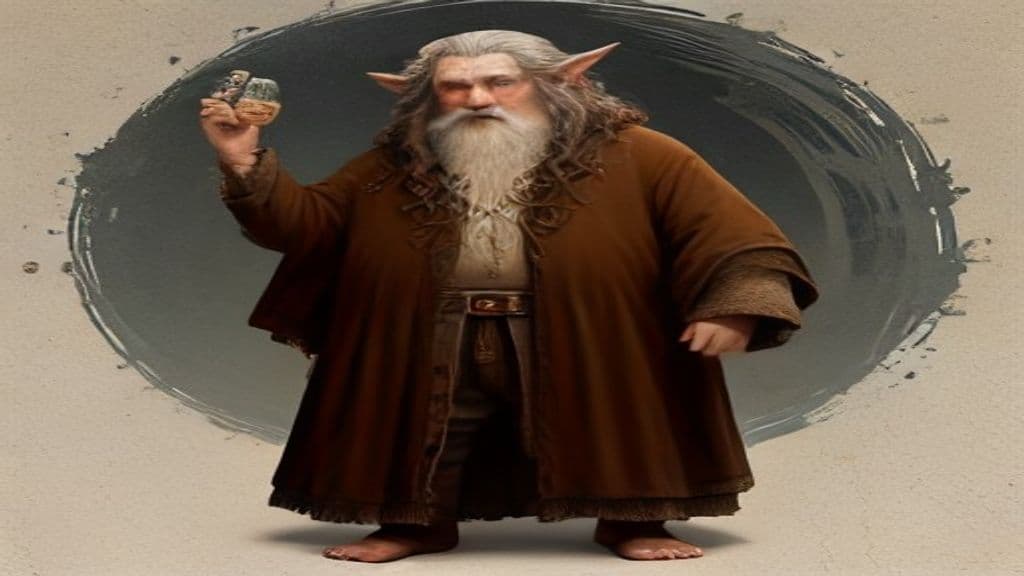
A fictional, short-statured race of people created by J. R. R. Tolkien in his Middle-earth legendarium; rural, domestic, and culturally anachronistic within the imagined past, noted for homely underground dwellings and ordinary courage in extraordinary circumstances.

Hobgoblin
Lesser

Hobgoblin

A household spirit from English folklore that traditionally performs domestic chores for a family in return for simple food but is also prone to practical jokes and mischief; accounts vary regionally and over time, and Christian influence is reported to have shifted popular descriptions toward greater mischief.

Hrólfr Kraki
Greater

Hrólfr Kraki

Hrólfr Kraki is a semi-legendary early 6th-century Danish king of the Scylding lineage preserved in Anglo-Saxon and Old Norse sources. He appears as Hroðulf in Beowulf and is expanded into a fuller heroic-biographical figure in Scandinavian saga material and in Saxo's Gesta Danorum.

Hygd
Lesser

Hygd

Hygd is a legendary queen of the Geats attested in the Old English epic poem Beowulf. In the poem she functions as an ideal hostess and cup-bearer and as a wise political counselor who models queenly virtues and intervenes in a succession crisis following King Hygelac's death.

Háma (Hama / Heime / Heimir)
Lesser

Háma (Hama / Heime / Heimir)

Háma (also rendered Hama, Heime, Heimir) is a named figure of the Germanic heroic-legend tradition attested in Anglo‑Saxon and continental Germanic sources. He appears as a legendary warrior or retainer — often associated with the companion Witige — in poems such as Beowulf and Widsith and in later Germanic epic material (Alpharts Tod, Þiðreks saga). A single secondary source records a variant identification of the name with a mythic watchman figure linked to Heimdallr and the Bifrost; this identification is presented in the available material as a distinct, unverified tradition.

Idis (Germanic)
Lesser

Idis (Germanic)

The idis (Old Saxon; pl. idisi) is a term for a divine or supernatural female being in the pre-Christian Germanic linguistic and poetic record. Cognate with Old High German itis and Old English ides, the term carries senses of a dignified or well‑respected woman and appears in poetic, folkloric, and comparative discussions alongside related female figures such as the Norse dísir.

Ingeld
Lesser

Ingeld

Ingeld (Old Norse Ingjaldr; Latin Hinieldus) is a legendary heroic prince of the pan‑Germanic Scylding/Heaðobard cycle known from early English and Norse literary sources. He appears as a warrior and dynastic actor whose narrative role centers on marriage diplomacy, feuding, and cycles of vengeance rather than any supernatural agency.

Jack o' the Bowl
Lesser

Jack o' the Bowl

A Swiss household spirit (described in sources as a brownie or kobold) who, in exchange for a nightly bowl of sweet cream or milk, guides cows to safe grazing — even on otherwise dangerous mountainsides — and is maintained by a routine domestic offering.

Jack the Giant Killer
Lesser

Jack the Giant Killer

A cycle of Cornish/British folktales about a clever young man named Jack who, during the reign of King Arthur, outwits, ambushes, and kills a number of man- and livestock-eating giants, freeing captives and appropriating wealth. The tales place Jack in an Arthurian, magical landscape populated by giants, sorcerers, enchanted persons, and magical objects.

Jack-o'-lantern
Lesser

Jack-o'-lantern

A jack-o'-lantern refers both to a carved, hollowed vegetable lantern (commonly a pumpkin in North America; historically turnips, mangelwurzels or rutabagas in Britain and Ireland) used at seasonal festivals such as Halloween, and to an older English dialect name for wandering peat-bog lights (ignis fatuus / will-o'-the-wisp). The carved object and the atmospheric phenomenon are related in folk imagination: the older name for ghost-lights helped supply the name and some meanings of the carved lantern used at liminal festivals.

Jadis (the White Witch)
Greater

Jadis (the White Witch)

Jadis, commonly called the White Witch, is a fictional antagonist created by C. S. Lewis who rules Narnia as a sorceress-queen and whose magic enforces the prolonged 'Hundred Years Winter.' She is the principal opposing force in The Lion, the Witch and the Wardrobe (1950) and is a central figure in The Magician's Nephew (1955).

Jenny Greenteeth
Lesser

Jenny Greenteeth

A figure of northern‑English folklore personifying dangerous still and slow freshwater. Presented as a green‑skinned river‑hag who lures or seizes children and the elderly into ponds, rivers, and lakes; stories function primarily as cautionary warnings about aquatic hazards.

Jerry Cornelius
Minor Spirit

Jerry Cornelius

Jerry Cornelius is a fictional, protean literary persona created by Michael Moorcock, presented across multiple novels and stories as a mutable archetype — an urban adventurer, trickster/Pierrot figure, and one incarnation of Moorcock's Eternal Champion concept. The character's identity, appearance, and role shift across narratives rather than forming a single fixed biography.

Johann Georg Faust
Lesser

Johann Georg Faust

Johann Georg Faust is a historically attested itinerant early modern practitioner — variously an alchemist, astrologer, physician, teacher and performer — whose life and unusual death were rapidly mythologized in chapbooks and later literature (notably Marlowe and Goethe). Documentary records show a learned background and contested reputation; later pamphlet tradition transformed him into the legendary 'Faust' figure associated with diabolism.

John Dough
Lesser

John Dough

John Dough is a fictional life-sized gingerbread man created by L. Frank Baum in his 1906 children's fantasy novel John Dough and the Cherub. Brought to life when an immortality elixir is accidentally mixed into his batter, he functions as an animate confection with social agency who travels, befriends companions, sacrifices for others, and ultimately becomes a king within Baum's Oz-adjacent imagined world.

King Arthur
Greater

King Arthur

King Arthur is a central figure of the medieval Matter of Britain: a legendary king and folk‑hero presented variously as a post‑Roman military leader of the Britons, a chivalric monarch of great courtly fame, and a figure entwined with later otherworldly motifs (Avalon, Excalibur, Merlin). Sources range from early Welsh annals and poetry to Geoffrey of Monmouth, continental romances, and later English retellings.

King Caspian X (tradition)
Minor Spirit

King Caspian X (tradition)

The provided sources do not document King Caspian X as a supernatural or folkloric entity. References to 'Caspian' in the materials pertain to the fictional literary character Prince Caspian from C. S. Lewis's The Chronicles of Narnia, to historical/administrative uses of the toponym 'Caspian Oblast,' and to modern cultural uses of the name.

King Hroðgar
Lesser

King Hroðgar

Hroðgar is a semi‑legendary early medieval Danish king of the Scylding dynasty known from Old English and Norse saga material. In the Beowulf tradition he is the generous lord of the mead‑hall Heorot whose court becomes the scene of Grendel's assaults and the hero Beowulf's intervention.

King Tirian
Greater

King Tirian

King Tirian is the last reigning monarch of Narnia and the protagonist of C. S. Lewis's The Last Battle. He leads Narnia's military and political resistance against the subversion and invasion portrayed in the book and is closely allied with Jewel the Unicorn.

Knocker
Lesser

Knocker

A small mine-associated spirit from British and American mining folklore, known for producing knocking sounds in underground workings that miners interpreted as warnings or communications. Variants and cognates appear across Cornwall, Devon, Wales, Staffordshire and in American mining communities (Tommyknockers).

Lake monster
Lesser

Lake monster

A lake monster is a lake-dwelling creature in myth, folklore, and modern reports; treated as a recurring narrative motif (not a single species) that ranges from older kelpie-like horse or serpentine beings to modern reptile/plesiosaur-like sightings such as Nessie, Champ, and Ogopogo.

Linton Worm
Lesser

Linton Worm

A serpent-like monstrous "worm" from Scottish Borders folklore associated with a hollow on Linton Hill; traditionally described as a large wyrm that ravaged people, livestock and crops and was overcome in a heroic confrontation. The legend is presented in sources as medieval in origin and comparable to other British worm/dragon tales such as the Lambton Worm.

Little people
Lesser

Little people

A cross-cultural folkloric category of diminutive supernatural or semi-supernatural beings found worldwide. They occupy liminal places near humans (woods, mounds, anthills, mines, shorelines) and range from helpful household spirits to mischievous tricksters or dangerous guardians of places and resources.

Lucy Pevensie
Lesser

Lucy Pevensie

Lucy Pevensie is a fictional human child and one of the four Pevensie siblings in C. S. Lewis's Chronicles of Narnia. Within Lewis's narrative cosmology she is a mortal human who travels between England and Narnia, noted for her faith, compassion, and special receptivity to Aslan; she is crowned Queen Lucy the Valiant and later enters Aslan's Country after death.

Madam Pigott
Lesser

Madam Pigott

A named White Lady ghost of Newport and Chetwynd Park, Shropshire, said to be the restless spirit of a deceased woman tied to the Pigott family and to specific local landmarks; traditions describe repeated nocturnal appearances, interactions with riders, and two different local remedies (clerical Psalm-reading exorcism and a Romani-style bottling and drowning).

Marty Hopkirk
Lesser

Marty Hopkirk

Marty Hopkirk is a fictional deceased private detective who remains on the earthly plane in incorporeal form and continues to interact socially and professionally with the living. Introduced in the 1969–70 television series Randall and Hopkirk (Deceased) and revisited in a 2000 revival, Marty functions as a persistent ghostly partner who aids investigations while being constrained by the narrative's afterlife rules.

Merrow
Lesser

Merrow

A sea-being of Irish/Celtic folklore, the Merrow (Hiberno-English) denotes a class of half-human marine supernatural persons — often female 'sea-maidens' and uglier male counterparts — capable of interaction and occasional intermarriage with humans. Medieval Irish terms connect the figure to older siren- and sea-nymph motifs, while 19th-century collectors shaped much of the modern folk image.

Metheringham Lass
Lesser

Metheringham Lass

A place‑bound apparition reported at RAF Metheringham in Lincolnshire, presented in local wartime and post‑war lore as a young woman who approaches passing motorists asking for help for an injured boyfriend and then vanishes. The story is linked to the airfield's WWII history and persists in regional storytelling and contemporary paranormal media.

Michael
Lesser

Michael

Michael is presented in the supplied sources as a masculine given name and disambiguation headword applied to people, historical rulers, cultural works, places, and other uses; the provided material treats it as an onomastic item rather than as a single supernatural being.

Moddey Dhoo
Lesser

Moddey Dhoo

A place‑bound phantom black dog from Manx tradition, chiefly associated with Peel Castle (St Patrick’s Isle). Recorded in an 18th‑century account by George Waldron and later collected and expanded by folklorists, the Moddey Dhoo appears at dusk in the castle guardroom and returns to a secret passage at dawn; later local reports extend the motif across the Isle of Man with variant descriptions.

Modthryth
Minor Spirit

Modthryth

Modthryth is a literary royal figure attested in the Old English poem Beowulf, presented as a princess who initially behaves violently toward men beneath her rank but is later depicted as a reformed and celebrated queen. The figure functions in the poem as a foil to other aristocratic women and as a commentary on ideals of queenship (freoðuwebbe) in Anglo-Saxon literary culture. The manuscript reading of her name and the precise sense of the compound are subjects of scholarly dispute.

Morgan le Fay
Greater

Morgan le Fay

A mutable figure of the Arthurian tradition variously portrayed as an enchantress, healer, fairy-queen, or human noblewoman. Early accounts emphasize her role as a healer and leader of supernatural women at Avalon; later prose romances often recast her as an ambivalent or antagonistic sorceress in relation to Arthur and his court.

Night Hag
Lesser

Night Hag

A cross-cultural folkloric figure invoked to explain the experience now called sleep paralysis: an unseen nightly visitor said to sit upon or press down on sleepers, causing immobility, a sensation of weight on the chest, terror, and frightening dreams. The figure occupies different cultural forms (mare, karabasan, kana tevoro, Mokthi/Makthi, etc.) but functions as a common explanatory 'slot' linking the sleeping body to spirits, jinn, or the recently dead.

Nix Nought Nothing
Minor Spirit

Nix Nought Nothing

Nix Nought Nothing is the provisional personal name of the human protagonist in a Scottish fairy-tale (ATU 313, "The Magic Flight") who is promised to a giant and compelled to perform impossible tasks, rescued and aided by the giant's magical daughter. The tale centers on rash promise, naming as temporary identity, magical tasks, flight from the giant, and a sleep-enchantment resolved by a counter-spell and social reparation.