English Supernatural Beings

294 documented English supernatural beings from the Evil Eye grimoire, including 186 lesser and 54 minor spirit in power tier.

page 3 of 5

Cressida
Minor Spirit

Cressida

Cressida is a literary character from medieval and Renaissance retellings of the Trojan War, appearing in works from the Roman de Troie tradition through Boccaccio, Chaucer, and Shakespeare. She is portrayed as Troilus's lover who is exchanged to the Greeks and later becomes associated with an affair with Diomedes; later authors vary in their moral judgments of her.

Cromm Cruac (Robin of Sherwood)
Ancient

Cromm Cruac (Robin of Sherwood)

Cromm Cruac is a reworking of the Irish figure Crom Cruach used in the British television series Robin of Sherwood as a named pagan locus of power. Historically attested in Christian sources as a pre‑Christian Irish deity whose worship Christian writers claim involved offerings, the television series presents 'Cromm Cruac' (episode title, 17 May 1986) as a place — associated in the episode with a lake — whose powers can be invoked in the drama.
Croydon Cat Killer
Lesser

Croydon Cat Killer

A contemporary social and media label applied to an alleged perpetrator (or perpetrators) blamed for a large series of cat mutilations first reported in Croydon, South London, from 2014 onward. The term functioned as a focal agent in community fear, media coverage and police investigation, and was later reinterpreted by forensic reviews as more likely the result of vehicle trauma and wildlife scavenging.

Dagonet
Lesser

Dagonet

Dagonet is a named individual in the Arthurian literary tradition, variously portrayed as a Knight of the Round Table, a court fool/jester attached to King Arthur, or a deranged former knight. He appears across medieval prose romances (notably the Vulgate Cycle, Guiron le Courtois, Prose Tristan) and later retellings (Malory, Tennyson, Howard Pyle, nineteenth–twentieth-century pastiches).

Dando's Dogs
Lesser

Dando's Dogs

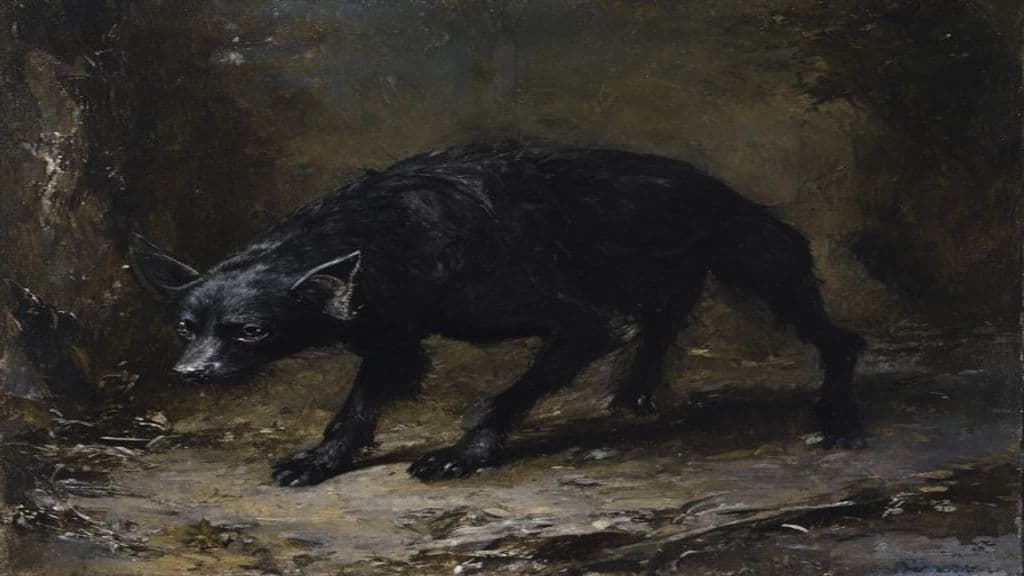
Dando's Dogs are an English folkloric pack of spectral hounds tied to the tale of a sinful huntsman named Dando. They are classed among English 'black dog' apparitions and described as taking part in the Wild Hunt; tradition reports their sounds on early Sunday mornings as they pursue game or search for their master after his abduction.

Deiphobos
Greater

Deiphobos

Deiphobos is a Trojan prince in Greek epic tradition, a son of Priam and Hecuba who fought in the Trojan War. Later epic and post-epic poets (Virgil, Chaucer in allusion) treat his household and fate among the episodes of Troy's sack; classical summaries also record him as a notable warrior who killed several named opponents.

Deutsche Mythology
Ancient

Deutsche Mythology

A collection of mythological narratives representing the collective myths, legends, and beliefs of ancient Germanic cultures. (Note: 1. Power tier: Primordial (Deutsche Mythology as a collective mythological narratives does not have supernatural abilities and behaviors attributed to it; rather, it contains those of individual Germa)

Devil horse
Lesser

Devil horse

A polyvalent folkloric and cultural label applied to horses or horse-shaped phenomena interpreted as malevolent, uncanny, or diabolically influenced in disparate literary, toponymic, and cinematic sources. The term appears in place-name folklore, fiction, film titles, and as an epithet attached to ordinary horses, but the sources do not present a single, coherent supernatural taxonomy for a discrete species called "Devil horse."

Diamond (dog)
Lesser

Diamond (dog)

Diamond is a named dog appearing in anecdotal accounts associated with Sir Isaac Newton; in popular and literary retellings the animal is said to have overturned a candle and so caused the destruction of Newton's experimental manuscripts. The story is widely reproduced in 19th‑century biographies and literature but is described in some sources as largely apocryphal.

Digory Kirke
Minor Spirit

Digory Kirke

Digory Kirke is a human fictional character created by C. S. Lewis in The Chronicles of Narnia. He appears as a child in The Magician's Nephew, as the elderly 'Professor' in The Lion, the Witch and the Wardrobe, and is included in Lewis's narrative chronology that places his death in a 1949 railway accident and his subsequent presence in the renewed Narnia/Aslan's Country within the fiction.

Dinadan
Minor Spirit

Dinadan

Dinadan is a fictional human knight of Arthurian romance, a member of King Arthur's Round Table best known as a pragmatic, comic, and cynical foil—especially to Tristan—appearing in the Old French Prose Tristan, later continuations, and Thomas Malory's Le Morte d'Arthur. He is portrayed as a competent but reluctant warrior, a teller of satirical commentary on chivalry and courtly love, and is killed in Malory during the internal collapse of Arthur's court.

Doppelgänger
Lesser

Doppelgänger

A supernatural double or look‑alike of a living person, frequently reported in folklore and literature as a haunting counterpart or an omen of misfortune. The motif appears across cultures with related but distinct concepts (e.g., Egyptian ka, Norse vardøger, Finnish etiäinen, Muslim karin/qareen).

Dracula
Greater

Dracula

Count Dracula is the singular Transylvanian aristocratic vampire of Bram Stoker's 1897 novel who preys on the living by drinking blood and exerting mental influence, relocates to England via the ship Demeter with boxes of earth from his castle, and is ultimately tracked and destroyed by a group of hunters using a mix of scientific, clerical, and folkloric measures.

Drudwas ap Tryffin
Lesser

Drudwas ap Tryffin

A human warrior and knight associated with Arthurian and medieval Welsh tradition, noted chiefly for possessing three supernatural birds (Adar Llwch Gwin) given to him by his fairy wife; a late tale records that his literal command to those birds led to his death.

Drummer of Cortachy
Lesser

Drummer of Cortachy

A site-bound ghost associated with Cortachy Castle and the Ogilvy (Earls of Airlie) family, reputed to sound a martial tattoo on a drum — sometimes with ghostly pipes — as a portent of imminent death among the castle's owners. The legend appears in nineteenth- and twentieth-century collections of Scottish ghost stories and in modern summaries.

Duergar
Lesser

Duergar

Two distinct uses of the name appear in the sources: (1) a traditional English folk designation for the Simonside Dwarfs — a local small‑folk or hill spirit group associated with the Simonside Hills of Northumberland (also called Brownmen and Bogles); and (2) a modern fantasy role‑playing race: a subterranean dwarf people in tabletop RPGs (Dungeons & Dragons, Pathfinder and related SRD material) with defined physiology, resistances, and subterranean culture.

Dwarf (folklore)
Lesser

Dwarf (folklore)

A type of supernatural, human-shaped being in Germanic tradition associated with subterranean places, craft (notably metalwork), and a liminal role between nature and culture. In Norse mythic sources dwarfs function as artisan-makers of powerful objects for gods and occasionally appear in folktales as magical servants bound to objects.

Dywel fab Erbin
Lesser

Dywel fab Erbin

Dywel fab Erbin is a minor heroic figure of medieval Welsh literary tradition: a son of Erbin, brother to Geraint and Ermid, and named among King Arthur's knights at Celliwig. He is attested in early Welsh poetry (the Black Book of Carmarthen and the Stanzas of the Graves) and in the Arthurian tale Culhwch ac Olwen, where his death in battle and the location of his grave at Caewaw/Caeo are recorded.

Eadgils (Aðils / Adils)
Lesser

Eadgils (Aðils / Adils)

Eadgils is a semi-legendary 6th-century Swedish king of the Yngling/Skilfing dynasty attested in Old Norse skaldic poetry and sagas and in the Anglo-Saxon epic Beowulf. Sources present him as a dynastic figure whose exile, restoration, and conflicts (notably with Onela/Áli and later associations with Hrólfr Kraki) explain succession and inter-kingdom violence; he is treated as a mortal ruler rather than a supernatural being.

Eanmund
Lesser

Eanmund

Eanmund is a semi-legendary Swedish prince of the Scylfing dynasty attested in the Old English epic Beowulf. Portrayed as a mortal claimant to the Swedish throne whose exile and death precipitate inter-kingdom conflict and later vengeance by his brother Eadgils, he functions as a genealogical and political figure within the Scandinavian heroic cycle rather than a supernatural being.

Easter Bunny (Easter Hare / Osterhase)
Minor Spirit

Easter Bunny (Easter Hare / Osterhase)

A folkloric figure originating in German-speaking communities, depicted as an anthropomorphic hare or rabbit that brings or hides decorated eggs and treats for children at Easter. Functioning in domestic and seasonal custom rather than liturgy, the figure was historically associated with child-focused gift-giving and moral evaluation and was popularized in visual culture from the 19th century onward.

Ecgþēow
Lesser

Ecgþēow

Ecgþēow is a human figure in the Old English poem Beowulf, presented as the father of the hero Beowulf and a member of the Wægmundings. He functions in the poem as an exemplar of warrior status, kin obligations, and the social mechanisms (wergild, exile, fosterage, and oath‑bonding) that settle blood‑feuds and create inter‑household loyalties.

Ector
Minor Spirit

Ector

Ector (also Hector, Ectorius) is a named human noble and knight in the Arthurian tradition, best known as the foster (adoptive) father of King Arthur and the father of Sir Kay. Portrayed across medieval and later retellings as the head of a knightly household responsible for raising Arthur in concealment at Merlin's arrangement, he functions as a social guardian and narrative caretaker rather than a supernatural being.

Edward Mordake
Lesser

Edward Mordake

A late-19th-century apocryphal case popularized in sensational journalism and medical miscellany describing a supposedly well-born Englishman born with a second, allegedly malign face on the back of his head. Modern researchers treat the account as a likely hoax or urban legend rather than a documented historical or folkloric supernatural being.

Elaine
Lesser

Elaine

Elaine is a personal name applied to several female characters in the Arthurian literary cycle (for example Elaine of Astolat, Elaine of Corbenic, and a Queen Elaine of Garlot). In the cited materials these Elaines are legendary human figures — queens, lovers, or nuns — whose roles vary by tale rather than a single supernatural being.

Elaine of Astolat
Lesser

Elaine of Astolat

Elaine of Astolat is a mortal noblewoman from Arthurian romance who dies of unrequited love for Sir Lancelot; her body is set adrift in a small boat clutching a lily and a final letter and is discovered at Camelot. Her episode appears in multiple medieval variants and was later reworked in Victorian poetry and visual art.

Elaine of Corbenic
Lesser

Elaine of Corbenic

A noblewoman in the Arthurian Grail-cycle who functions as the Grail Maiden/Grail Bearer; daughter (in many accounts) of King Pelles of Corbenic, she shows the Holy Grail to Lancelot, engineers (with aid) the conception of Galahad, and later brings a mad Lancelot to the Grail to be healed.

Elf
Greater

Elf

An elf is a humanoid supernatural being from Germanic folklore, especially prominent in North Germanic (Norse/Icelandic) myth and in later early-modern Scottish and Scandinavian belief. Elves are typically depicted as magically powerful and unusually beautiful, ambivalent toward humans and capable of helping or harming them.

Elves (Middle-earth)
Primordial

Elves (Middle-earth)

In J. R. R. Tolkien's legendarium, the Elves are the Firstborn of Ilúvatar, a prime pre‑human race whose lives are long and whose spiritual destiny differs from Men. They dwell in Middle‑earth and in the Undying Lands of Valinor; slain Elves' spirits go to the Halls of Mandos in Aman, and many eventually yearn to sail from the Grey Havens to Valinor.

Elyan the White
Lesser

Elyan the White

Elyan the White is a human knight of Arthurian legend attested in the medieval prose romances of the Lancelot‑Grail (Vulgate) and Post‑Vulgate cycles (and in the Prose Tristan). He is presented as the son of Bors the Younger, a member of the Round Table, a loyal kinsman of Lancelot, and a martial participant in episodes such as the rescue of Guinevere and Lancelot's exile; one Vulgate strand prophesies he will become Emperor of Constantinople.

Emeth / אמת
Lesser

Emeth / אמת

Two distinct but lexically related referents: (1) Emeth is a human Calormene officer in C. S. Lewis's novel The Last Battle whose sincere devotion leads Aslan to accept him; (2) אמת (Emeth, Hebrew for "truth") appears in a version of the golem legend as the written animating word placed on a clay figure's forehead, removal of whose initial letter deactivates the creature.

Enfield Poltergeist
Lesser

Enfield Poltergeist

A widely publicized alleged instance of poltergeist activity at 284 Green Street, Brimsdown, Enfield, London, reported between 1977 and 1979. The case is treated in sources as an example of disruptive, localized poltergeist phenomena centered on a household and its occupants and is the subject of investigative, skeptical, and popular-media treatments.

Enide (Enid)
Lesser

Enide (Enid)

Enide (Welsh: Enid) is a human literary character from medieval Arthurian romance, depicted as the wife of the heroes Erec (in Chrétien de Troyes' Erec and Enide) and Geraint (in the Welsh romance Geraint and Enid). She functions as a courtly lady whose love, loyalty, and speech catalyze the hero's testing, restoration of honor, and reconciliation of domestic affection with knightly duty.

Eoten (ēoten)
Ancient

Eoten (ēoten)

Eoten (Old English ēoten) is the Old English term glossed as 'giant' and cognate with Old Norse jötunn. In Anglo‑Saxon and Norse literary traditions the word is used within a wider family of large non‑human beings (jötnar, þurs, risi, troll) that often occupy liminal or primeval roles in myth and saga.

Eotenas
Greater

Eotenas

Eotenas (Old English eotenas) are a race-class of other-than-human beings attested in Anglo-Saxon poetic contexts, notably Beowulf, where they appear among a catalogue of hostile or monstrous stocks. Philological traditions link the term to Old Norse jötnar/ettins (often rendered "giants" in modern summaries), but primary Old English lines give little concrete physical description.

Ermanaric
Lesser

Ermanaric

Ermanaric is a historically attested Greuthungian Gothic king of the fourth century who later becomes a central figure of Germanic heroic legend (Old English Eormenric, Old Norse Jǫrmunrekkr). Sources present him as a powerful, warlike ruler whose cruelty (notably the execution of Svanhild/Sunilda) provokes cycles of violent vengeance in later poetry and saga.

Evadne
Minor Spirit

Evadne

Evadne (Ancient Greek: Εὐάδνη, Euádnē) is an ancient Greek personal name borne by several mortal women in classical mythic genealogies and dramas; in modern usage it appears as a personal or taxonomic name. The supplied sources treat Evadne primarily as an anthroponym rather than a discrete supernatural class or persistent spirit.

Fairy
Lesser

Fairy

A class of anthropomorphic supernatural beings found across multiple European folk traditions, fairies are magical, liminal entities variously described as spirits, an older race, or enchanted people; their depiction ranges from human-sized to diminutive and their attributes and moral alignment vary by region and period.

Fairy Queen
Greater

Fairy Queen

A female sovereign figure who rules over fairies or fairy courts across diverse folkloric and literary traditions. Depictions range from benevolent and gift-giving to ambivalent or dangerous; she appears both as a local hill-associated ruler in Celtic traditions and as a literary sovereign in Continental and English writings.

Father Christmas
Minor Spirit

Father Christmas

Father Christmas is the traditional English personification of the Christmas festival — a cultural and performative embodiment of midwinter feasting, merrymaking and later, following nineteenth-century cultural exchange, a domestic gift-bringer. He functions as a symbolic figure in pageantry, pamphleteering and popular imagery rather than as an independently ontological supernatural being.

Finn (Frisian)
Lesser

Finn (Frisian)

Finn is a named legendary Frisian king of the heroic age attested in Old English poetry (Widsith, the Finnesburg Fragment) and in the episode preserved within Beowulf. He appears in narratives of inter-ethnic warfare, hospitality, and the uneasy settlements that follow slaughter, sometimes portrayed as ruling honorably over surviving enemy retainers and in other variants as slain in the conflict.

Firedrake
Lesser

Firedrake

A term in English tradition for dragon-shaped manifestations of fire observed in the sky; used both as an Old English poetic word for dragon (fyrdraca) and, from the Renaissance onward, to describe luminous aerial phenomena such as meteors or ignis fatuus. Sources treat firedrakes variously as mythic dragons, atmospheric luminous vapors, or morally charged apparitions (e.g., the Devil in dragon form).

Fisher King
Greater

Fisher King

A figure in the Arthurian Grail cycle who serves as the hereditary guardian of the Holy Grail and whose bodily wound is symbolically linked to the barrenness of his realm. He is often depicted as incapacitated and 'fishing' while awaiting a questing hero whose question or deed will heal him and restore the land.

Frankenstein (the creature / creation)
Lesser

Frankenstein (the creature / creation)

A sapient humanoid created by Victor Frankenstein in Mary Shelley's 1818 novel by assembling human remains and animating them through an unorthodox scientific experiment. In the original text the family name 'Frankenstein' refers to the creator, but cultural usage often applies the name to the created being itself.

Freawaru
Lesser

Freawaru

Freawaru is a legendary human royal woman in Old English and Scandinavian traditions, presented in Beowulf as the daughter of King Hroðgar and Queen Wealhþeow and married to Ingeld as a freoðuwebbe (peace-weaver) intended to settle a blood-feud. Scandinavian prose (Gesta Danorum) preserves a cognate episode in which an old warrior (Starkad) incites renewed vengeance, reversing the marriage's peacemaking purpose.

Freybug
Lesser

Freybug

The Freybug (also Fray‑bug) is a named monstrous Black Dog from English folklore, recorded in association with Norfolk. Cited in early modern letters and later antiquarian commentary, it is described chiefly as a large black canine apparition that wanders country roads and terrifies travellers.

Friar Rush
Greater

Friar Rush

A popular narrative figure from late medieval and early modern northern Europe: a supernatural intruder who assumes the guise of a friar, infiltrates a monastery, and causes mischief, vice, and disorder until expelled by ecclesiastical ritual. The tale circulated in Low German, High German, Scandinavian, Dutch and English print from the late 15th century onward.

Gaheris
Lesser

Gaheris

Gaheris is a literary figure of the Arthurian romance tradition: a Knight of the Round Table, son of King Lot and Queen Morgause, and a brother of Gawain. Presented in continental French poetry, the Vulgate/Lancelot-Grail cycle, and Thomas Malory's Le Morte d'Arthur, his martial deeds, a notorious act of matricide in Malory, and his death during Lancelot's rescue of Guinevere are depicted as contributing to the political unraveling of Arthur's court.

Galehaut
Lesser

Galehaut

Galehaut is a literary figure of the medieval Arthurian cycle: a sovereign prince and great knight-commander of the Distant Isles (Sorelois/Surluse) who first opposes King Arthur, then surrenders and becomes a close companion of Lancelot. In the Prose Lancelot and related romances he functions as an exemplar of chivalric magnanimity and tragic devotion; some redactions describe him as the son of a 'Fair Giantess' (a half‑giant) while later literature repurposes his name as a mediator of illicit love.

Gandalf
Greater

Gandalf

Gandalf is a central protagonist in J. R. R. Tolkien's legendarium (The Hobbit; The Lord of the Rings). Within that fictional cosmology he is one of the Istari — incarnated Maiar spirits — sent to Middle-earth to oppose Sauron; he functions primarily as a guiding counselor who also acts directly in exceptional combat or magical need and bears the Elven Ring Narya.

Gareth
Minor Spirit

Gareth

Gareth is a literary knight of King Arthur's Round Table, traditionally presented as a younger son of King Lot and nephew of King Arthur. In medieval Arthurian romances (notably Thomas Malory's Le Morte d'Arthur and continental Vulgate/Post-Vulgate material) he functions as an exemplar of chivalric virtues—humility, martial skill, generosity—and as a narrative figure whose death helps precipitate the collapse of Arthur's realm.

Gawain
Minor Spirit

Gawain

Gawain is a human heroic figure of the Arthurian legendary cycle: a knight of King Arthur's Round Table, variously portrayed across medieval Welsh, French, Latin, and English traditions as an exemplar of courtesy and loyalty or, in later cycles, as a morally ambiguous or culpable noble. He functions within courtly, kinship, and martial narrative networks rather than as a supernatural spirit.

Gef (the Talking Mongoose)
Lesser

Gef (the Talking Mongoose)

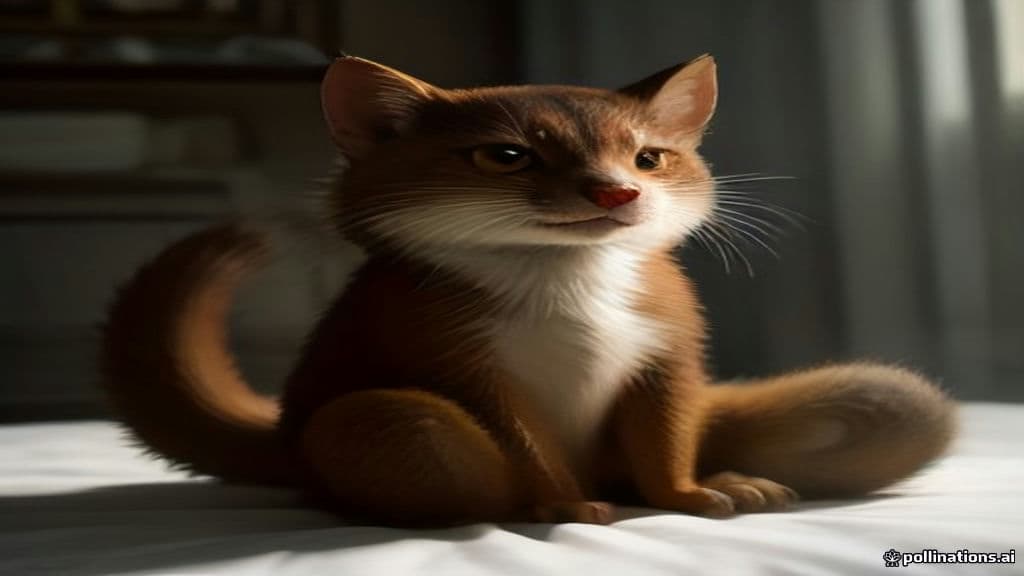
Gef is a reported talking animal-like intelligence tied to the Irving family farmhouse at Cashen's Gap, Dalby, Isle of Man in the early 1930s. Described by the family as a small yellowish, bushy‑tailed creature that spoke and performed minor household tasks, the case attracted press sensationalism and psychical researchers and remains contested between hoax, poltergeist, and psychological interpretations.

Geraint
Minor Spirit

Geraint

Geraint is a personal name borne by overlapping human figures in Welsh and Brittonic tradition: a valiant warrior celebrated in early medieval poetry, the protagonist of the Arthurian romance Geraint and Enid, and a king of Dumnonia attested in a saints' vita. The name links heroic, courtly, and hagiographic registers rather than a supernatural taxonomy.

Geraint son of Erbin
Lesser

Geraint son of Erbin

Geraint son of Erbin (Middle Welsh: Geraint uab Erbin / Geraint mab Erbin) is a medieval Welsh legendary hero celebrated in early Middle Welsh englynion for his deeds at the Battle of Llongborth and later as the protagonist of the prose romance "Geraint and Enid," an adaptation of Chrétien de Troyes' Erec and Enide. He functions in the Welsh literary tradition as a martial exemplar situated in the heroic past rather than as a supernatural being.

Ghost Train
Lesser

Ghost Train

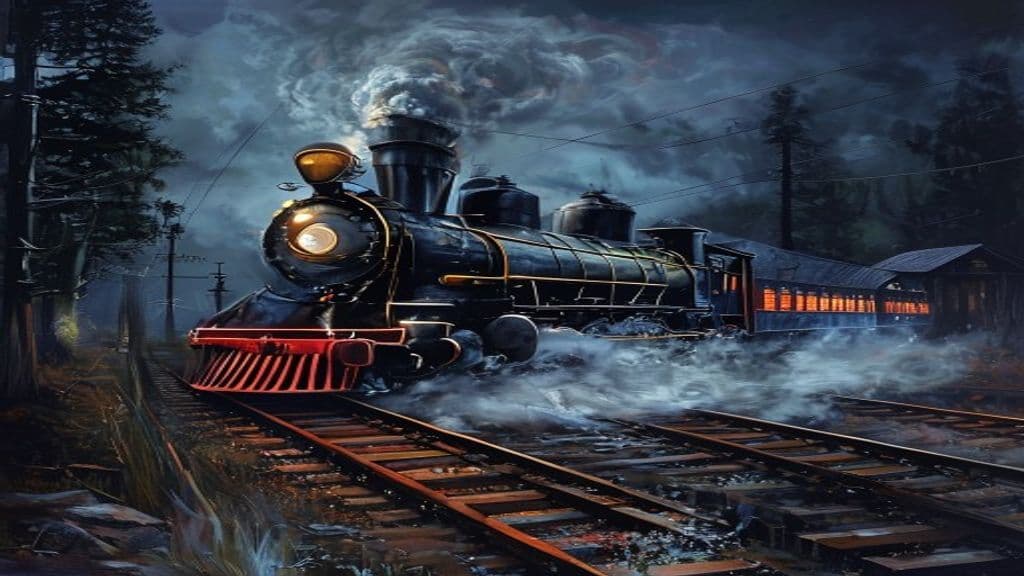
A folkloric apparition whose visible form is an entire train or rail vehicle rather than a single disembodied human spirit. Reported in multiple regions where railways have been significant, it appears variously as omen, commemorative phantom, or an imitation created by animal tricksters in local tales.

Gideon Stargrave
Minor Spirit

Gideon Stargrave

Gideon Stargrave is a fictional comics character created by Grant Morrison in 1978 who functions as a pulp‑style 1970s spy archetype and as a metafictional persona adopted by other characters (notably King Mob) within Morrison's The Invisibles. The character exists as a literary construct and metatextual device rather than a supernatural being.

Glewlwyd Gafaelfawr
Lesser

Glewlwyd Gafaelfawr

Glewlwyd Gafaelfawr is a figure in medieval Welsh and Arthurian tradition presented as the chief porter (gatekeeper) of Arthur’s court and a renowned warrior. Sources portray him as a liminal institutional officer who enforces court protocol and as a veteran hero famed for prodigious size, strength, and ferocity rather than as a supernatural being.

Goblin
Lesser

Goblin

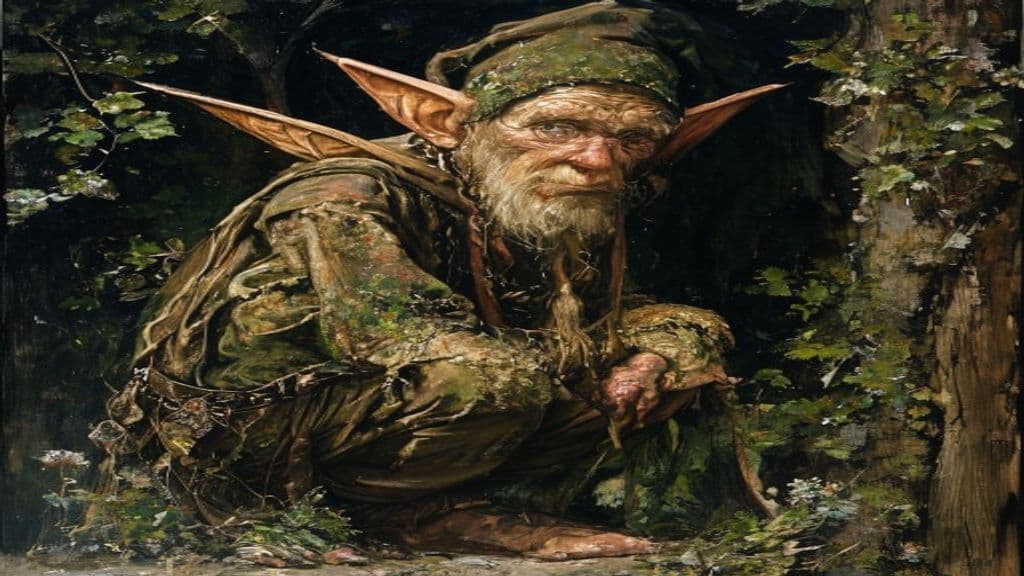
A class of small, often grotesque humanoid beings in European folk belief that range from household helpers to tricksters and violent figures. Goblins occupy liminal spaces—hearths, cellars, ruins and wild places—and their behavior toward humans depends on region, story, and reciprocal treatment.

Gogmagog
Greater

Gogmagog

Gogmagog (also Gog-Magog) is a named giant of British folklore and appears in collections of giant‑tales as an example of the very large humanoid figures that populate myth and legend. In the supplied sources he functions as a legendary giant figure referenced in compendia rather than as a fully described character with a single, detailed tradition.