English Supernatural Beings

294 documented English supernatural beings from the Evil Eye grimoire, including 186 lesser and 54 minor spirit in power tier.

page 5 of 5

Nixie
Lesser

Nixie

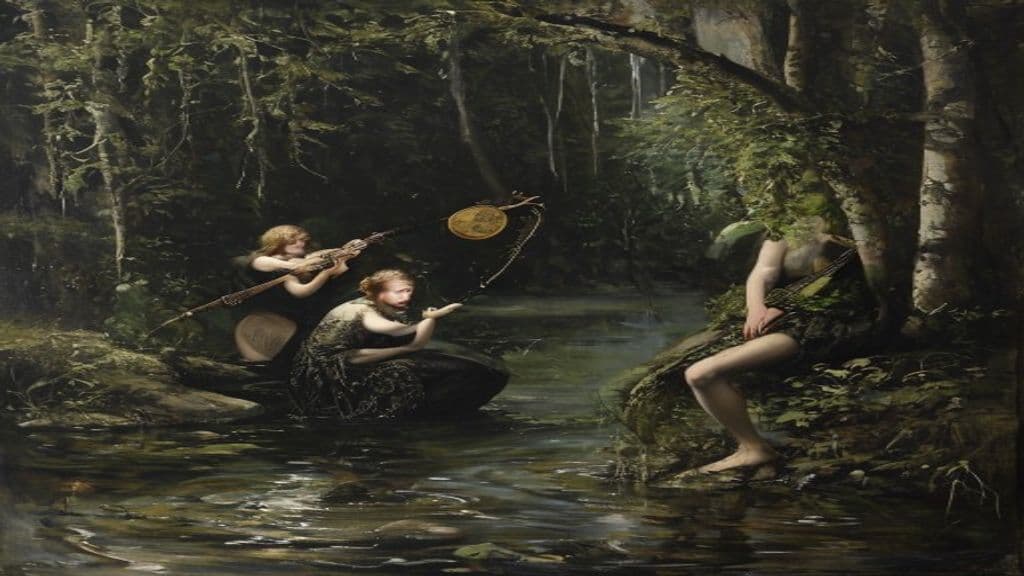
A category of water spirit from Germanic and neighbouring European folklore associated with lakes, streams, ponds and waterfalls. Commonly described as shapeshifting and linked to enchanted music, nixies may be helpful or dangerous to humans depending on local tales.

Nuckelavee
Ancient

Nuckelavee

The most terrifying creature of Orcadian folklore — a skinless, horse-headed demon of the sea whose breath spreads plague and whose presence causes crops to wither. It cannot cross fresh water.

Odin
Ancient

Odin

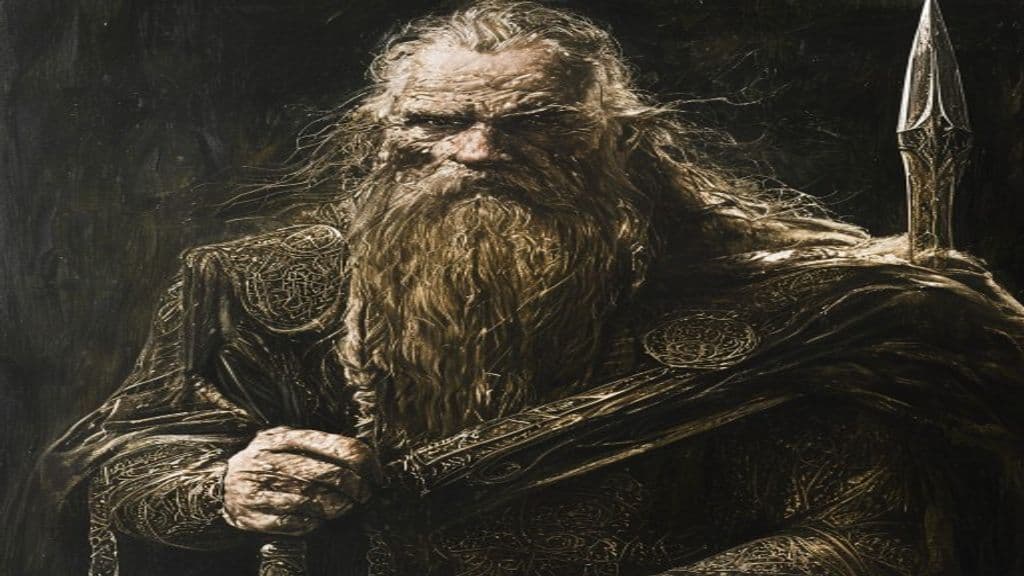
Odin (Old Norse: Óðinn) is the chief god of the Norse (Æsir) pantheon, a multifaceted deity associated with wisdom obtained by sacrifice, poetic inspiration, death and warfare, and rulership over the hall Valhöll where chosen slain warriors (einherjar) dwell. He appears throughout Germanic tradition from Roman-era accounts through the Viking Age and in later folklore as leader of the Wild Hunt.

Ohthere (Vendelcrow)
Lesser

Ohthere (Vendelcrow)

Ohthere (Old Norse Óttarr vendilkráka; modern Swedish Ottar Vendelkråka) is a semi-legendary Swedish king of the Scylfing house, placed by sources in the Germanic Heroic Age, possibly early 6th century (fl. c. 515–c. 530). Literary traditions present him as a warrior-king involved in Swedish–Geatish and Swedish–Danish conflicts; a burial mound in Vendel parish (Ottarshögen) has long been associated with his name. Some narrative details (notably a Danish death in the Limfjord and the story of a wooden "Vendelcrow" of humiliation) are attested only in Snorri's later Ynglinga saga and may represent literary elaboration.

Onela
Lesser

Onela

Onela is a semi-legendary Swedish king attested in early medieval Germanic sources (notably Beowulf and Norse saga summaries). He appears as a dynastic usurper and wartime opponent in the Scandinavian heroic-legend tradition whose actions (usurpation, killing of a rival prince, and eventual slaying in battle) structure episodes of vengeance and succession.

Ongentheow
Lesser

Ongentheow

Ongentheow (Old English Ongenþeow / Ongenþio; Old Norse Angantýr, identified with Egil Vendelcrow in Scandinavian sources) is a semi-legendary Swedish king of the Scylfing/Yngling line attested in Old English heroic poetry and Norse/Swedish king-lists. He functions as a martial royal ancestor in Beowulf and as a figure in Ynglingatal, Ynglinga saga, Historia Norwegiae and Íslendingabók, with divergent accounts of his death.

Orc
Lesser

Orc

A literary and philological construct originating from an Old English attestation and substantially developed in J. R. R. Tolkien's mythopoeic writings as a corrupt, warlike humanoid race serving dark powers; earlier usage in Beowulf links the element to underworld/demonic associations.

Oswald Bastable
Lesser

Oswald Bastable

Oswald Bastable is a fictional human character whose name appears in two distinct literary traditions: as a child narrator in Edith Nesbit's turn-of-the-century Bastable stories (1899–1905) and as a reused, reinterpreted adult military figure in Michael Moorcock's 20th-century alternate-history/speculative fiction. Moorcock explicitly reused the name to evoke a particular Fabian liberal-imperial milieu rather than to create a direct sequel to Nesbit's tales.

Peter Pevensie
Lesser

Peter Pevensie

Peter Pevensie is a fictional human character created by C. S. Lewis who appears in The Chronicles of Narnia. An evacuated English boy who becomes High King Peter the Magnificent in Narnia, he functions as a divinely‑sanctioned monarch and head general in Aslan's cause and is one of the two Sons of Adam prophesied to rule at Cair Paravel.

Phoebus (epithet of Apollo)
Ancient

Phoebus (epithet of Apollo)

Phoebus is an epithet historically applied to the Olympian god Apollo. In the supplied sources the name functions primarily as an alternative designation for Apollo, a major Greek deity associated with light, healing, prophecy, music, poetry, and archery; it is also attested in modern secular place- and personal-names.

Pillywiggin
Minor Spirit

Pillywiggin

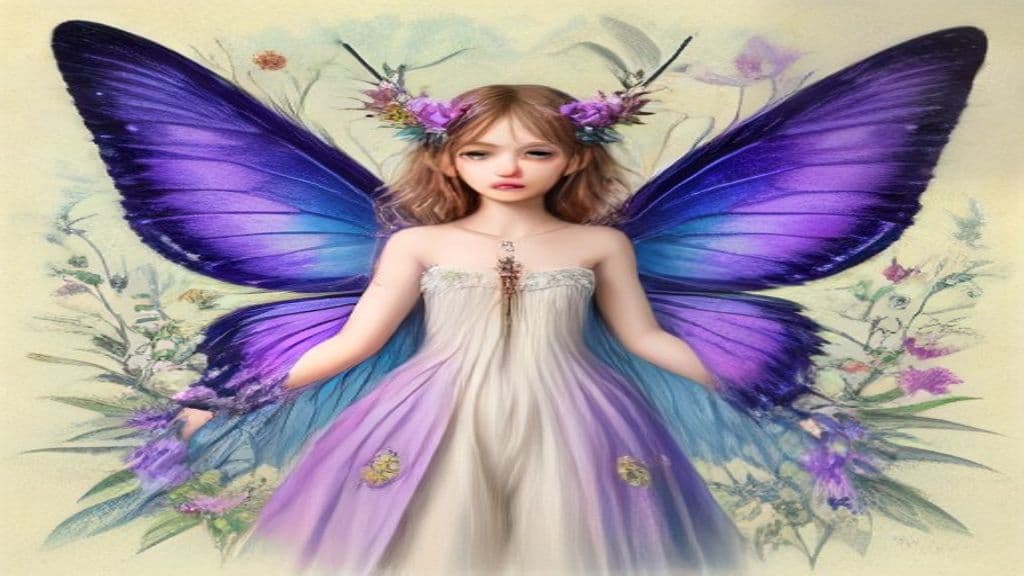
Pillywiggins are very small faery or 'little people' in English and Irish folkloric compilations who function as guardians and personifications of spring flowers and small flora. Described in modern sources as trooping, winged flower-fairies, they are generally benign and largely indifferent to humans, associated with gardens, meadows and the seasonal rhythms of plants.

Pixie
Lesser

Pixie

A class of small, landscape‑anchored supernatural beings from southwest British folklore (especially Cornwall and Devon), generally portrayed as childlike, fond of dancing and mischief, and attached to ancient/liminal places such as stone circles, barrows and moorland. They appear in local tales as helpful household spirits at times and as tricksters at others — notably in stories that 'pixy‑lead' travellers — and figure as a marker of regional folkloric identity.

Puck
Lesser

Puck

Puck is a northwest European liminal spirit occupying a space between household sprite and wild fairy trickster. Portrayed as a domestic helper who expects food offerings and as a nocturnal jester of the fairy court, Puck performs both useful chores and mischievous pranks in folklore and literature.

Puddleglum
Lesser

Puddleglum

Puddleglum is a fictional Marsh-wiggle who appears in C. S. Lewis's The Silver Chair (part of The Chronicles of Narnia). Portrayed as a gloomy yet steadfast companion, he guides Eustace and Jill, resists enchantment in Underland, and helps free Prince Rilian.

Puzzle the Donkey
Minor Spirit

Puzzle the Donkey

Puzzle is a fictional donkey character in C. S. Lewis's The Chronicles of Narnia, prominently appearing in The Last Battle. In the novel he is a simple, credulous beast manipulated by the ape Shift and presented to others as the deity Aslan as part of a deception plot.

Púca (Pooka / Puca)
Minor Spirit

Púca (Pooka / Puca)

A long-standing folkloric spirit from Irish and related Celtic traditions, the púca is a shape‑shifting, ambivalent supernatural being commonly associated with rural and maritime communities and said to bring both good and ill fortune.

Red King (term)
Minor Spirit

Red King (term)

“Red King” is a polyvalent label used across literature, popular media, history, science, and other fields rather than a single, coherent folkloric supernatural being. The term appears as character names (e.g., Lewis Carroll's Through the Looking-Glass), nicknames for historical figures (William II, 'Rufus'), monsters in genre media (Ultraman, comics), and non-supernatural uses (red king crab, scientific hypotheses).

Redcap
Lesser

Redcap

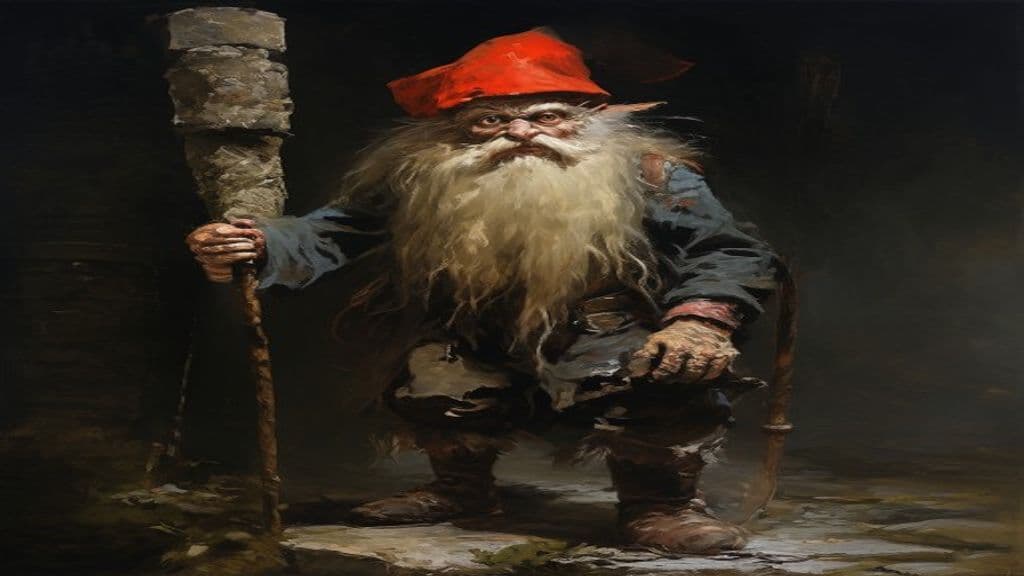
A malevolent small household/house-ruin spirit attested in Anglo-Scottish border folklore, described as dwelling in ruined towers and castles and attacking trespassers; tradition emphasizes a blood‑stained red cap as its identifying emblem and records Christian symbols or Scripture as effective repellents.

Rerir
Lesser

Rerir

Rerir is a human dynastic figure in the Norse legendary corpus (not a supernatural being). He is presented as the son of Sigi, succeeds and avenges his murdered father, rules in Hunaland, and is the father of the saga-founder Völsung; Völsung's conception and birth involve divine intervention by the goddess Frigg and the giantess Hljod.

Revenant
Lesser

Revenant

A revenant is a deceased human (corporeal corpse or spirit) that returns from death to appear among or assault the living. The category spans multiple cultures and historical periods and includes walking corpses, barrow-dwellers, and other postmortem returns addressed by communal funerary and ritual responses.

Rheda
Lesser

Rheda

Rheda is the Latinized name of an Anglo-Saxon goddess preserved by the early medieval scholar Bede as an eponym for a month in the Anglo-Saxon calendar. The attestation is fragmentary: Bede records the name but gives no details of rites, appearance, or cult practice; later scholars have offered etymological speculations without definitive proof.

Samson
Greater

Samson

A constructed fictional character in the 28 Days Later film series presented as an unusually large and highly aggressive variant of the infected, classified in the films as an "Alpha." Introduced in 28 Years Later (2025) and returned as a central character in 28 Years Later: The Bone Temple (2026).

Sceafa
Minor Spirit

Sceafa

Sceafa is an Old English legendary ancestral figure: a mysteriously arriving child found asleep in a small boat with a handful of grain, later accepted and made a progenitor of royal lines (notably in Lombard and some Anglo-Saxon pedigrees). He functions as an etiological founder whose miraculous origin legitimizes dynastic descent.

Scyld Scefing
Minor Spirit

Scyld Scefing

Scyld Scefing (Old English) / Skjöldr (Old Norse) is a legendary early king and eponymous progenitor figure in Anglo-Saxon and Scandinavian genealogical and literary tradition. He appears across medieval sources as a founding ancestor used to legitimise royal lines rather than as a described supernatural being.

Scylding
Minor Spirit

Scylding

The Scyldings (Old English Scyldingas; Old Norse Skjǫldungar) are a legendary royal dynasty of early medieval Anglo‑Scandinavian tradition, described in sources such as Beowulf, Norse saga genealogies and Latin chronicles. They function as a mytho‑historical lineage that anchors claims to rulership, heroic identity, and dynastic origin rather than as a singular supernatural being.

Seaxnēat
Ancient

Seaxnēat

Seaxnēat (Old Saxon Saxnôt) is attested in medieval sources as a national god or divine ancestor of the Saxons, named at the head of royal genealogies for Essex and listed among pagan gods in the Old Saxon Baptismal Vow. Scholarly discussion treats him as an eponymous patron linked to Saxon ethnic identity and as a figure variously compared to other Germanic and Celtic deities.

Selkie
Lesser

Selkie

A seal-being from northern Atlantic coastal folklore said to shift between seal and human forms by removing or donning a seal skin. Tales focus on intimate relations with humans, the selkie's longing for the sea, and the narrative motif of a hidden skin that prevents return to the ocean.

Sergestus
Lesser

Sergestus

Sergestus is a human Trojan companion of Aeneas in Virgil's Aeneid, presented as one of the minor members of Aeneas's retinue who participates in the funeral games (Book V). Later literary adaptations preserve him as a minor character; Roman tradition/gens Sergia regarded him as an eponymous ancestor.

Seventh son of a seventh son
Greater

Seventh son of a seventh son

A folkloric birth-status applied to a male who is the seventh consecutive male child in an unbroken male line whose father was also a seventh son; across several European-derived and Latin American traditions this status is associated variously with exceptional healing or with dangerous supernatural transformations. The figure functions as a social/biological category that explains extraordinary capacities or misfortunes rather than a single mythic individual or species.

Sheela na Gig
Minor Spirit

Sheela na Gig

A medieval figurative architectural carving of a naked woman displaying an exaggerated vulva, found on churches, castles and other buildings across parts of Europe. Scholarly interpretations disagree on original function—proposed roles include apotropaic protection of thresholds, survivals of fertility/mother‑goddess imagery, or medieval moralizing images condemning female lust—while modern groups sometimes reappropriate the motif in neopagan and artistic contexts.

Shug Monkey
Lesser

Shug Monkey

A Cambridgeshire folkloric supernatural creature described as having the shaggy body of a black sheepdog and the face of a monkey. Traditionally reported as haunting Slough Hill Lane between West Wratting and Balsham, it is framed in sources as a local ghostly or demonic road‑haunt related in popular literature to the region's black dog traditions.

Sigmund
Lesser

Sigmund

Sigmund is a legendary human hero of the Völsung (Wælsing) lineage in Germanic/Norse and Anglo‑Saxon literary tradition. Presented as son of Völsung and Hljod and father of later heroes, his life links kin‑vengeance, an Odin‑placed sword, cursed wolf‑skins, and the hereditary destiny that prepares for the later dragon‑slayer of the cycle.

Simonside Dwarfs
Lesser

Simonside Dwarfs

A regional race of small, hill-dwelling supernatural beings from Northumberland folklore (Simonside Hills). They are famed for leading travellers astray at night with lighted torches and vanishing at dawn; traditions treat them as a local variety of English/Borders 'dwarfs' or 'brownmen'.

Sir Balin
Lesser

Sir Balin

Sir Balin is a mortal knight of the Arthurian cycle, portrayed as an archetypal tragic and impetuous warrior whose actions — notably drawing a cursed sword sent by a damsel from Lile (Lily) of Avalon and later striking the Dolorous Stroke with the Holy Lance — set in motion grievous consequences for Arthur's court, including the initiation of the Grail quest in Post‑Vulgate tradition.

Skjöldr (Skjǫldr / Scyld)
Ancient

Skjöldr (Skjǫldr / Scyld)

Skjöldr is a legendary ancestral king in Germanic/Norse tradition, commonly presented as the eponymous founder of the Danish royal line (the Skjöldungs/Skjöldungar). Attestations vary: in Old Norse sources he appears as a son of Odin who receives Denmark, while in Old English (Beowulf) he appears as a foundling (Scyld Scefing) who rises to become a powerful king.

Smaug
Greater

Smaug

Smaug is a singular, ancient dragon from J. R. R. Tolkien's legendarium (The Hobbit). He seized and occupied the Dwarf-kingdom of Erebor, guarded a vast hoard for centuries, and is portrayed as a highly intelligent, speech-capable, and vainglorious hoard-guardian whose single exposed belly-spot proves fatal.

Stoor Worm
Ancient

Stoor Worm

The Stoor Worm (Mester Stoor Worm) is a colossal, malevolent sea‑serpent of Orcadian (Orkney) folklore known from 19th‑century preservations and later retellings. In the tradition it threatens coastal communities with physical destruction and a poisonous, putrid breath; in the central tale the hero Assipattle kills it by thrusting burning peat into its liver.

Susan Pevensie
Minor Spirit

Susan Pevensie

Susan Pevensie is a fictional English girl and one of the four Pevensie siblings created by C. S. Lewis in The Chronicles of Narnia. In the series she functions as a mortal child who becomes Queen Susan the Gentle (Queen Susan of the Horn) while ruling in the parallel realm of Narnia; her later estrangement from Narnia and ambiguous fate have generated extensive critical and fan commentary.

The Black Dog of Newgate
Greater

The Black Dog of Newgate

A late‑16th/early‑17th century English prison legend of a spectral black hound tied to Newgate Prison in London. First recorded in a tract attributed to Luke Hutton, the story functions as a morality exemplum in which a monstrous black dog is reported to avenge a murder inside the gaol and to haunt the prison precincts.

Tirian
Lesser

Tirian

Tirian is a fictional human character in C. S. Lewis's Chronicles of Narnia, the last King of Narnia and the protagonist of The Last Battle. He is a mortal ruler and skilled swordsman who leads Narnia in its final conflict, witnesses the deception of a false Aslan, and ultimately enters Aslan's Country.

Titania
Lesser

Titania

Titania is the proper name used most prominently for the Queen of the Fairies in William Shakespeare's A Midsummer Night's Dream; the name also appears across astronomy, chemistry/mineralogy, and modern fiction as distinct, homonymous referents rather than a single folkloric entity. In the Shakespearean context she appears onstage as a sovereign fairy figure who enters accompanied by her retinue.

Unferth
Lesser

Unferth

Unferth (Old English Hunferð/Unferth) is a human courtier and thegn in the Old English epic Beowulf, presented as Ecglaf's son and a þyle in Hrothgar's hall. In the poem he functions primarily as a rhetorical antagonist to Beowulf, later lending his sword Hrunting and receding in speech after Beowulf's victories.

Vanishing Hitchhiker
Minor Spirit

Vanishing Hitchhiker

A widespread modern folk-narrative type in which a traveler (often a motorist) gives a ride or shelter to a passenger who later disappears without mundane explanation; subsequent corroboration often reveals the passenger had died earlier or leaves a token such as a garment on a grave.

Warg
Greater

Warg

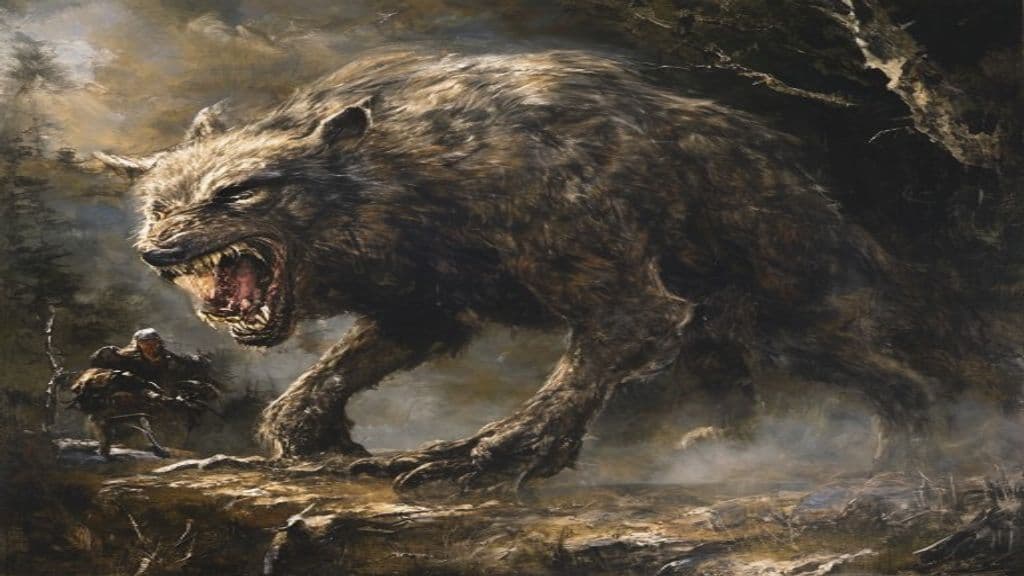
A large, malevolent wolf-like being whose modern fictional form was popularized by J. R. R. Tolkien as an intelligent, war‑capable wolf-race allied with Orcs; the term derives from Old Norse vargr and Old English wearh, words that blur natural wolf, outlawry, and destructive agency.

Wayland the Smith
Greater

Wayland the Smith

Wayland the Smith is a legendary master craftsman from early Germanic and Norse tradition, famed for superlative metalwork, cunning devices, and a narrative of capture, mutilation, vengeance, and escape. He appears as a culture-hero/artisan in poetic and saga contexts (not a formal deity) and is later equated with classical craft-figures such as Daedalus in medieval manuscript tradition.

Wealhtheow
Lesser

Wealhtheow

Wealhtheow is a legendary/literary queen in the Old English epic Beowulf: wife of Hrothgar and a member of the Wulfing (Helming) kin who performs the courtly, diplomatic, and ceremonial duties that maintain social cohesion in the Danish hall.

Weohstan
Lesser

Weohstan

Weohstan is a legendary human warrior of Germanic heroic tradition attested in Old English and Old Norse sources. He appears in Beowulf as a Wægmunding retainer who killed the Scylfing prince Eanmund in service to Onela and later bequeathed the prize sword and armour to his son Wiglaf; he also appears in Old Norse skaldic material (Kálfsvísa) in the form Vésteinn.

Wight
Lesser

Wight

A Germanic-language term historically meaning 'being' or 'creature' that, across Old English and Old Norse usage, covers ordinary created beings as well as a range of supernatural local spirits (e.g., land- and household- vættir). In later medieval and modern contexts the term's range shifted and in modern fantasy it has been narrowed by authors to denote specific undead creatures.

Wiglaf
Lesser

Wiglaf

Wiglaf is a human thane in the Old English epic Beowulf who exemplifies the comitatus ideal: he aids the dying Beowulf against the dragon, retrieves the treasure, and is charged with leadership and funerary duties as the poem's climax resolves.

Will-o'-the-wisp
Lesser

Will-o'-the-wisp

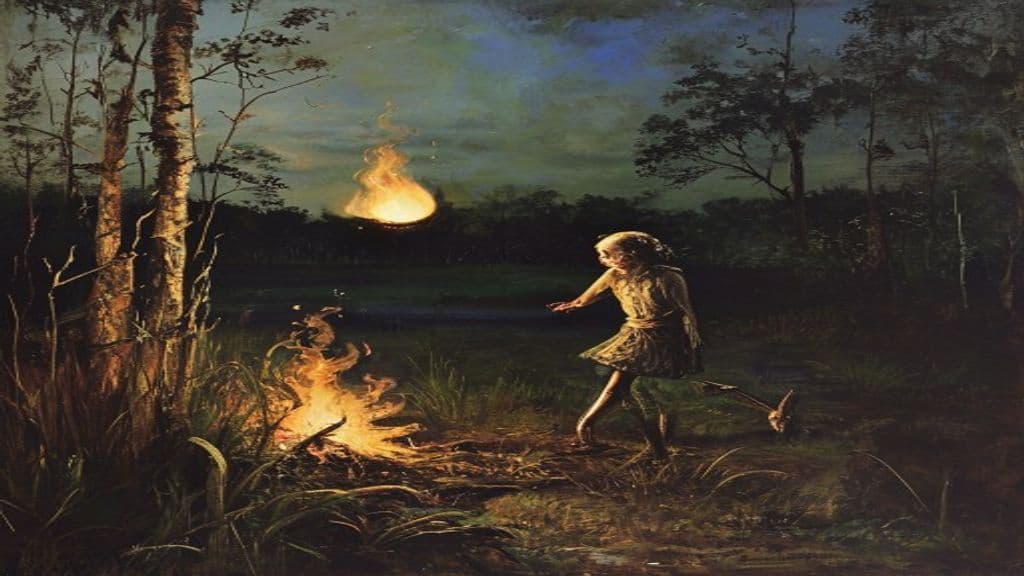
An atmospheric 'ghost light' — a small, mobile, lamp-like light seen at night over marshes, bogs, wet ground, or graveyards. In many cultures the phenomenon is interpreted as a supernatural being or manifestation (wandering nature-spirit, soul of the dead, transformed witch, or treasure-indicator); modern science offers chemiluminescent explanations for some occurrences.

Wyrd (Norse Tradition)
Primordial

Wyrd (Norse Tradition)

Concept governing individual lives and their destinies in Anglo-Saxon culture, corresponding to fate or personal destiny. (Note: 1. Power tier should be Lesser (local spirit) as Wyrd is not described as having cosmic-level power. 2. The summary should include the word "Anglo-Saxon culture" to match the source material, but this)

Wælcyrge (wælcyrie / wlcyrge)
Ancient

Wælcyrge (wælcyrie / wlcyrge)

An Old Norse-origin conception of a battle-associated female supernatural figure known in Old Norse as valkyrja and attested in Old English as wælcyrge/wælcyrie. In Norse sources these figures choose the slain on the battlefield and convey the chosen to Valhalla, while Old English attestations sometimes portray a more witch-like or maleficent war-maiden addressed in charms and manuscripts.

Yngling
Ancient

Yngling

The Ynglings (Old Norse Ynglingr) are a mytho-historical royal dynasty in Scandinavian tradition, presented as descendants of the god Yngvi-Frey and as early kings of Sweden who later produced branches in Norway. Their role is genealogical and political — legitimating kingship by divine descent and explaining settlement and dynastic origins in the legendary past.

Æsir
Ancient

Æsir

Æsir are the principal gods of Old Norse and wider Germanic religion, used both as a general term for gods and as a specific family of deities contrasted with the Vanir; the term is also attested in some early-medieval English contexts as a label for potentially harmful unseen beings.